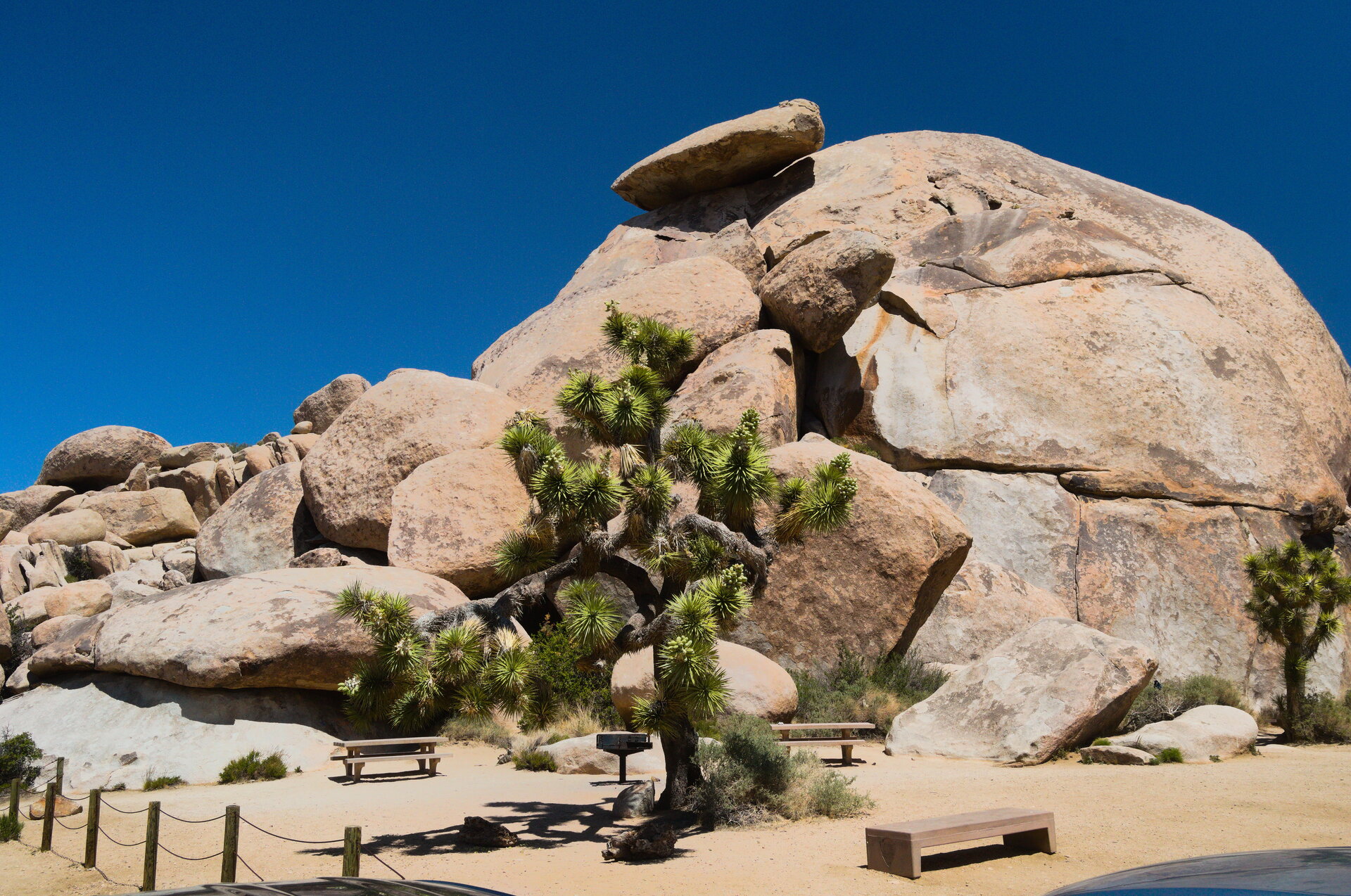


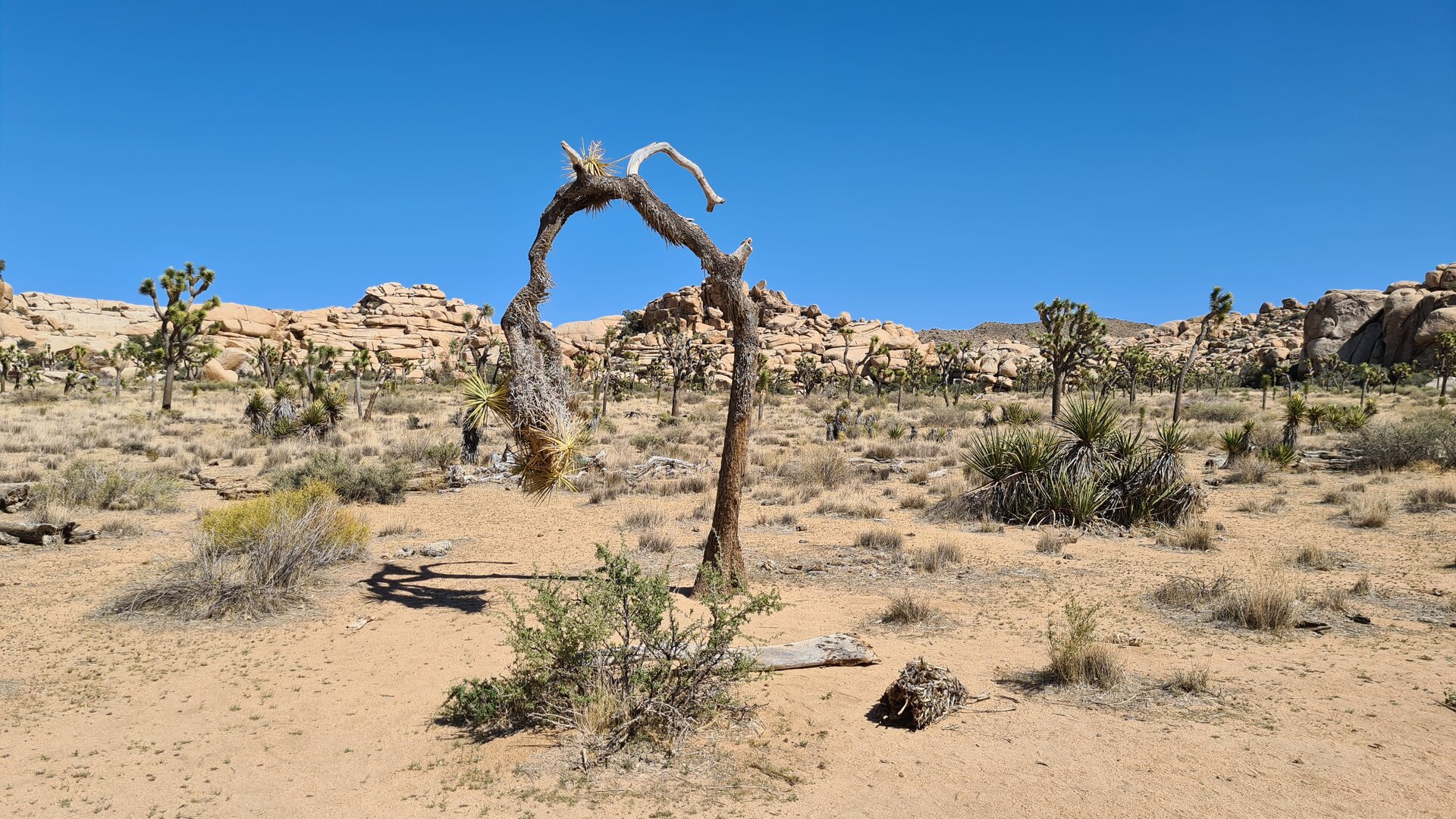
Joshua Tree National Park is a protected desert landscape located in southern California, where the Mojave Desert meets the Colorado Desert. The park covers a vast area east of Los Angeles and north of Palm Springs and is known for its stark beauty, unusual vegetation, rugged rock formations, and expansive open spaces.
The park’s name comes from the Joshua tree, a distinctive plant native to the Mojave Desert that defines much of the higher-elevation landscape. Joshua Tree National Park is characterized by wide desert basins, rocky hills, isolated mountain ranges, and clear night skies. Its remote and arid environment creates a strong sense of isolation and scale.
Climate conditions are extreme. Summers are very hot, while winters can be cool or cold, especially at higher elevations. Rainfall is low and unpredictable, but when it occurs, it can briefly transform the landscape with desert blooms. The park attracts visitors for hiking, rock climbing, stargazing, photography, and desert exploration.
History
Human presence in the Joshua Tree region dates back thousands of years. Indigenous peoples, including the Serrano, Cahuilla, and Chemehuevi, lived in and around the area, adapting to desert conditions through seasonal movement, water management, and extensive knowledge of native plants.
European-American exploration increased in the 19th century as settlers, miners, and ranchers moved through southern California. Small-scale mining operations left behind remnants such as shafts, mills, and abandoned structures, some of which can still be seen today.
The area gained recognition for its natural and cultural value in the 20th century. It was designated a national monument in 1936 and later elevated to national park status in 1994. This designation ensured long-term protection of its desert ecosystems, geological features, and cultural sites.
Geology
Joshua Tree National Park has a complex geological history shaped by tectonic forces, volcanic activity, and erosion. The park lies near the boundary of several geological provinces, resulting in a varied and dramatic landscape.
Much of the park is composed of ancient granite formed deep underground and later exposed through uplift and erosion. Over millions of years, weathering processes sculpted these granite formations into massive boulders, rounded domes, and stacked rock piles that are now iconic features of the park.
Faulting and tectonic movement created valleys and mountain ranges, while erosion carved washes and canyons. Lower elevations in the Colorado Desert portion of the park feature different rock types and flatter terrain, highlighting the contrast between the two desert ecosystems.
Landscapes and Natural Environment
Joshua Tree National Park is defined by the meeting of two distinct desert ecosystems. The Mojave Desert occupies the higher elevations and supports Joshua trees, pinyon pine, and juniper. The Colorado Desert, part of the larger Sonoran Desert, lies at lower elevations and features creosote bush, ocotillo, and cholla cactus.
Elevation changes across the park create temperature gradients and varied habitats. Rocky hills give way to broad plains, while isolated mountain ranges rise abruptly from the desert floor. Dry washes carry water only during rare rain events but play an important role in shaping the landscape.
Wildlife includes reptiles, birds, mammals, and insects adapted to extreme conditions. Many species are nocturnal, taking advantage of cooler nighttime temperatures. The park is also recognized for its dark skies, making it a popular destination for astronomy and night photography.
Things to See
Joshua Tree National Park offers a wide range of natural and cultural features:
Natural Landscapes
- Joshua tree forests across high desert plateaus
- Massive granite rock formations and boulder fields
- Wide desert valleys and dry washes
- Panoramic viewpoints with expansive desert views
Cultural and Historic Sites
- Indigenous cultural landscapes and rock art sites
- Historic mining remains and abandoned structures
- Early ranching and homestead sites
Outdoor Activities
- Hiking trails ranging from short walks to longer backcountry routes
- World-renowned rock climbing and bouldering areas
- Stargazing under some of southern California’s darkest skies
- Photography focused on desert light, texture, and form
Experience and Character
Joshua Tree National Park is often described as otherworldly. Its open spaces, silence, and unusual vegetation create an environment that feels both harsh and meditative. The park encourages slow exploration and awareness of subtle changes in light, temperature, and terrain.
Visitors often experience a strong sense of solitude and connection to nature. The lack of development and the scale of the landscape emphasize the park’s raw character. Joshua Tree has also influenced artists, musicians, and writers, contributing to its reputation as a place of creative inspiration.