
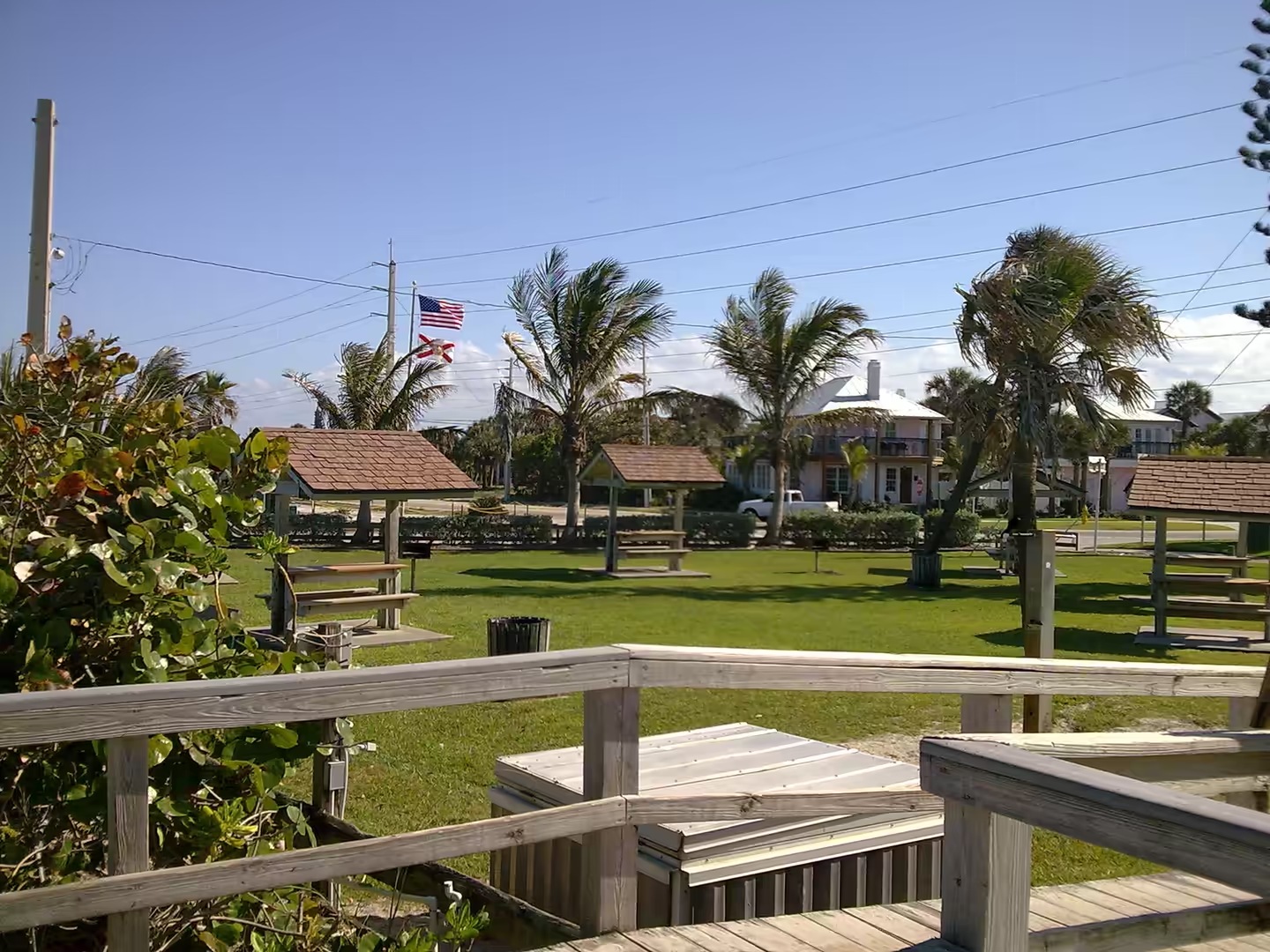

Florida is one of the most distinctive travel destinations in the United States, shaped by its subtropical climate, vast flat landscapes, and a strong focus on leisure, tourism, and outdoor life. Located in the heart of the state, Orange County plays a central role in this image. The county, whose largest city is Orlando, is internationally known as a hub for tourism, conventions, and entertainment, while at the same time reflecting many broader characteristics of Florida as a whole.
Historically, Florida has been influenced by a succession of cultures and powers. Long before European contact, Indigenous peoples inhabited the region for thousands of years. Spanish explorers arrived in the early 16th century, followed later by British and eventually American rule. Florida became the 27th state of the United States in 1845. Orange County remained largely rural well into the 20th century, shaped by cattle ranching, citrus farming, and small settlements. Its transformation began after World War II and accelerated dramatically with the rise of the American space program and the opening of major theme parks in the early 1970s. Since then, Central Florida has grown into one of the world’s most visited regions.

Geologically, Florida is unlike most other U.S. states. It rests on a massive limestone platform formed under ancient shallow seas. This geological foundation explains the abundance of springs, sinkholes, wetlands, and underground aquifers that supply much of the state’s fresh water. Florida is the flattest state in the country, with minimal elevation differences, which contributes to its extensive marshes and lakes. In and around Orange County, the landscape is characterized by freshwater basins, sandy soils, and low-lying wetlands, while further south the terrain transitions into the vast ecosystem of the Everglades. The climate is subtropical, with hot, humid summers, mild winters, and a pronounced rainy season.
For visitors, Orange County and Florida offer a remarkable range of experiences. Orange County is best known for its large-scale attractions, including Walt Disney World Resort and Universal Orlando Resort, which have defined the global image of the region. Beyond the theme parks, the area also features lakes, natural springs, golf courses, and state parks that provide a quieter counterbalance to the entertainment industry. Across Florida more broadly, travelers can explore Atlantic and Gulf Coast beaches, historic cities such as St. Augustine, and unique technological landmarks like the Kennedy Space Center, where human spaceflight history is still very much alive.

What makes Florida, and Orange County in particular, compelling as a destination is the contrast between nature and infrastructure, spectacle and everyday life. Vast highways cross wetlands and forests, ultra-modern resorts stand next to quiet residential areas, and pristine beaches coexist with highly developed coastal cities. Florida may not always feel subtle or traditional, but it offers scale, variety, and an atmosphere that is unmistakably its own—an experience that stays with visitors long after they leave.