Day 1 - From Germany to Southern France
30 May 2026

Journal Notes
Some travel days are destinations in themselves. They are not defined by a single landmark, a famous viewpoint, or a particular attraction. Instead, they are about movement, changing landscapes, and the gradual transition from one region of Europe to another. This day was exactly that kind of journey – a long ride from southwestern Germany to the Mediterranean landscapes of southern France.
The morning began before sunrise. The roads were still quiet, and the first kilometres passed through familiar scenery. Villages slowly came to life, fields were covered by the soft light of dawn, and the air still carried the coolness of the night. It was the beginning of a day that would cover nearly a thousand kilometres and cross several distinct regions, each with its own character and atmosphere.
As the route continued southward, the landscape gradually opened up. Forested hills alternated with agricultural land, and the road became a steady ribbon leading toward France. Crossing the border always creates a subtle feeling of transition. Road signs change language, architecture takes on a different appearance, and the rhythm of daily life seems to shift almost immediately.
The first part of the French journey was defined by distance. Long motorway sections allowed rapid progress across the country, while the scenery slowly transformed outside the helmet visor. The terrain became broader and more expansive. Large agricultural areas stretched to the horizon, punctuated by villages, church towers, and occasional ridges rising above the plains.
Throughout the day, the route followed one of Europe’s historic north-south corridors. For centuries, merchants, travellers, soldiers, and pilgrims have used these natural passages between northern and southern Europe. Modern roads have replaced many of the ancient routes, but the geography remains unchanged. Valleys, rivers, and mountain gaps continue to guide travellers through the landscape just as they always have.
As the hours passed, the climate became noticeably warmer. The vegetation gradually changed, and the colours of the landscape shifted. What had begun as a journey through the green countryside of Germany slowly evolved into a ride through the brighter and drier scenery of southern France.
One of the most impressive aspects of such a long-distance journey is witnessing these transitions unfold in real time. A traveller does not simply arrive in a new region; they experience every stage of the transformation. Forests give way to vineyards. Broad river valleys replace rolling hills. Traditional building styles change. Even the quality of the sunlight seems different as one moves closer to the Mediterranean.
By midday, the route had covered several hundred kilometres. Service stations and short breaks provided opportunities to stretch, refuel, and watch the endless flow of traffic heading in every direction. Long-distance travel creates its own rhythm. Hours pass surprisingly quickly as landscapes drift by, and the focus narrows to the simple sequence of road, horizon, and destination.
Further south, vineyards began appearing more frequently. The terrain became increasingly Mediterranean in character, and the architecture reflected centuries of life shaped by warmer temperatures and drier conditions. Small villages occupied hilltops and ridges, while agricultural land spread across broad valleys below.
The southern part of the journey offered some of the most memorable scenery of the day. The light became warmer and more golden as the afternoon progressed. Shadows lengthened across the countryside, highlighting the contours of hills, fields, and vineyards. It was easy to understand why this region has inspired travellers, artists, and photographers for generations.
The approach toward Occitanie marked another noticeable shift. This region possesses a unique identity, shaped by both French and Mediterranean influences. Historic towns, ancient trade routes, vineyards, and open countryside combine to create a landscape that feels distinctly different from northern France.
Despite spending most of the day on major roads, there were countless moments when the surrounding scenery captured attention. Distant mountain silhouettes appeared on the horizon. Vine-covered hills rolled away into the distance. Small settlements emerged unexpectedly among fields and groves. These brief impressions formed a constantly changing panorama that accompanied the entire journey south.
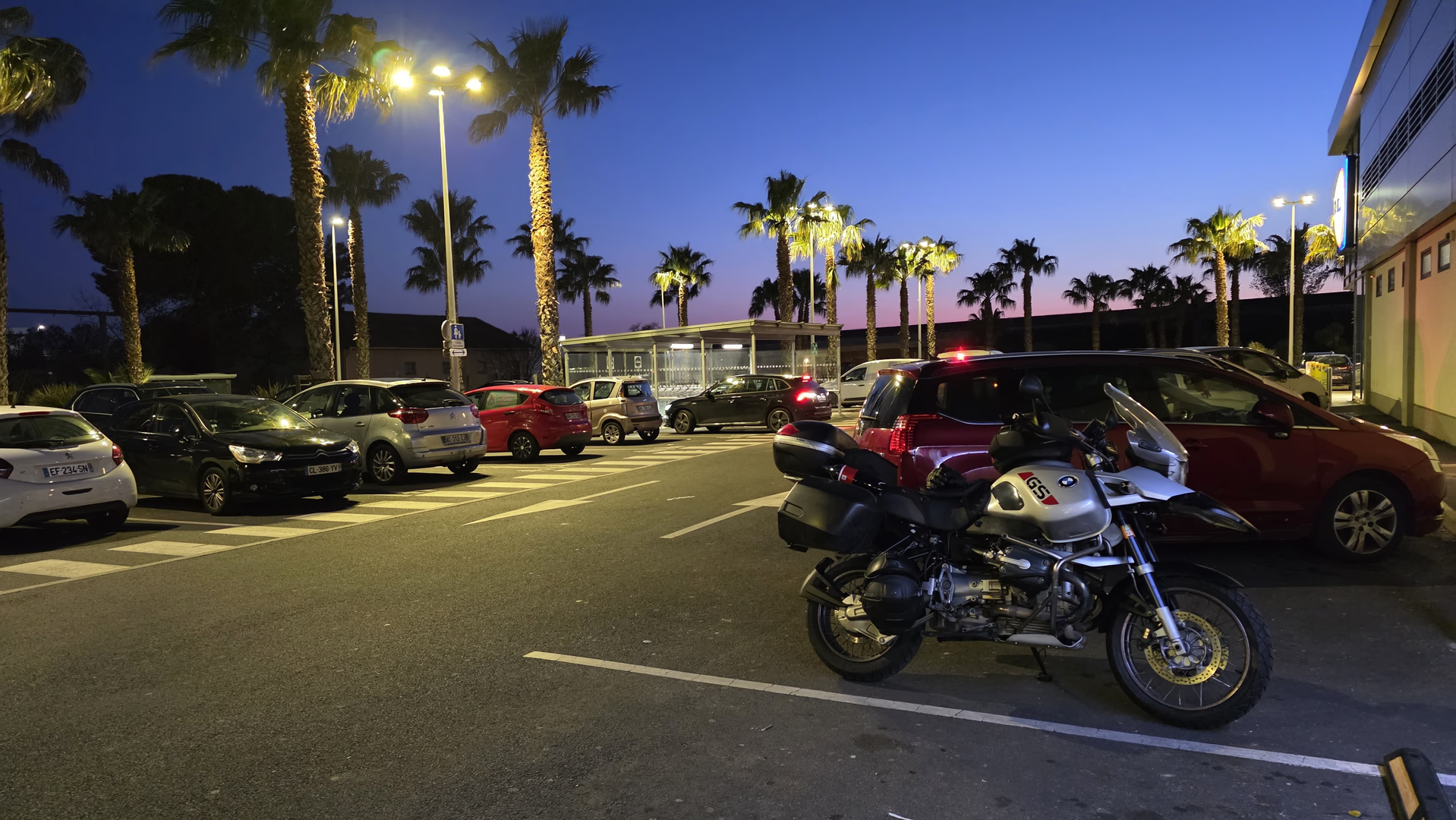
Late in the day, the road finally began to feel less like a transit corridor and more like an arrival. The landscape surrounding Béziers reflects centuries of agricultural tradition. Vineyards dominate large parts of the region, while historic villages and towns remain closely connected to the land around them. After hundreds of kilometres on the road, there was a sense that the Mediterranean world had truly been reached.
The final kilometres passed through landscapes illuminated by the warm evening light that southern France is famous for. Colours became softer, the pace of traffic slowed, and the long journey gradually came to an end. What had begun before sunrise in Germany concluded in an entirely different environment – one shaped by a different climate, different history, and a distinctly Mediterranean atmosphere.
Days like this rarely produce a single defining photograph or a single memorable stop. Instead, their value lies in the experience of crossing entire regions and witnessing the gradual transformation of Europe from north to south. They remind us that travel is not only about destinations. Sometimes the journey itself becomes the highlight.
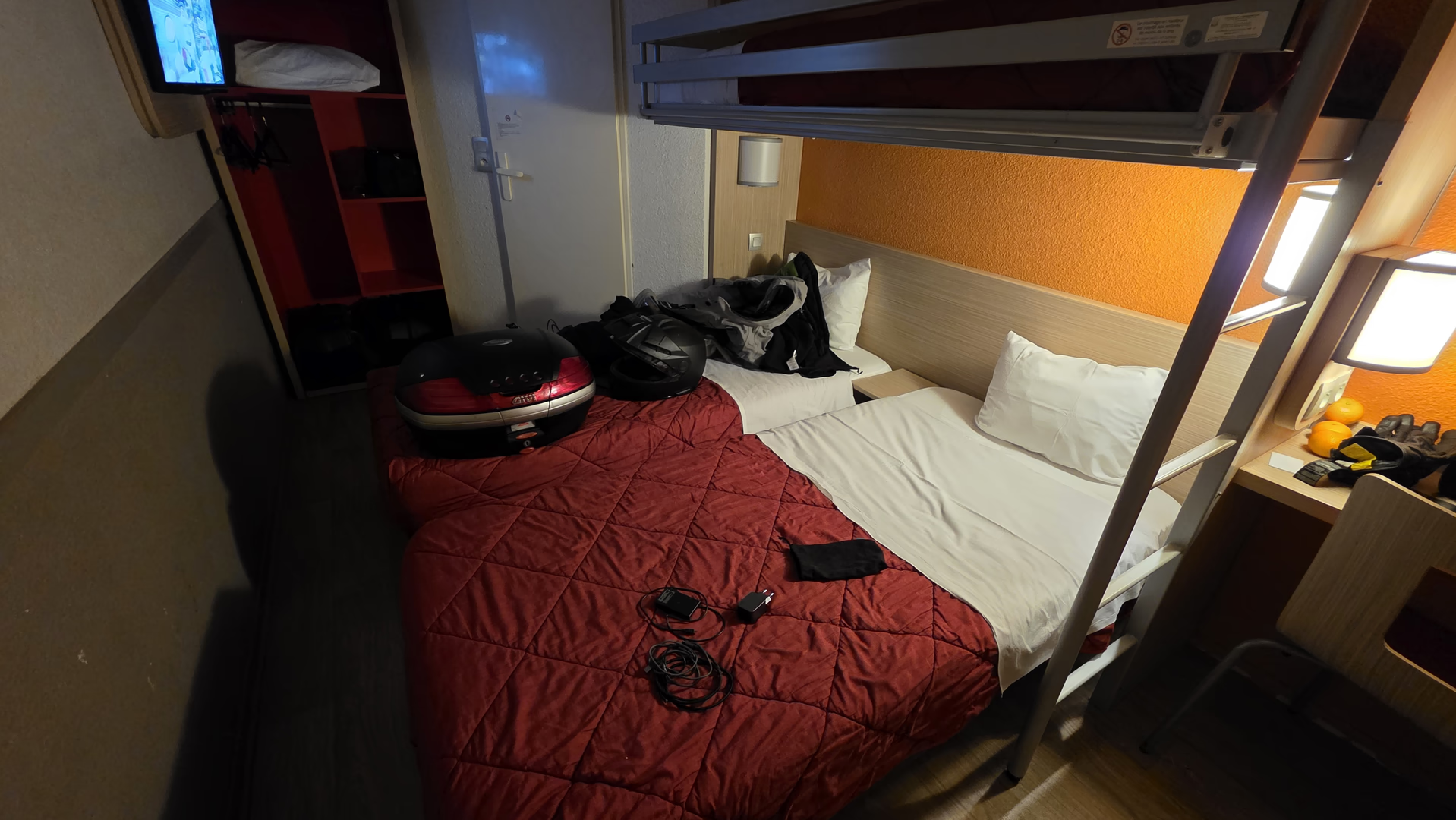
After nearly a thousand kilometres, the day ended near Béziers, surrounded by vineyards and the warm air of southern France. The road ahead would continue toward new landscapes and new experiences, but this stage had already achieved something remarkable: connecting two very different parts of Europe within a single day of travel.
Looking back, the most memorable aspect was not any specific location but the continuous change of scenery. From the forests and hills of Germany to the sunlit landscapes of Occitanie, the route offered a living cross-section of western Europe. It was a day defined by distance, movement, and the simple satisfaction of watching the world gradually change beyond the horizon.