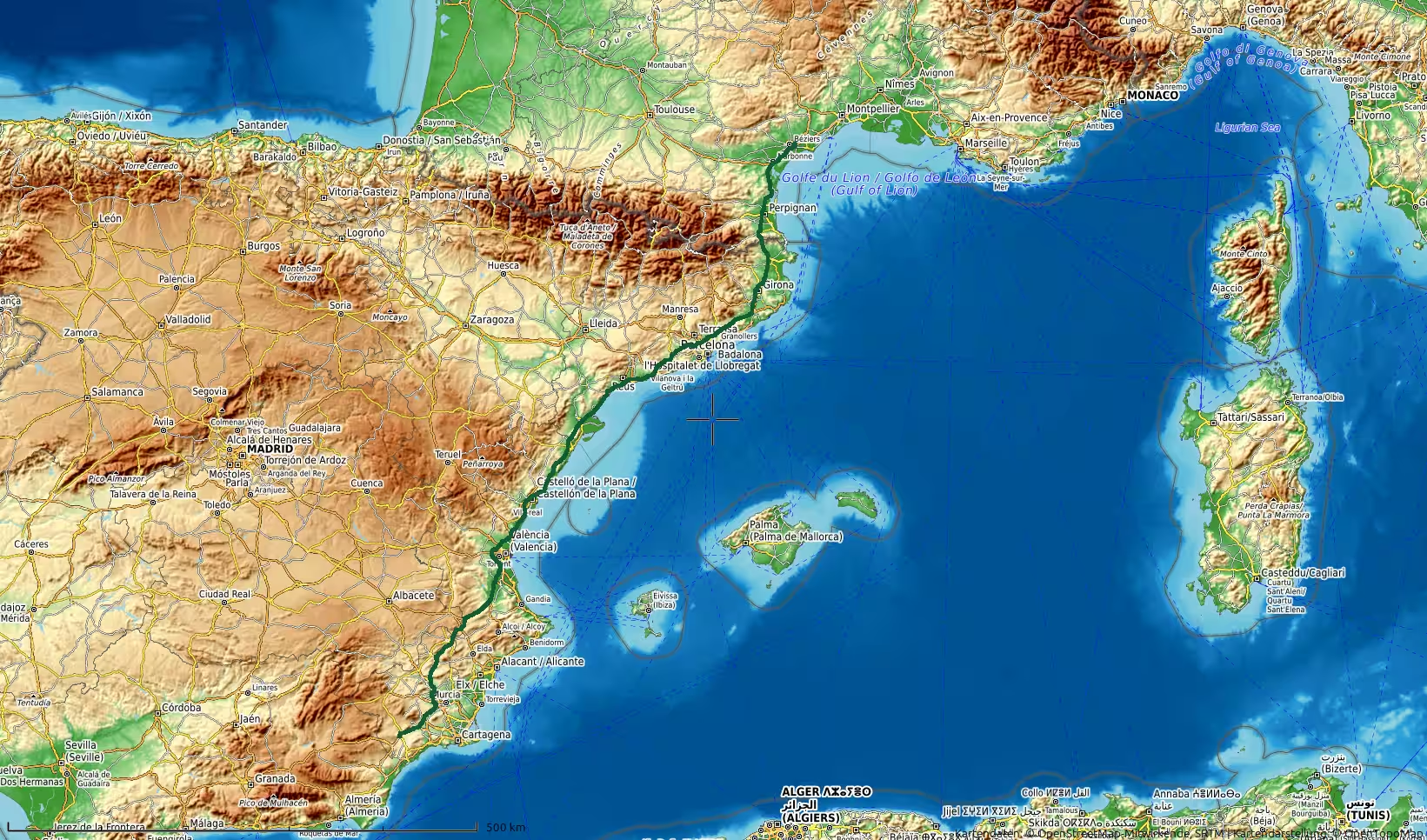
2026 Morocco – Day 2 – Murcia

Motorway in northeastern Spain with the snow-covered Pyrenees visible in the distance.

Murcia is one of Spain’s most distinctive regions, located in the southeast of the Iberian Peninsula between Andalusia, Valencia, and the Mediterranean Sea. Known for its sunny climate, fertile agricultural lands, and rich cultural heritage, Murcia offers a unique blend of history, natural landscapes, and traditional Spanish life.

Often referred to as the “Orchard of Europe,” Murcia is one of the country’s most important agricultural regions. Extensive irrigation systems, many of which date back to the Moorish period, have transformed the semi-arid landscape into a productive area known for fruits, vegetables, citrus groves, and vineyards. The fertile Segura River valley forms the heart of the region and has supported settlement and agriculture for centuries.

Murcia enjoys one of the warmest and driest climates in Europe, with more than 300 days of sunshine per year. This favorable weather has made the region a popular destination for both tourism and agriculture. Along the Mediterranean coast, known as the Costa Cálida, visitors find sandy beaches, secluded coves, and the unique Mar Menor, Europe’s largest saltwater lagoon.

The region combines a wide variety of landscapes. Coastal plains and beaches give way to rugged mountain ranges, limestone cliffs, desert-like badlands, and fertile river valleys. Natural parks and protected areas preserve habitats for numerous plant and animal species, while scenic roads provide excellent opportunities for hiking, cycling, and photography.

Display shelf with packaged Spanish pastries, biscuits, and traditional baked goods in a convenience store.
A selection of traditional Spanish pastries and sweet specialties offered at a roadside convenience store.

Murcia’s cultural identity reflects centuries of Roman, Islamic, and Christian influence. Historic towns feature impressive cathedrals, plazas, fortifications, and traditional architecture. The regional capital, Murcia City, is renowned for its Baroque architecture, lively atmosphere, and vibrant street life.

The local cuisine is closely tied to agriculture and the Mediterranean. Fresh vegetables, seafood, rice dishes, olive oil, and locally produced wines form the basis of many traditional recipes. Markets, festivals, and local celebrations remain important aspects of daily life and help preserve the region’s cultural traditions.

Today, Murcia remains one of Spain’s lesser-known but most authentic destinations. Visitors are drawn by its combination of sunshine, historic cities, Mediterranean coastline, mountain scenery, and relaxed lifestyle. Whether exploring ancient streets, enjoying local gastronomy, or discovering the landscapes of southeastern Spain, Murcia offers a diverse and rewarding experience far from the crowds of some of Spain’s larger tourist centers.

History

The history of Murcia spans more than two thousand years and reflects the many civilizations that have shaped southeastern Spain. Located along the fertile valley of the Segura River, the region has long been valued for its agricultural potential, strategic location, and access to the Mediterranean.

Before the arrival of the Romans, the area was inhabited by Iberian tribes who established settlements throughout the region. During the Roman period, Murcia became part of the province of Hispania. The nearby city of Carthago Nova, known today as Cartagena, emerged as one of the most important ports in the Roman Empire. Rich mineral resources, trade routes, and agricultural production helped the region prosper for centuries.

Fuel price display at a Repsol service station showing diesel, gasoline, and LPG prices.
Fuel prices displayed at a Repsol service station, alongside information about on-site solar energy generation.

Following the decline of Roman authority, the region came under Visigothic control before becoming part of the expanding Islamic world in the early eighth century. The Moorish period had a profound influence on Murcia and remains one of the most important chapters in its history.

In 825 AD, the city of Murcia was officially founded by Abd ar-Rahman II of the Emirate of Córdoba. The Moors developed an advanced irrigation network using canals, dams, and water management systems that transformed the semi-arid landscape into one of the most productive agricultural regions of the Iberian Peninsula. Many of these irrigation systems continue to influence agriculture in the region today.

Under Islamic rule, Murcia became a prosperous center of agriculture, trade, science, and culture. The city grew into an important regional capital and was known for its fertile orchards, craftsmanship, and intellectual activity. During the twelfth and thirteenth centuries, the independent Taifa Kingdom of Murcia briefly flourished before increasing pressure from Christian kingdoms in the north.

In 1243, Murcia became a protectorate of the Crown of Castile through the Treaty of Alcaraz. A few decades later, the region was fully incorporated into Christian Spain. The transition brought significant demographic and cultural changes as Christian settlers arrived while many Muslim communities gradually disappeared or were assimilated.

Throughout the late Middle Ages and the Renaissance, Murcia remained an important agricultural region. Its fertile lands supplied food to much of southeastern Spain, while Cartagena continued to serve as a strategic naval and commercial port.

During the eighteenth century, Murcia experienced significant economic growth. Agricultural production expanded, churches and public buildings were constructed, and much of the Baroque architecture visible in Murcia City today dates from this period. The Cathedral of Murcia, with its magnificent Baroque façade, became one of the region’s most recognizable landmarks.

The nineteenth century brought industrial development, improved transportation networks, and the expansion of mining activities, particularly around Cartagena and the nearby mountain ranges. The region also faced challenges including droughts, economic fluctuations, and periods of political instability.

Hotel room with twin beds, a desk, and travel gear arranged after arrival.
A comfortable hotel room serves as a temporary base during a journey.

During the twentieth century, Murcia gradually modernized while maintaining its agricultural identity. Irrigation projects, tourism development, and infrastructure improvements contributed to economic growth. The Costa Cálida emerged as a popular destination for both domestic and international visitors, while agriculture remained a cornerstone of the regional economy.

Today, Murcia preserves a rich historical legacy shaped by Iberian, Roman, Islamic, and Christian influences. Ancient archaeological sites, medieval fortifications, Baroque churches, historic irrigation canals, and vibrant city centers all tell the story of a region that has served as a crossroads of cultures for more than two millennia. Its unique combination of history, agriculture, and Mediterranean heritage continues to define Murcia as one of Spain’s most distinctive regions.

Geology

The geology of Murcia is among the most diverse and fascinating in Spain, shaped by millions of years of tectonic activity, mountain building, marine incursions, and erosion. Located in southeastern Spain, the region forms part of the Betic Cordillera, a complex mountain system that extends along the Mediterranean coast and represents one of the most geologically active areas of the Iberian Peninsula.

The foundation of Murcia’s landscape was created during the Alpine Orogeny, a major mountain-building event that occurred between approximately 65 and 5 million years ago. During this period, the collision between the African and Eurasian tectonic plates uplifted vast sections of southern Spain, forming the mountain ranges that dominate much of the region today. This tectonic activity continues at a low level, making southeastern Spain one of the country’s most seismically active areas.

The region is characterized by a striking contrast between rugged mountain ranges and broad sedimentary basins. Limestone, dolomite, sandstone, marl, and gypsum are common rock types throughout Murcia. Many of the mountain ranges contain folded and faulted rocks that reveal the intense geological forces that shaped the area over millions of years.

One of the most distinctive features of Murcia is its semi-arid landscape. Limited rainfall and high evaporation rates have produced extensive badlands, dry valleys, and erosion features. Areas such as the Barrancos de Gebas display spectacular erosion landscapes often compared to miniature deserts. These formations were created when soft sedimentary rocks were gradually sculpted by occasional heavy rainfall and runoff.

The Segura River plays a central role in the region’s geology and geography. Over thousands of years, the river deposited fertile alluvial sediments across the Huerta de Murcia, creating one of Spain’s most productive agricultural areas. These rich soils have supported human settlement since ancient times and continue to form the foundation of the region’s agricultural economy.

Murcia’s coastline reveals another chapter of its geological history. Along the Costa Cálida, marine erosion has shaped cliffs, coves, beaches, and rocky headlands. The region also contains volcanic features, particularly around Cartagena and the coastal mountains. Although volcanic activity ceased millions of years ago, volcanic rocks remain visible in several locations and contribute to the area’s geological diversity.

One of Murcia’s most remarkable natural features is the Mar Menor, Europe’s largest saltwater lagoon. This shallow coastal lagoon is separated from the Mediterranean Sea by La Manga, a narrow sandbar formed through the long-term accumulation of marine sediments. The lagoon’s unique geological setting has created distinctive ecosystems and made it one of the region’s most important natural landmarks.

Mineral resources have also played an important role in Murcia’s geological history. The mountains around Cartagena contain deposits of silver, lead, zinc, and iron that have been mined since Roman times. These mineral-rich formations contributed significantly to the development of the region and remain visible in historic mining landscapes.

Today, Murcia’s geology creates a remarkable variety of landscapes, from fertile river valleys and Mediterranean beaches to rugged limestone mountains, volcanic outcrops, and desert-like badlands. This diversity not only shapes the region’s natural beauty but also influences its climate, agriculture, ecosystems, and human history, making Murcia one of the most geologically interesting regions of Spain.

Things to see

Murcia offers a remarkable combination of historic cities, Mediterranean coastline, mountain scenery, natural parks, and cultural landmarks. From ancient Roman heritage to spectacular coastal landscapes, the region provides a diverse range of attractions for visitors.

  • Murcia Cathedral
  • Plaza del Cardenal Belluga
  • Real Casino de Murcia
  • Episcopal Palace of Murcia
  • Salzillo Museum
  • Segura River Promenade
  • Murcia Old Town
  • Monteagudo Castle
  • Sanctuary of Fuensanta
  • Cartagena Roman Theatre
  • Cartagena Historic Center
  • Cartagena Naval Museum
  • Castillo de la Concepción
  • Roman Forum District of Cartagena
  • Port of Cartagena
  • Mar Menor Lagoon
  • La Manga del Mar Menor
  • Cabo de Palos Lighthouse
  • Calblanque Regional Park
  • Sierra Espuña Regional Park
  • Barrancos de Gebas
  • Ricote Valley
  • Cieza Peach Blossom Landscapes
  • Caravaca de la Cruz
  • Lorca Castle
  • Águilas Castle
  • Costa Cálida Beaches
  • Cabo Cope Regional Park
  • Mazarrón Bay
  • Bolnuevo Erosions
  • Mining Landscapes of Cartagena-La Unión
  • Calas of Cartagena
  • Salinas of San Pedro del Pinatar
  • Villavieja Archaeological Site
  • Almadenes Canyon

One of the region’s highlights is Cartagena, a city with more than two thousand years of history. Visitors can explore the remarkably preserved Roman Theatre, ancient fortifications, museums, and a vibrant waterfront shaped by centuries of maritime activity.

Nature lovers should not miss the Mar Menor, Europe’s largest saltwater lagoon. Its calm waters, sandy beaches, and unique ecosystems make it one of the most distinctive natural attractions in Spain. Nearby, the narrow strip of land known as La Manga separates the lagoon from the Mediterranean Sea and offers beaches on both sides.

The mountainous interior provides excellent opportunities for hiking and outdoor recreation. Sierra Espuña Regional Park features forests, dramatic viewpoints, and extensive trail networks, while the nearby Barrancos de Gebas showcase spectacular badlands landscapes often described as Murcia’s “moon landscape.”

The historic city of Murcia itself offers impressive architecture, lively plazas, museums, and traditional markets. The Cathedral of Murcia and the ornate Real Casino de Murcia are among the city’s most celebrated landmarks.

Along the Costa Cálida, visitors can discover hidden coves, cliffs, beaches, and protected coastal areas such as Calblanque Regional Park and Cabo Cope. These landscapes provide some of the most beautiful and least developed stretches of coastline in the Mediterranean.

Whether exploring Roman ruins, mountain parks, coastal lagoons, historic cities, or Mediterranean beaches, Murcia offers a diverse range of attractions that showcase the natural and cultural richness of southeastern Spain.