The muezzin began his daily work again quite early, but around 06:00 I didn’t really care. At about 07:30 I got up, after noticing that the English girls had already left. I went up to the roof terrace with almost the same result as the day before—only the Italians were missing.
I had some pita bread and jam, accompanied by plenty of tea and cigarettes. Somehow, hardly anyone was awake at that time, even though the hostel was quite full. From the alleys below, I could once again hear the typical sounds of people, vendors, and moped drivers.
I went to the bathroom to take a shower. This turned out to be one of the few warm showers of the trip—or at least one of the few that stayed warm consistently.
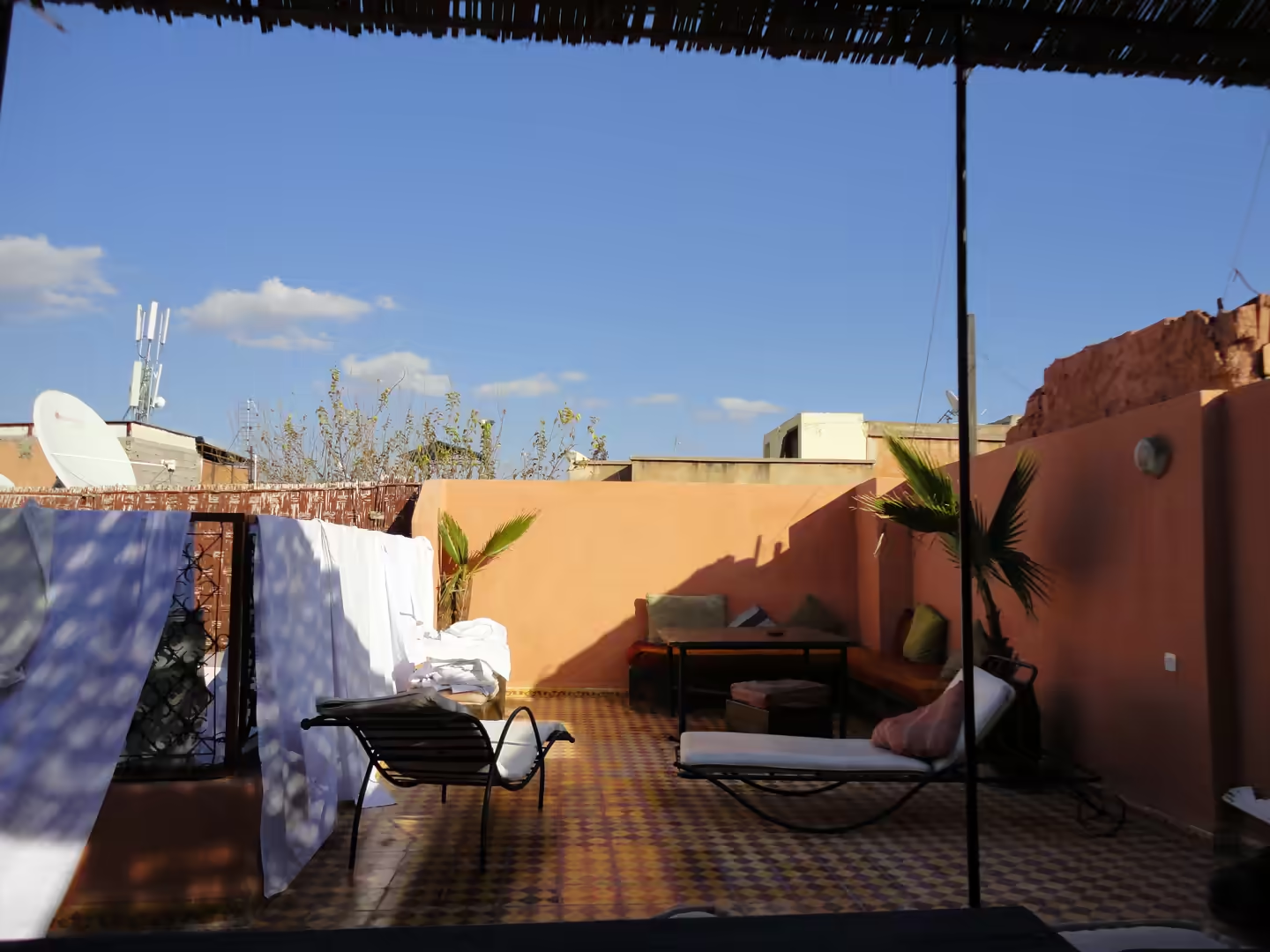
I also took some clothes with me, as I didn’t know what was going to happen. I hung them on the roof terrace in the bright sunshine. Then I went to the Jemaa to drink an orange juice. The freshly squeezed orange juice there is simply unique and incredibly refreshing. However, I wouldn’t want to be one of those people squeezing hundreds of oranges by hand every day—the acid alone must do terrible things to their hands.
At the edge of the Jemaa I looked for a restaurant where I could have a proper breakfast. For 25 dirhams there was coffee, an omelette, and flatbread. While eating, I watched some locals engaged in what looked like a business meeting at the same restaurant. Sitting outside in the sun was quite pleasant, but flies and bees were extremely annoying and constantly tried to get at my coffee and sweet pastries.
I still had the 24-hour hop-on hop-off bus ticket and decided to use it for the route outside the city. But instead of going directly to the bus stop at the Jemaa, I walked north through the medina toward the northern gate, where the bus station was supposed to be.
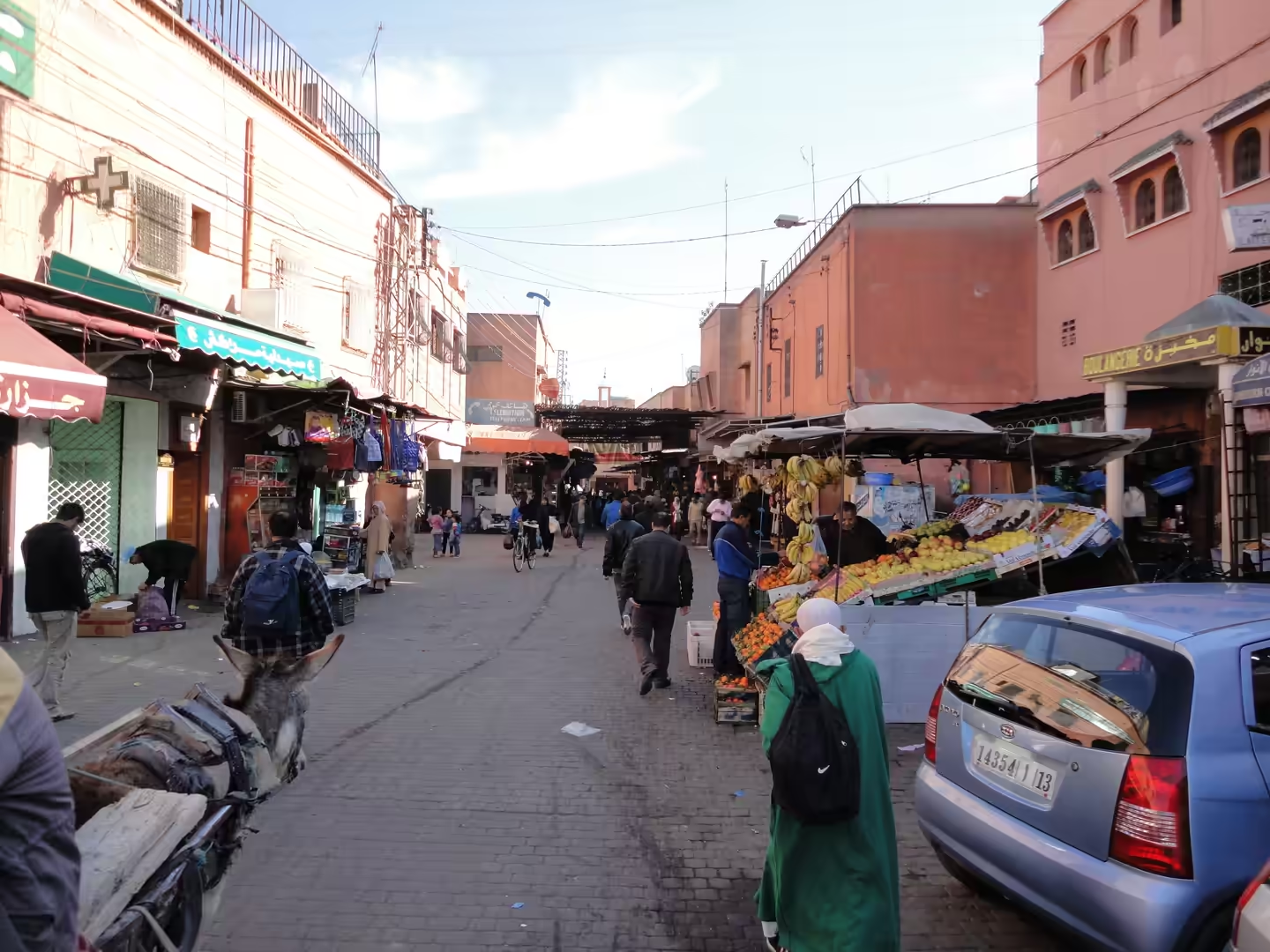
The northern medina once again offered all kinds of food, some of it requiring a bit of getting used to—entire halves of cattle, heads, wings, and the like. At the northern exit there was a large square. Looking to the right, I saw wooden stalls and the bus station, clearly recognizable by the crowds and the many buses.
I wanted to find out how to get to Essaouira, which I had chosen the evening before as my next destination. So I went into the bus station, not without being constantly approached by people. Later this would no longer happen, but for now it did. I stayed firm and headed toward the appropriate counter after taking a few minutes to look around.
Each destination had its own counter, depending on the bus company. The bus station itself looked a bit neglected, but it offered everything a traveler might need. Here it was already obvious that many travelers with limited financial means were on the move. At the counter I received a handwritten note with the departure time and route for about 85 dirhams. I had my doubts. The note was about half the size of a tram ticket and a quarter as thick. I wasn’t sure it would actually work—but it did.
I then went back the same way toward the Neustadt to the bus stop from the day before. This time I had to wait quite a long time until the correct sightseeing bus arrived.
The upper deck was already full, so I sat down in the air-conditioned lower area. The temperature was already around 25 degrees in the shade. The audio guide had the same problems as the day before: sometimes it worked, but most of the time it didn’t. I rarely saw what was being talked about, which was a pity, as it could have been much more interesting.
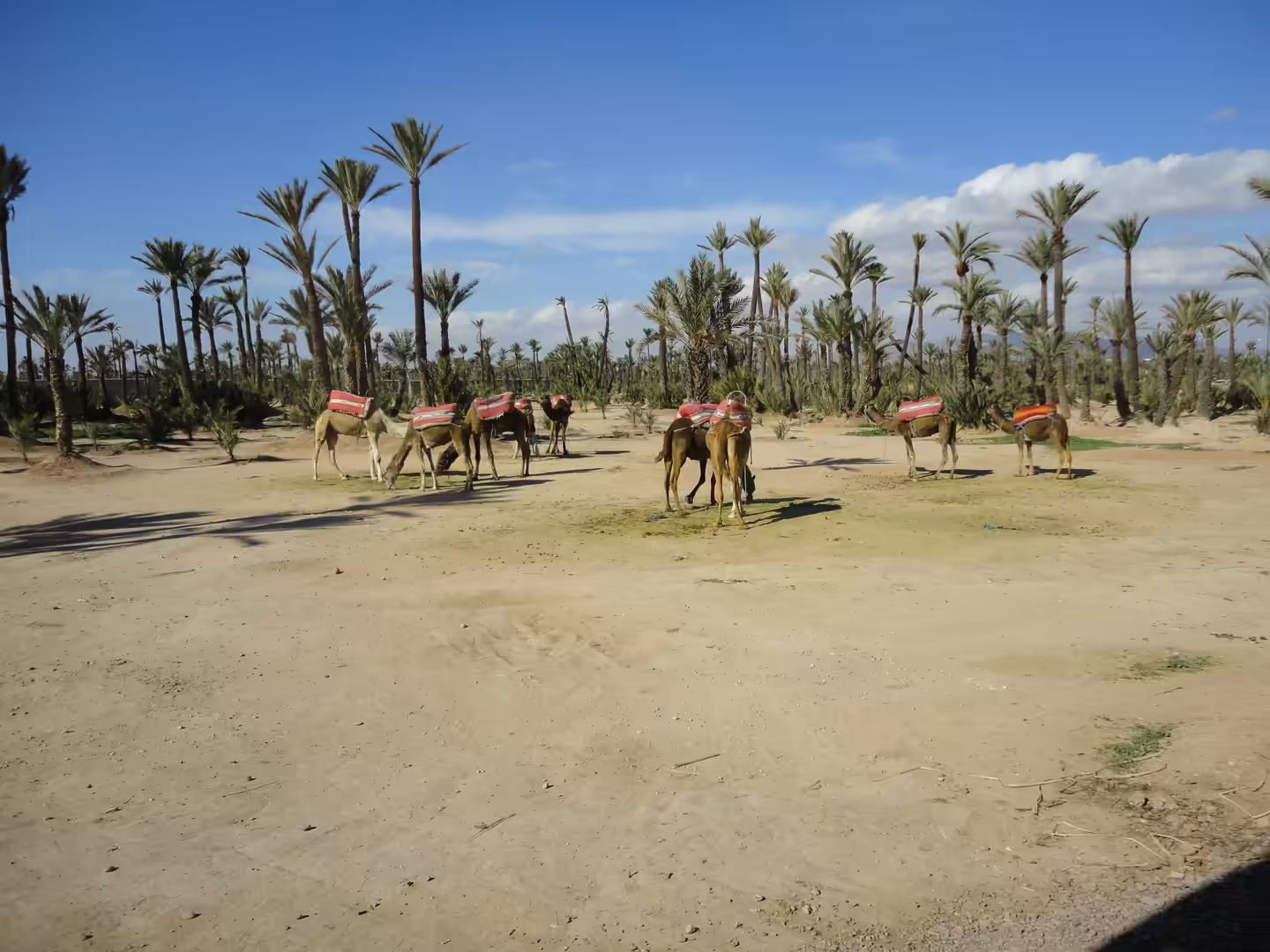
What I do remember are the palm groves outside the city and the fact that Marrakech is an oasis city, kept alive by about 700 km² of ancient irrigation systems. The wells and canals are hidden beneath inconspicuous mounds and hills, especially visible throughout the palm groves. There were also camels waiting along the way, as I jokingly called them.
We continued through even more upscale areas, where Hollywood stars and other celebrities could hide behind meter-high walls surrounding villas and half-palaces. Then came the Marrakech golf course, which was constantly being watered, complete with several small ponds. Eventually the bus returned to the stop in the Neustadt, where I got off and headed back toward the medina.
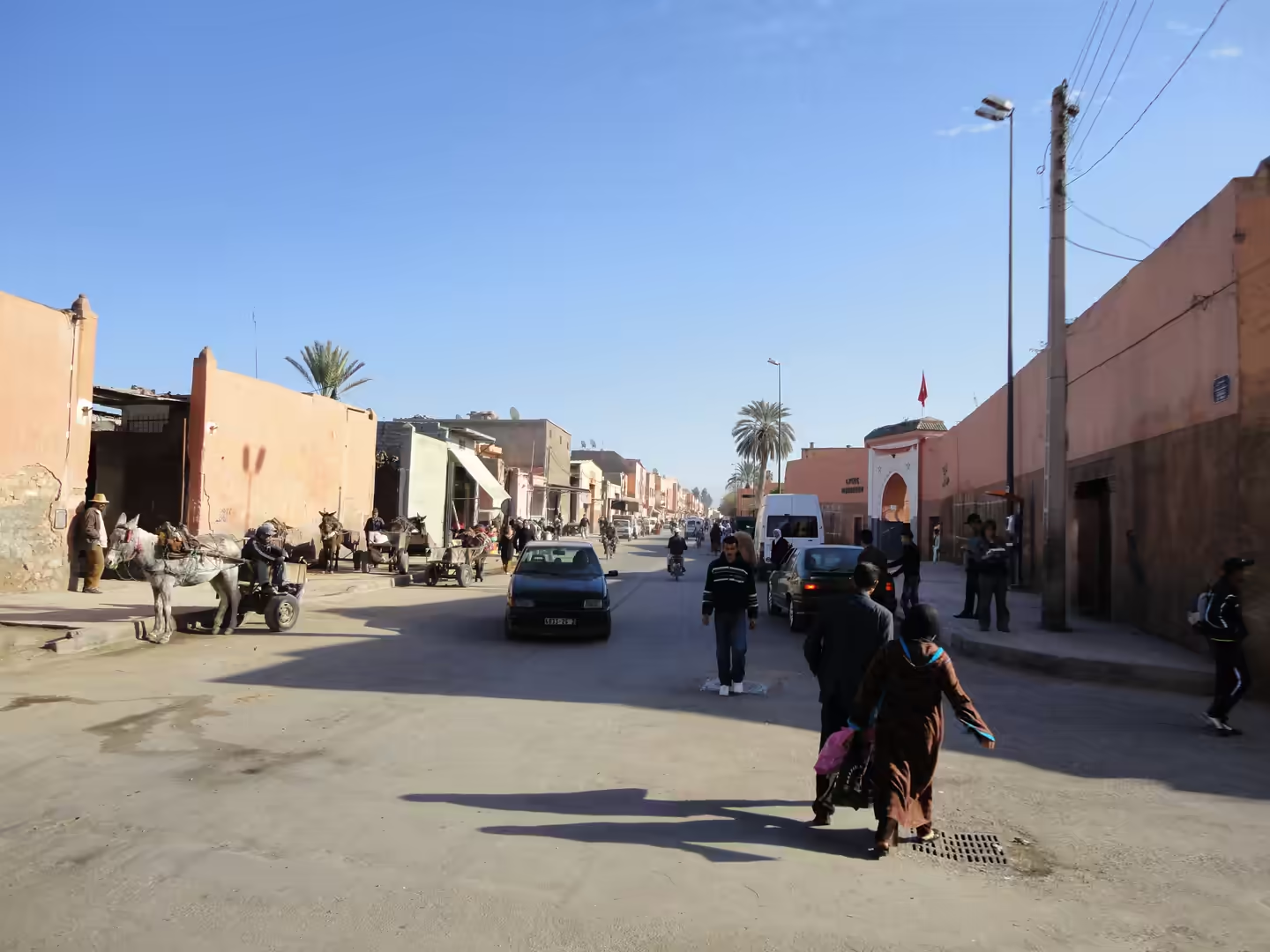
The many Western shops made me uncomfortable. Based on a tip from the English women the day before, I bought Marquise cigarettes, which at 18 dirhams were supposedly the cheapest smokable ones. I strolled through the medina for a while and then returned to the hostel.
This time there was lively activity. On the roof terrace, the two Americans reported on their last party night, which they had only finished around 06:00. Two more Englishmen had arrived, both looking as if they had just come from a party—which, as I later learned, they had. They had been at a party back in England when they realized they had booked a flight to Marrakech weeks earlier. Now they were there, sitting on the roof terrace, clearly suffering and not really sure where they were.
I walked through the medina again, but in the end everything looked the same on every corner. If I had had more space to take things home, one or two dust-collectors might have come with me. But I didn’t feel like buying anything in such a tourist hotspot. So I sat down on a bench in front of the Jemaa and watched the people.
A short while later, a small scuffle with kung-fu-like movements broke out, probably caused by a collision with a bicycle. A short walk through the more crowded peripheral areas didn’t reveal anything new—at least nothing I still remember.
Back at the hostel, new guests introduced themselves. Among them were an Australian couple, an older globetrotter traveling with his wife, and a woman from Latvia. Conversations sprang up about everything imaginable. Somewhat confusing were the three different varieties of English at one table: British, American, and Australian.
The older globetrotter talked about how different travel had been in the 1960s, when there were no direct telephone connections and everything happened by ship. If you got into trouble, help could take weeks to arrive. We smoked another shisha, and I talked in detail with the Latvian woman about her country, as it was unusual to meet someone from there in Marrakech. She didn’t really feel safe in the streets and alleys outside.
I could understand that, as I had felt uneasy at first as well. But in reality, those fears are largely unfounded. The real dangers are the same as in any tourist hotspot: being overcharged or possibly theft. You just have to pay a bit of attention. It’s also not recommended to carry an iPhone openly.
She planned to go to Essaouira the day after next; I intended to go the next day. After that I would certainly continue on, so we wouldn’t see each other again. After endless conversations, we finally went to bed sometime around 02:00.