In the end, the morning still dragged on until about 09:00 before I finally got out of bed. That didn’t really matter, as my bus wasn’t scheduled to leave until around 13:00 and I wasn’t quite sure what else I wanted to see by then.
So I got ready, grabbed my still not completely dry clothes from the terrace, recharged all my batteries, and finally said goodbye to Maschud. This time I skipped the obligatory breakfast at the Jemaa.
I then walked north again through the medina toward the exit where the bus station is located.
On that morning it still took until about 09:00 before I finally got out of bed. That didn’t really matter, as my bus wasn’t scheduled to leave until around 13:00 and I didn’t really know what else I wanted to see by then. So I got ready, grabbed my still not completely dry clothes from the terrace, recharged all my batteries, and finally said goodbye to Maschud. This time I skipped the obligatory breakfast at the Jemaa and walked north through the medina toward the exit near the bus station.
Along the way there was once again all kinds of traffic and fresh goods to see: fish, animal heads, innards, birds, vegetables, and much more food that takes some getting used to. Since I hadn’t eaten anything yet and was in the mood for coffee and cigarettes, I sat down at a café on the intersection near the bus station. The coffee cost about one euro and was, as usual, very strong. As I still had time, I ordered a second one and spent the time sitting in the sun, drinking coffee, smoking, watching people, and writing travel notes.
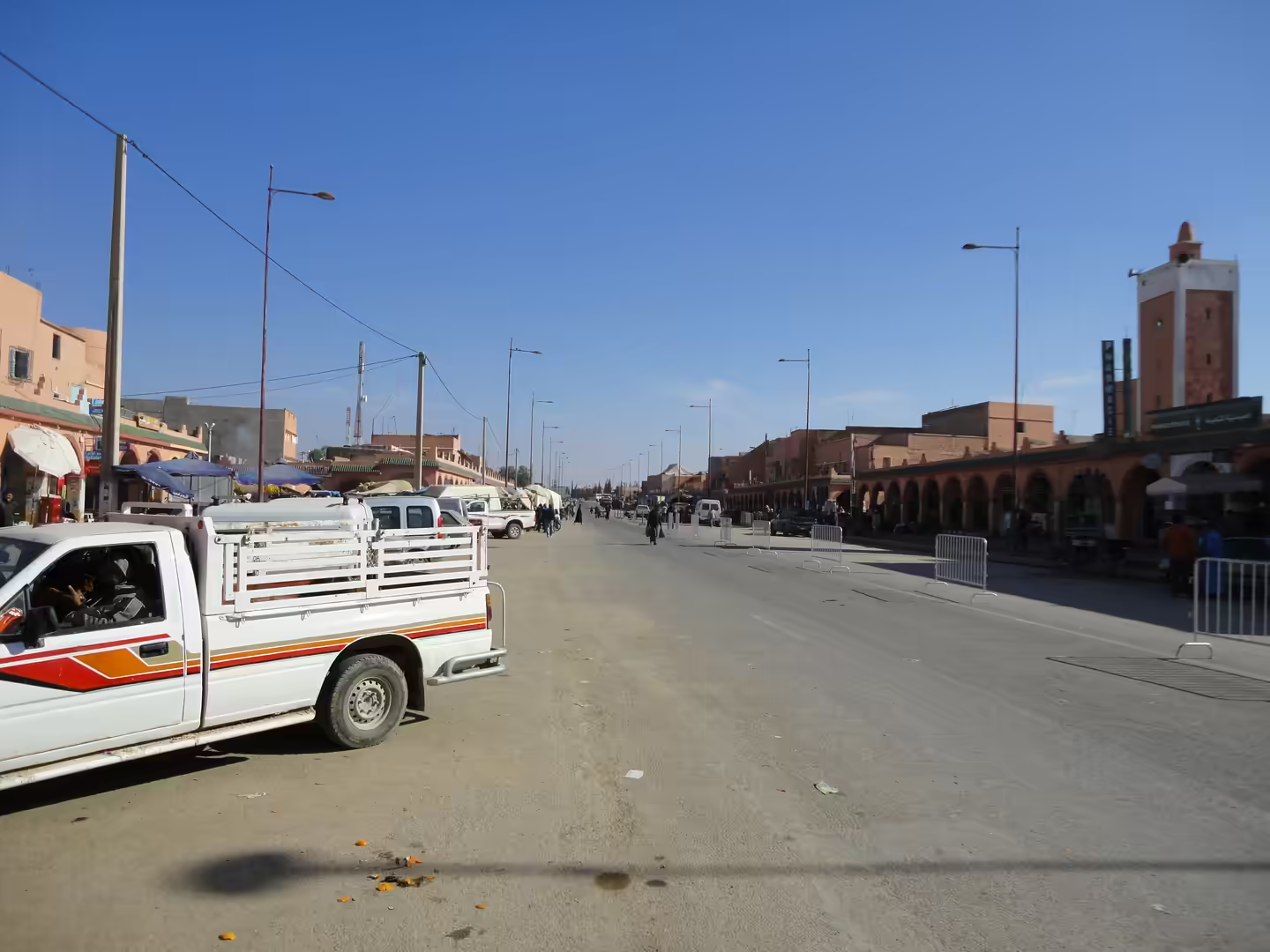
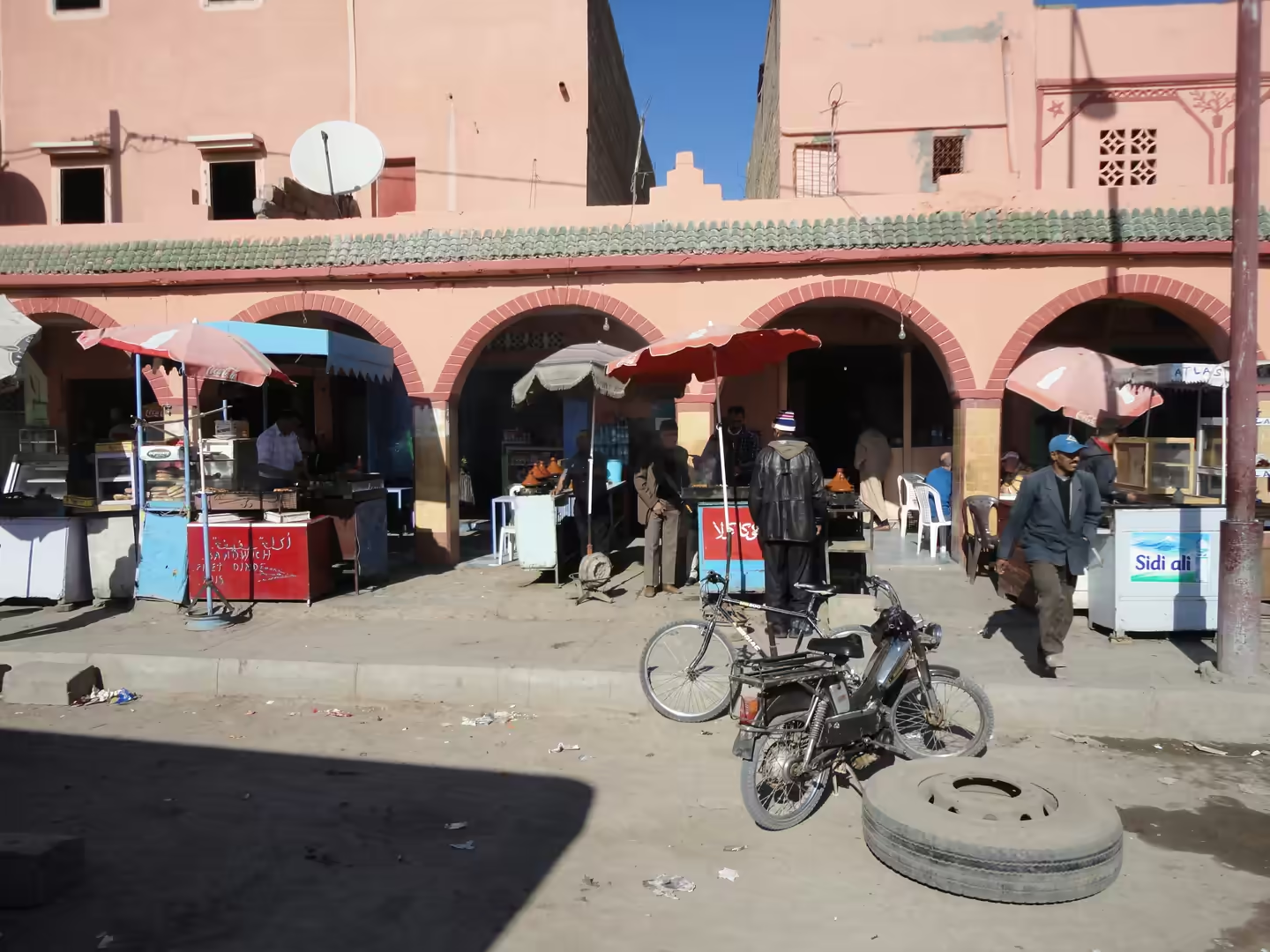

Eventually I had to go to the toilet, which I remembered just in time. It was one floor up, and it must have been amusing for the others to watch a 205-cm-tall man with a full backpack squeezing through what felt like 1.50-meter-high passages. The toilet itself was no higher and typically Arabic.
I was still uneasy about the strange bus ticket I had bought the day before, so this time I pushed more decisively through the people trying to sell tickets. The bus was indeed standing at the correct platform, and for about 25 dirhams my luggage was loaded into the storage compartment underneath. I had actually wanted to keep it with me and had already taken a seat, but I was forced to put it below. I wasn’t prepared for that yet. Later I would always keep all important items—passport, tickets, netbook—in a separate plastic bag with me, to avoid constantly worrying about my backpack.
I stood outside the bus for a while, where an American was waiting with his girlfriend. Both looked alternatively dressed and said they were already there for the fifth time and were traveling around the area again. They seemed completely relaxed about their luggage, which helped me relax as well. The bus looked somewhat worn, but I know my own car and what others think about it—so it fit.
Eventually we were told to board, as we were going to depart slightly late in the direction of Essaouira. The trip was supposed to be about 200 km. In retrospect, the departure process was always the same: first the engine started, then nothing happened for a while. More passengers arrived and the bus slowly filled up. Then came the women I later jokingly called “holy women,” who wished you a good journey in exchange for a dollar. Either before or after that, someone appeared selling bread or pastries. Then more people got on or off, the bus crept forward at walking speed, honked several times, stopped again, and only then actually set off. Depending on the stop, this procedure could take 15 minutes or more.
The bus moved slowly through Marrakech’s traffic chaos. Gradually the houses became smaller and the landscape more barren. Eventually the bus reached a steady speed, perhaps around 80 km/h. When the houses thinned out and the road stretched straight toward the west, it became very clear that Marrakech is an oasis. Not that I hadn’t known that before—but leaving the city, you really see the land becoming increasingly dry and desolate. The houses grew poorer as well. Clay huts didn’t appear yet, but they would later.


The bus made alarming noises when braking, suggesting the brake pads were not in the best condition. But that didn’t really matter—it always stopped somehow, and the speeds were low anyway.
After about two hours there was hardly any vegetation left. What had first been fields—then increasingly barren ones, with occasional palms and no rivers or streams—turned into desert. We stopped in a village. Later it became clear that on long routes the bus always makes a break in such villages. The bus had no air conditioning, which didn’t bother me; with temperatures of around 30 °C inside, it was still quite comfortable.
Most passengers got off to buy something to eat. I wasn’t used to this routine yet and stayed near the bus, unsure when it would depart again or whether someone might leave with my backpack. There were also stops on request along the way, and sometimes people were picked up directly from the roadside. I never fully understood how that system worked.
I was content with cigarettes and watched the others and a meat skewer vendor. After about 30 minutes we finally continued. Suddenly the landscape became hilly, and the vegetation noticeably greener. First a few green patches, then suddenly wide green meadows with small olive trees. The houses also looked significantly better again. Along the road were many signs advertising argan oil. Goats climb the argan trees and eat the fruits; the oil is extracted from the kernels afterward. It’s not cheap.
After another curve we drove through the new town of Essaouira. Many new buildings and construction projects showed lively real estate activity. About ten minutes later we arrived at the bus station, which could hardly have been more different from Marrakech’s. It was basically just an open square with a small building containing a café, a wall, and about five buses.
At first I didn’t really know what to do in this dusty, deserted place. There were hardly any shops. A few donkey cart operators waited for customers—the donkeys themselves being the actual owners of the carts, transporting travelers’ luggage somewhere. I tried using my guidebook again.
I had imagined the city very differently. I decided to walk toward the beach and the medina, as I wanted to see the sea. I still didn’t know what Jimi Hendrix had been doing here in the 1970s. Passing a few shops and a small market, I walked through a gate into the medina. Tourists were clearly visible, recognizable by their Western clothes and luggage, which made me feel less alone.
I wandered through an area that the guidebook warned about, supposedly frequented by drunk people targeting tourists at night. At that time it was completely empty. After another five minutes I reached the tourist area near the city wall and harbor. I kept searching the guidebook for the hotel I had planned to stay in, but either it no longer existed or I had missed it. Perhaps I was already standing right in front of it.

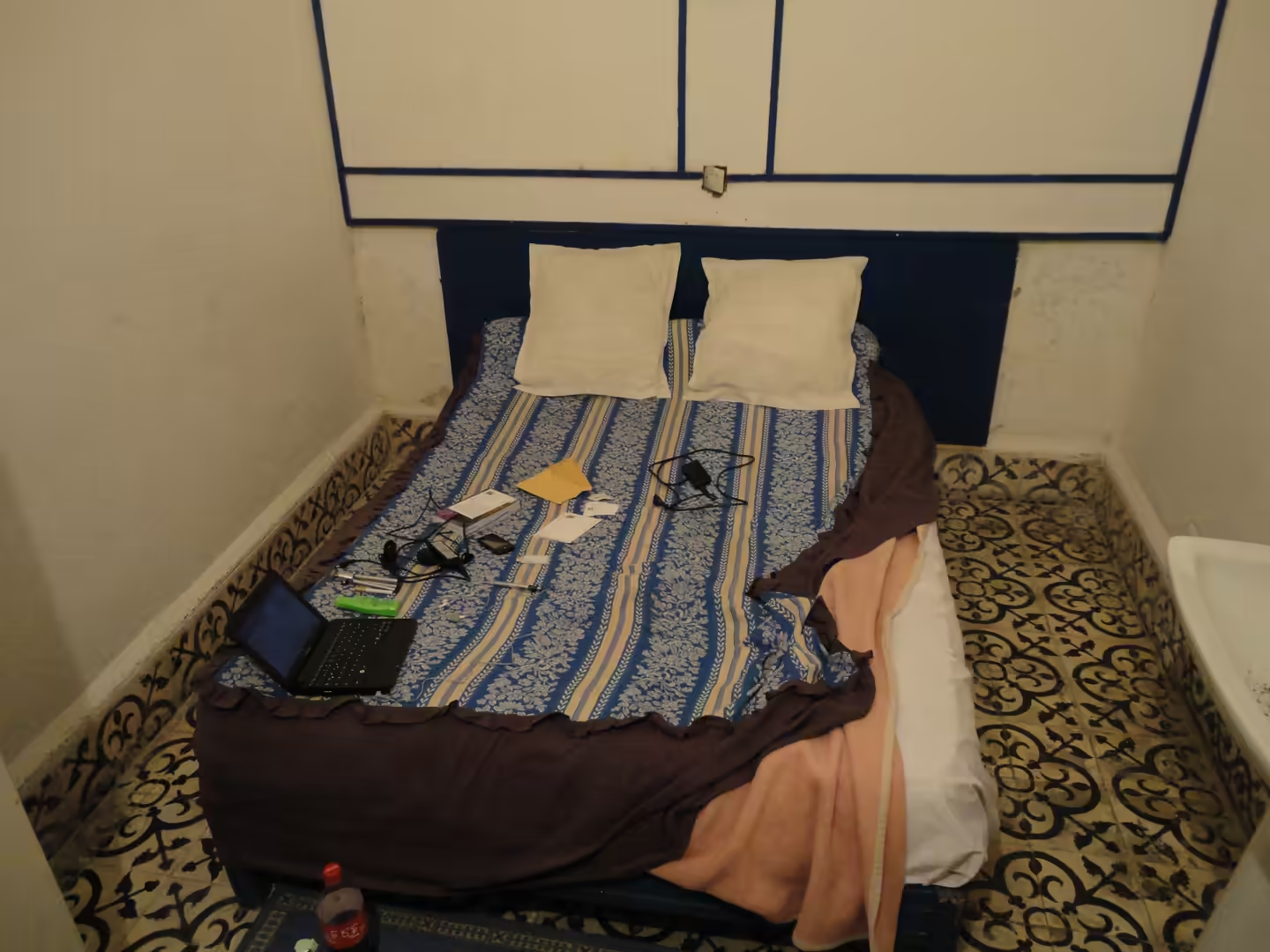
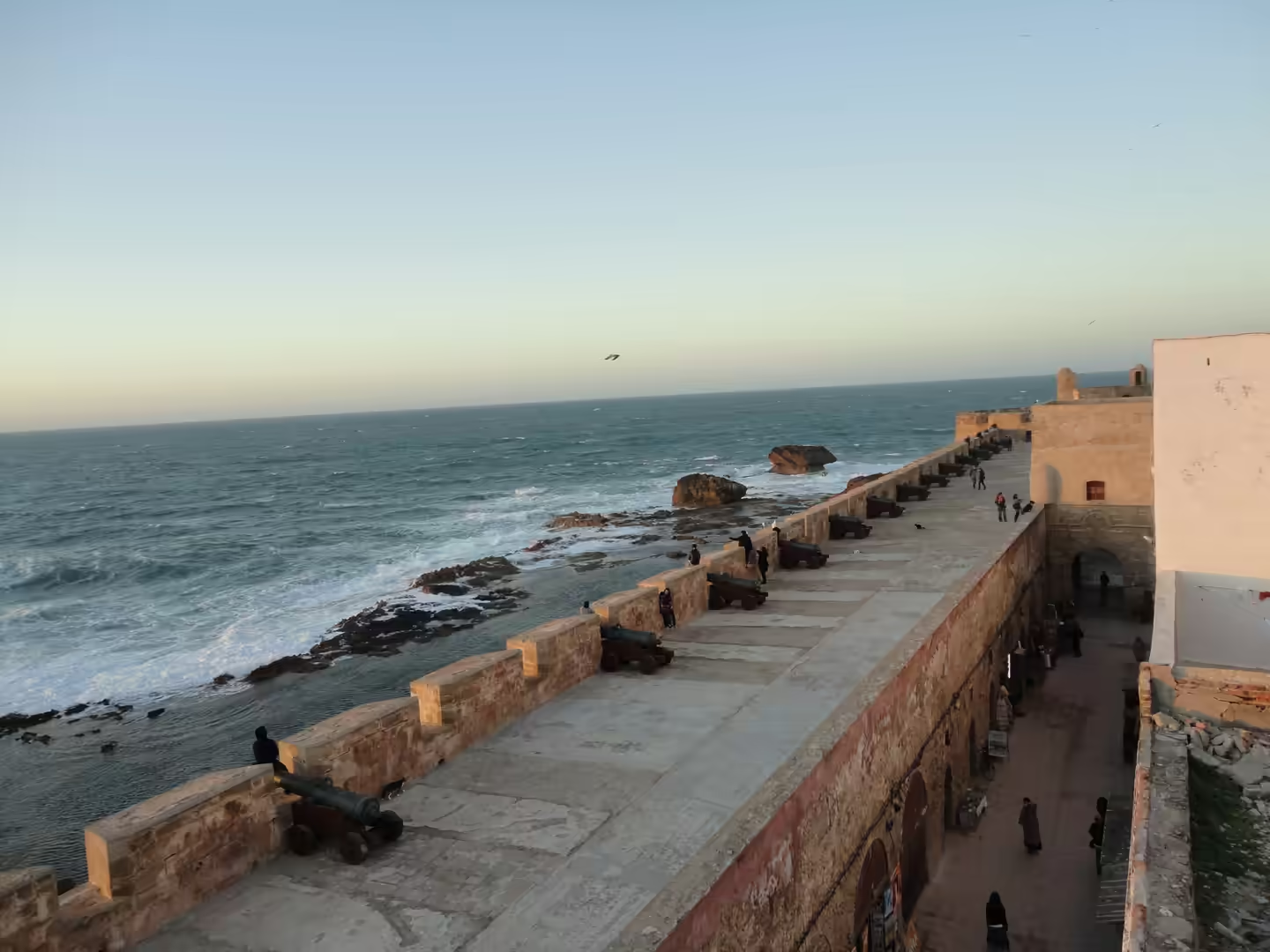
In any case, I took a hotel directly at the coastal wall, from whose roof terrace you could see the cannons and the sea. At reception I was offered a room for about €10. I had hoped for something cheaper, but that was also possible. Later it would turn out that I probably got the worst room. The hotel had clearly seen better days. At first glance, I liked the room. I hadn’t yet learned to look more closely.
I unpacked my things and went out again to explore before sunset. There was wind everywhere—strong drafts at every corner. I had been warned about this, but it quickly became clear that this was not a place I wanted to stay long.
I walked toward the harbor, where there was a large open square. A few tourists were around, along with shops selling sandwiches and omelets at fairly high prices. Anyone expecting a great sandwich would be disappointed. At the harbor it was even windier. I briefly sat on a wall by the water and watched fishermen unloading their catch directly into nearby fish stalls. Seagulls were everywhere. At that moment I suddenly realized how high the probability of being hit by bird droppings was, so I moved on.
I wandered past the small harbor stalls. Compared to Marrakech, the place felt abandoned. There were perhaps three fish grill stalls and three orange juice stands. I skipped the fish and bought a juice from one vendor who actually used a proper press—and even gave me three oranges. Strange figures carrying bags with something clearly containing alcohol walked toward the sea wall. Everything smelled intensely of fish and decay. Garbage lay scattered among the rocks by the water.
I took a few photos of the crescent-shaped beach and the harbor. It became steadily colder. Here by the sea, temperatures were much lower than in Marrakech, 200 km away.
Walking back along the main road toward the medina exit, more and more people appeared. What struck me immediately was how quiet the call to prayer was here compared to Marrakech—barely audible, if at all. After nightfall the alleys filled quickly, especially the short main street. Shops everywhere sold items made from the region’s distinctive wood, which is now becoming scarce and therefore not recommended to buy.
In a small side-street shop, I became interested in a wooden puzzle box. The seller spoke English and challenged me to open it. Despite many attempts, I couldn’t figure it out. He showed me the mechanism—quite complex—and despite that, I immediately forgot how it worked. Outside, similar items were sold everywhere for about one euro. I eventually bought a small box anyway.
The journey had just begun, and I still had the 10-kg limit for my return flight. Space in the backpack was tight. I had only now begun truly living out of it. Managing belongings strategically on such a trip was a challenge I hadn’t faced before. I packed all important items—netbook, documents—into plastic bags that could be easily removed and carried separately, especially on buses or taxis. Losing clothes wouldn’t have bothered me.
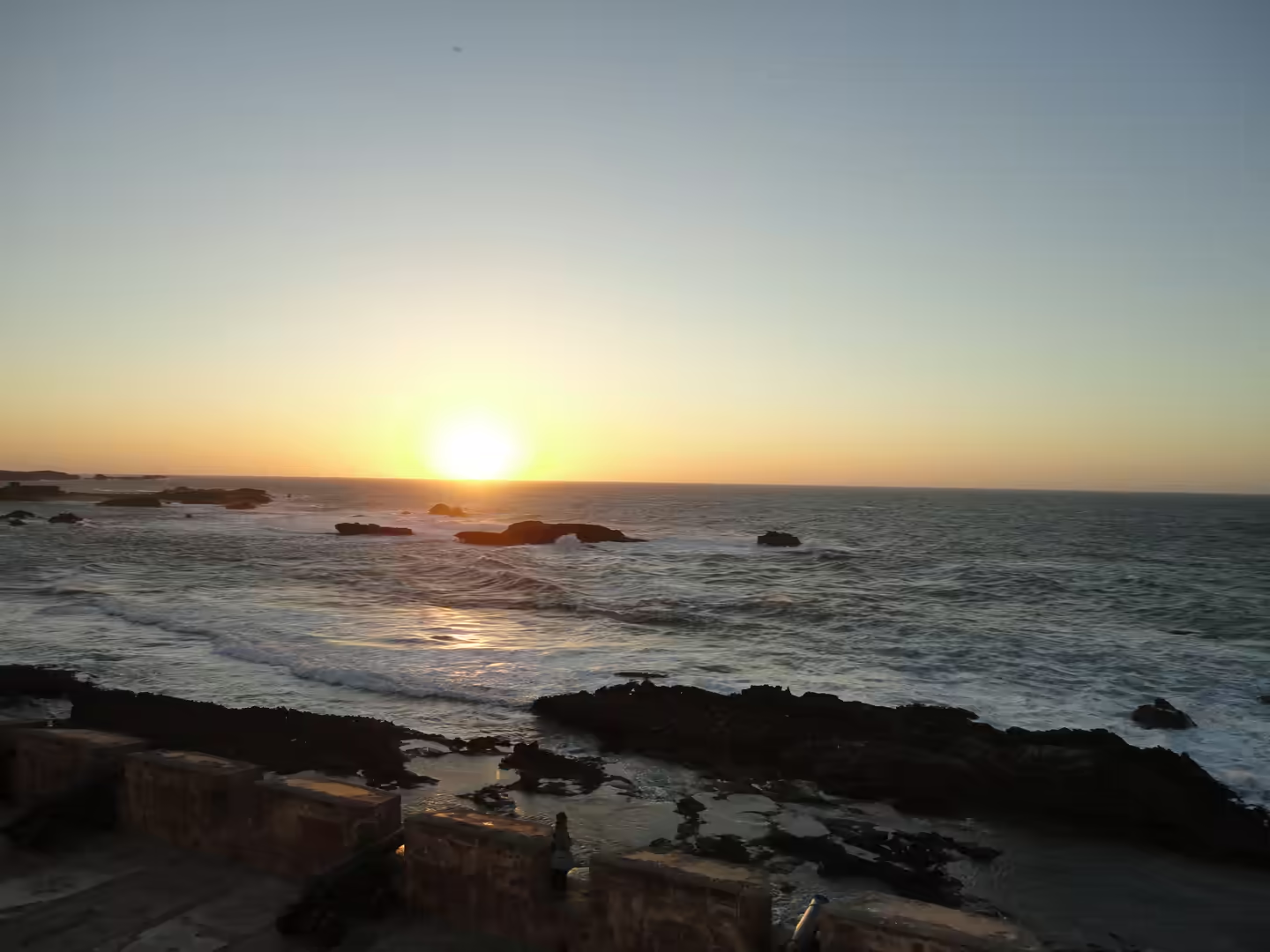
The green plastic bags didn’t look like a proper daypack, but they worked. I returned to the hotel and went straight to the roof terrace to photograph the sunset over the sea. I thought about two years earlier, when I had sat on the opposite shore, the sunset behind me. A couple sat nearby with a bottle of wine, watching the same scene.
Back in the room, I unpacked to charge my devices. That’s when I learned an important lesson: a socket doesn’t necessarily mean electricity. No matter what I did, nothing came out of the hole in the wall. The only visible wiring was a light bulb dangling from the ceiling. I thought of a light-bulb-to-socket adapter—but of course I didn’t have one.
The room was extremely drafty. Above the door was a hole about 10 × 10 cm, and another one in the opposite wall. I stuffed coins wrapped in clothes into the gaps to block the wind, which eventually worked. After that, and after washing my clothes, I went out once more to stroll through the alleys, explored the medina almost completely, and returned to the room.
I fell asleep in the cold room under a thin blanket, listening to the sound of the sea. During the night I woke several times, freezing, as the wind blew through me.