I woke up around 09:00. It was bitterly cold, and the wind was still whistling through the holes in the walls. The sea was loud as well. The laundry I had washed the evening before was not dry at all because of the humidity by the sea.
I went to the shared shower, then packed my things and realized that my digital camera had hardly any battery left. The laptop wasn’t doing much better. I cursed the socket once again and left the shabby room in search of sunlight.
I walked along the city wall through the area the guidebook had warned about, once again toward the center of the medina, and finally headed back toward the bus station, which was about ten minutes outside the medina walls.
This time I wanted to try something new, so I didn’t buy a bus ticket in advance. It was already around noon. The day before, when I arrived, I had noticed bus drivers loudly shouting their destinations. Getting to Agadir turned out to be very easy. After about five minutes of waiting, I heard the shouting and went to the bus. I asked how much it cost and when it would depart. The trip was about 80 dirhams, and the assistant wanted a small “coffee bonus.” Luggage in the storage compartment cost an additional 15 dirhams. The day before I would have been annoyed by such customs, but this time I didn’t care. My luggage—and I—were safe.
As with the previous day, it took a while before the bus finally left, much later than announced. I had taken my last three photos in the city beforehand, so during the journey the digital camera and netbook were no longer useful. Instead, I wrote my travel notes and planned the next steps in the guidebook.
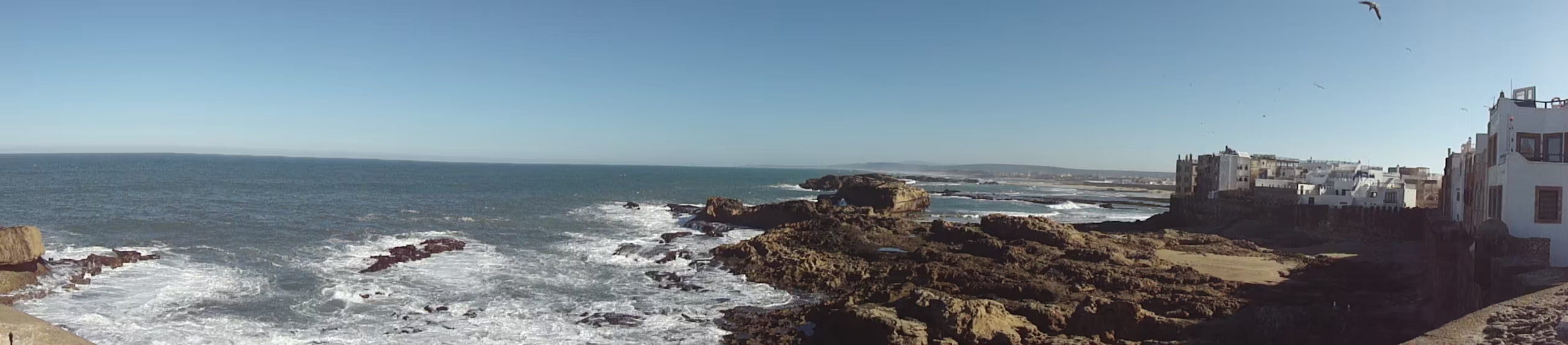

When leaving the city—and actually even before—I realized there was very little to see here. Overnight stays were expensive and of poor quality. The only truly interesting thing was the old town itself, but it wasn’t worth traveling there, especially since the city fully lived up to its reputation for wind. This time my plastic-bag strategy proved useful again: I kept all important items with me on the bus and didn’t have to worry.
The journey led through a sparsely populated but fairly green and flat landscape. Inside the bus it was warm again. About halfway through the trip we stopped at a café for a break. I bought some flatbread and oranges. A vendor selling pastries also walked through the bus; his baked goods tasted excellent. When we left, I saw a boy without arms or legs sitting by the roadside.
Later the road ran close to the sea. In several places there were many surfers taking advantage of the high waves. After passing a hill, Agadir appeared. Approaching from the north, the city could be seen clearly from above. In contrast to Essaouira, Agadir was no small town. We drove past the harbor and then east along the edge of the city. I suspected that the bus might not go directly to Agadir but instead to nearby Inezgane, so I decided to get off when others did.
By then it was already late afternoon, around 15:00–16:00. According to my small map, the road where I got off led directly west to the beach in the city center. It was a very wide road with many shops on both sides. This part of the city was far less Western than Marrakech’s new town, but still a stark contrast to Essaouira.
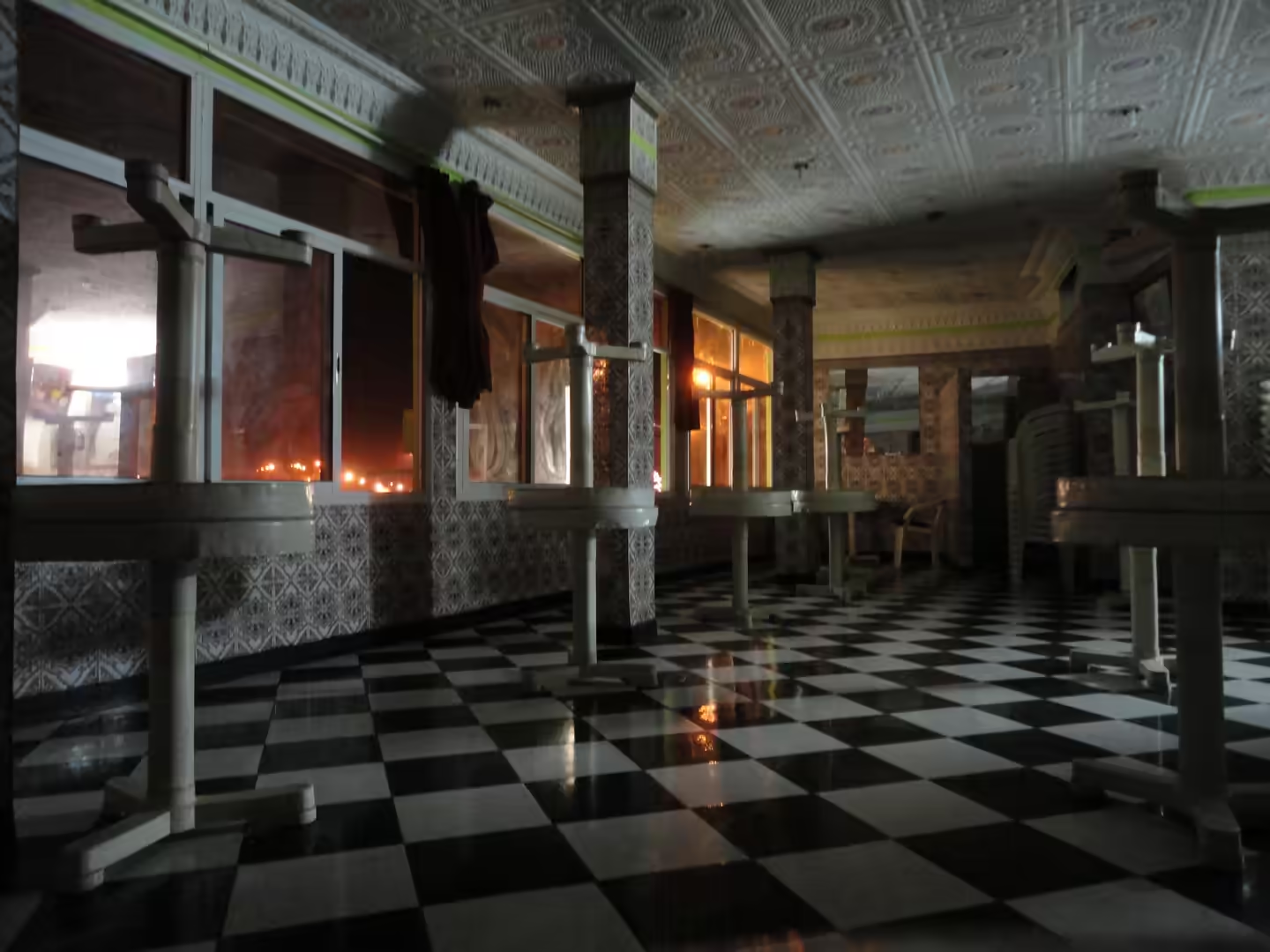
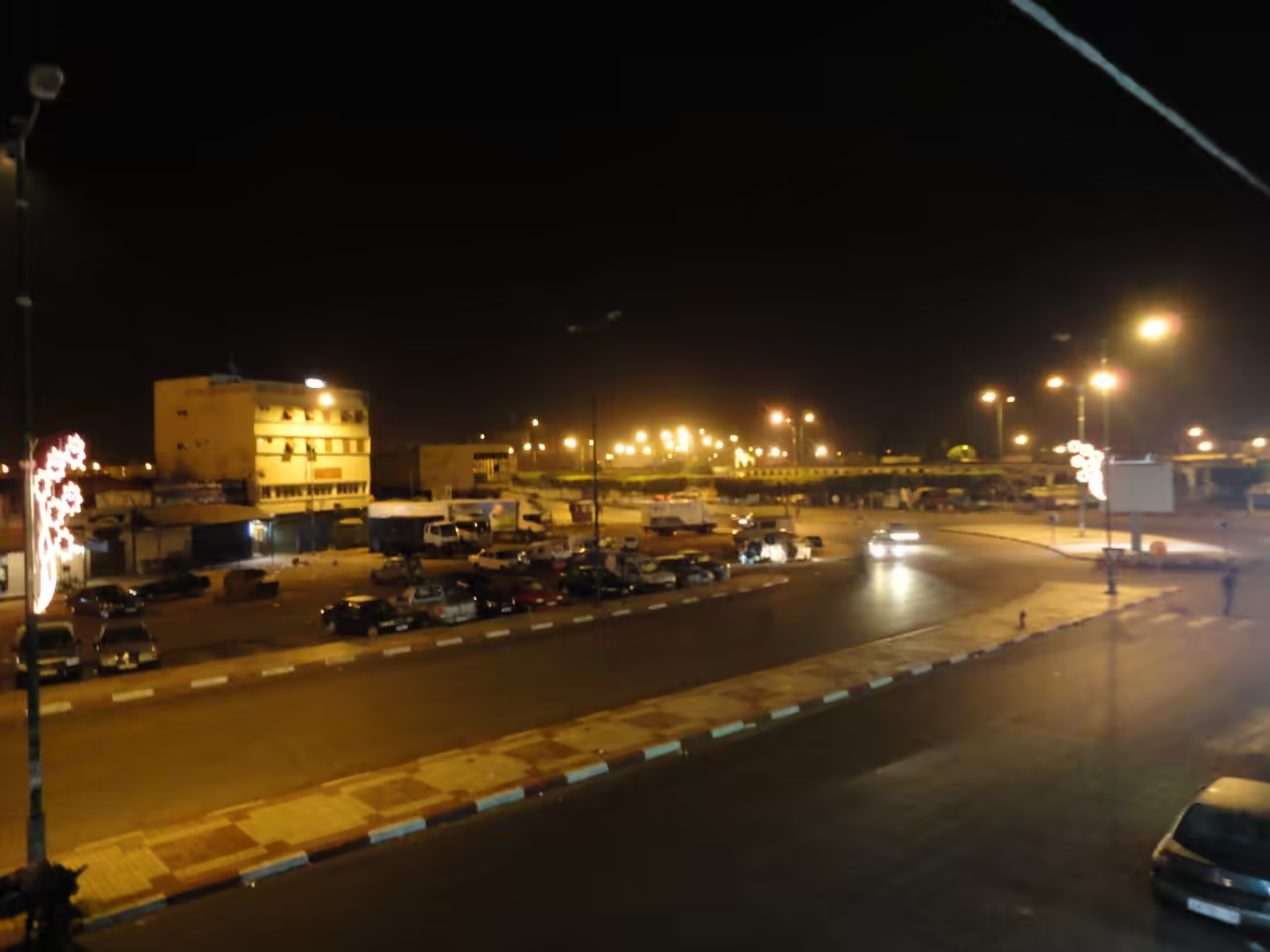
Eventually I reached the beach. On a square in front of the crescent-shaped promenade, a man in a suit asked me for a light. We started talking. He had worked as a correspondent for a German magazine and spoke good German. We went to a nearby café, drank tea, and talked about many peculiarities of both countries. He also gave me valuable advice on which cities to visit and in what order. In retrospect, I followed some of his recommendations. Mohammed gave me his phone number in case I needed help, and we said goodbye as the sun began to set.
He also advised me not to stay overnight in Agadir, but instead in Inezgane, where the main bus station is located and hotels are much cheaper. I already knew from the guidebook that it would be hard to find accommodation in Agadir for less than €25. After a walk along the beach at sunset, I decided to follow his advice. There wasn’t much to see that evening anyway. Everything near the beach was clean and Western—along with Western prices. Of course, there was also a McDonald’s on the promenade.
I walked back east toward the city center, passing wide streets and many shops, some quite expensive. After visiting a supermarket, the area became too crowded for my taste, so I decided to head for the bus station. It wasn’t far from the center. At a kiosk, I asked for the bus number to Inezgane. Naturally, the bus had just left.
The next one arrived about half an hour later. It was surprisingly modern and cost only about 5 dirhams. The ride took quite a while due to frequent stops. I asked the driver to let me know when we reached Inezgane. At first the surroundings looked deserted, then suddenly more urban and confusing. I couldn’t see a bus station anywhere. The driver eventually let me off at the terminal in Inezgane.
I tried to orient myself, but in the darkness and without a map it was difficult. I walked in what I thought was the direction we had come from and eventually found the bus station. I asked for directions several times—always more than once—to avoid being sent the wrong way. People there often gave directions even when they didn’t really know. A previous experience in Spain had taught me that lesson.
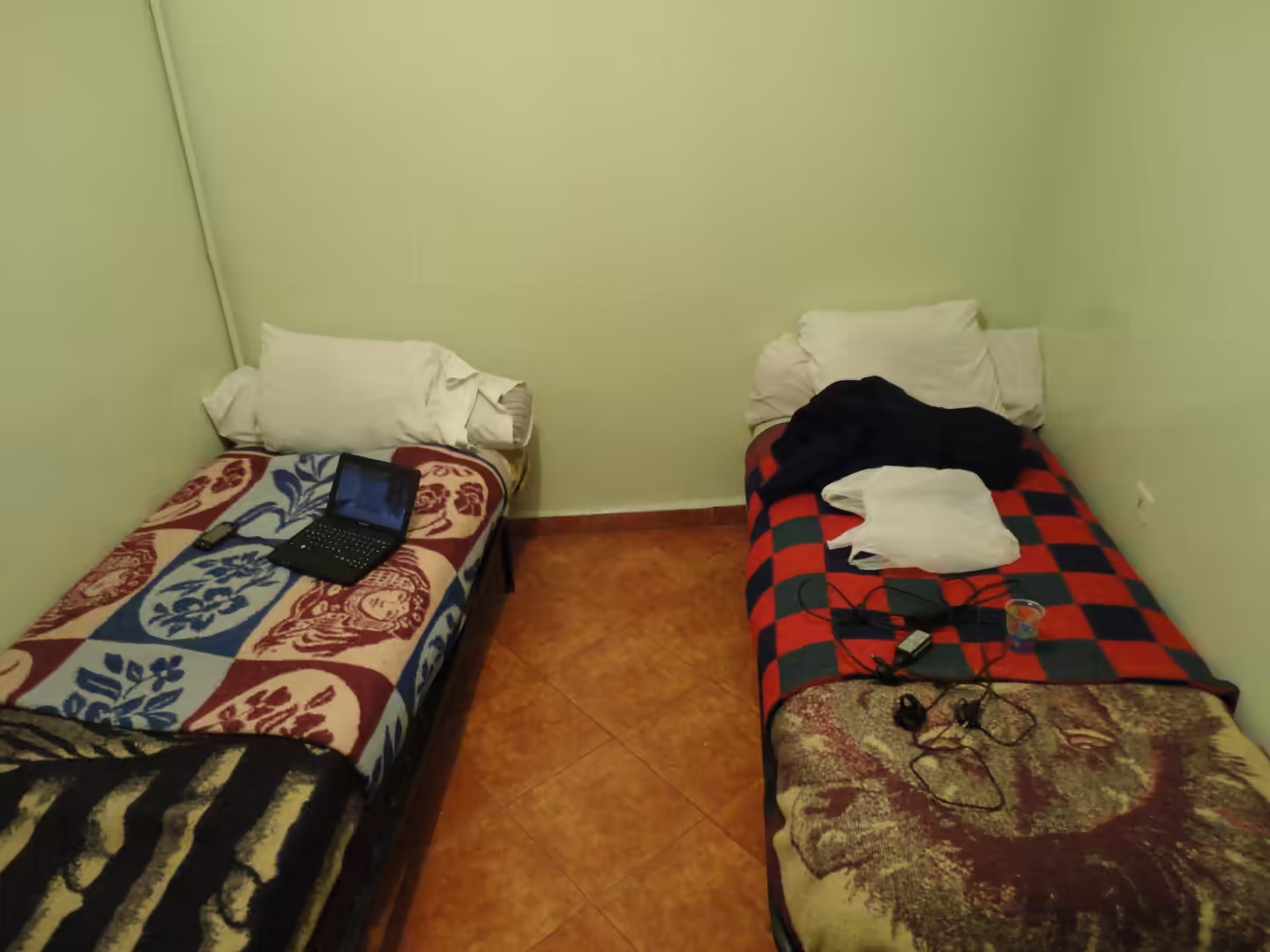
After a short while, open shops and small restaurants appeared. According to the guidebook, the cheapest hotel should cost about 80 dirhams. Near the bus station—which turned out to be more of a market square—I found several hotels with narrow entrances. I chose one and climbed a narrow staircase to the first floor, where a porter sat in a small booth. The room cost 40 dirhams for a double. I looked at it and had no complaints: two beds and a table. Shower and toilet were in the corridor. Again, I hadn’t checked for sockets—this time there weren’t any in the room at all.
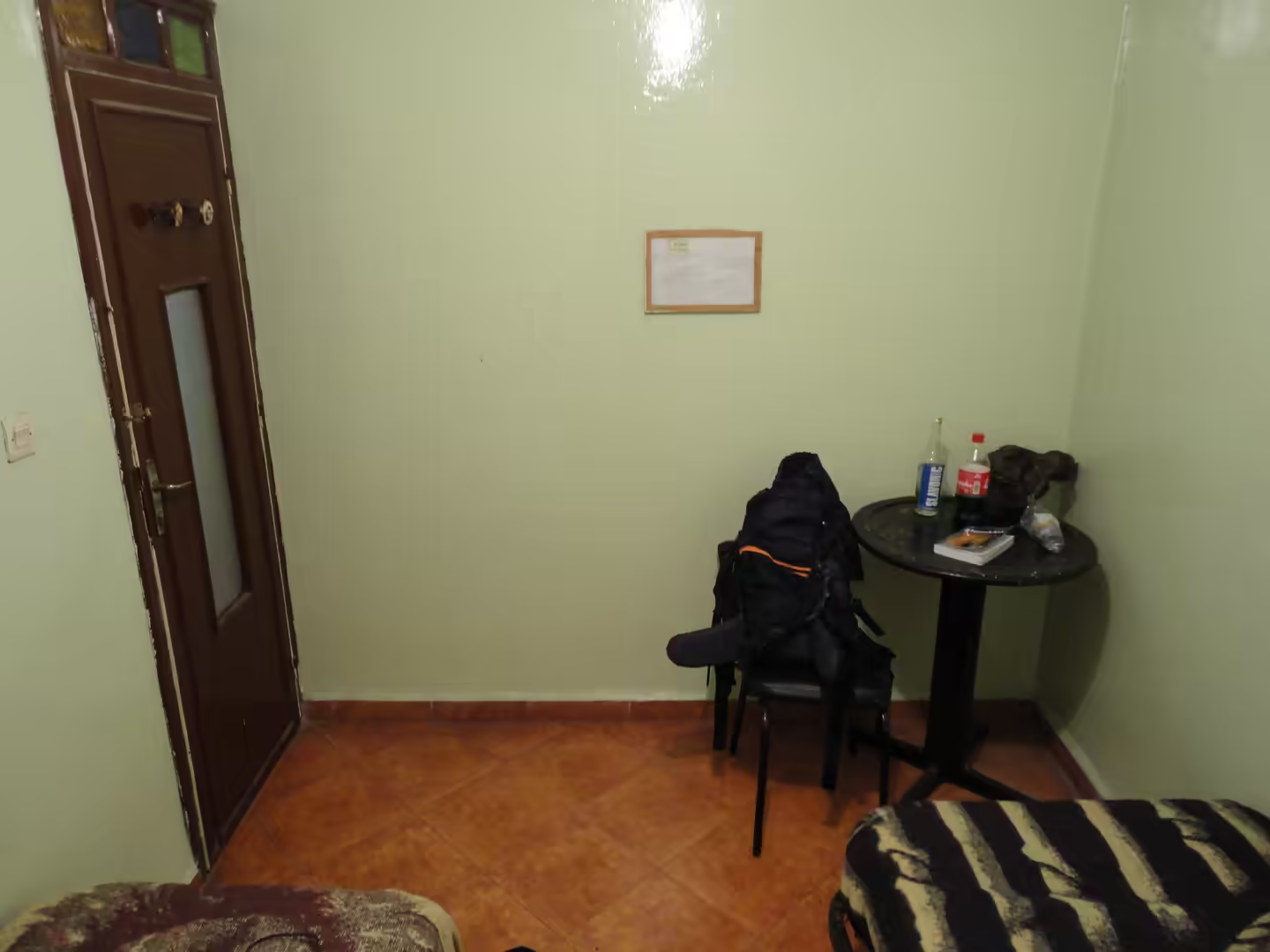
Fortunately, there were sockets in the fully tiled restaurant on the second floor, which was closed but still accessible. I asked if I could sit there, and that was fine. First, I went out to look for a micro-USB cable and a lightbulb-to-socket adapter. In the fourth electronics shop nearby, I found a USB cable taken straight from a Nokia phone package. It cost 25 dirhams.
Now I needed something warm to eat. Across from the hotel, two barbecue stalls were still open. I inspected the food and strangely decided on a dish I had never seen before—and whose name I no longer remember. The vendor asked if I wanted sauce from a pot poured over it; I said yes. It cost about 25 dirhams.
On the way back to the hotel, I suddenly suspected that it might have been sheep’s testicles. My appetite vanished. I gave the food to a disheveled man sitting nearby with a Pepsi bottle filled with red wine, which made him very happy.
Becoming more cautious, I noticed shops closing one by one. Eventually I stopped at a snack stand, sat down on the sidewalk, and ordered something like a döner plate with cola for about 25 dirhams. After eating, I returned to the hotel, brought my devices to the restaurant upstairs, and sat down there to charge them. The windows were open, giving me a view of the square. Outside stood a donkey with carts, and from a nearby window someone played loud Arabic music on a mobile phone.
After charging everything, copying photos to the computer, and writing travel notes, I finally went to bed in my surprisingly luxurious room.