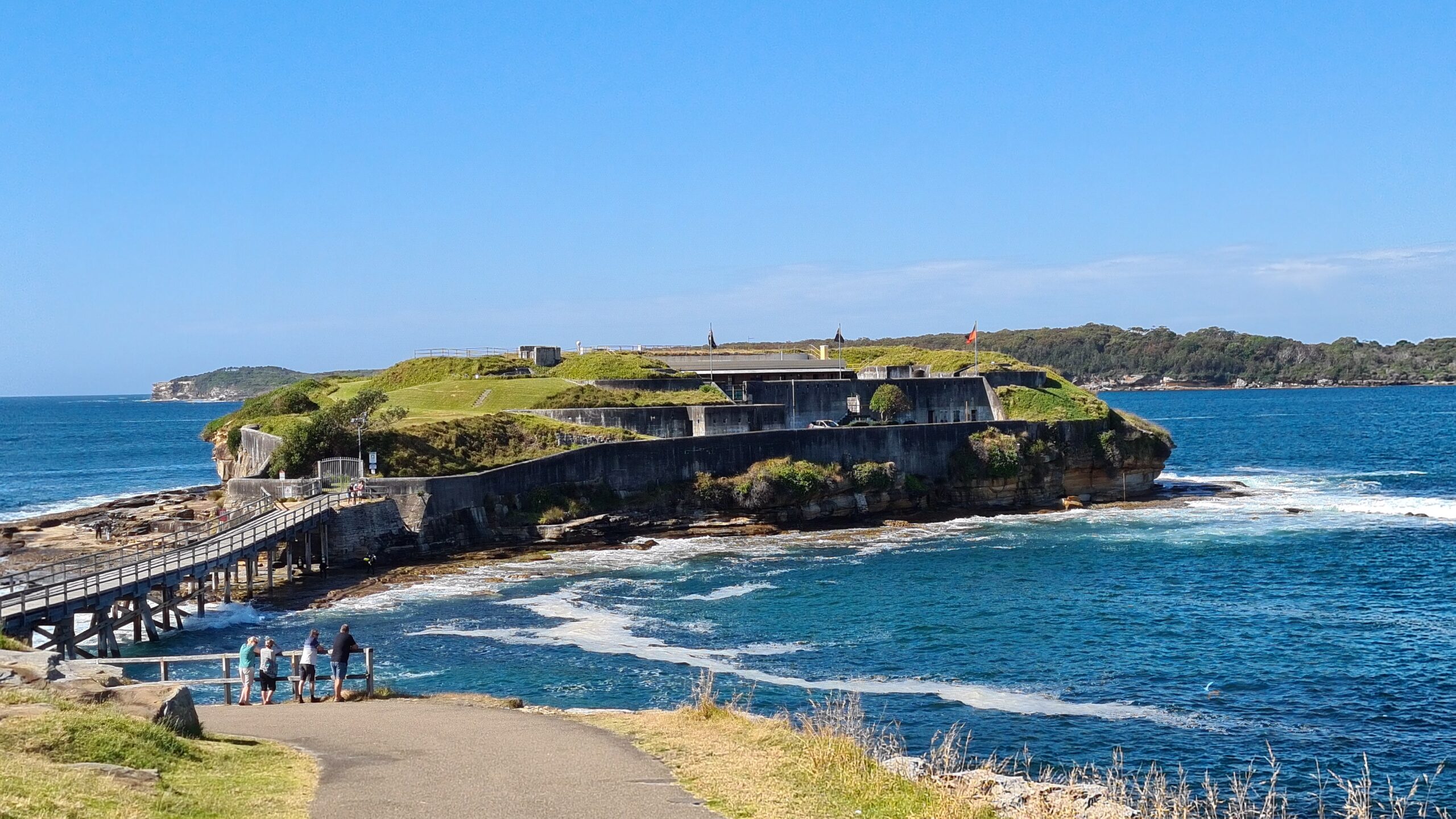


Cape Banks has a long history of Indigenous occupation. The area is part of the traditional lands of the Bidjigal and Gweagal peoples of the Dharawal Nation. The coastline provided food resources, shelter, and travel routes, and cultural connections to the land remain significant.
European history at Cape Banks began in the late 18th century following the arrival of British colonists. The headland played a strategic role in coastal defense due to its elevated position and clear views over the approaches to Botany Bay.
In the late 19th and early 20th centuries, military installations were constructed as part of Sydney’s coastal defense network. Remnants of these structures are still visible today, blending into the surrounding landscape and adding a layer of historical interest to the area.
Geology
Cape Banks is composed primarily of sandstone, part of the extensive Sydney Basin geological formation. These sedimentary rocks were laid down millions of years ago and later uplifted and exposed through erosion.
Wave action, wind, and weather have sculpted the cliffs and rock platforms into sharp edges, crevices, and flat shelves. Ongoing coastal erosion continues to shape the headland, creating dynamic landforms and influencing access to certain areas.
The exposed geology provides insight into Sydney’s coastal formation and highlights the power of marine processes in shaping the landscape over time.
Landscape and Natural Environment
Cape Banks is characterized by exposed coastal cliffs, rocky intertidal zones, and low coastal vegetation adapted to salt spray and strong winds. Heathland and coastal shrubs dominate the landscape, with limited tree cover due to the harsh conditions.
The area supports a range of bird species, including seabirds that use the cliffs and offshore waters. Marine life is abundant in the surrounding waters, supported by nutrient-rich ocean currents.
Seasonal changes influence visibility, wave conditions, and wildlife activity. The lack of development allows natural processes to dominate, reinforcing the sense of wild coastline within a major city.
Things to See
Cape Banks offers a variety of natural and historical points of interest:
Coastal Landscapes
- Dramatic sandstone cliffs and rock platforms
- Open ocean views toward the Tasman Sea
- Wave-battered headlands and rugged shoreline
Historical Features
- Remnants of coastal defense structures
- Historic pathways and military installations
- Interpretation points explaining local history
Outdoor Activities
- Coastal walking and exploration
- Rock fishing in designated areas
- Photography focused on coastal light and textures
- Wildlife and seabird observation
Experience and Character
Cape Banks is defined by exposure and openness. The constant presence of wind, waves, and sky creates a powerful sensory experience. Unlike Sydney’s popular beaches, Cape Banks offers a more austere and dramatic coastal environment.
The headland encourages quiet exploration and respect for natural forces. Its combination of rugged geology, layered history, and proximity to the city makes Cape Banks a distinctive and memorable part of Sydney’s coastline.