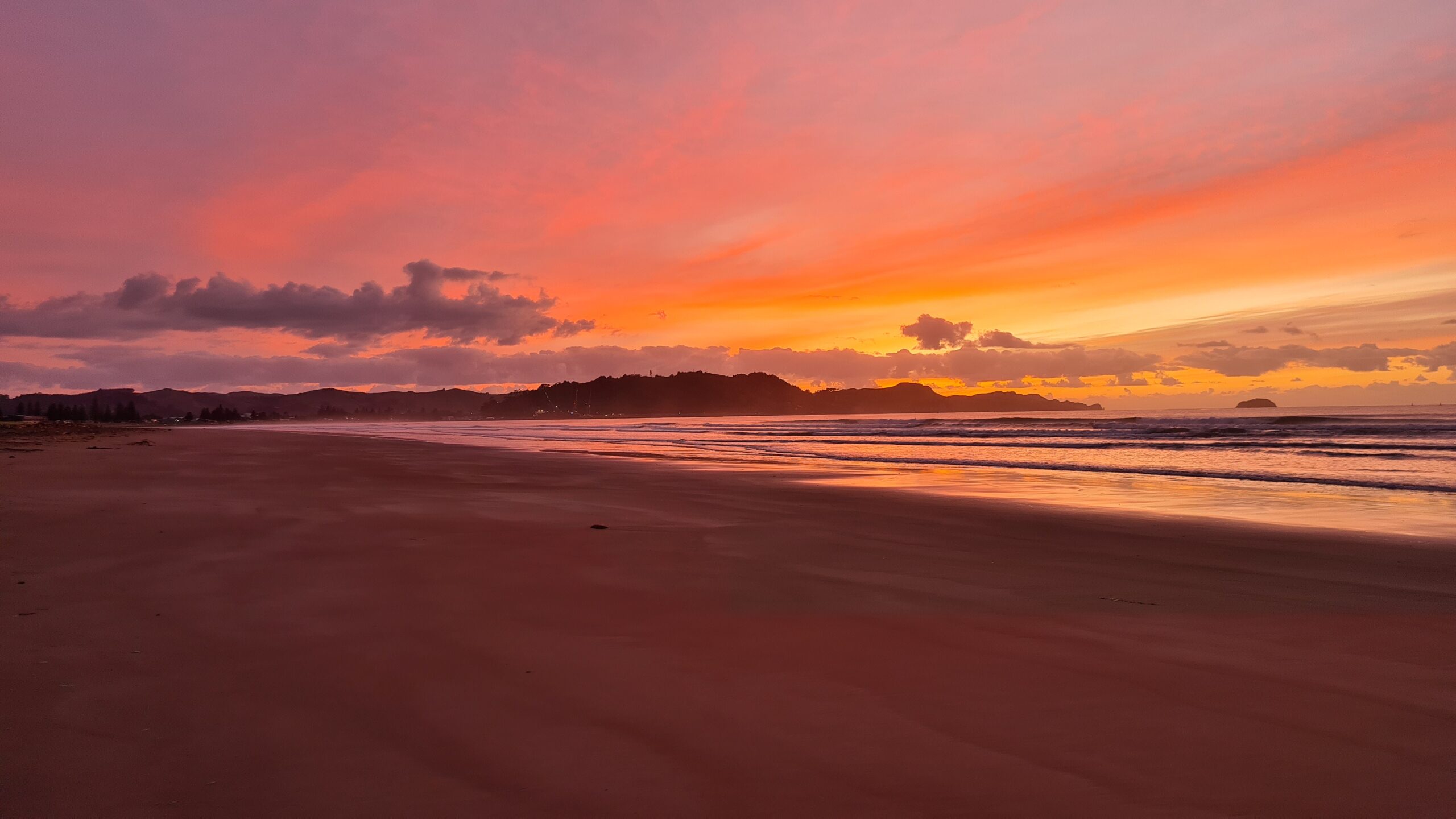
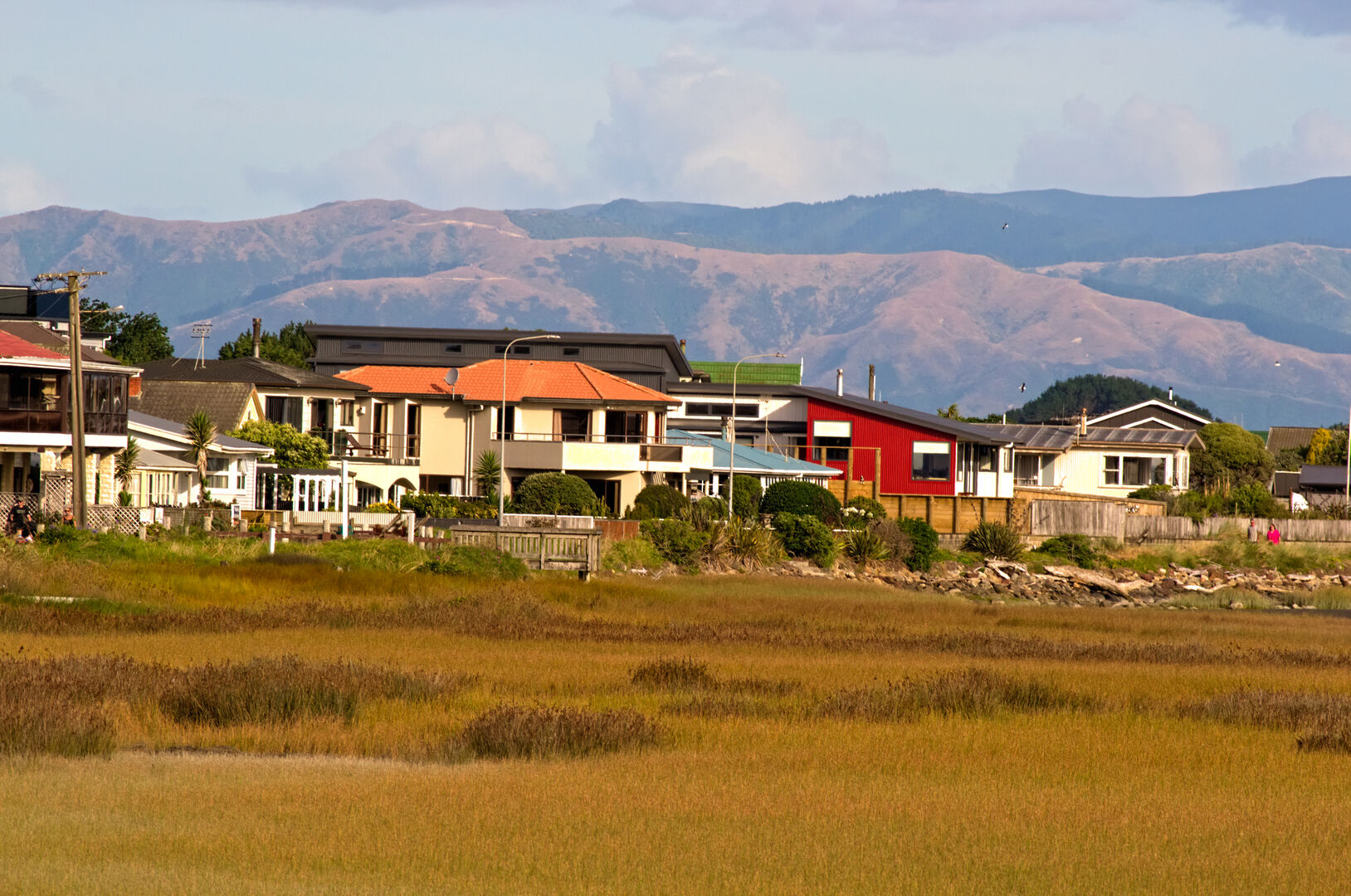
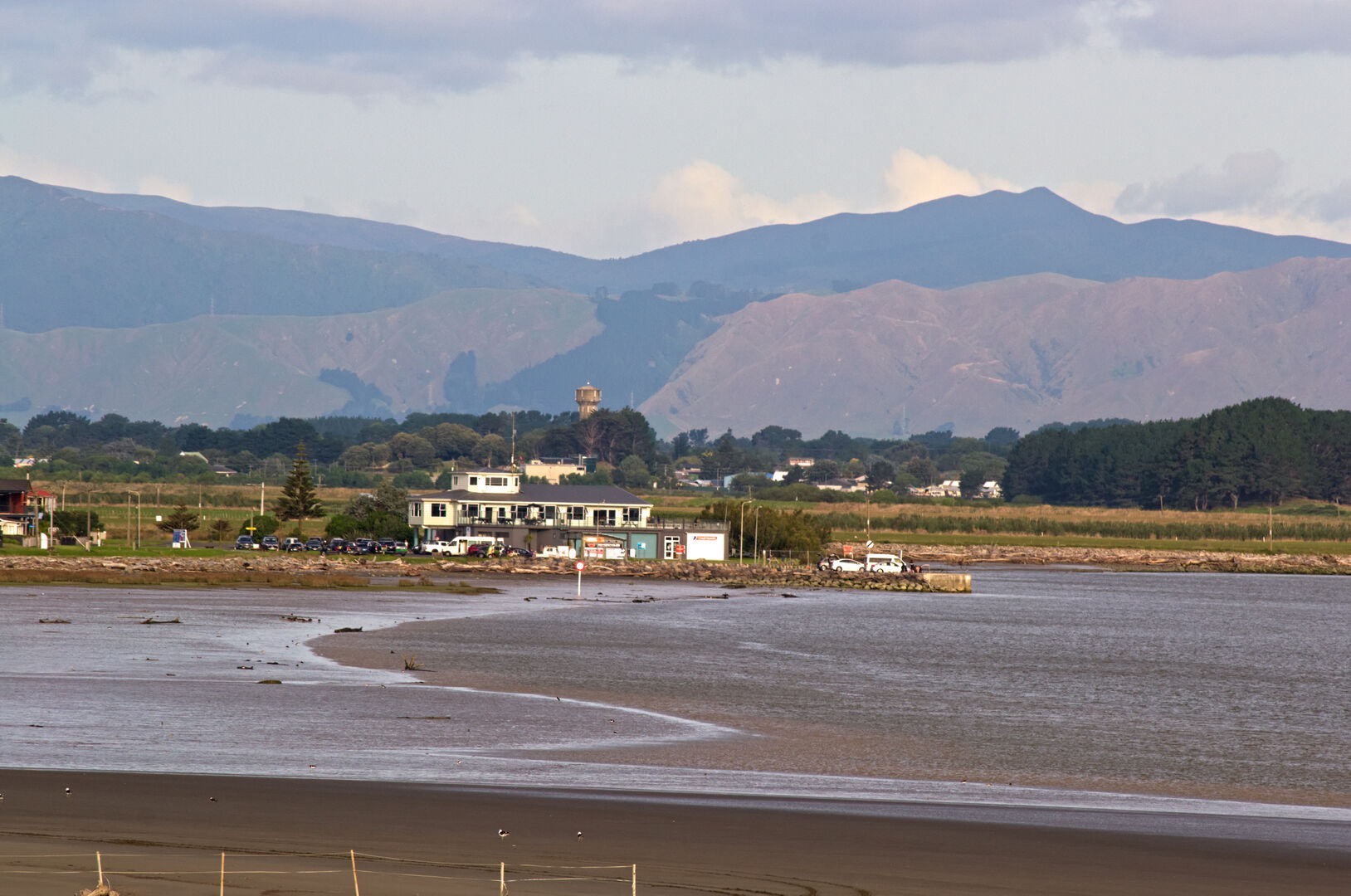
Himatangi Beach is a small coastal settlement located on the west coast of New Zealand’s North Island, within the Manawatū-Whanganui region. It lies approximately 35 kilometers west of Palmerston North and faces the Tasman Sea. The settlement is separated from the inland rural areas by sand dunes, forests, and wetlands, giving it a distinct coastal identity and a strong sense of separation from urban life.
The community is relatively small and low-density, consisting mainly of permanent residents, holiday homes, and seasonal visitors. Himatangi Beach is known for its quiet atmosphere, expansive coastline, and close connection to nature. Development in the area has remained limited, preserving its rural-coastal character and open landscapes.
The climate is temperate and maritime, with moderate rainfall, mild winters, and warm summers influenced by coastal winds. The local economy is not based on large-scale tourism; instead, it relies on agriculture in the surrounding region, small local services, and seasonal recreation. Many residents commute to nearby towns for work, while others are retirees or remote workers attracted by the lifestyle.
History
Before European settlement, the Himatangi area was inhabited by Māori communities who utilized the coastal and wetland environments for fishing, birding, and seasonal food gathering. The coastline, rivers, and inland plains formed part of important travel and resource networks.
European settlement in the wider Manawatū region accelerated in the late 19th century with the development of farming, forestry, and transport routes. The coastal areas, including Himatangi Beach, remained sparsely populated for much of this period due to challenging dune landscapes and exposure to coastal weather.
Himatangi Beach developed primarily in the 20th century as a small holiday and fishing settlement. Over time, modest residential growth occurred, but the area never became a major resort destination. This limited development has helped preserve the natural environment and maintain a strong sense of local community.
Geology
Himatangi Beach is situated on a coastal plain shaped by sand deposition, wind action, and long-term marine processes. The coastline is characterized by wide sandy beaches backed by dune systems that have formed over thousands of years as sea levels stabilized after the last ice age.
The dunes consist mainly of fine sands transported by prevailing winds from the Tasman Sea. Inland, these dunes transition into older stabilized sand plains, wetlands, and fertile agricultural soils. These geological features have influenced land use patterns, drainage, and vegetation.
Coastal erosion and sediment movement continue to shape the shoreline. The region is also influenced by tectonic uplift affecting much of New Zealand’s west coast, although volcanic activity is not a defining feature here. Environmental management focuses on dune stabilization and protection of fragile coastal ecosystems.
Things to See
Himatangi Beach offers attractions centered on nature, open space, and a relaxed coastal lifestyle:
Natural Landscapes
- Long, open sandy beaches with views across the Tasman Sea
- Coastal dune systems and native vegetation
- Wetlands and bird habitats in the surrounding lowlands
- Expansive skies and dramatic sunsets
Outdoor and Recreational Activities
- Beach walking, swimming, and fishing
- Surfcasting and shoreline exploration
- Cycling and walking in nearby rural areas
- Nature observation and photography
Local and Regional Experiences
- Quiet residential streets and community spaces
- Easy access to rural Manawatū landscapes
- Short travel distances to Palmerston North and regional towns
- Seasonal holiday atmosphere with minimal commercial development