
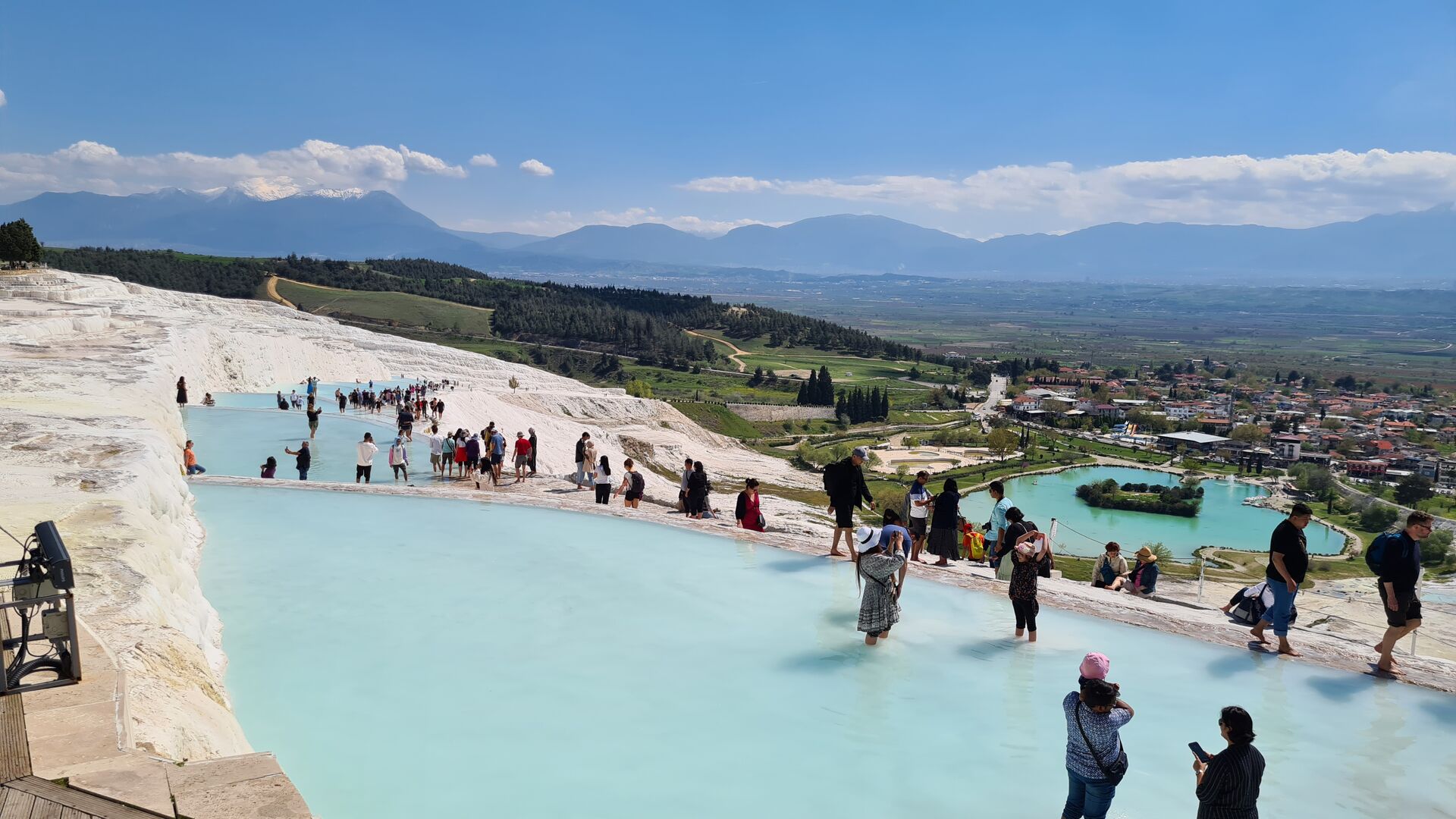
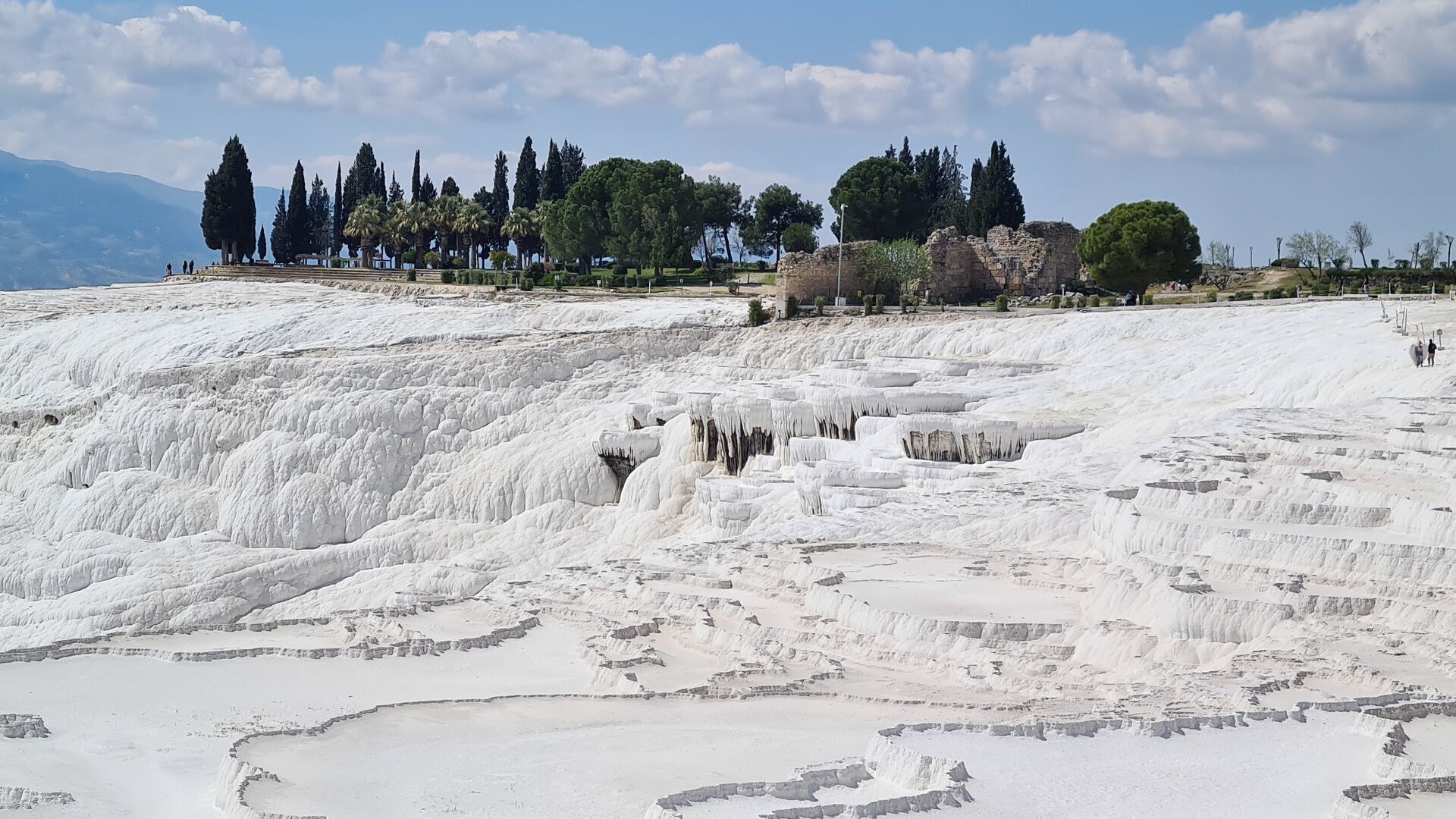
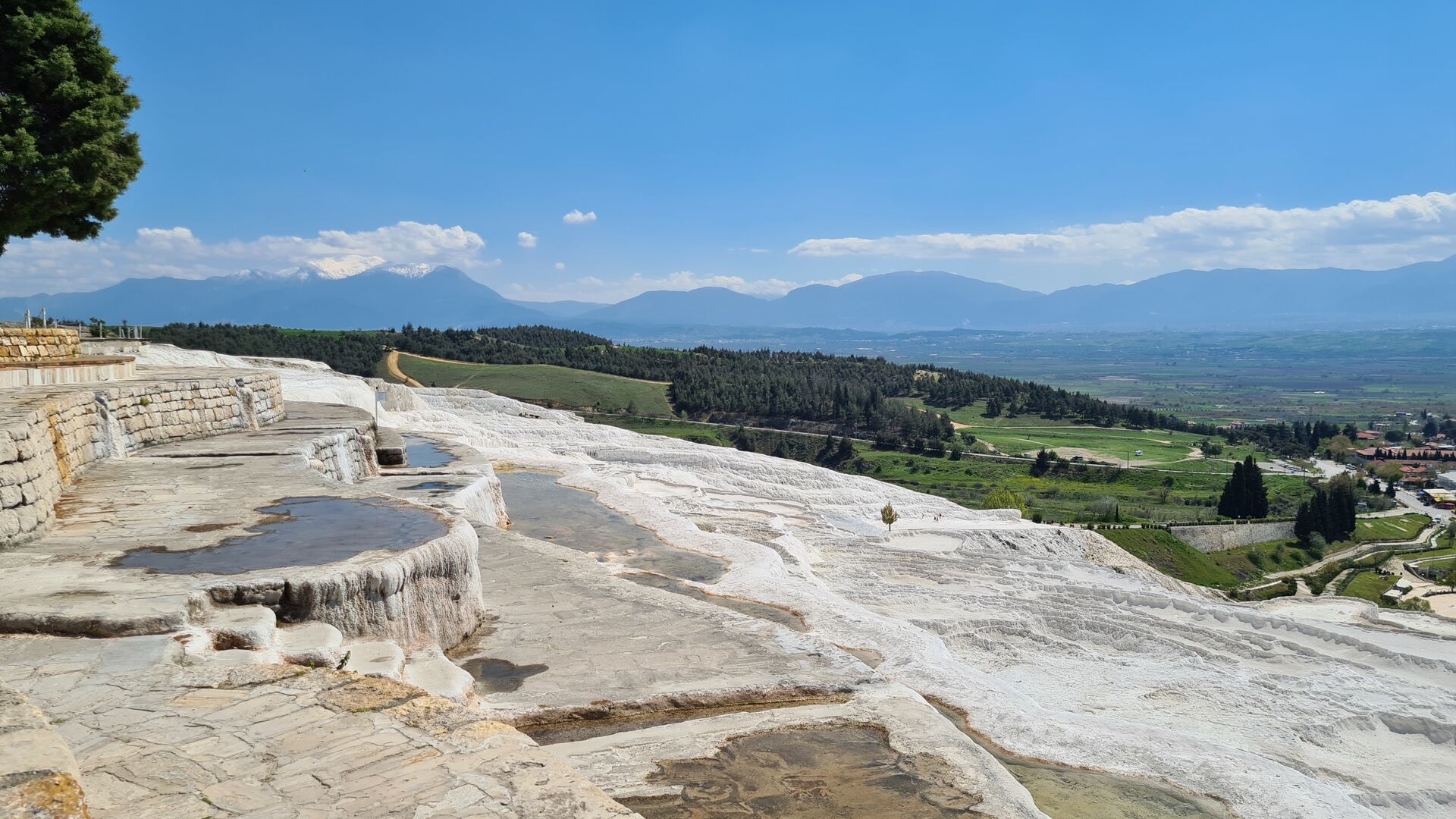
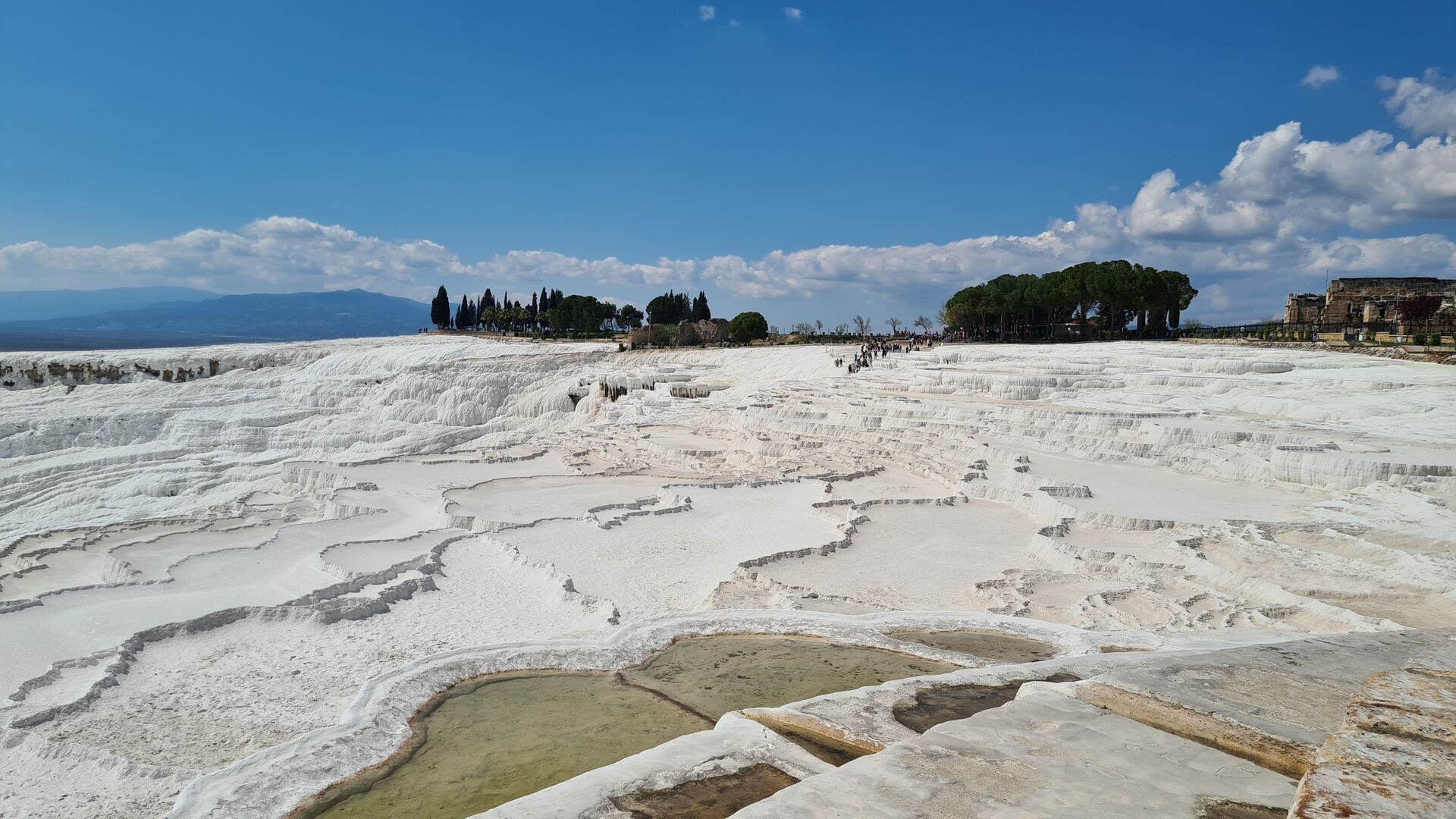
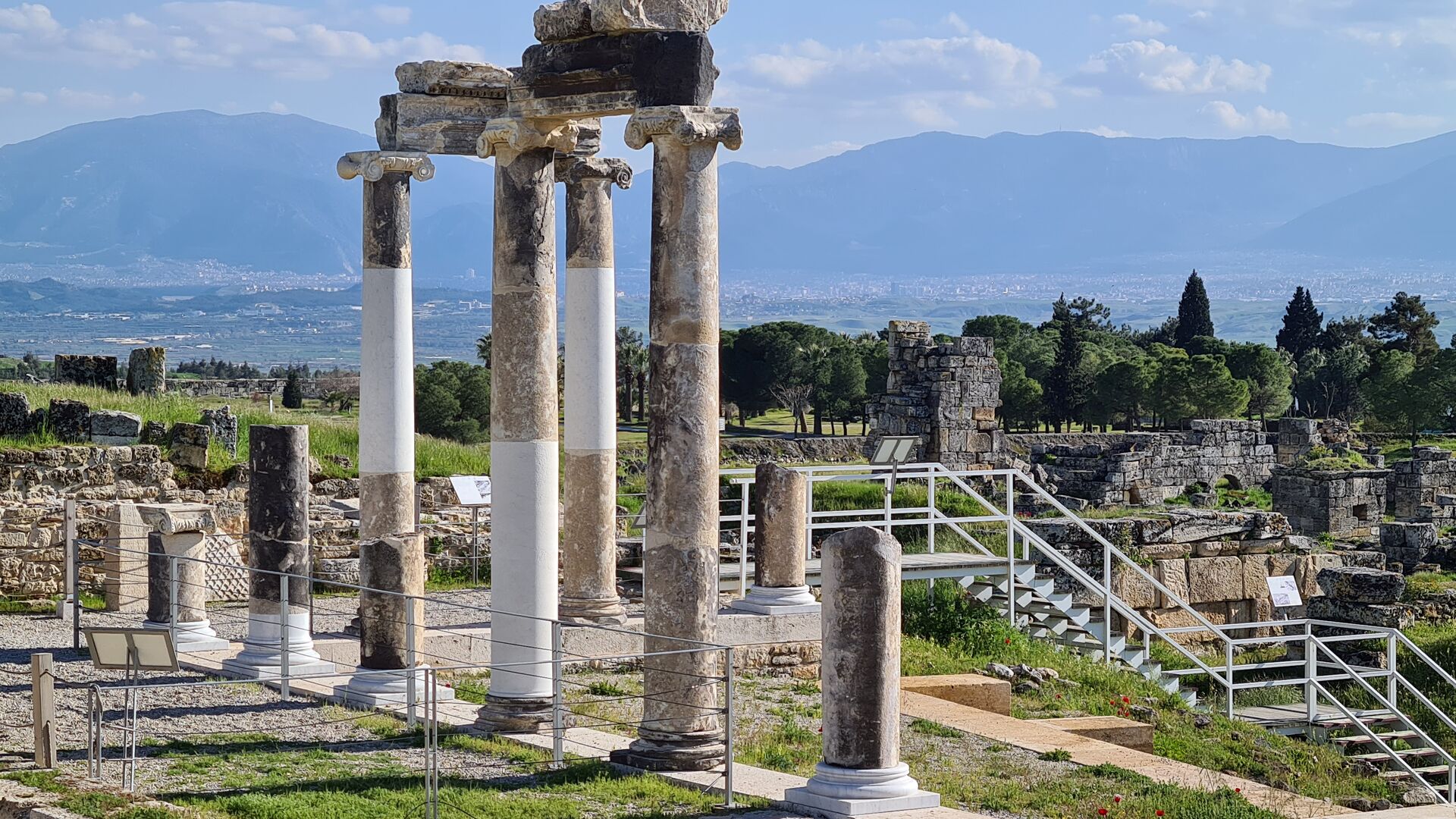
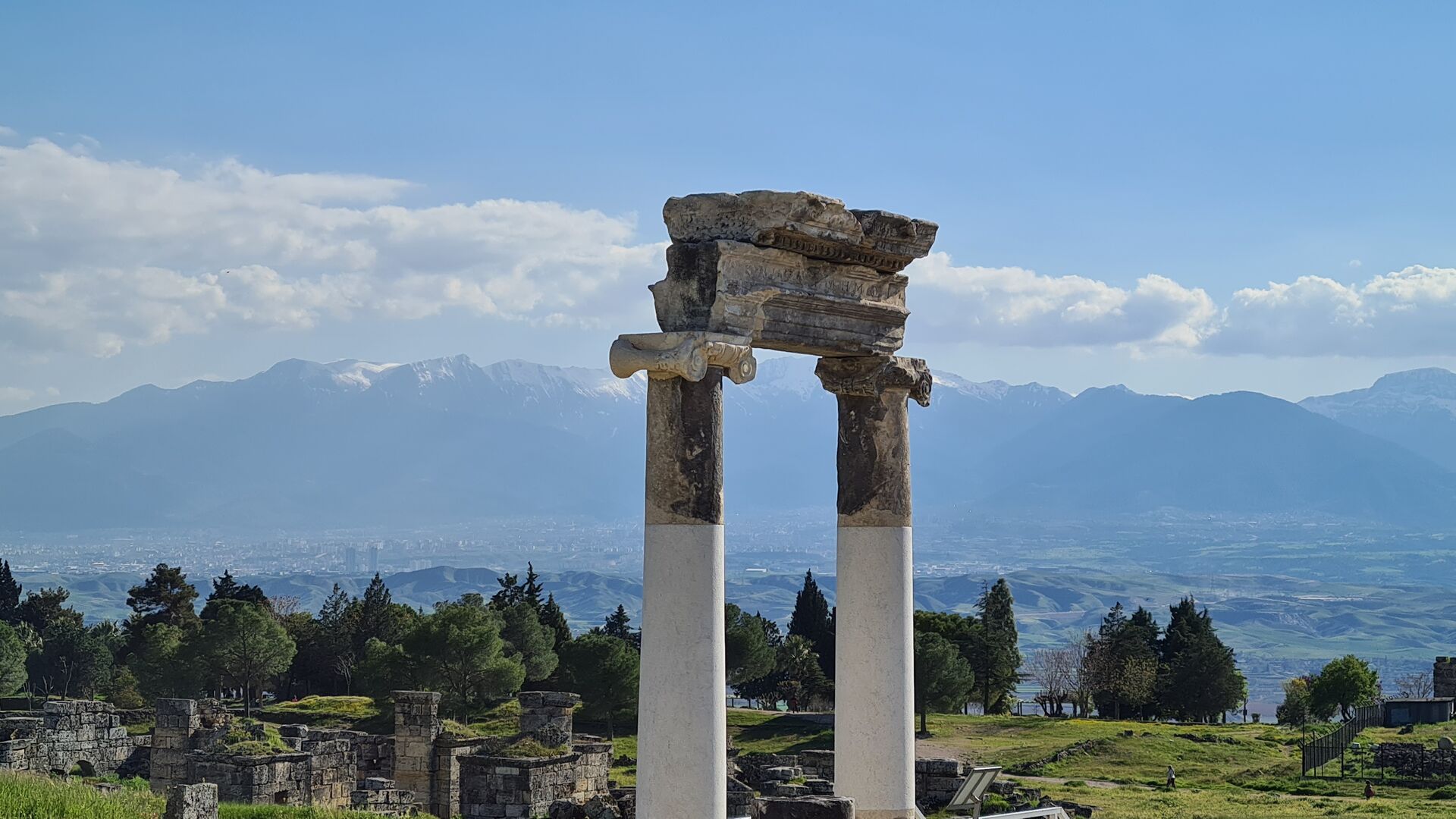
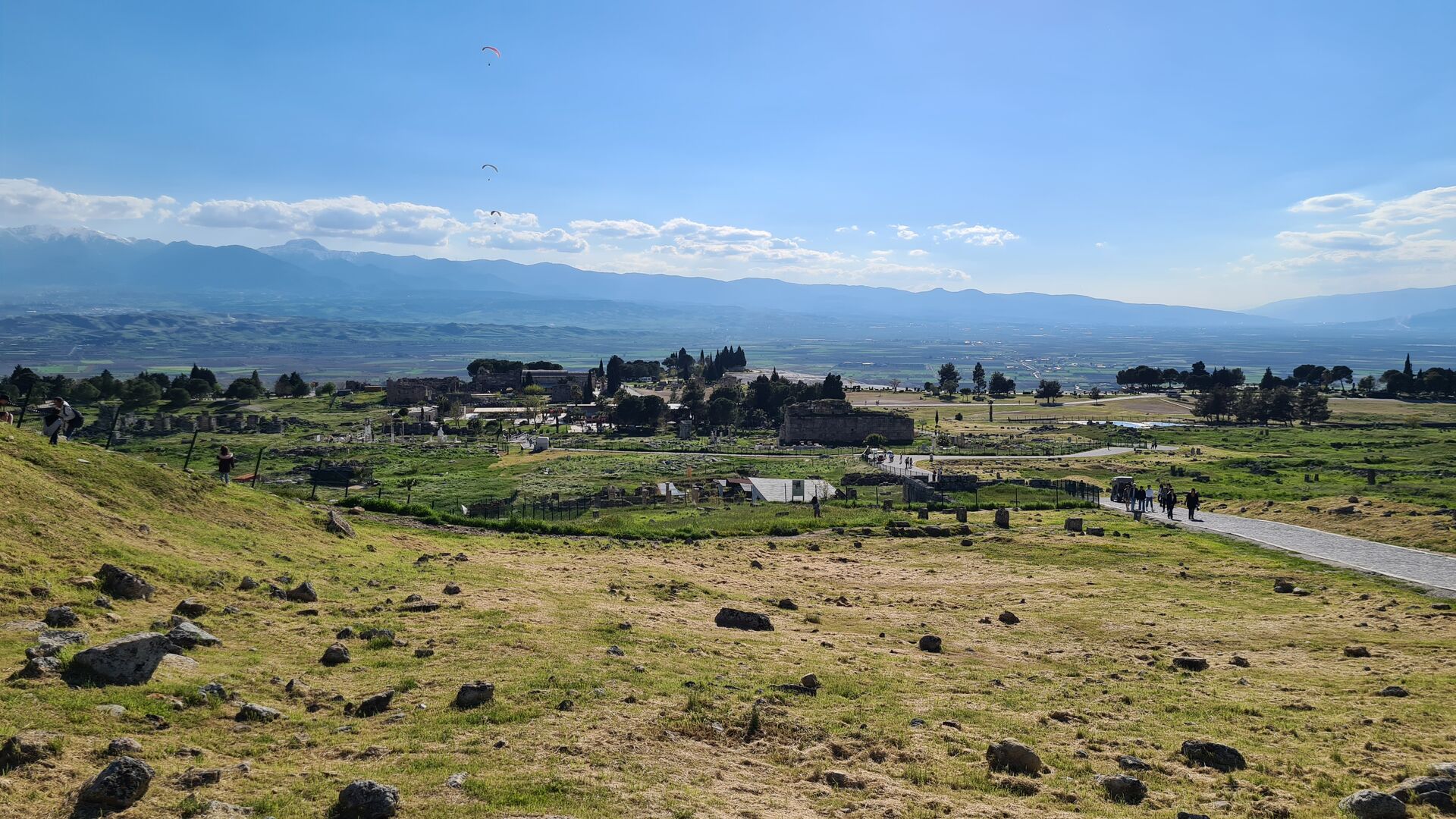
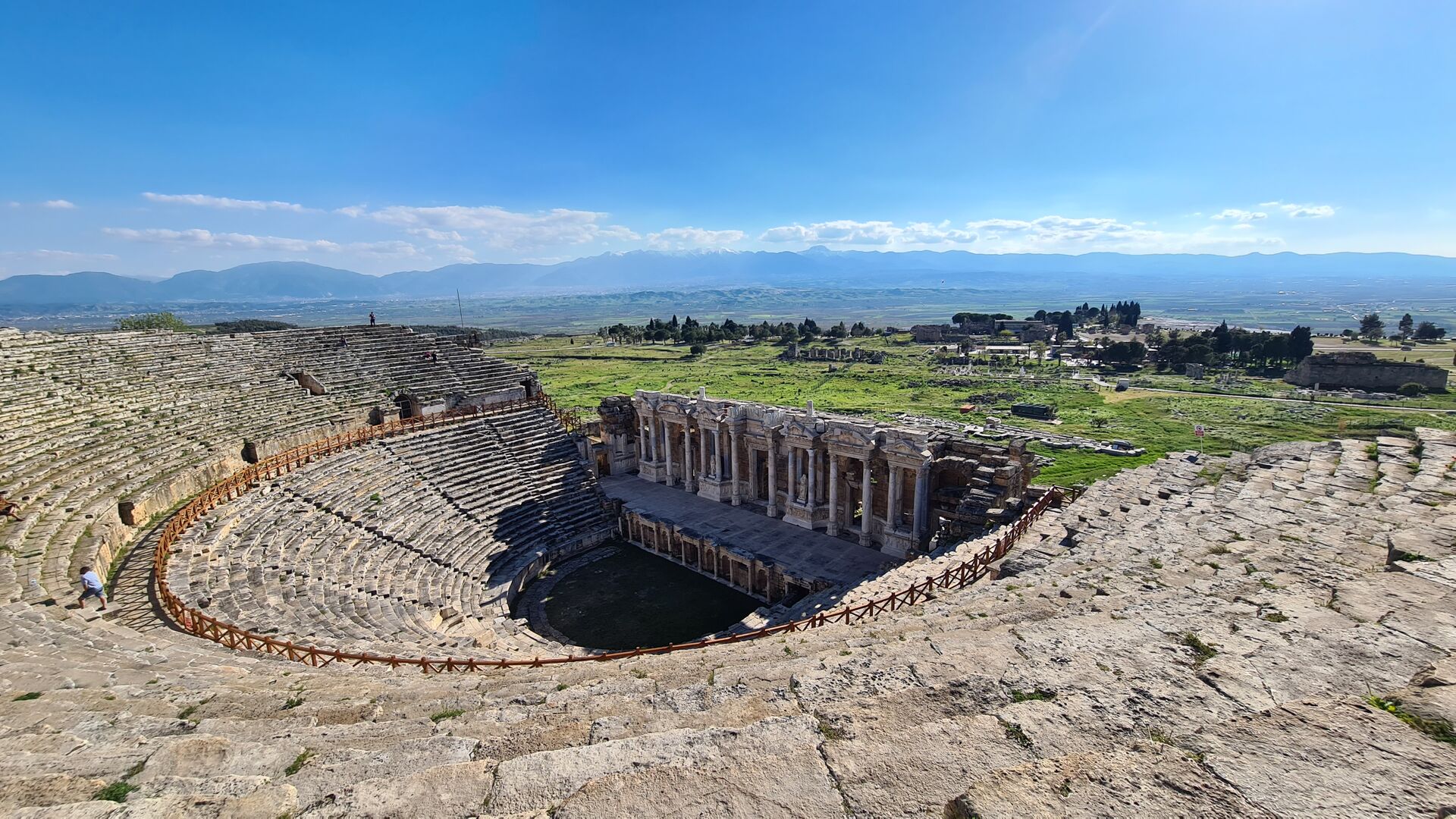

Pamukkale is a natural and historical site located in Denizli Province in south-western Turkey. It lies within the inner Aegean region, at the edge of the Büyük Menderes River basin, and is internationally famous for its white travertine terraces formed by mineral-rich thermal waters. Pamukkale is not a city in the modern sense but a protected area closely connected to nearby settlements and archaeological sites.
The name Pamukkale means “Cotton Castle” in Turkish, a reference to the bright white limestone formations that cascade down the hillside. The site forms part of a wider cultural and natural landscape that includes ancient cities, fertile plains, and thermal resources that have been used continuously for thousands of years.
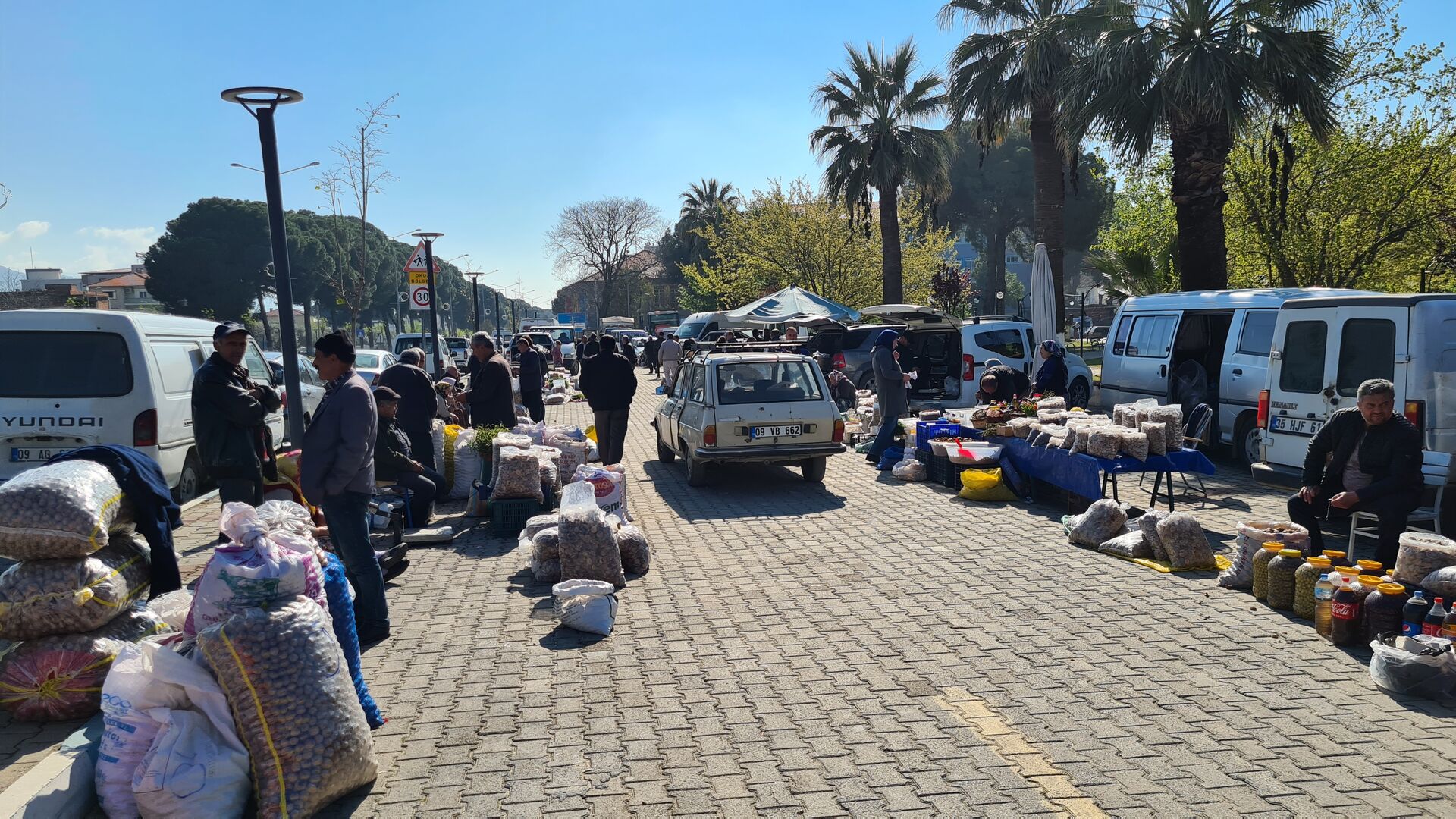
Pamukkale has a transitional climate between Mediterranean and continental, with hot summers and cool winters. Tourism is the primary economic activity in the area, supported by agriculture in the surrounding plains, particularly cotton, grapes, and cereals. The nearby city of Denizli serves as the main urban center for services, accommodation, and transportation.
History
Pamukkale’s history is closely tied to the ancient city of Hierapolis, which was founded in the 2nd century BCE by the Attalid kings of Pergamon. Hierapolis was established as a thermal spa city, taking advantage of the region’s hot springs, which were believed to have healing properties.
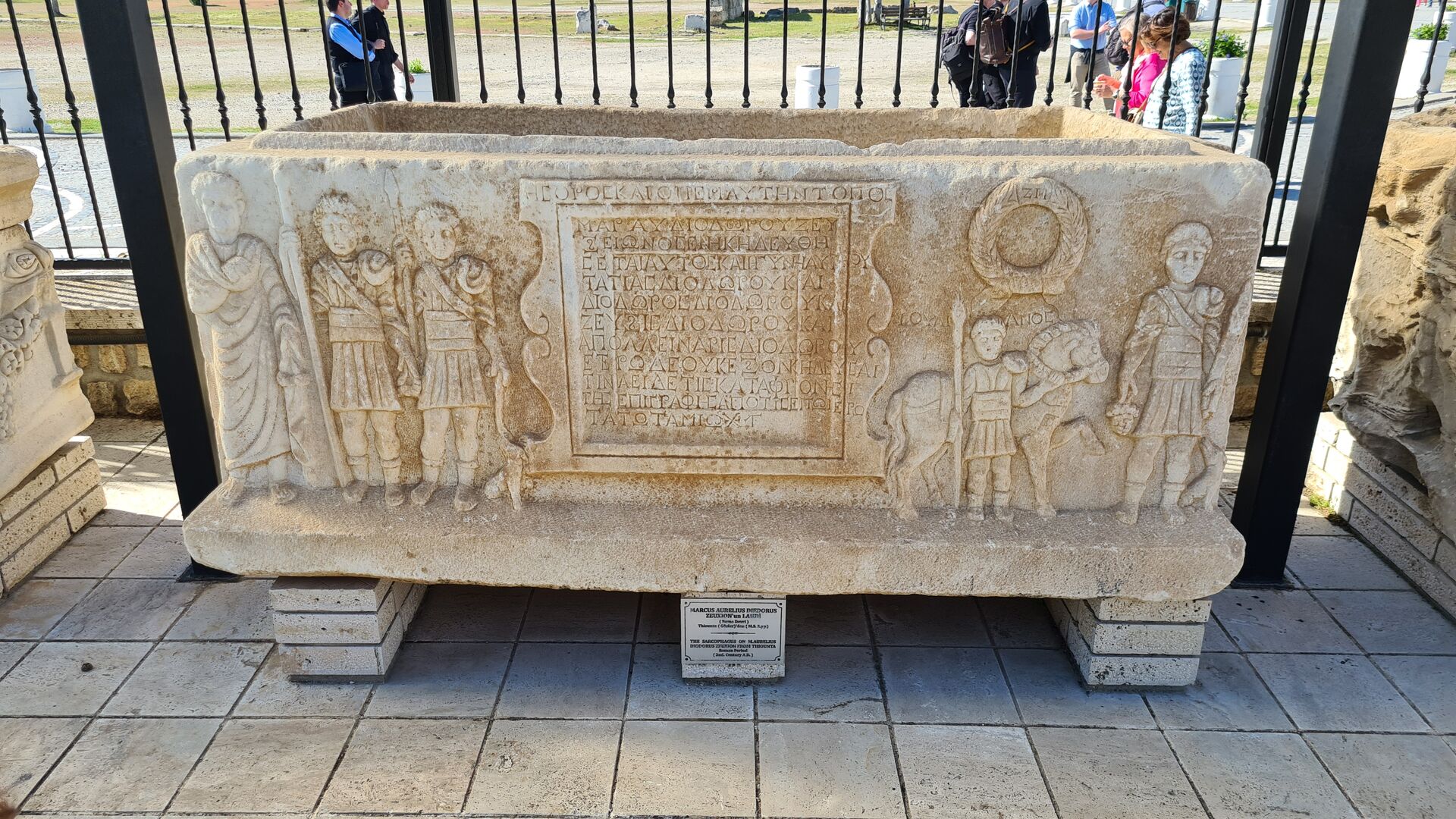
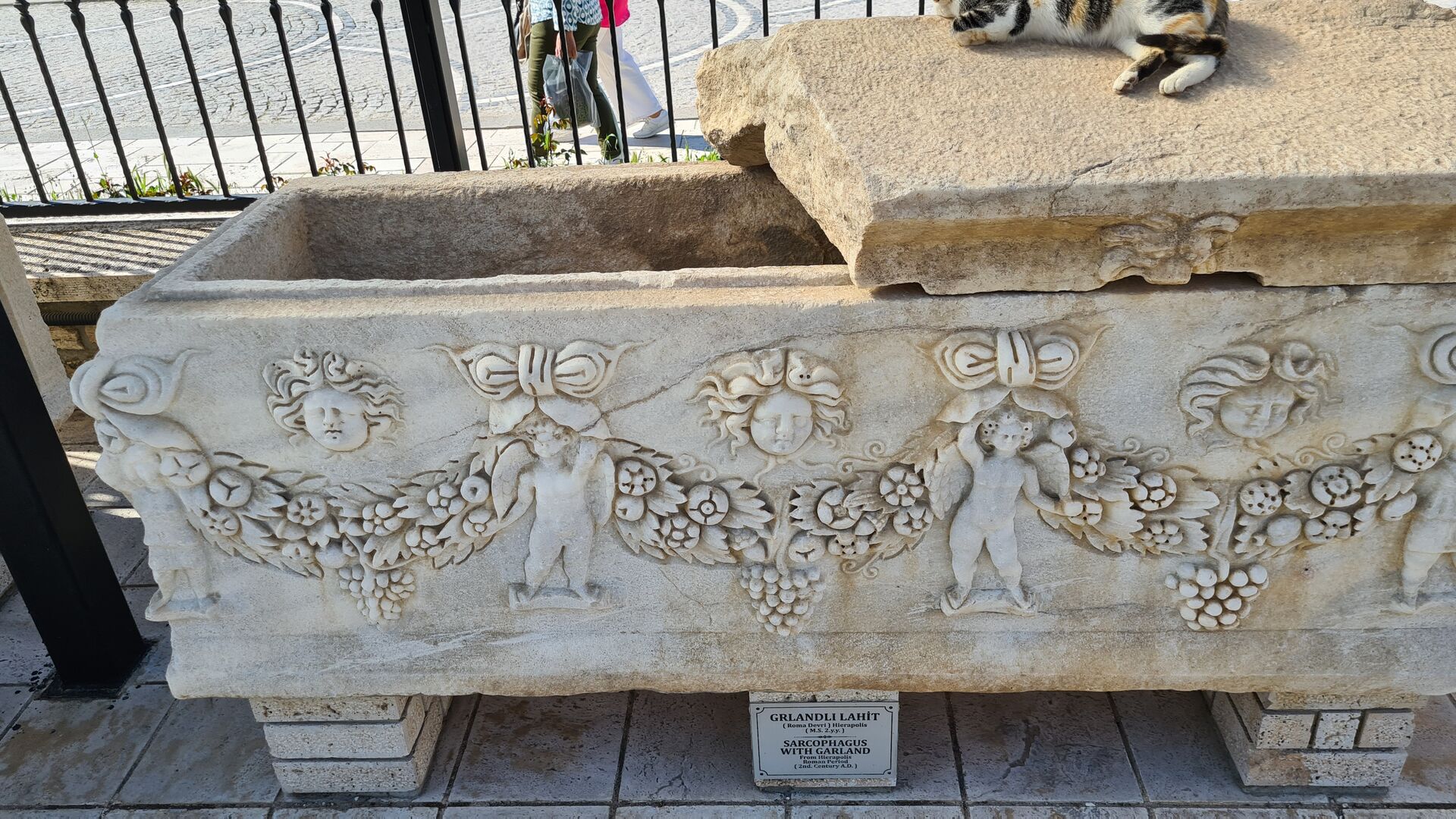
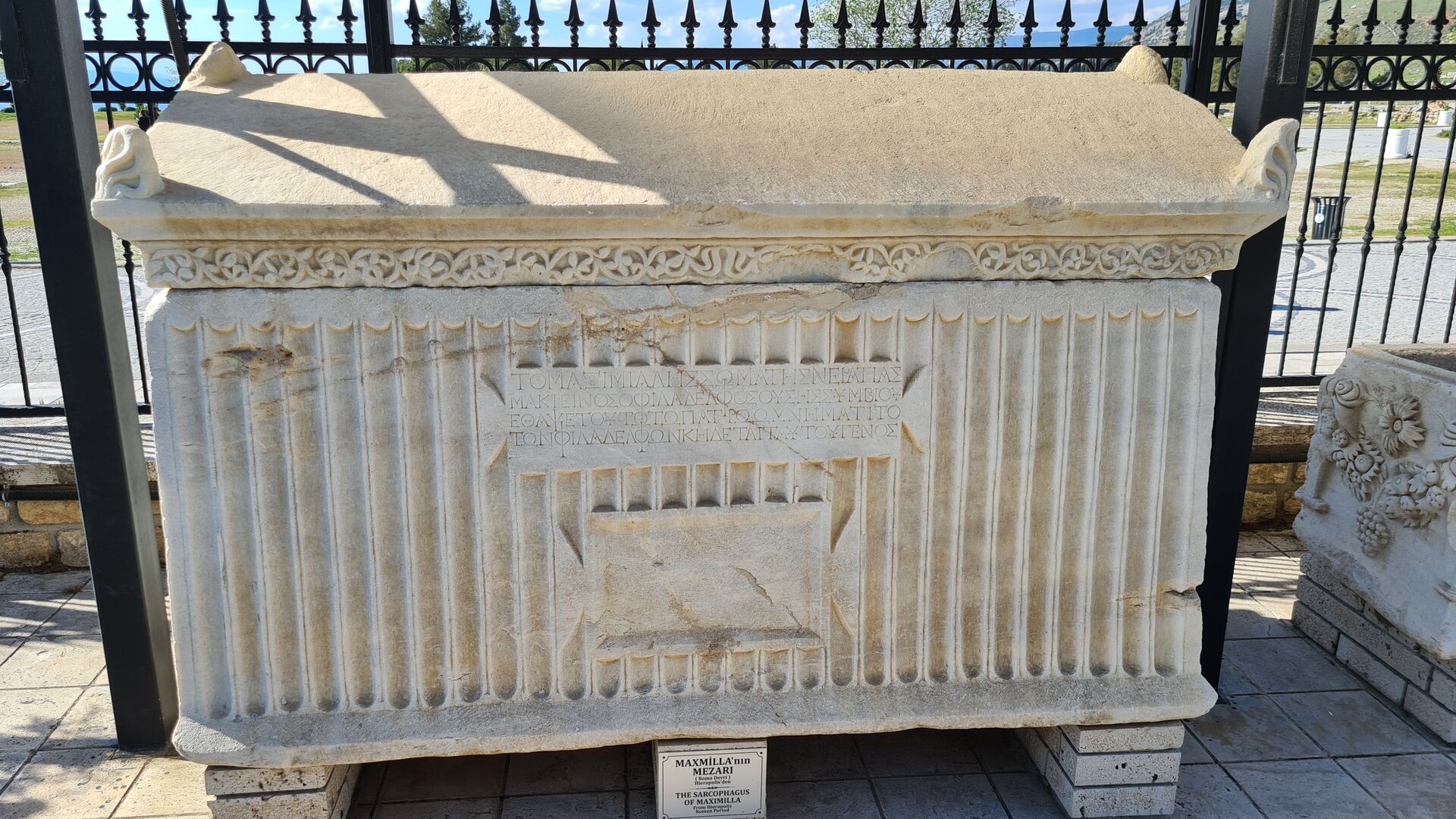
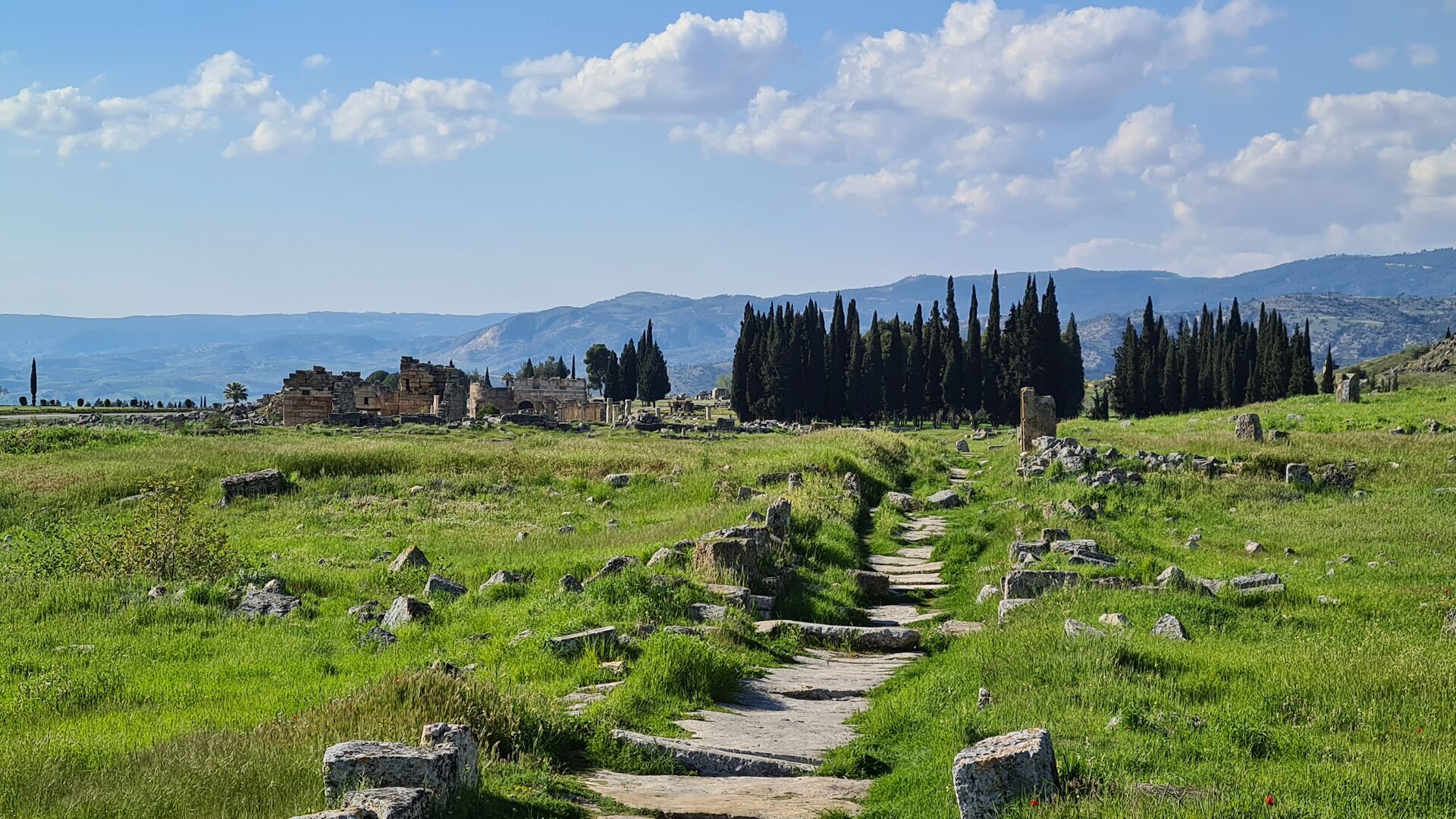
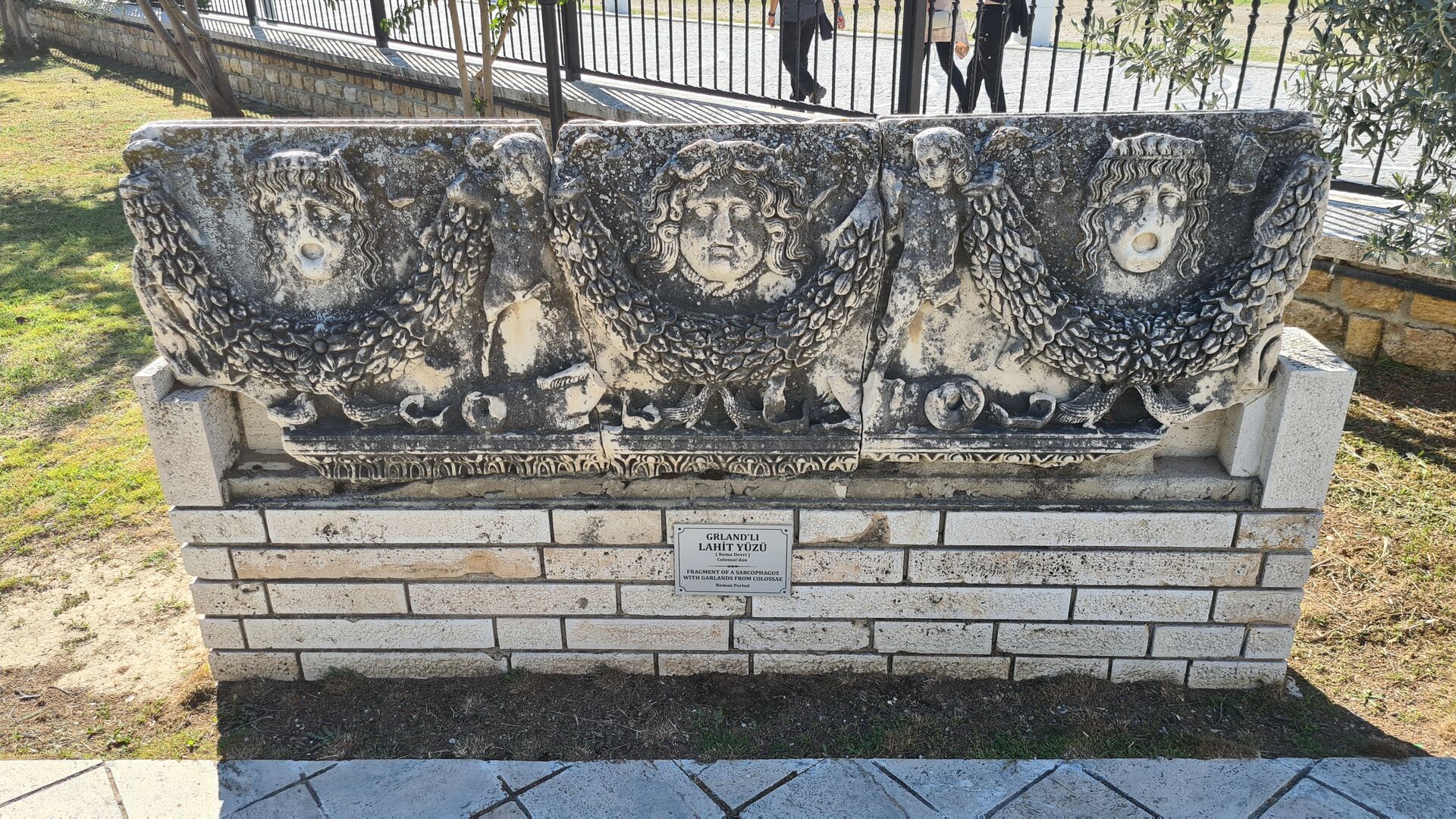
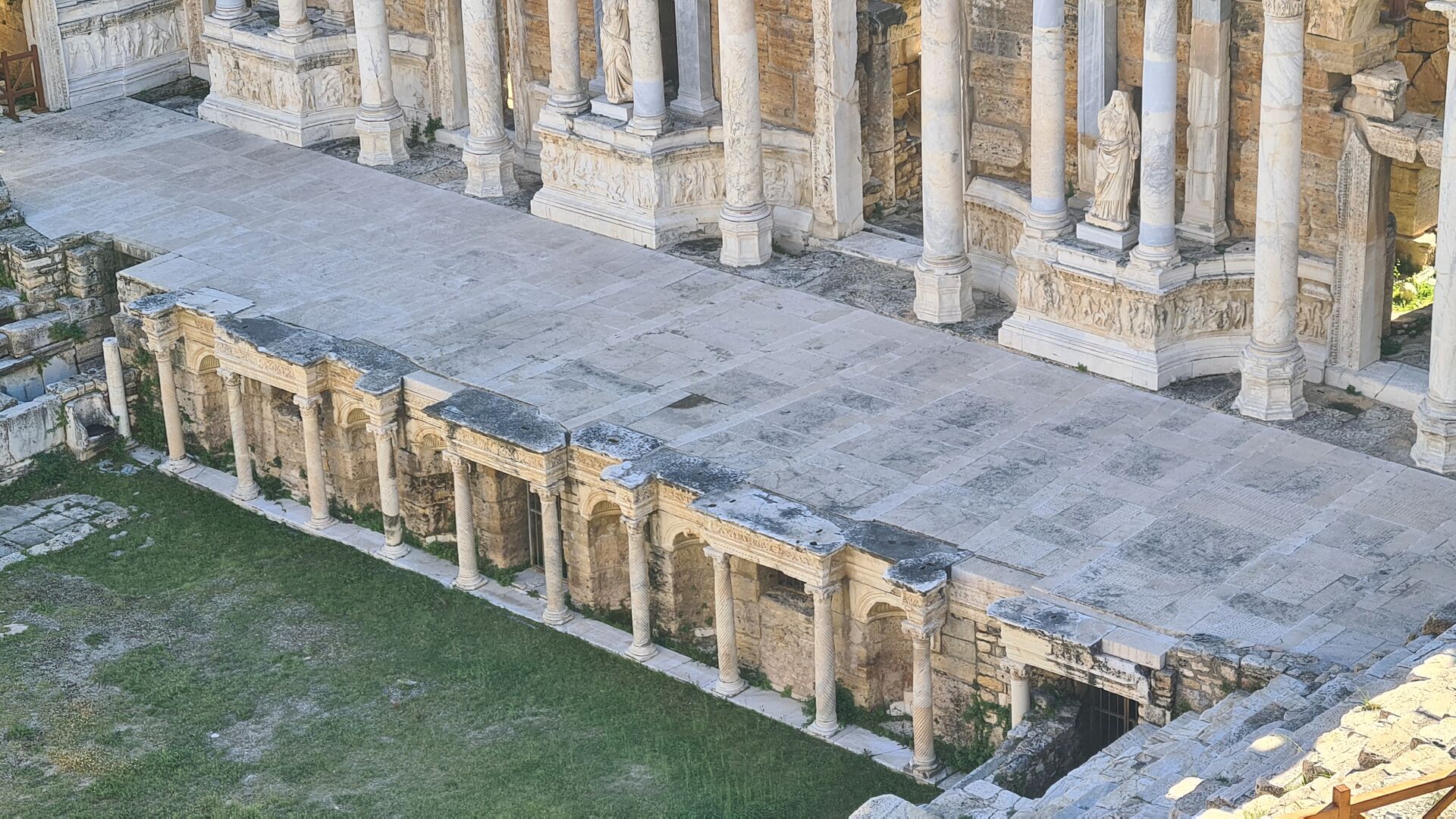
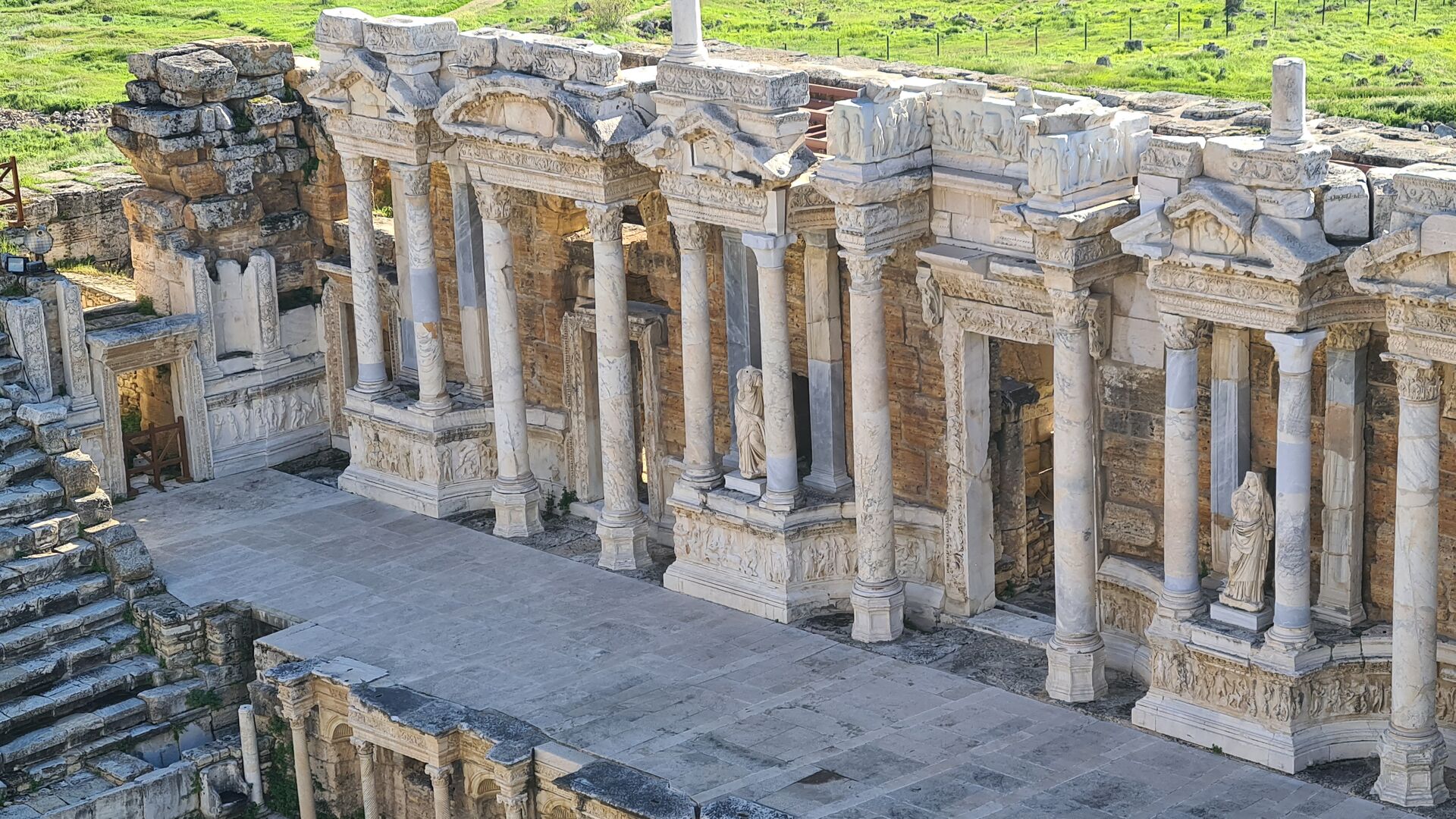
Under Roman rule, Hierapolis flourished as a religious, cultural, and health center. The city was home to temples, baths, theaters, and necropolises, many of which remain visible today. Hierapolis also became an important center of early Christianity and is traditionally associated with Saint Philip, one of the twelve apostles.
During the Byzantine period, the city remained inhabited but gradually declined due to earthquakes and changing political conditions. Over time, Hierapolis was abandoned, and its ruins became partially covered by travertine deposits. The thermal waters, however, continued to flow and shape the landscape. In modern times, archaeological excavations and conservation efforts have brought renewed attention to Pamukkale’s historical importance.
Geology
Pamukkale’s unique geology is the result of tectonic activity and hydrothermal processes. The region lies within an active fault zone, which allows geothermal waters heated deep underground to rise to the surface.
These waters are rich in calcium carbonate. As the hot water reaches the surface and cools, the calcium carbonate precipitates, forming the white travertine terraces, pools, and cascades that define Pamukkale’s landscape. Over thousands of years, this process created the layered formations seen today.
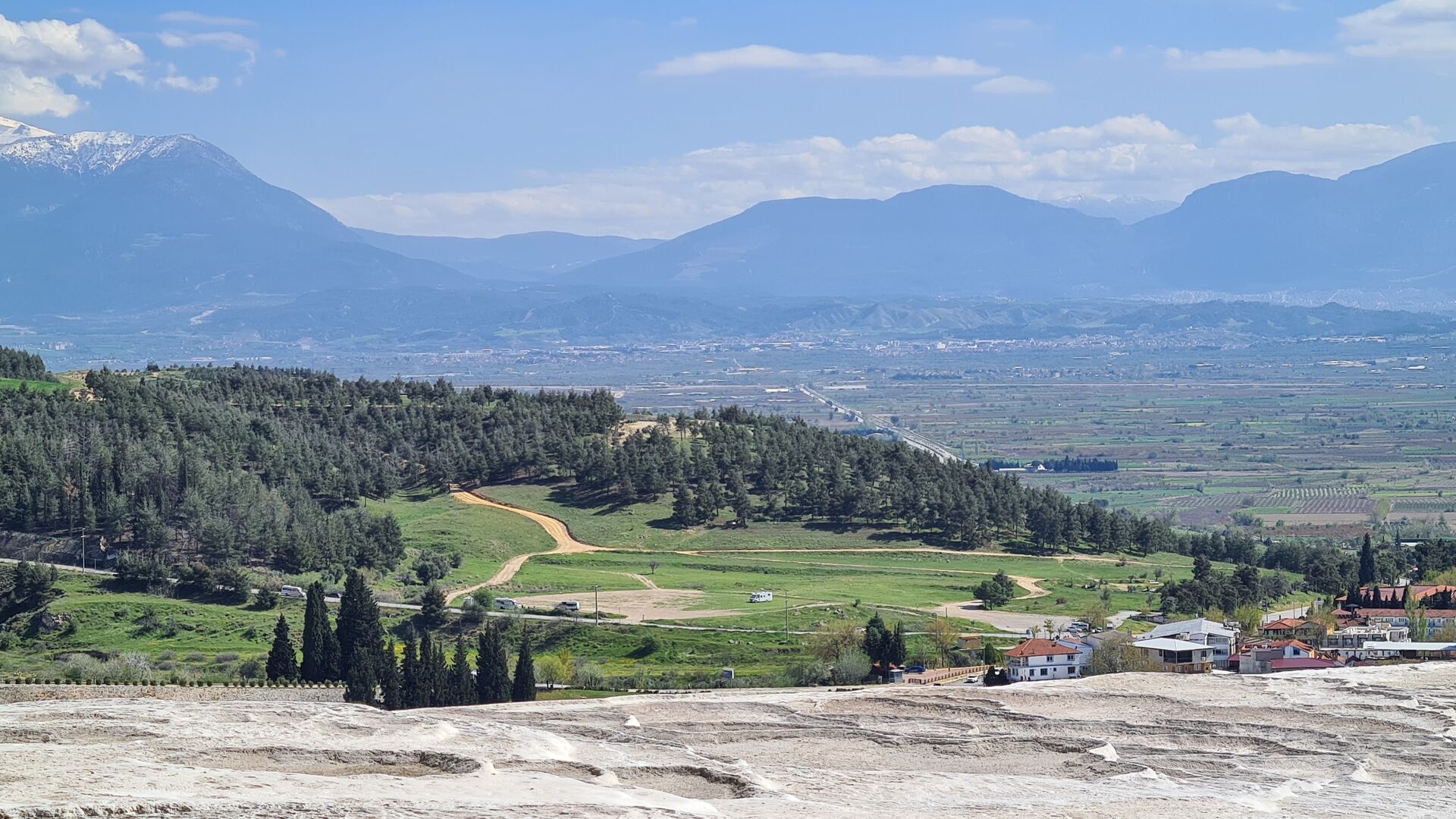
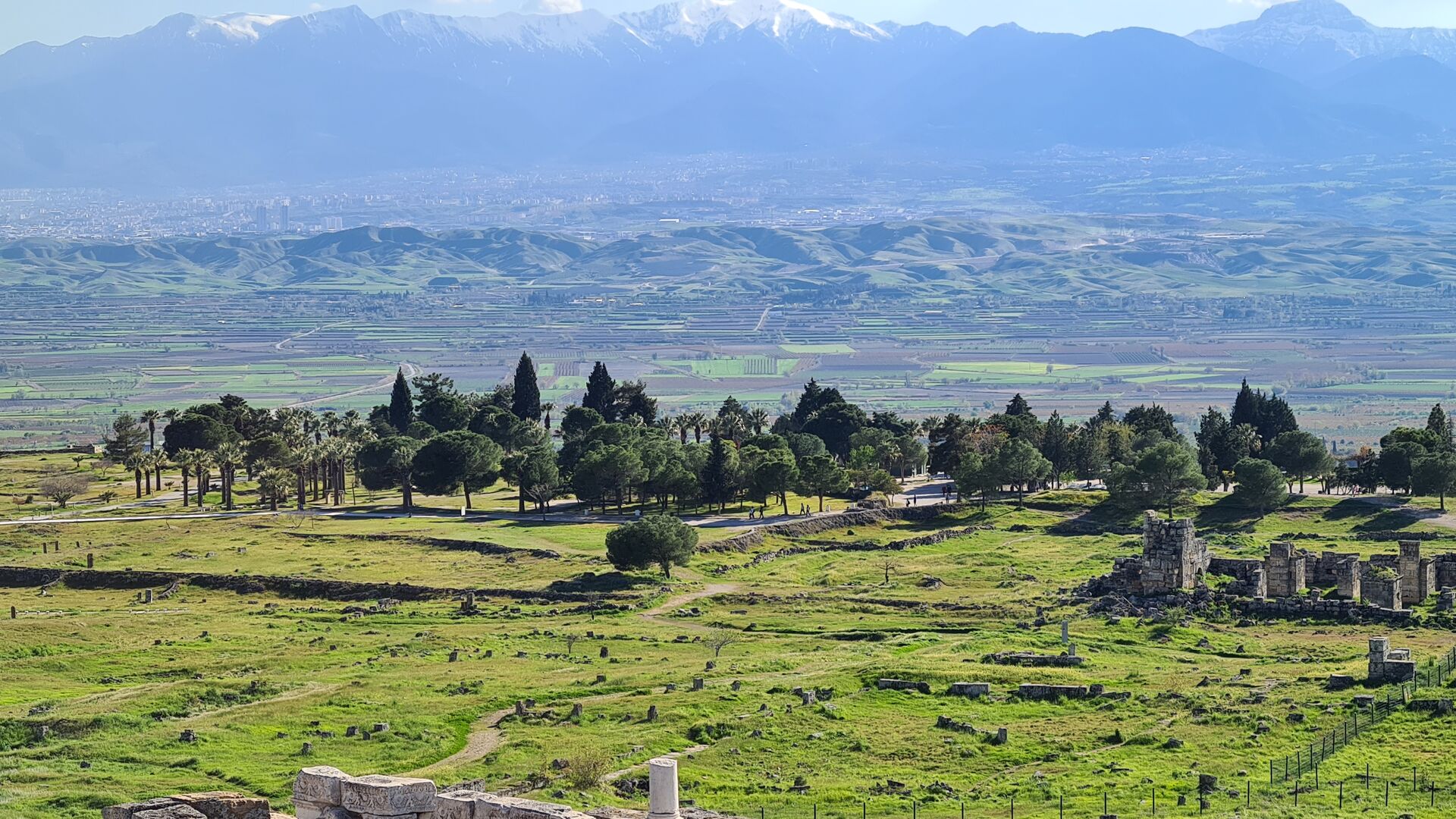
The surrounding region includes fertile alluvial plains shaped by river systems, as well as limestone hills and fault-controlled valleys. Geological activity has also caused frequent earthquakes throughout history, which contributed to the repeated destruction and rebuilding of Hierapolis.
Things to See
Pamukkale and its surroundings offer a remarkable combination of natural beauty and ancient heritage:
Natural Attractions
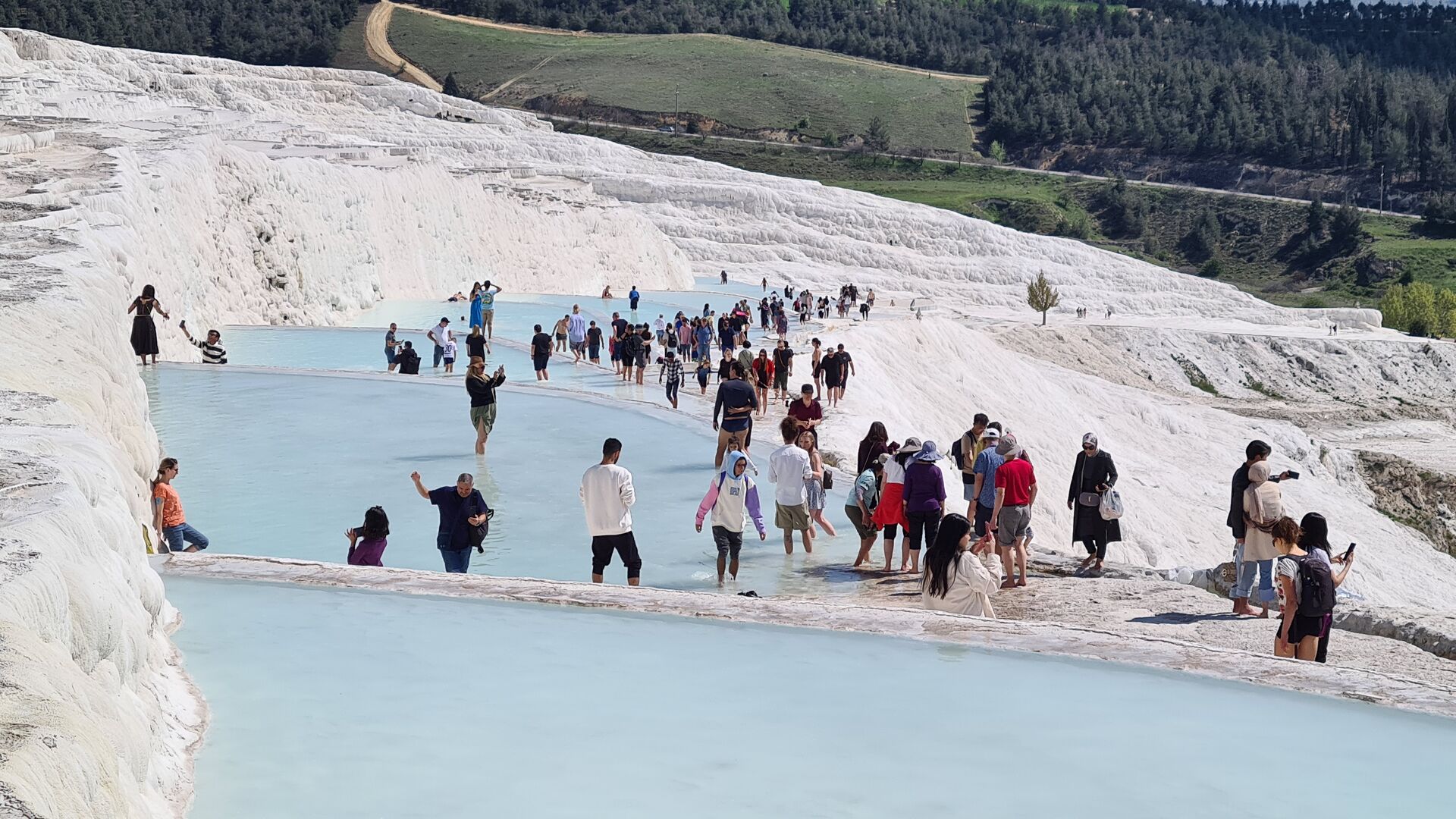
- White travertine terraces and thermal pools of Pamukkale
- Thermal springs with warm, mineral-rich waters
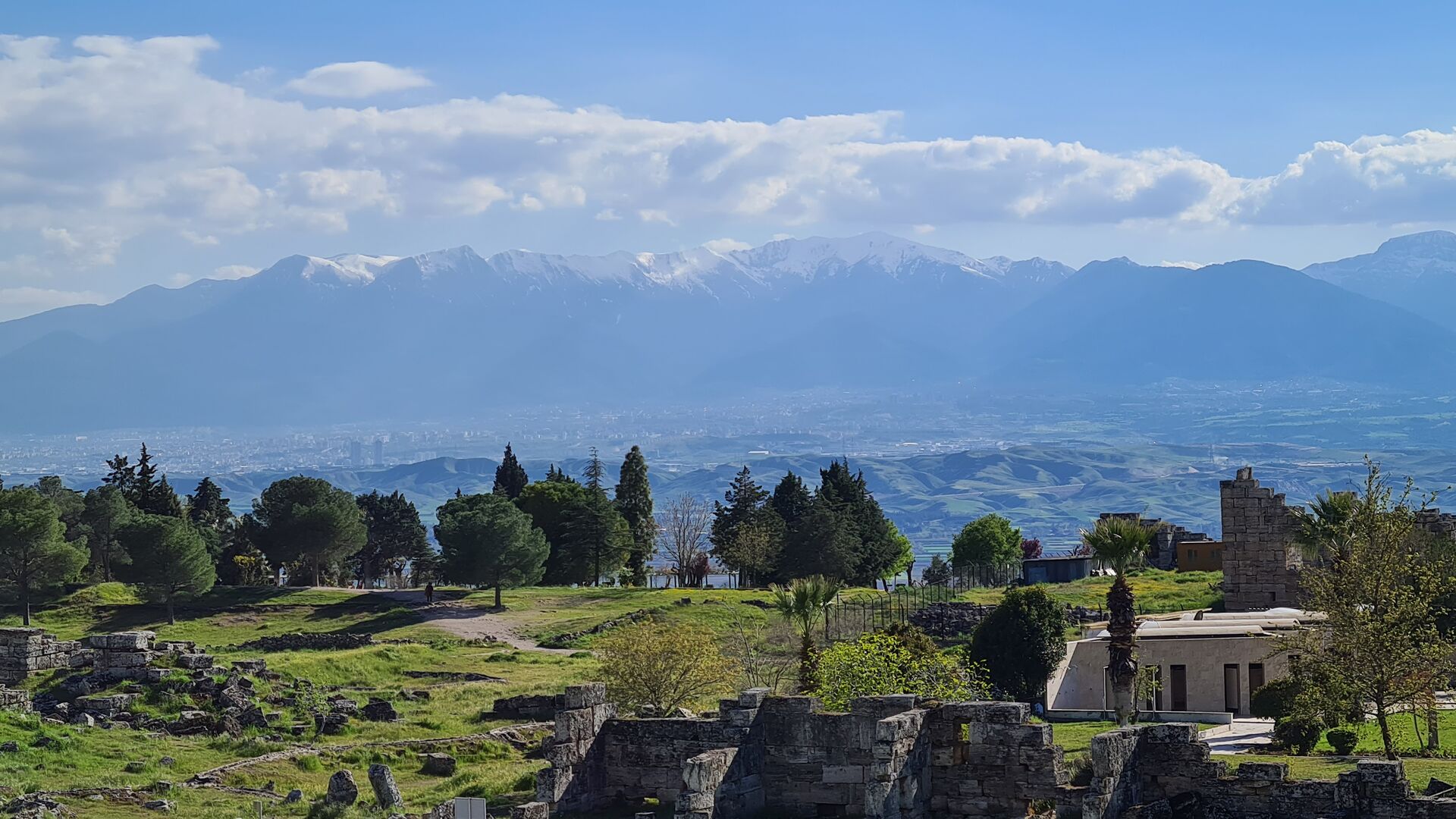
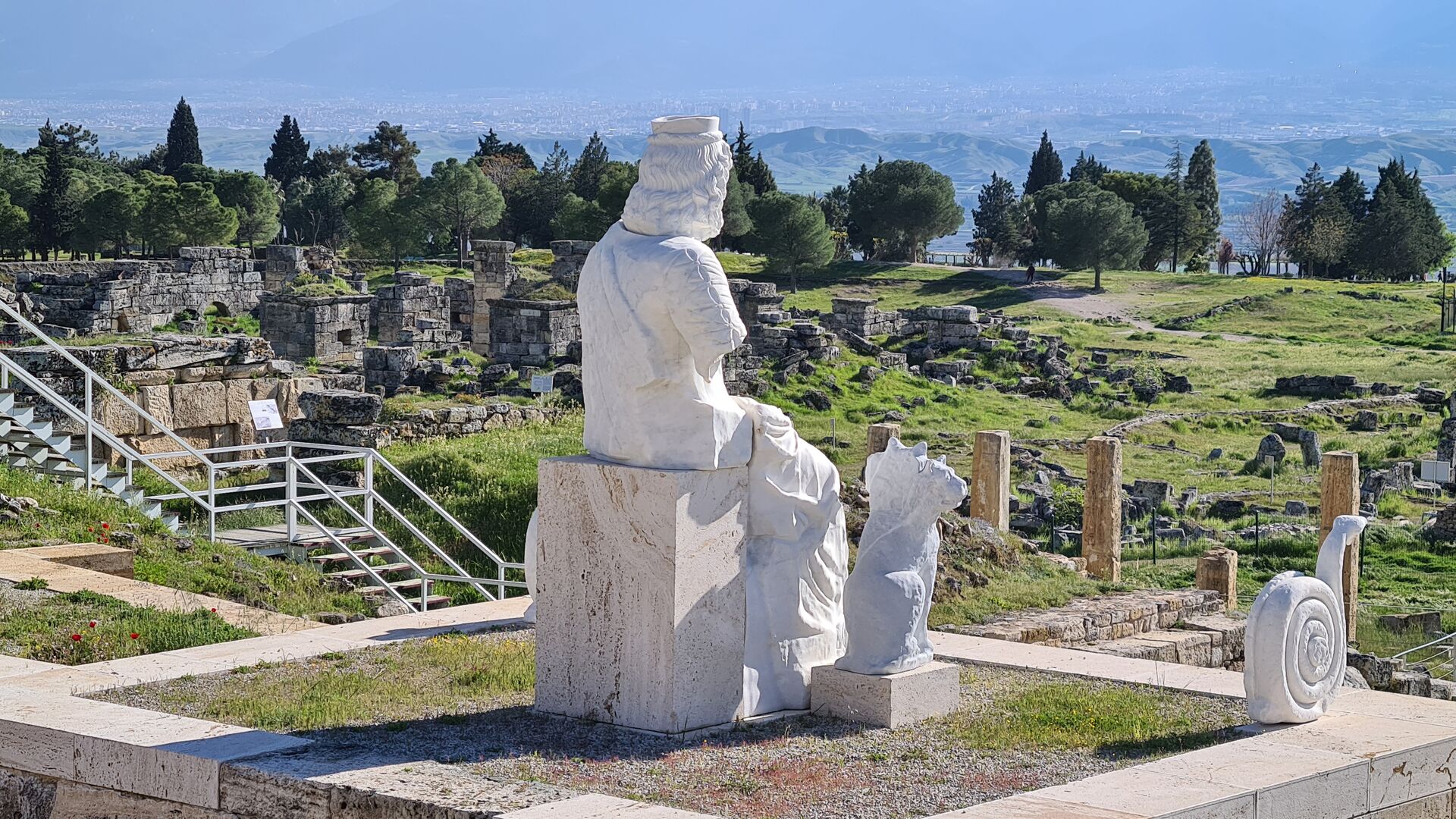
- Panoramic views over the Denizli plain
- Sunset and sunrise viewpoints across the terraces
Archaeological and Historical Sites
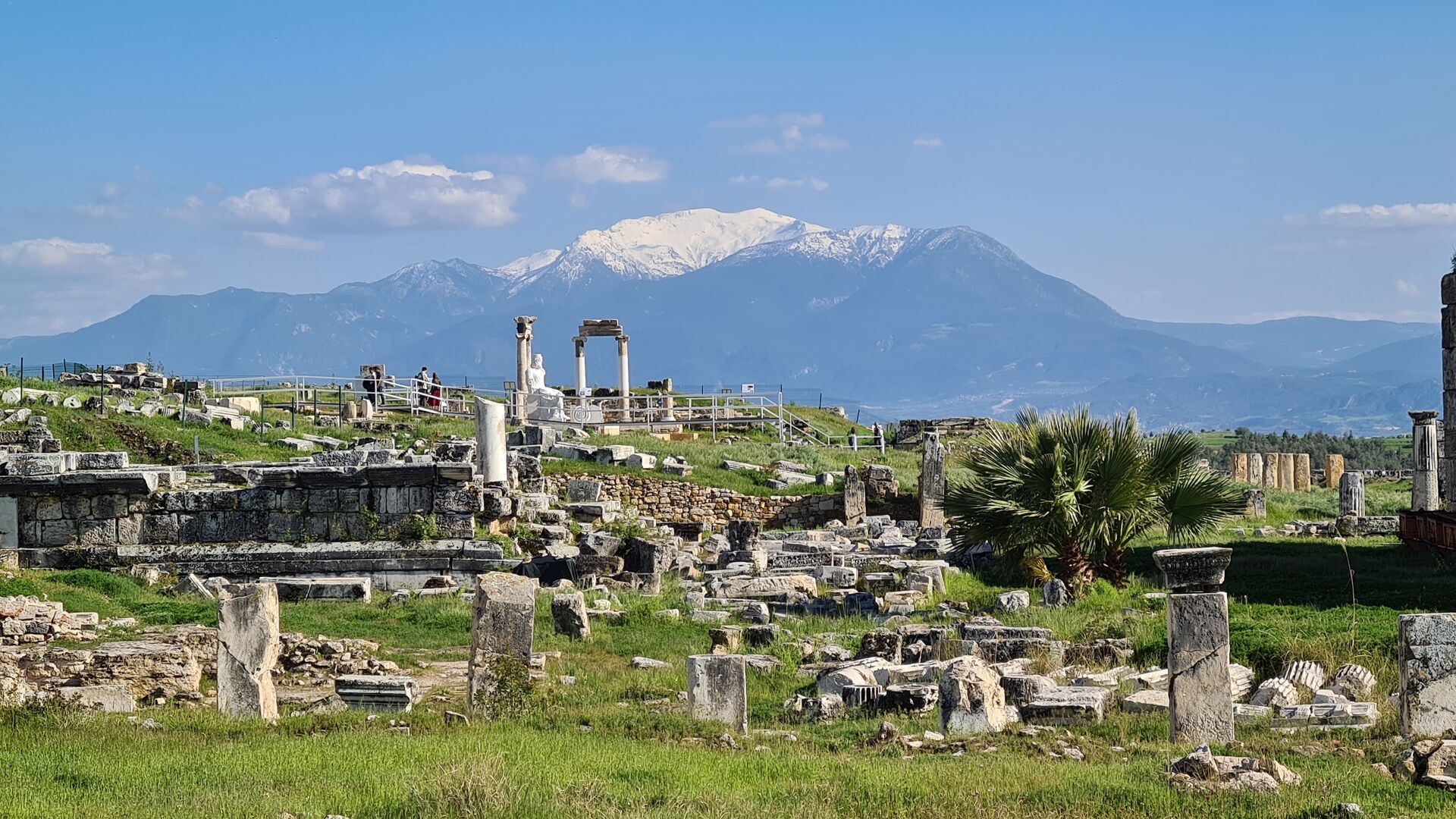
- Ancient city of Hierapolis, including the Roman theater
- Necropolis of Hierapolis, one of the largest in Anatolia
- Temple of Apollo and ancient bath complexes
- Ploutonion, an ancient sacred cave associated with the underworld
Surrounding Region
- Denizli city and its museums
- Laodicea on the Lycus, an important nearby ancient city
- Rural villages and agricultural landscapes
- Thermal spa facilities and wellness centers