
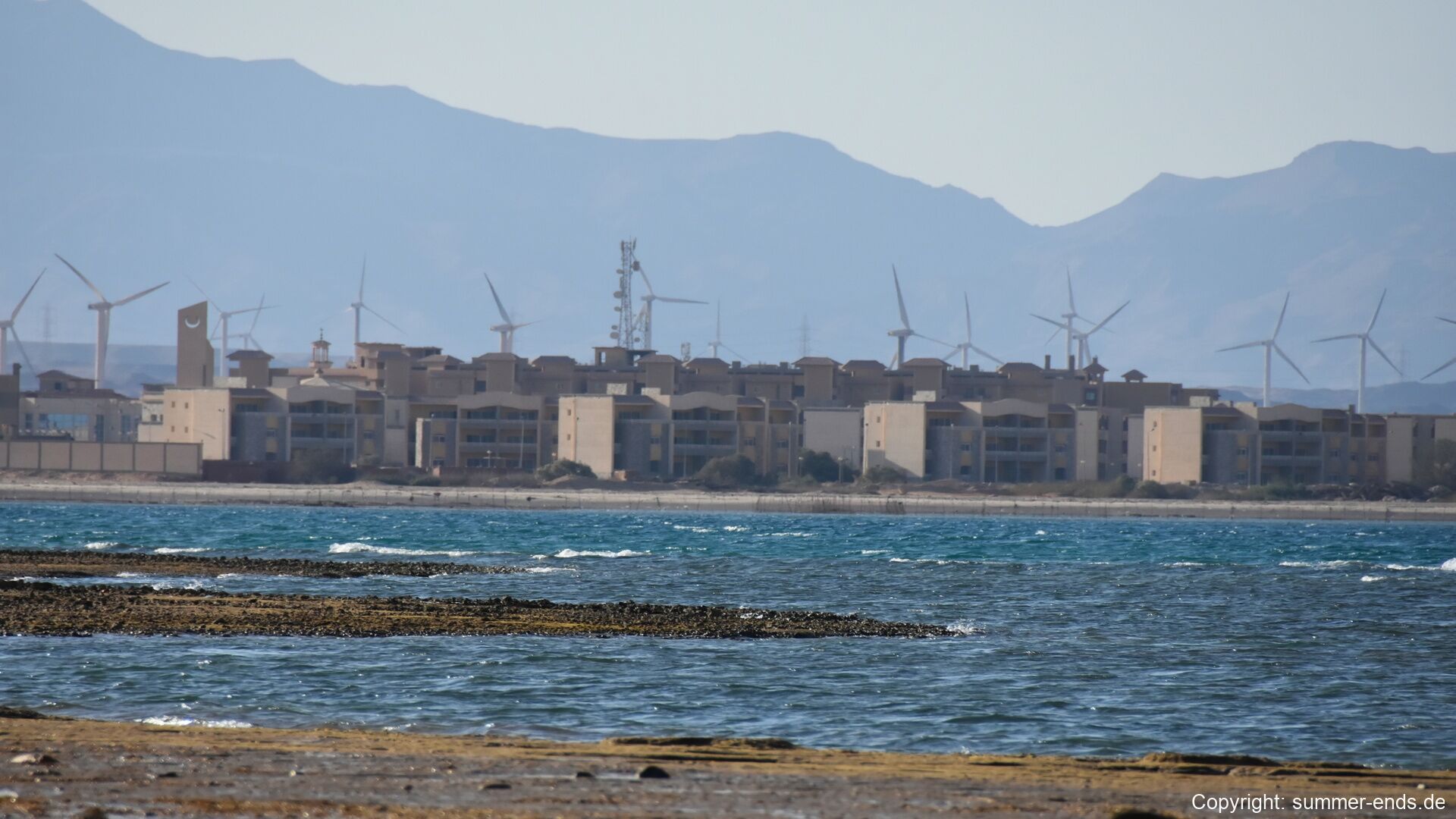
The journey from the Nile Valley to the Red Sea offers one of the most scenic and historically rich drives in Egypt. Traversing the Eastern Desert — a vast and rugged landscape between the fertile Nile floodplain and the Red Sea coast — this route links major inland cities like Luxor, Qena, or Cairo with coastal destinations such as Hurghada, Safaga, or El Quseir.
Whether you’re traveling for leisure, diving, or exploration, the drive across the Eastern Desert presents dramatic mountain views, ancient trade routes, and glimpses into the geology and history of one of Egypt’s most underexplored regions. Today’s well-paved roads trace paths that have been in use since pharaonic times, serving as arteries for trade, mining, and military campaigns.
The road to the Red Sea is not only a connection between ecosystems, but also between eras — linking ancient caravan trails with modern infrastructure, and desert silence with coastal vitality.
History
The Eastern Desert has been a critical corridor for thousands of years. In antiquity, pharaohs, merchants, miners, and armies crossed these harsh lands to reach the Red Sea and beyond. One of the most famous ancient routes is Wadi Hammamat, a valley that connects the Nile near Qift to the Red Sea port of El Quseir. This path was used as early as the Old Kingdom for expeditions to the Red Sea and the fabled Land of Punt.
Rock inscriptions found along these ancient routes record the journeys of expeditions sent to quarry stone, mine gold, or reach maritime trade ports. Hieroglyphs, graffiti, and depictions of boats, gods, and kings can still be seen carved into the cliffs of wadis such as Hammamat and Wadi Gimal.
During the Roman and Ptolemaic periods, the Eastern Desert was part of a broader imperial trade network. Fortified waystations, or praesidia, were built along the desert roads to protect caravans and supply water. Goods from Africa, Arabia, and India passed through ports like Berenike and Myos Hormos on the Red Sea and were transported across the desert to the Nile.
In modern times, this desert remained sparsely inhabited until the development of Egypt’s Red Sea tourism industry in the late 20th century. Today, paved highways connect cities like Luxor and Cairo to coastal resorts, making the drive both accessible and popular for travelers heading to the Red Sea Riviera.
Geology
The Eastern Desert is one of the most geologically complex regions in Egypt. It forms part of the Arabian-Nubian Shield, an ancient geological formation composed of metamorphic and igneous rocks dating back over 600 million years. The region features rugged Red Sea Mountains, wide desert valleys (wadis), and outcrops of granite, gabbro, and volcanic rock.
The desert’s landscape was shaped by tectonic uplift and erosion, and continues to evolve due to the ongoing separation of the African and Arabian tectonic plates — a process that created the Red Sea rift. This rifting zone marks a divergent plate boundary and gives rise to geothermal activity, faulting, and unique geological structures.
Along the drive, travelers may see striking granite peaks, desert pavements, and fossil-rich sedimentary formations, especially near the older quarries and mining sites. The area is also rich in mineral resources, including gold, copper, and semi-precious stones. Ancient mining galleries and slag heaps can still be found scattered across the desert.
The change in landscape is dramatic: from the cultivated Nile Valley, across barren desert plateaus and rocky canyons, to the coral-fringed coastline of the Red Sea, which drops steeply into one of the world’s most important marine rift systems.
Things to See
While the drive to the Red Sea is often treated as a transit route, it offers much for those interested in history, geology, and desert landscapes.
Highlights along or near the route include:
- Wadi Hammamat: One of the most historically significant routes, featuring hundreds of rock inscriptions from different eras, pharaonic graffiti, and ancient quarry sites for greywacke and basalt.
- Mons Porphyrites and Mons Claudianus: Roman-era quarry sites where porphyry and granite were mined for imperial construction in Rome and Alexandria. Remnants of Roman settlements, temples, and workshops remain.
- Desert ecology and wildlife: The Eastern Desert is home to acacia trees, desert foxes, monitor lizards, and migratory birds. Remote areas like Wadi El-Gemal National Park (closer to Marsa Alam) are noted for biodiversity and ecotourism potential.
- Nomadic tribes and Bedouin heritage: The Ababda and Ma’aza tribes traditionally inhabit this region. Cultural encounters, especially in remote areas or organized safaris, offer insights into traditional desert life.
- Roadside desert vistas: Especially near the Qena-Safaga and Luxor-Hurghada highways, there are scenic viewpoints where the layered geology, canyons, and shifting light create dramatic visuals.
- Arrival at the Red Sea: Upon reaching the coast, travelers are greeted by coral reefs, turquoise waters, and bustling resorts. Hurghada, Safaga, and El Quseir serve as major entry points for diving, snorkeling, and marine excursions.
Optional excursions include:
- Visiting ancient gold mines and Roman fortresses with local guides
- Exploring geological formations, such as volcanic plugs or fossil beds
- Joining a desert safari by 4×4 or camel in protected wilderness areas
The drive is typically between 3 to 5 hours, depending on the starting point. While fuel stations and rest areas are available on major routes, much of the desert remains remote, so preparation is essential.