


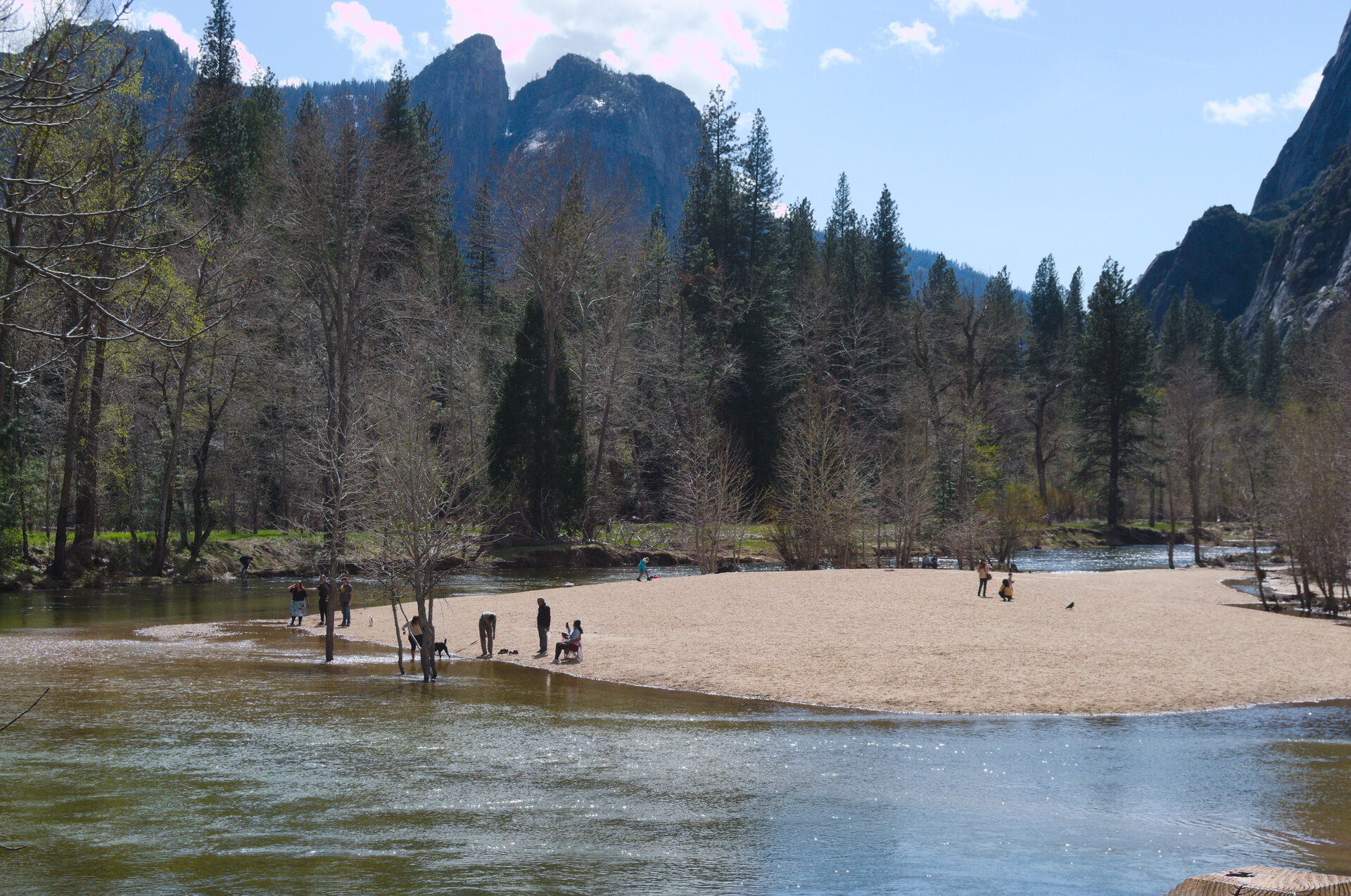


Yosemite National Park is a protected wilderness area located in the Sierra Nevada mountains of central California. It is internationally renowned for its dramatic granite cliffs, deep valleys, giant sequoia groves, waterfalls, and high-elevation wilderness. Covering nearly 3,100 square kilometers, Yosemite represents one of the most iconic natural landscapes in the United States.
The park spans a wide range of elevations, from lower foothill zones to alpine environments above 4,000 meters. This variation creates diverse climates and ecosystems within a relatively compact area. Yosemite Valley, the most visited part of the park, forms the visual and cultural heart of Yosemite, surrounded by towering granite walls and intersected by the Merced River.
Yosemite experiences distinct seasons. Summers are generally warm and dry, while winters bring heavy snowfall, particularly at higher elevations. Snowmelt in spring feeds rivers and waterfalls, creating some of the park’s most spectacular natural displays. Yosemite attracts visitors year-round for hiking, climbing, photography, wildlife observation, and scenic exploration.
History
Human presence in Yosemite dates back thousands of years. Indigenous peoples, including the Ahwahneechee, lived in Yosemite Valley and surrounding areas, relying on seasonal food sources, controlled burning, and deep ecological knowledge. The name “Yosemite” itself originates from Indigenous language and history.
European-American exploration increased in the mid-19th century during the California Gold Rush. Reports of Yosemite’s dramatic scenery quickly captured public imagination, leading to early calls for preservation. In 1864, Yosemite Valley and the Mariposa Grove of Giant Sequoias were granted protected status, marking one of the earliest conservation efforts in the world.
Yosemite National Park was officially established in 1890. Influential figures such as John Muir played a major role in promoting the park’s preservation and shaping the American conservation movement. Over time, management evolved to balance public access with ecosystem protection, cultural recognition, and scientific research.
Geology
Yosemite’s landscape is largely the result of geological processes that unfolded over hundreds of millions of years. The park is dominated by granite formed deep underground as magma slowly cooled and solidified. Tectonic uplift later raised this granite to the surface, forming the Sierra Nevada mountain range.
Glacial activity during multiple ice ages sculpted Yosemite’s most famous features. Massive glaciers carved U-shaped valleys, sheer cliffs, and smooth rock faces. Yosemite Valley is one of the most striking examples of glacial erosion in North America.
Iconic granite formations such as Half Dome and El Capitan were shaped by a combination of jointing, exfoliation, and glacial carving. Rivers continue to erode the landscape, while freeze-thaw cycles and rockfall remain active geological processes today.
Landscapes and Natural Environment
Yosemite contains a wide range of ecosystems shaped by elevation, climate, and geology. Lower elevations support oak woodlands and chaparral, transitioning into dense conifer forests dominated by pine, fir, and cedar.
Giant sequoia groves, including the famous Mariposa Grove, occupy specific mid-elevation zones where soil, moisture, and fire conditions are suitable. Fire plays a vital ecological role, clearing undergrowth and maintaining forest health.
At higher elevations, forests give way to alpine meadows, granite domes, and exposed ridgelines. Seasonal snowpack feeds rivers and streams, sustaining aquatic ecosystems and shaping waterfalls such as Yosemite Falls, Bridalveil Fall, and Vernal Fall.
Wildlife includes black bears, deer, coyotes, mountain lions, birds of prey, amphibians, and numerous smaller species adapted to mountain environments.
Things to See
Yosemite National Park offers a vast range of natural and cultural attractions:
Iconic Landscapes
- Yosemite Valley with towering granite cliffs
- El Capitan and Half Dome
- Glacier-carved valleys and high-country vistas
- Alpine meadows and granite domes
Water Features
- Yosemite Falls, one of the tallest waterfalls in North America
- Vernal and Nevada Falls along the Merced River
- Seasonal cascades fed by snowmelt
Forests and Wildlife
- Giant sequoia groves
- Extensive conifer forests
- Wildlife observation opportunities
Outdoor Activities
- Hiking trails from valley walks to high-country routes
- Rock climbing on world-class granite walls
- Scenic drives and viewpoints
- Winter activities such as snowshoeing and cross-country skiing
Experience and Character
Yosemite National Park is defined by grandeur, scale, and dramatic contrasts. The verticality of its cliffs, the power of its waterfalls, and the openness of its high country create a powerful sense of awe. Visitors often experience a strong connection to geological time and natural processes.
The park represents a cornerstone of the American national park system and continues to influence ideas about wilderness preservation and public access to nature. Yosemite’s combination of accessibility, iconic scenery, and deep ecological complexity makes it one of the most significant protected landscapes in the world.