






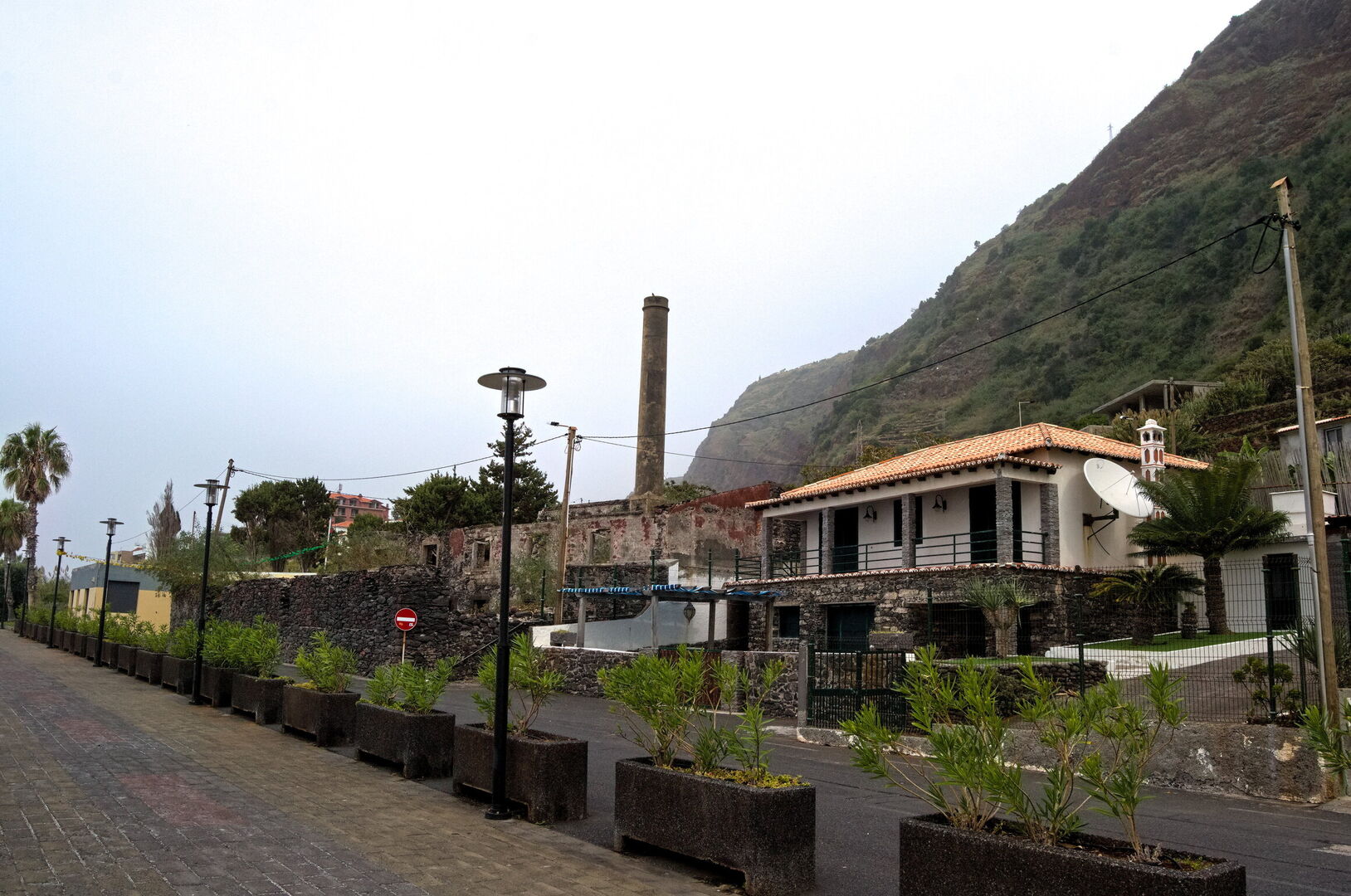
Madeira is a volcanic island in the North Atlantic Ocean, known for its highly varied and dramatic landscape. Despite its relatively small size, the island features steep mountains, deep valleys, dense forests, rugged coastlines, and fertile agricultural terraces. The landscape rises sharply from sea level to high-altitude ridges, creating strong contrasts over short distances.
The island’s terrain shapes every aspect of life on Madeira. Settlements cluster along the coast and in sheltered valleys, while the interior remains largely mountainous and sparsely populated. Roads, villages, and agricultural land adapt closely to the natural contours of the island, giving Madeira a distinctive visual identity.
Madeira’s mild subtropical climate allows vegetation to thrive year-round. Differences in elevation, exposure to wind, and moisture create multiple microclimates, which are clearly reflected in the island’s changing landscapes from south to north and from coast to summit.
Geological Formation
Madeira was formed by volcanic activity over millions of years as lava eruptions built the island up from the ocean floor. Basaltic rock dominates the island and provides the foundation for its steep slopes, cliffs, and ridgelines. Over time, erosion by water and wind carved the volcanic mass into deep ravines and sharp mountain profiles.
The island’s central mountain range runs roughly east to west and includes some of Madeira’s highest and most rugged terrain. These mountains act as a natural barrier, forcing moist air upward and contributing to heavy rainfall on the northern slopes. This process plays a major role in shaping both vegetation patterns and water availability.
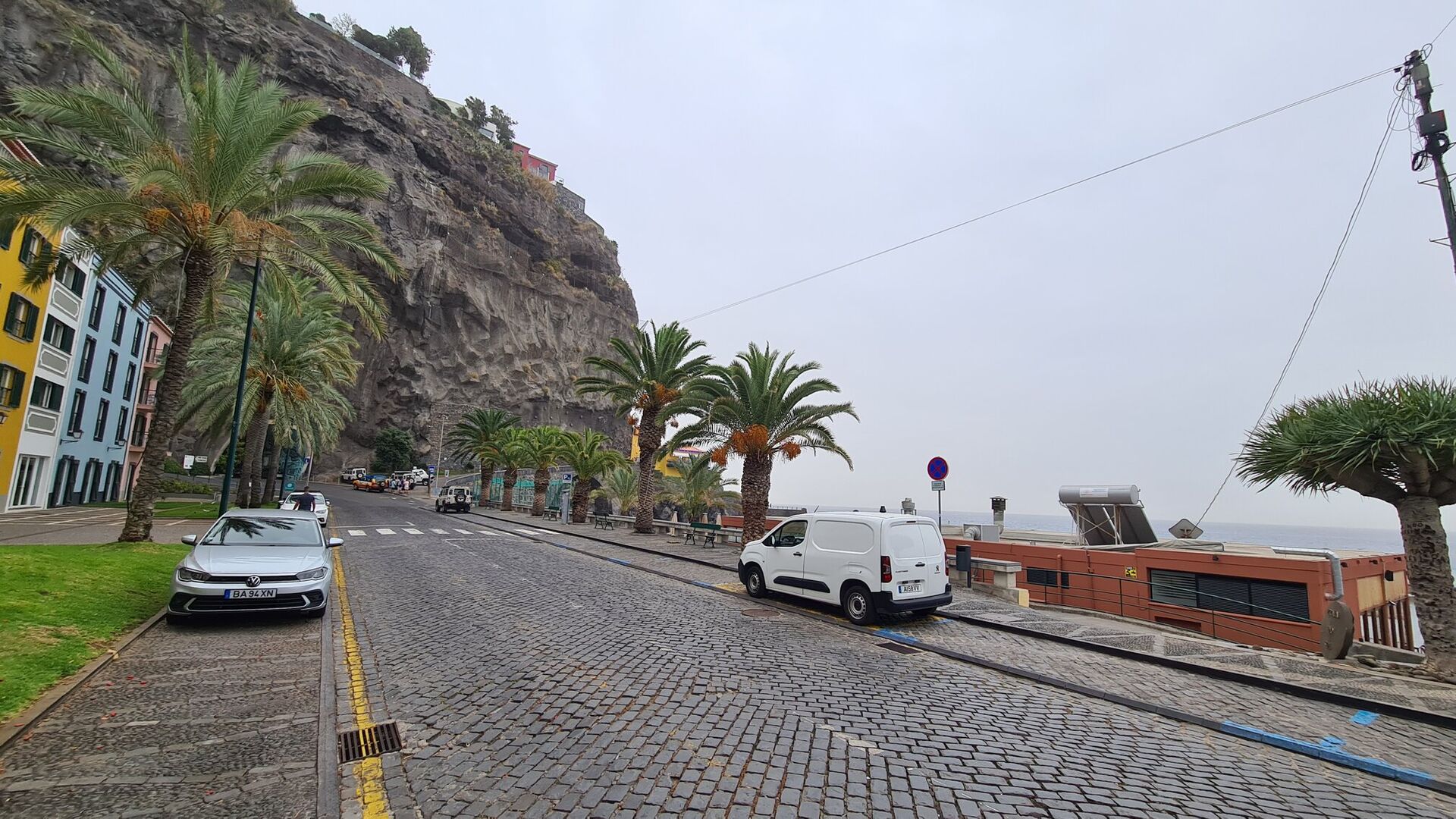
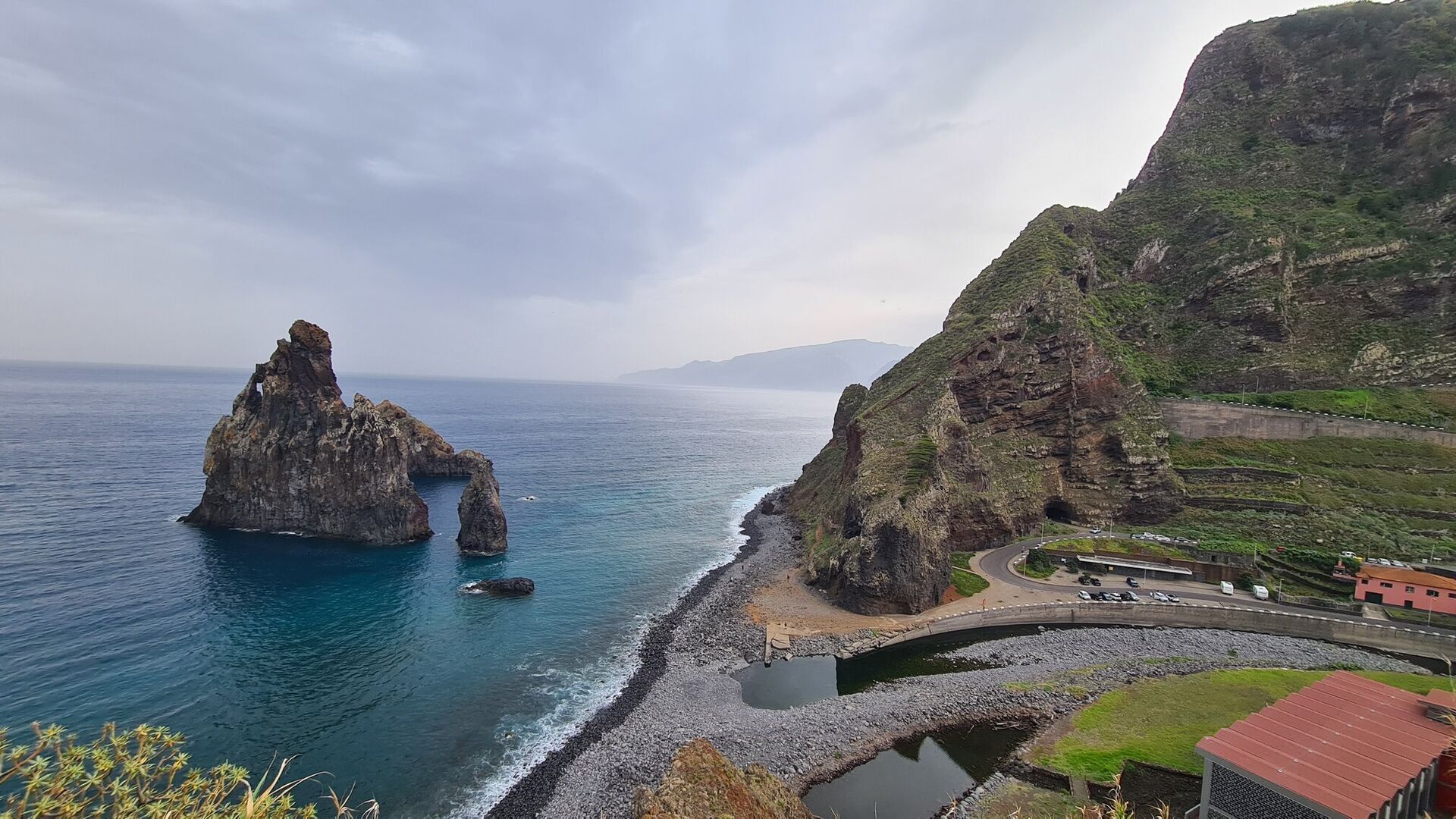
Cliff erosion along the coast has produced dramatic sea-facing landscapes, including vertical rock faces and narrow coastal platforms. Landslides and rockfall remain natural processes on the island and continue to reshape parts of the landscape.
Mountain Landscapes
Madeira’s mountainous interior defines the island’s character. Peaks, ridges, and high plateaus dominate the central region, often rising above cloud layers and offering wide views across the Atlantic. These areas are cooler, windier, and less vegetated than the lower slopes.
Sharp ridgelines and narrow passes connect high points, while steep valleys drop toward the coast. Many of these valleys are inaccessible except by foot, contributing to the island’s sense of rugged isolation in the interior.
High-altitude areas show exposed volcanic rock, alpine shrubs, and grasslands adapted to wind and temperature extremes. In winter, mist and occasional frost further shape the visual atmosphere of the mountain landscape.
Forests and Green Valleys
One of Madeira’s most distinctive landscapes is its forested terrain, especially in the northern and higher regions. The Laurisilva forest, a remnant of ancient subtropical woodland, covers large areas and is recognized as a UNESCO World Heritage Site.
These forests are dense, humid, and rich in endemic plant species. Tree canopies trap moisture from passing clouds, feeding streams and waterfalls that cut through the valleys below. Moss-covered rocks, ferns, and shaded paths create a landscape that feels markedly different from the drier southern coast.
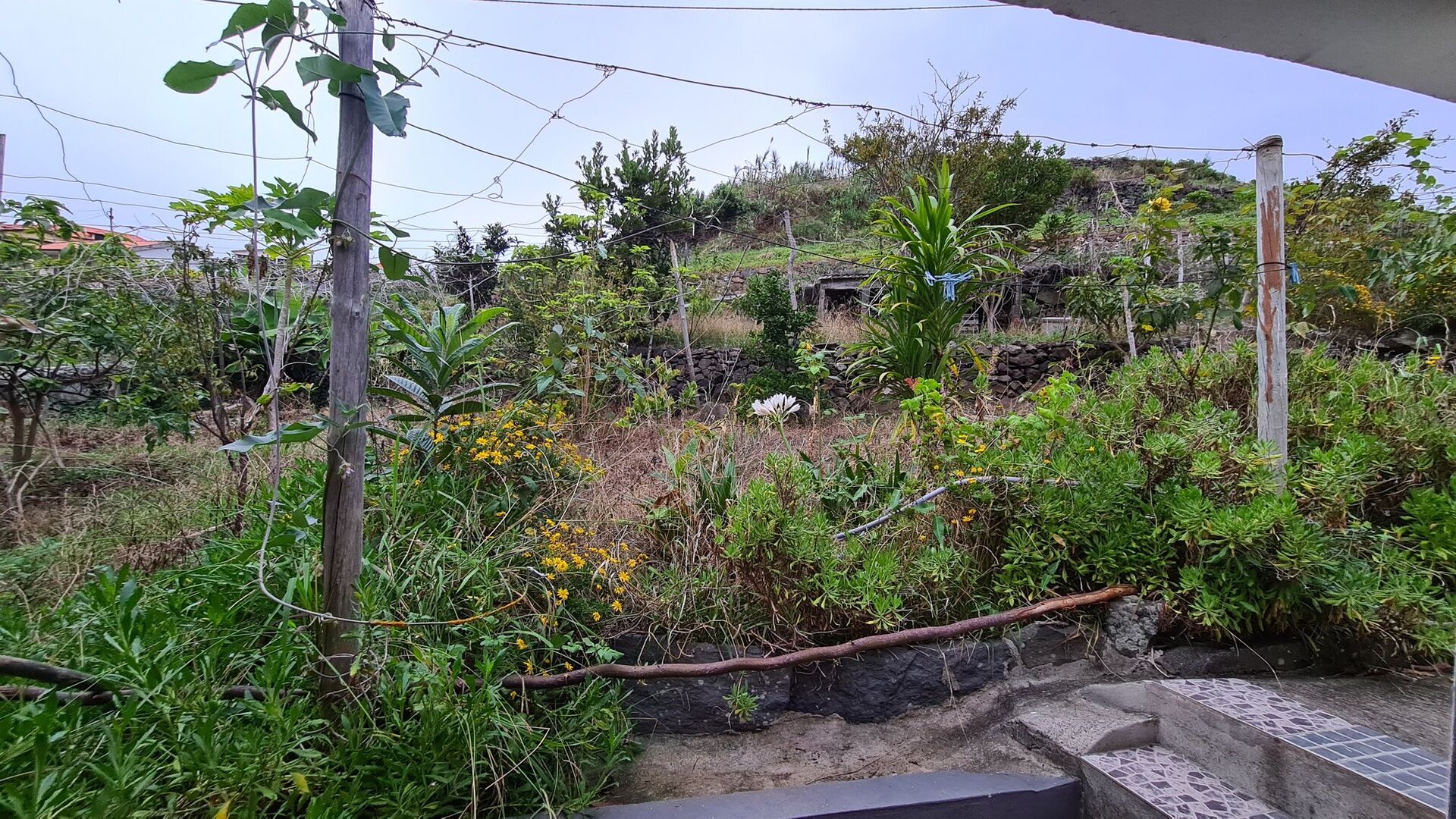
Below the forest belt, green valleys open into terraced farmland. Stone walls support cultivated slopes, where bananas, vines, and vegetables grow in carefully managed plots that follow the natural contours of the land.
Coastal Landscapes
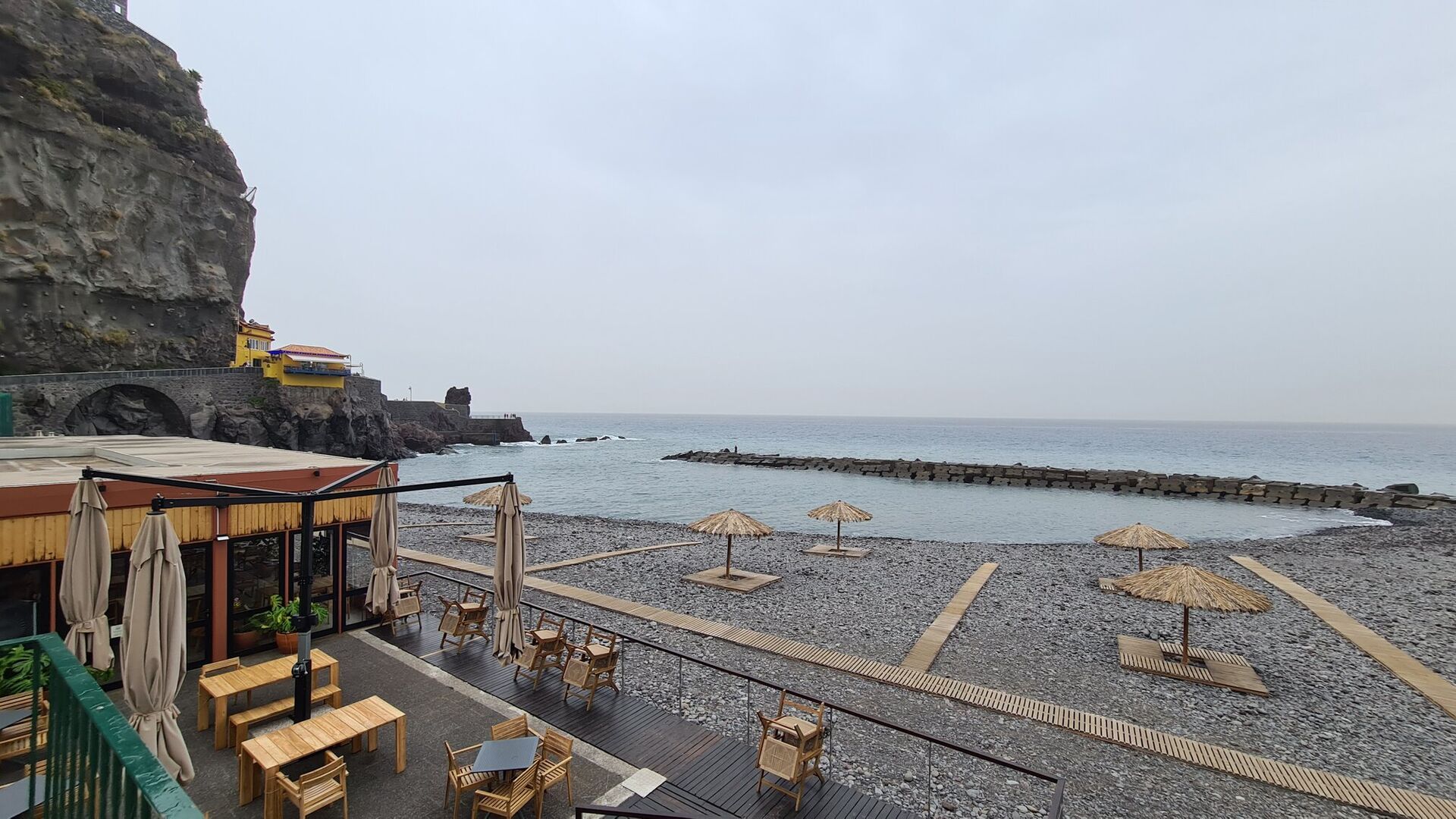
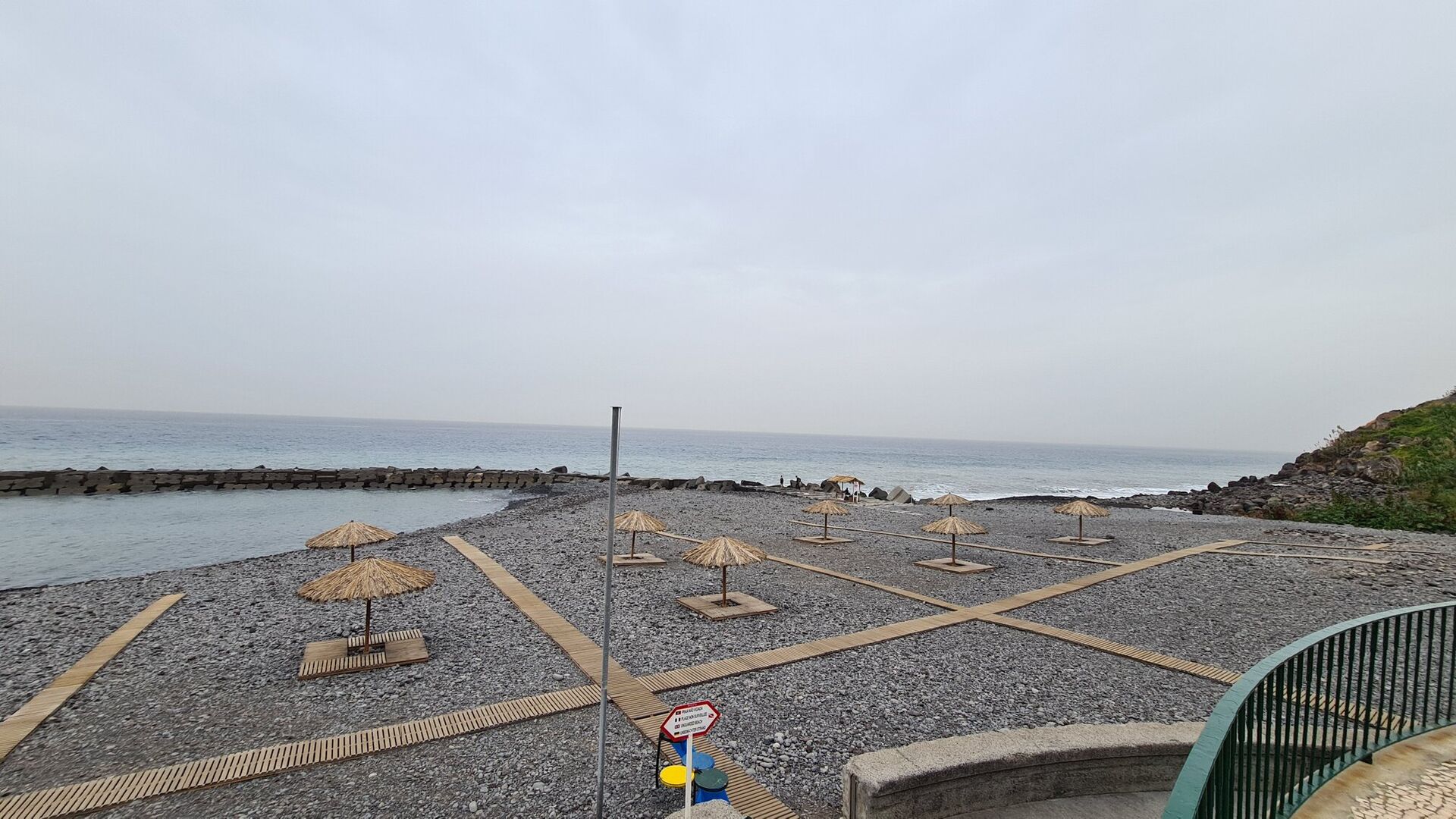
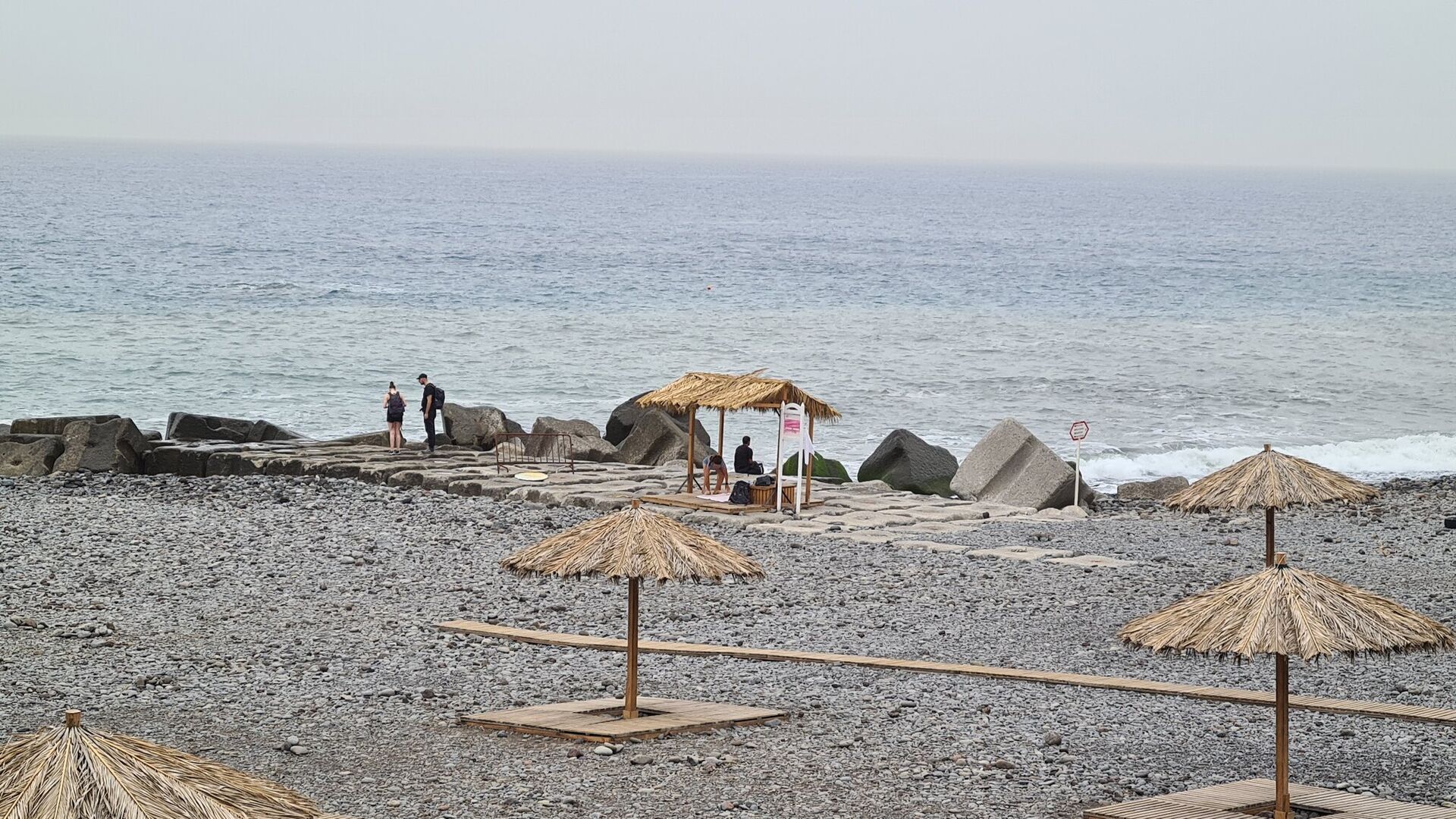
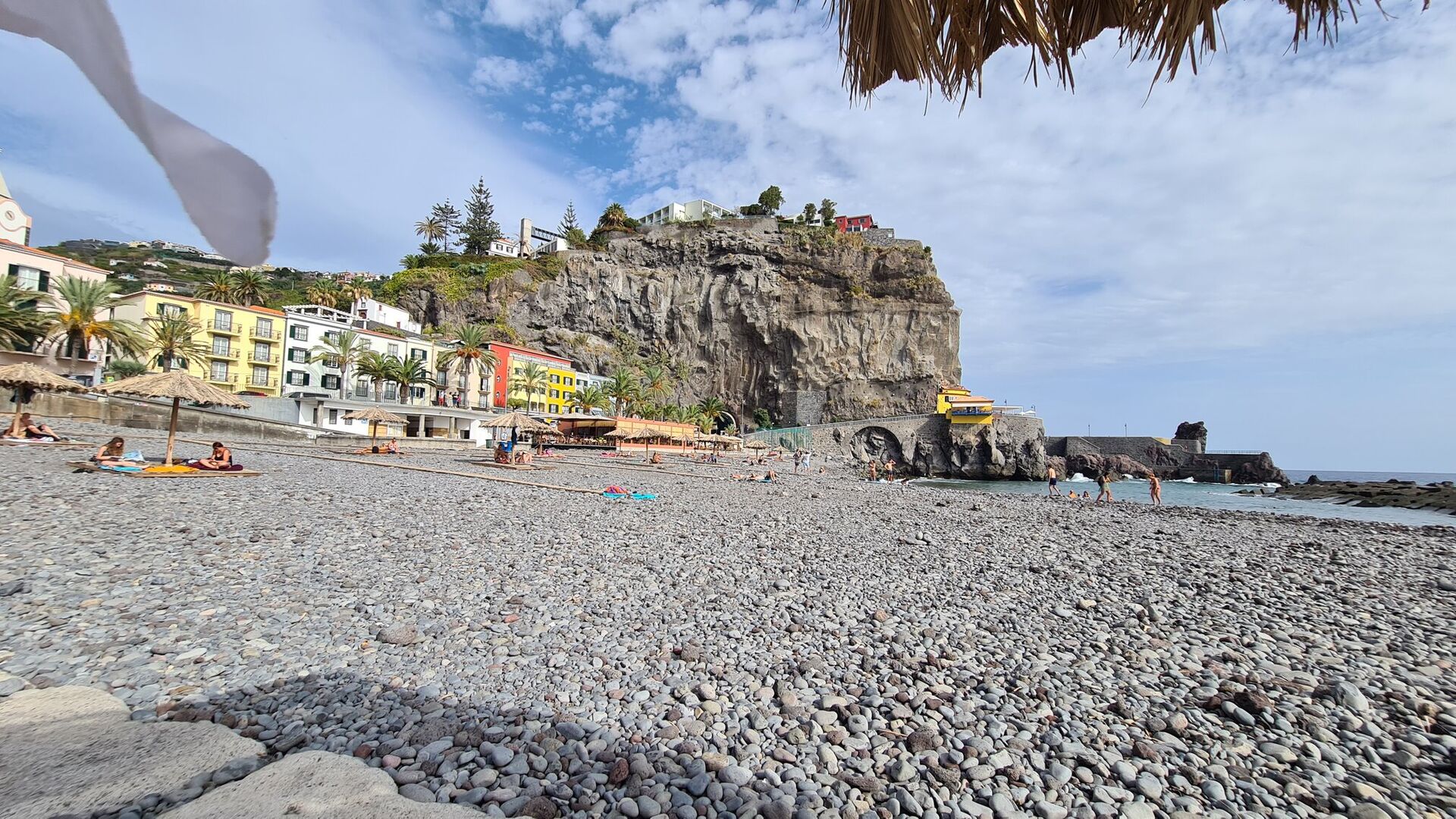
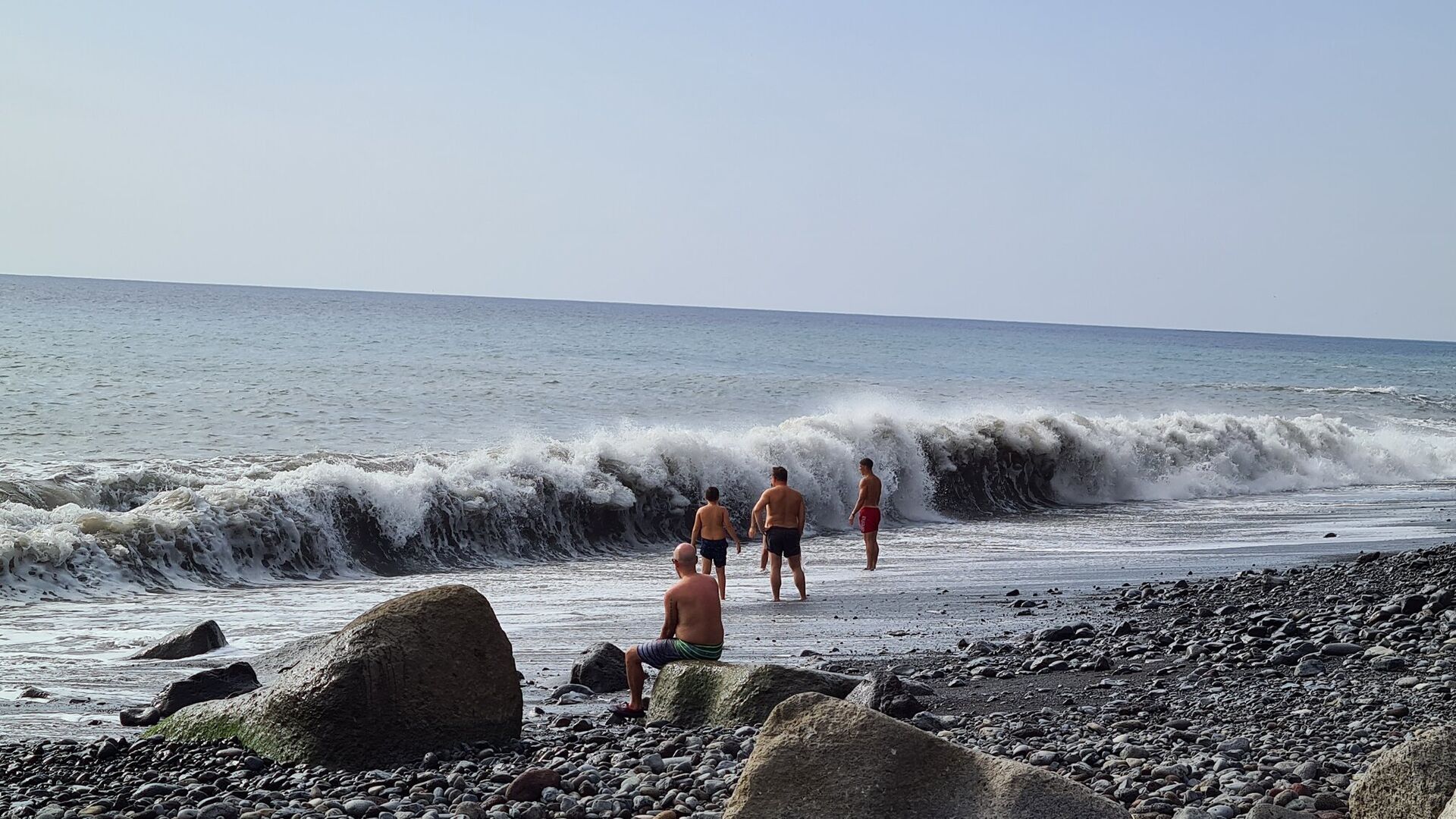
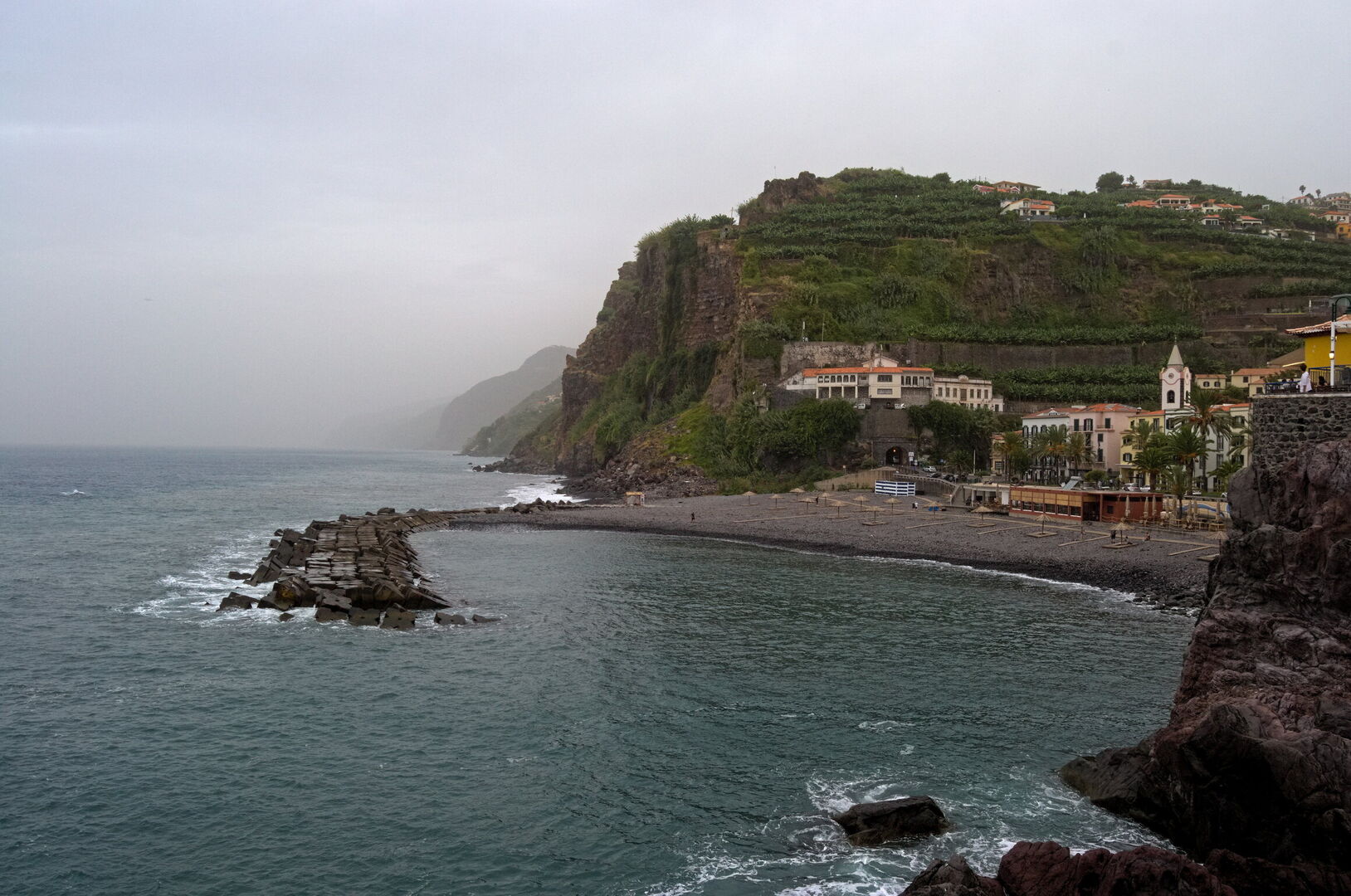
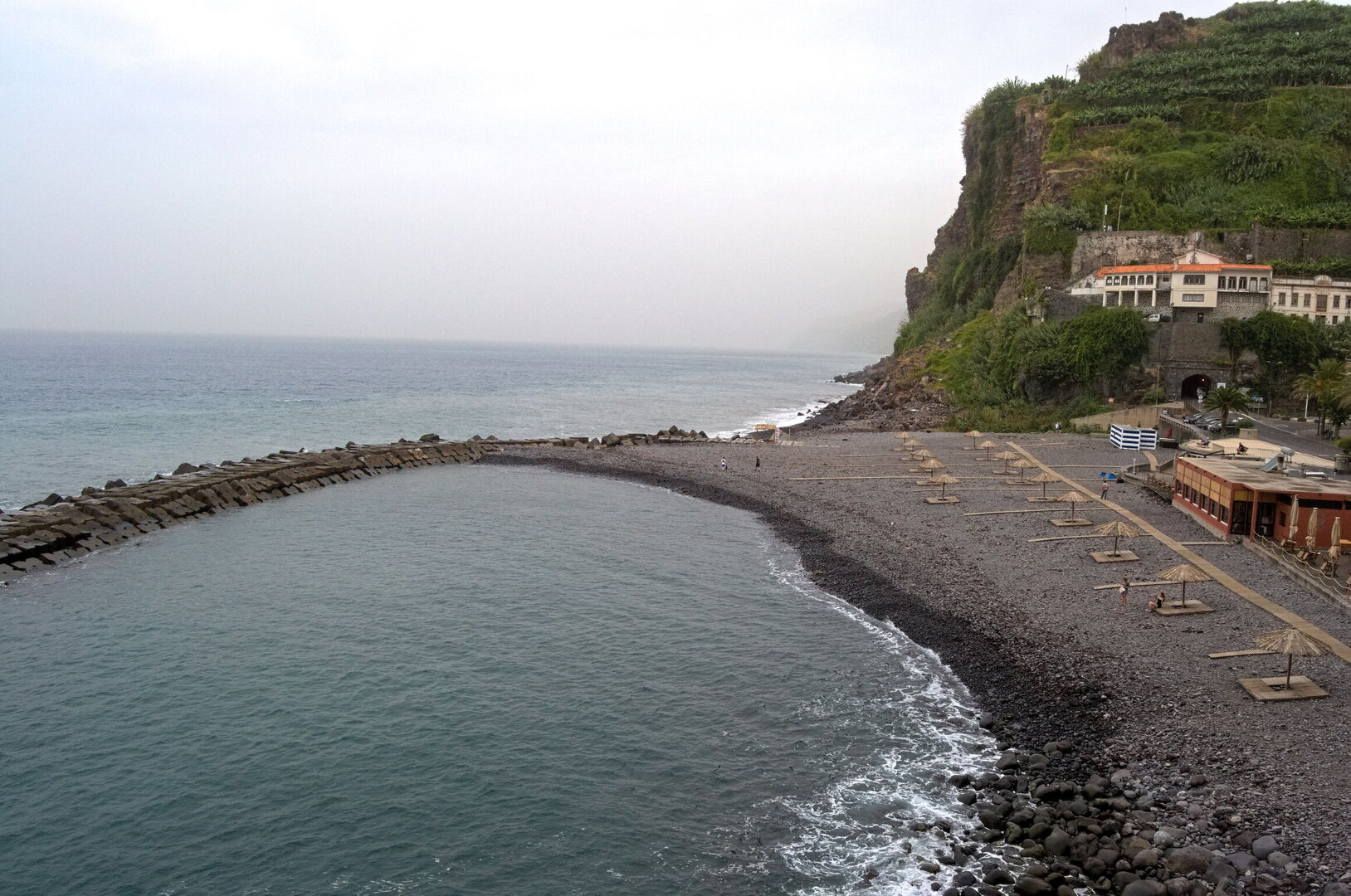
Madeira’s coastline is shaped by volcanic cliffs, rocky headlands, and small natural bays. Large sandy beaches are rare; instead, the island features pebble beaches, lava rock pools, and steep coastal drops directly into the ocean.
In many places, cliffs rise hundreds of meters above sea level, offering panoramic views of the Atlantic. Coastal settlements often occupy small flat areas or river mouths, while roads and paths cling to the rock face above the water.
The contrast between the dark volcanic rock and the deep blue ocean is one of Madeira’s most striking visual elements. On the north coast, waves and wind create a more dramatic and exposed environment, while the south coast is generally calmer and drier.
Agricultural Landscapes
Human activity has played a significant role in shaping Madeira’s landscape. Terraced agriculture is widespread, particularly on steep slopes where flat land is limited. These terraces are supported by stone walls and connected by narrow paths and irrigation channels.
The levadas, which transport water across the island, are both functional and landscape-defining features. They connect wetter and drier regions and support agriculture while also influencing vegetation patterns along their routes.
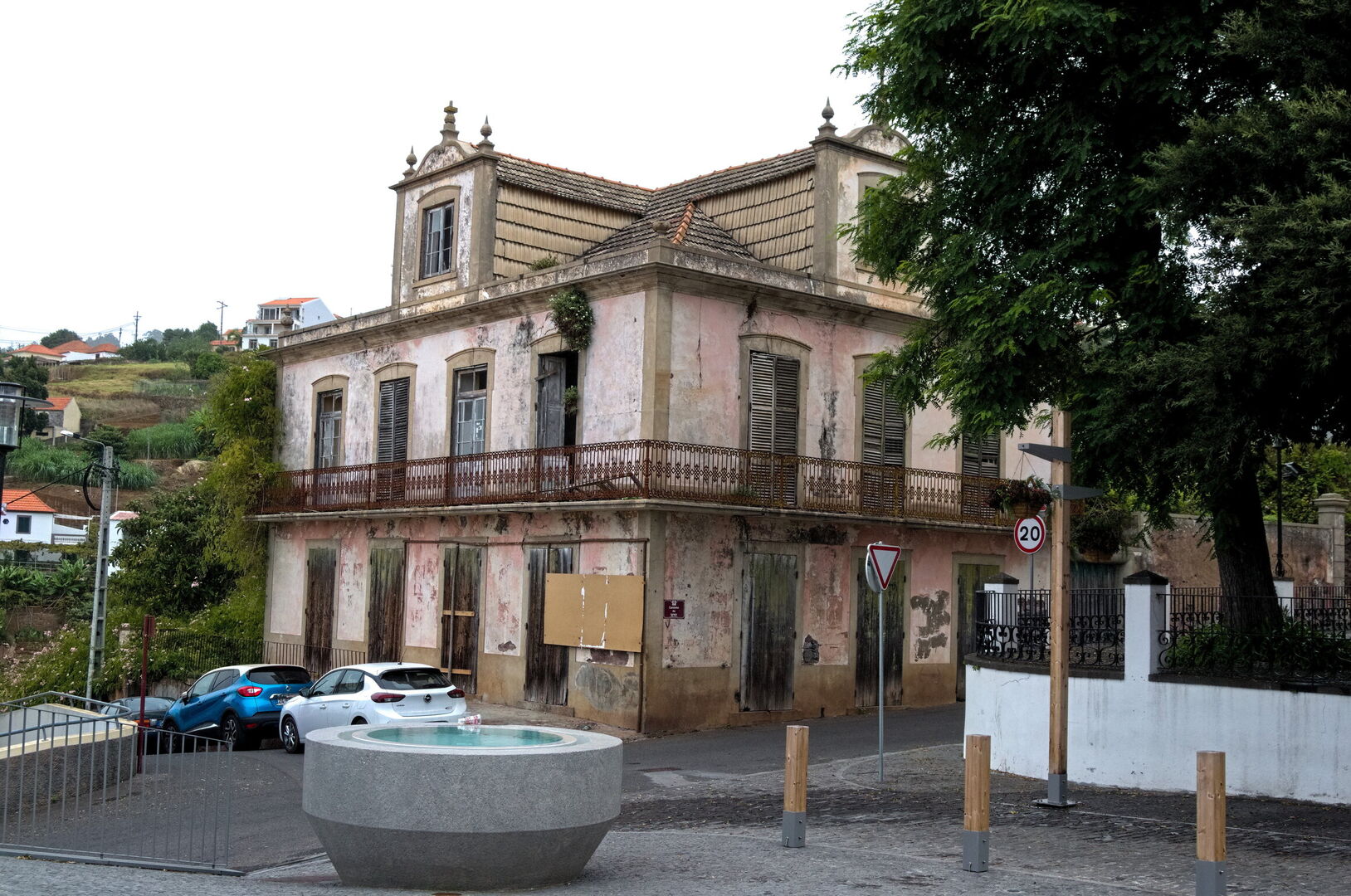
Villages and small towns blend into the surrounding terrain, with buildings adapted to slopes and limited space. This integration of human settlement and natural landscape gives Madeira a cohesive and balanced appearance.