
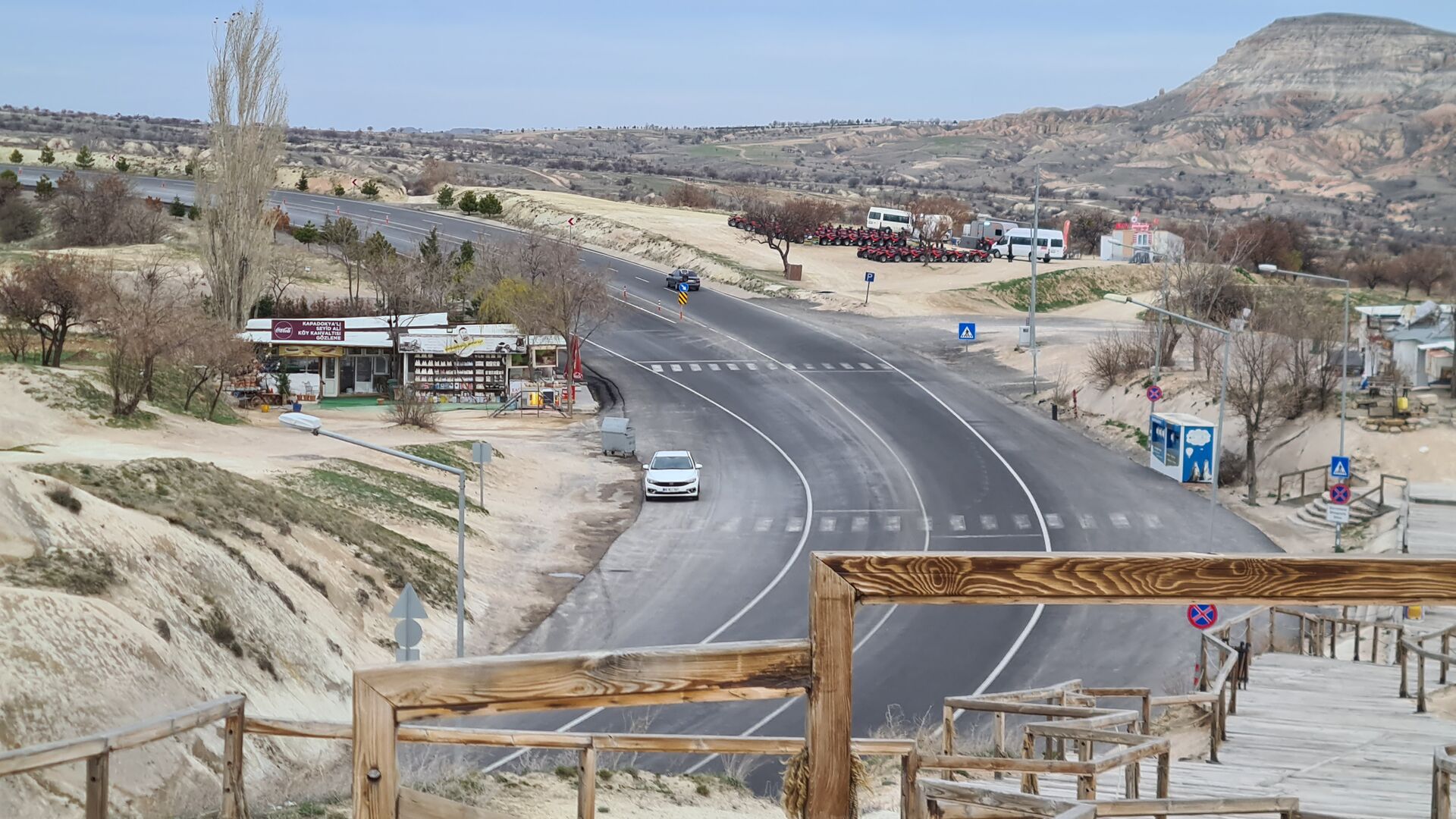
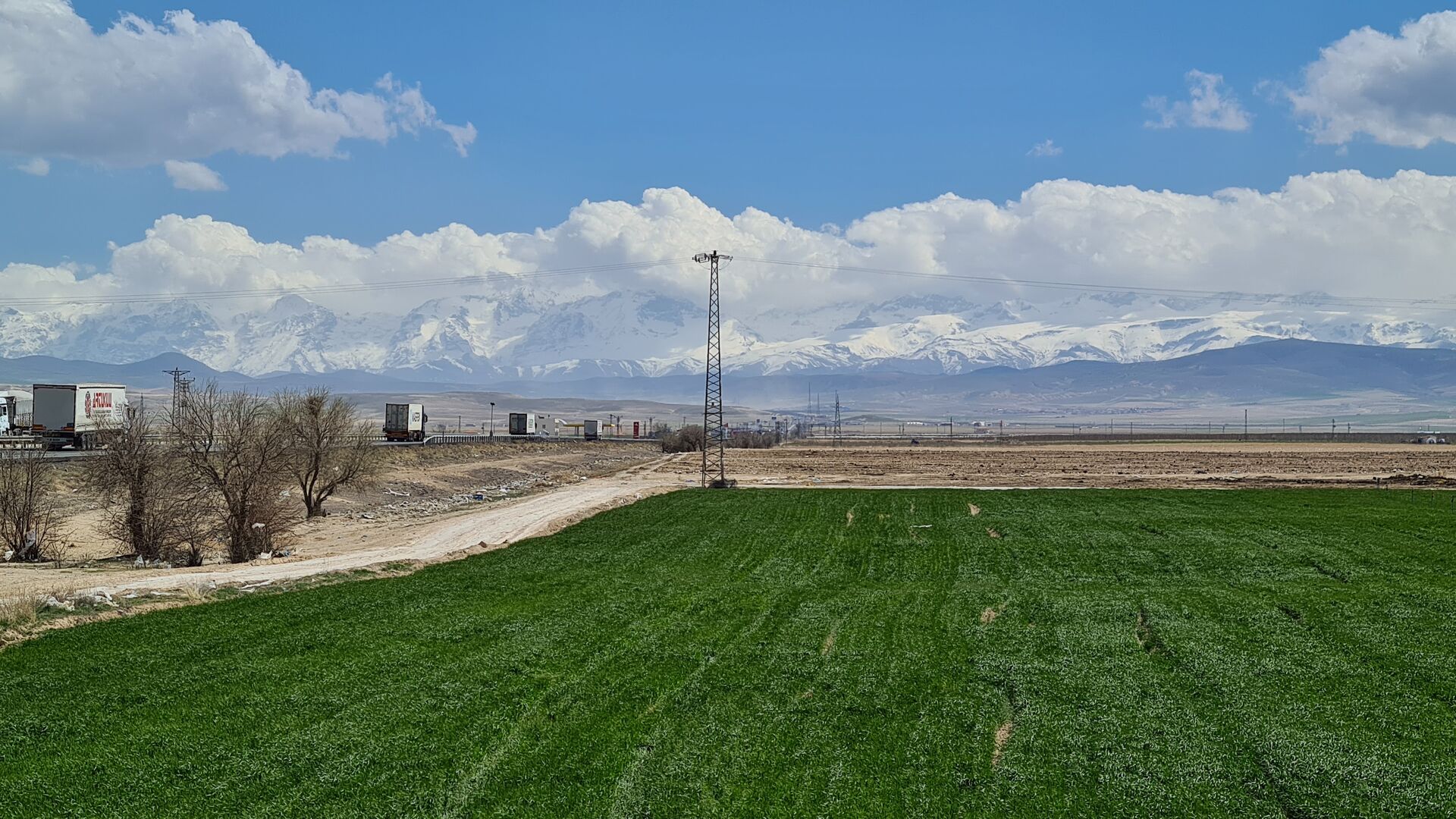
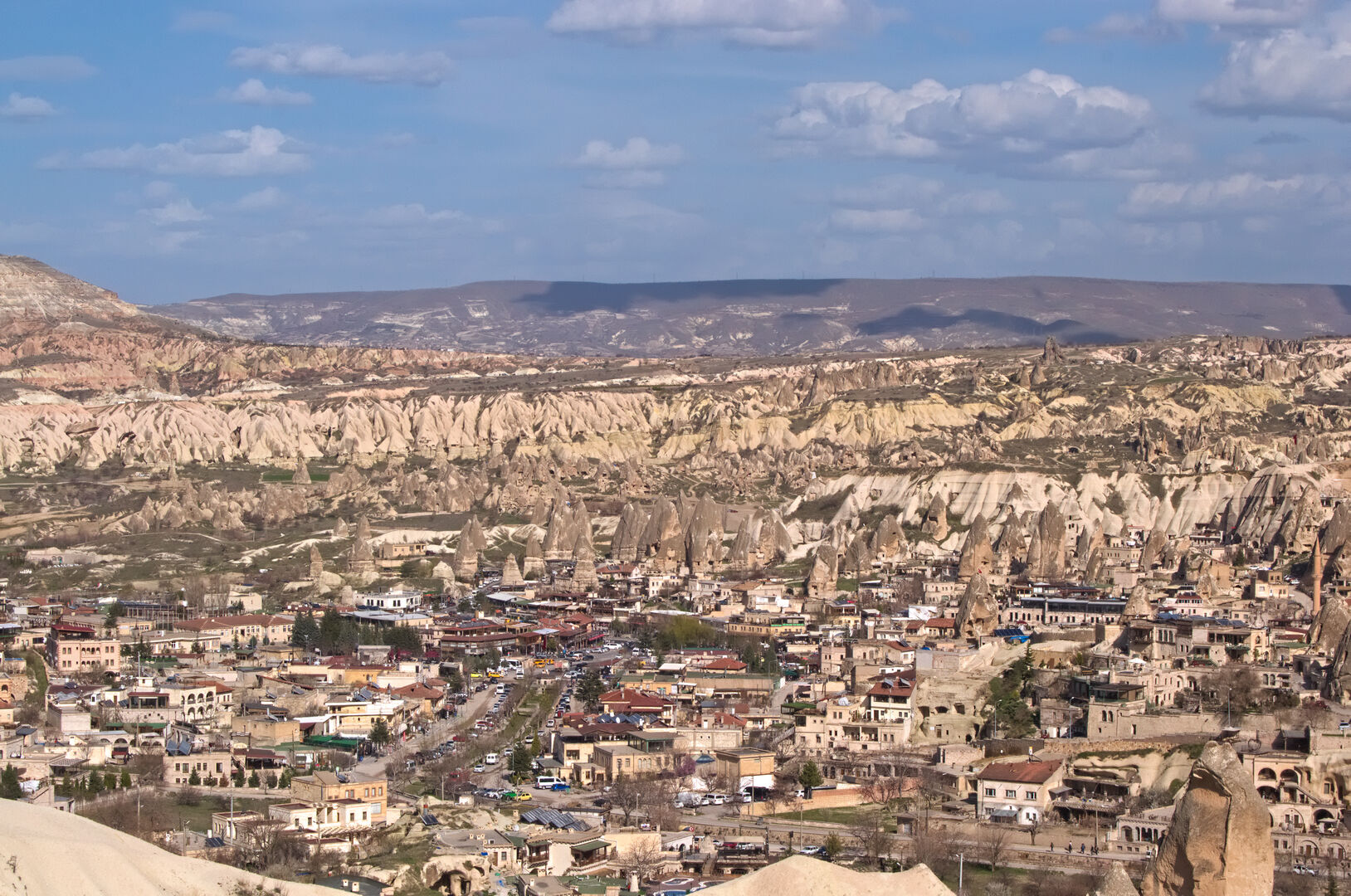
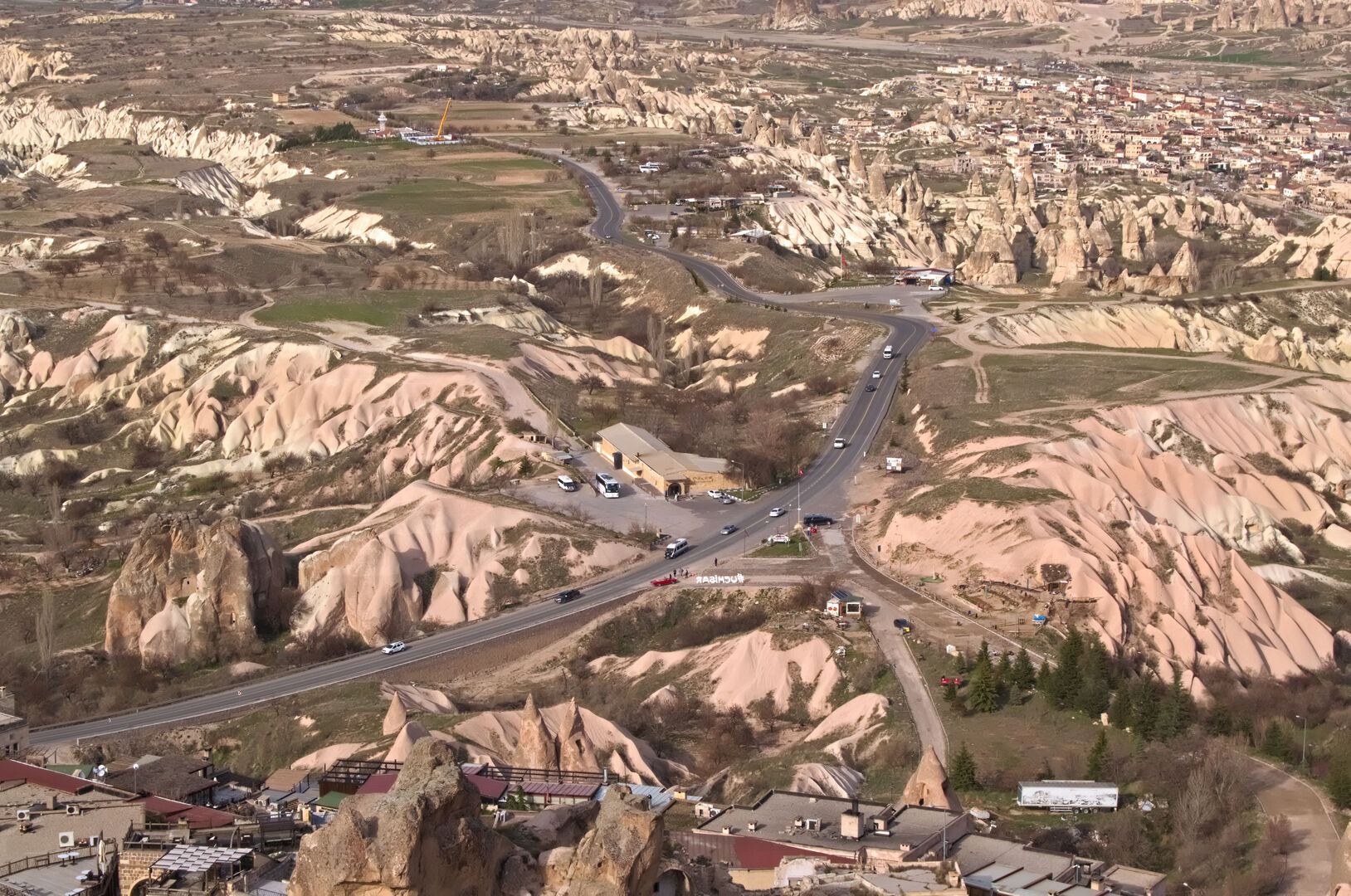
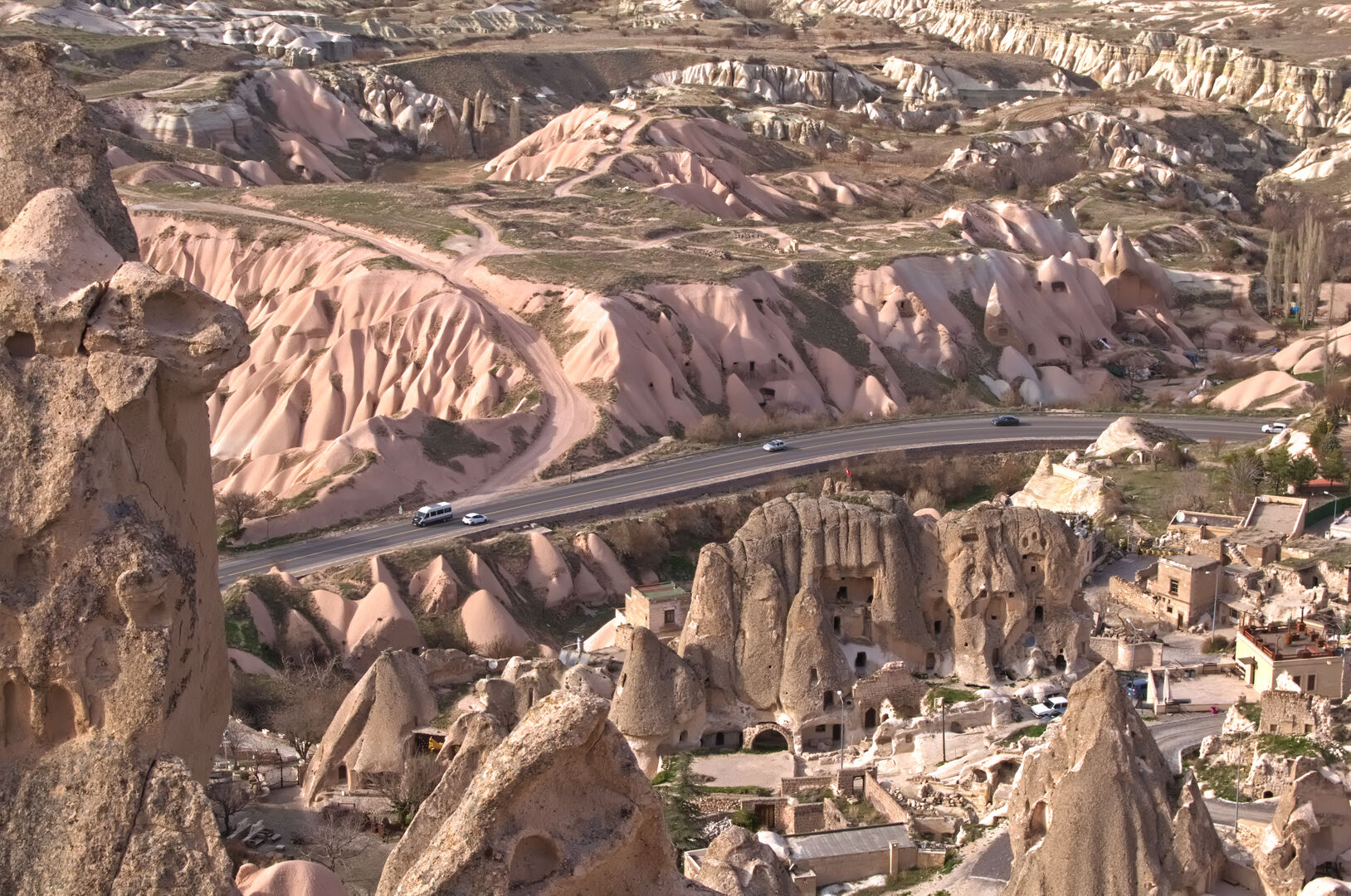
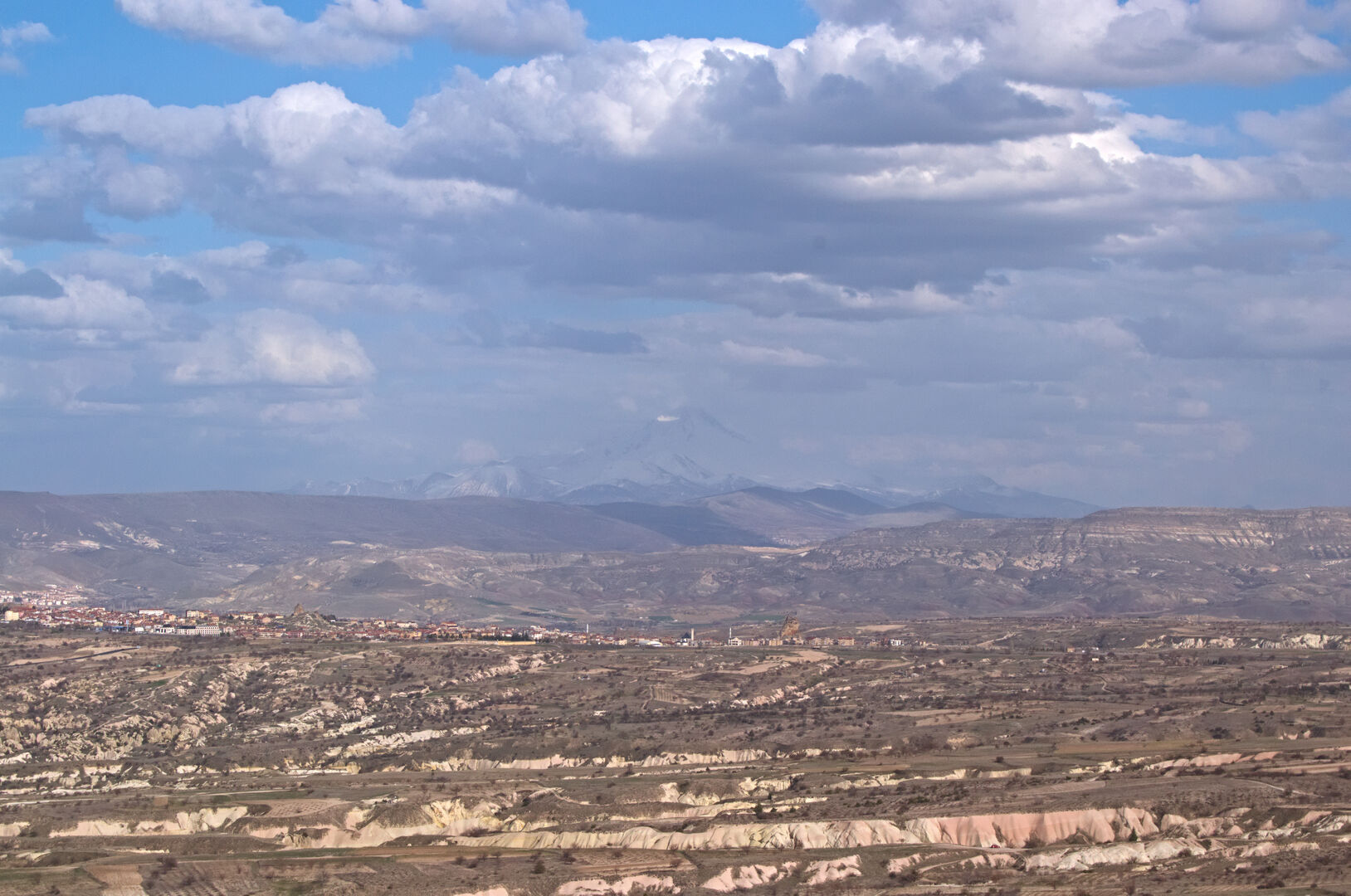
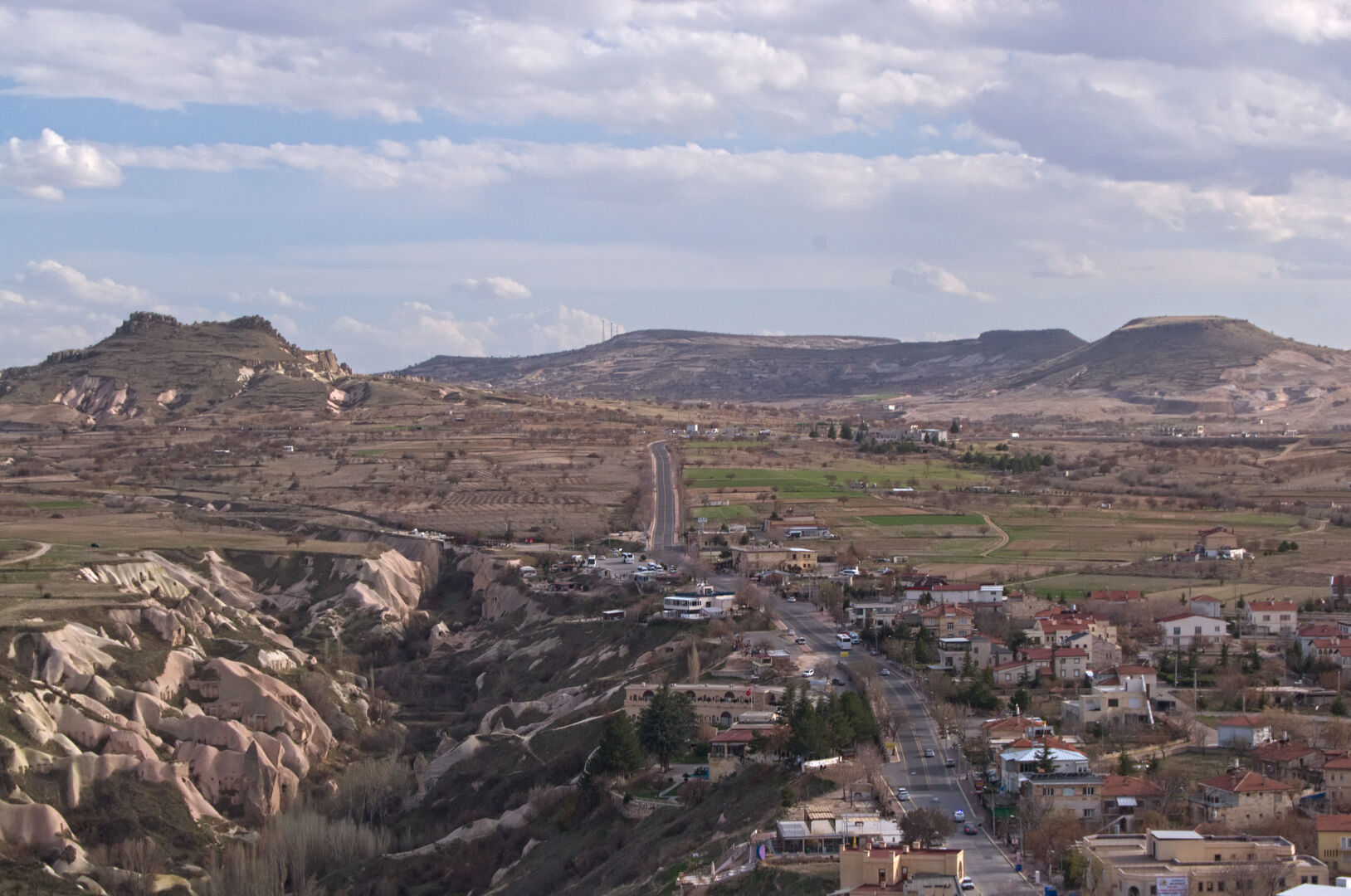
Cappadocia is a historic region in central Turkey, located on the Central Anatolian Plateau and spanning parts of the modern provinces of Nevşehir, Kayseri, Aksaray, and Niğde. Rather than being a single city, Cappadocia is a broad cultural and geographical region composed of valleys, towns, villages, and archaeological landscapes that together form one of the most distinctive environments in the world.
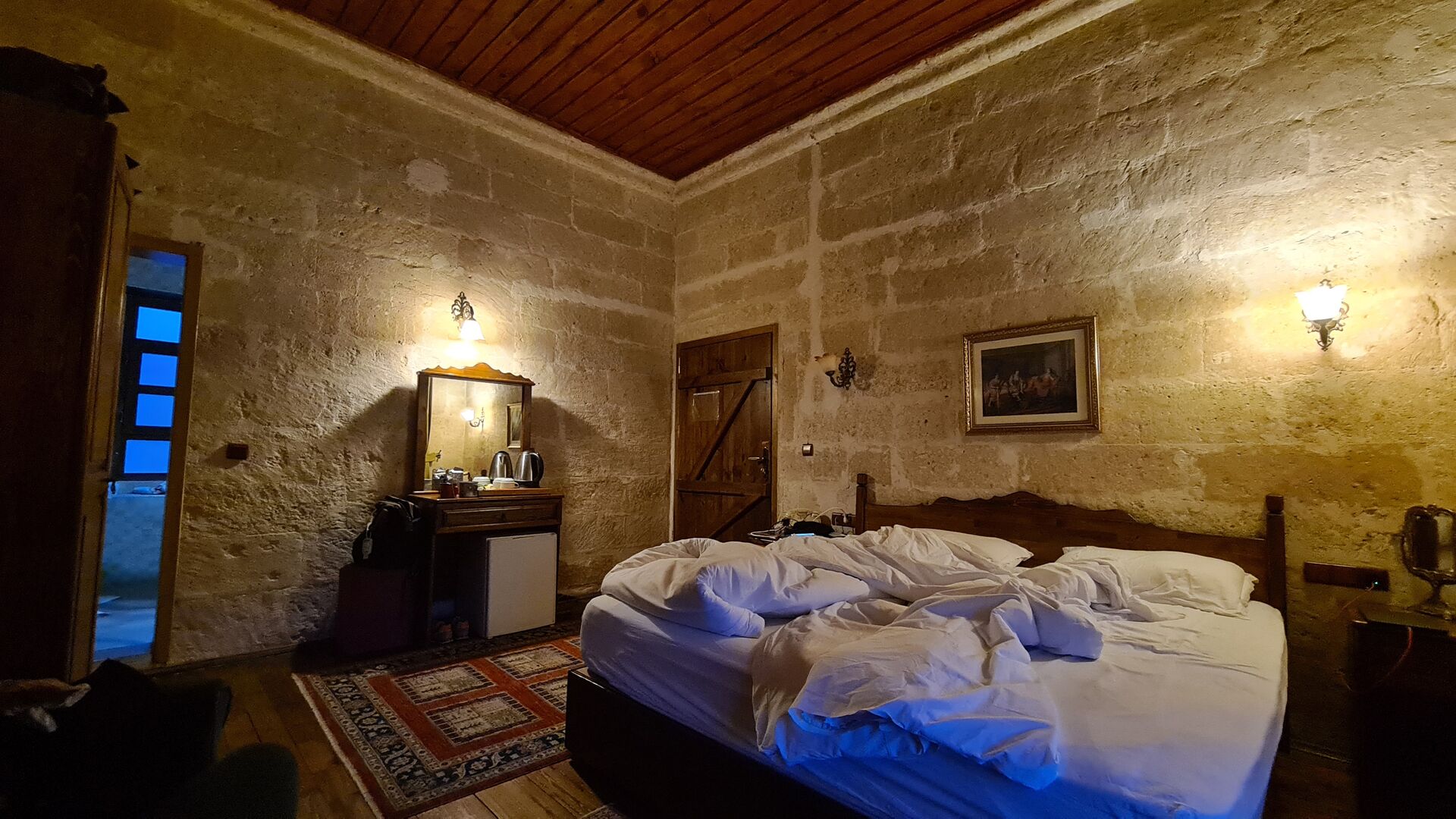
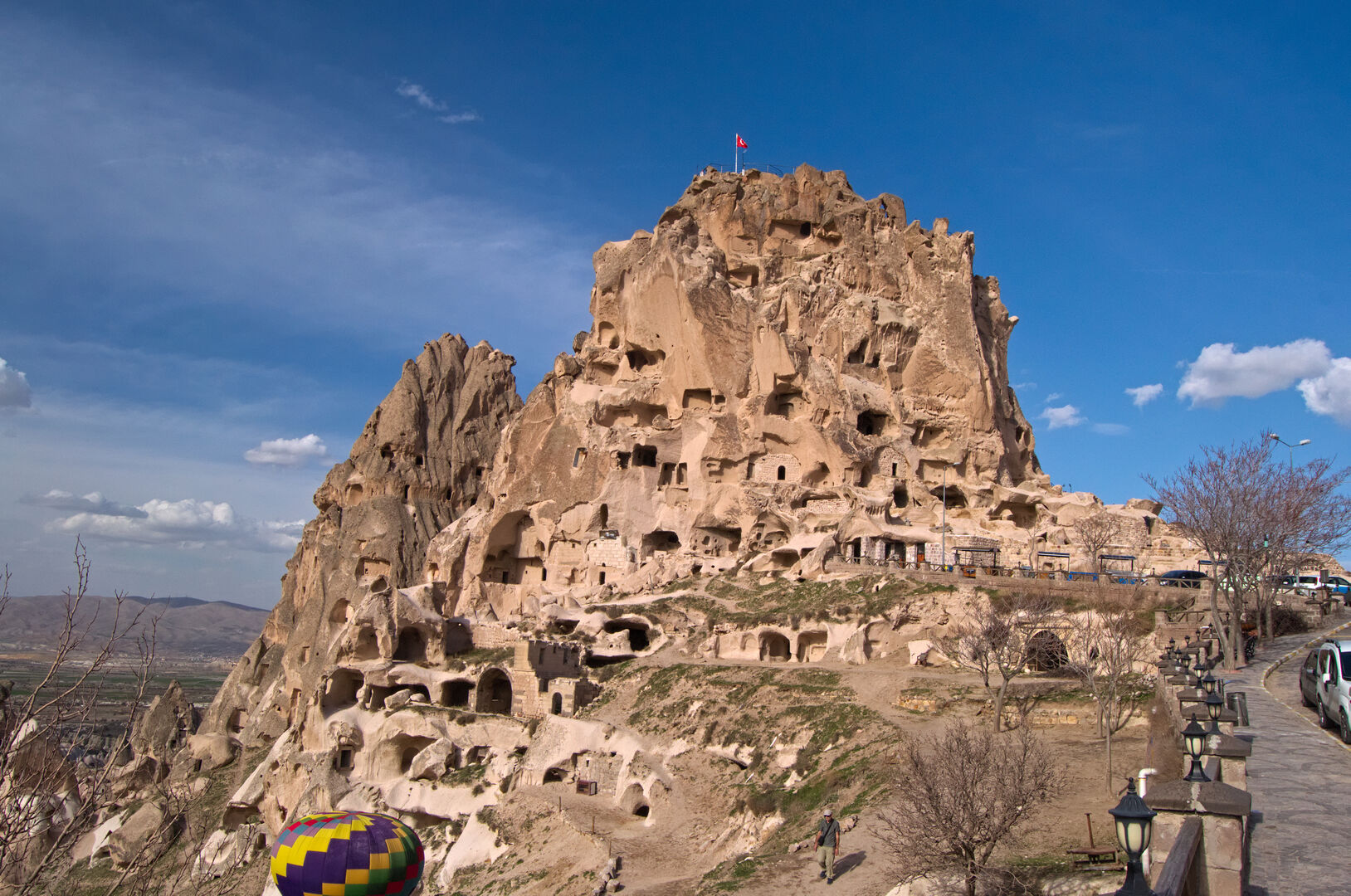
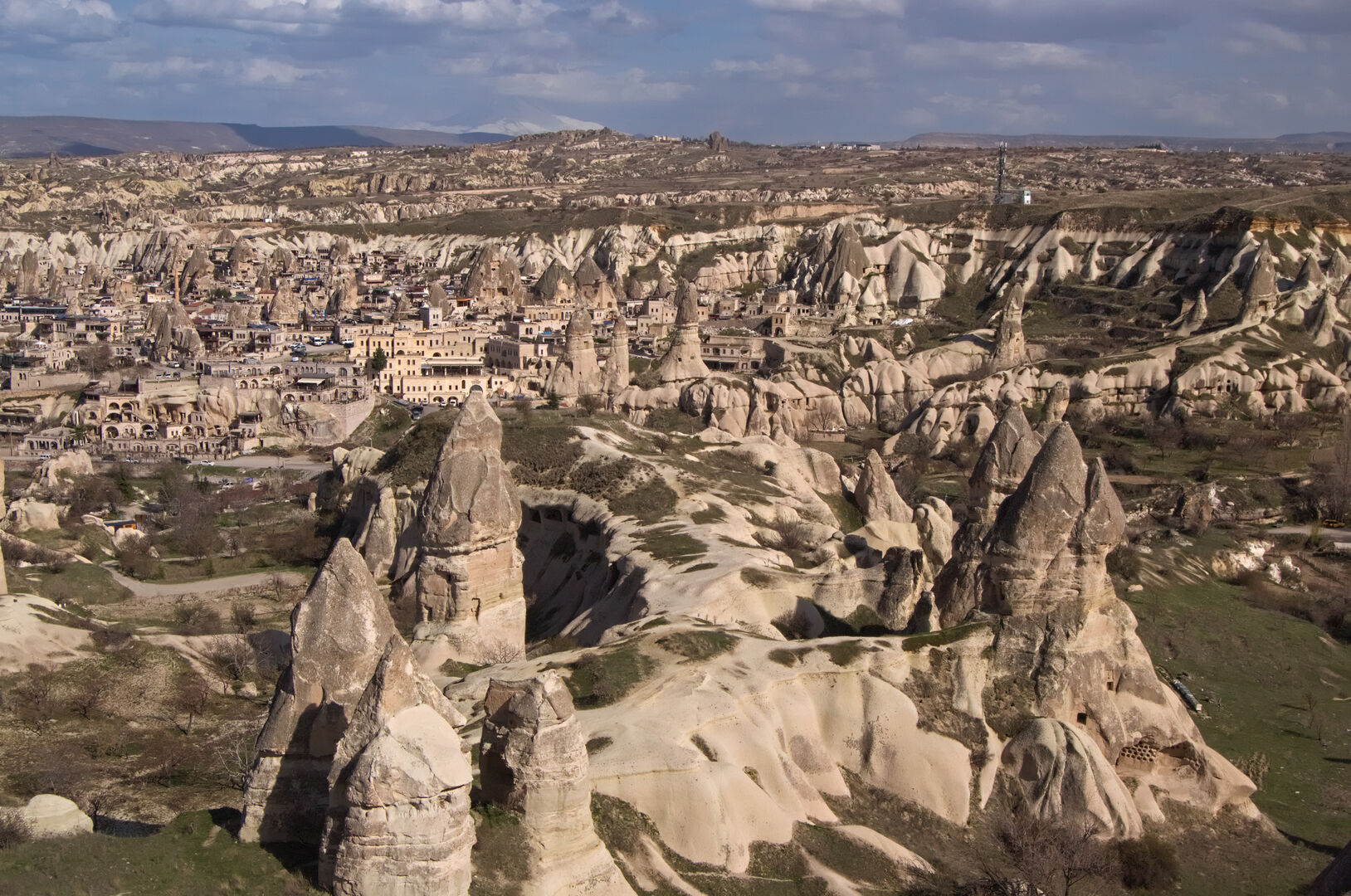
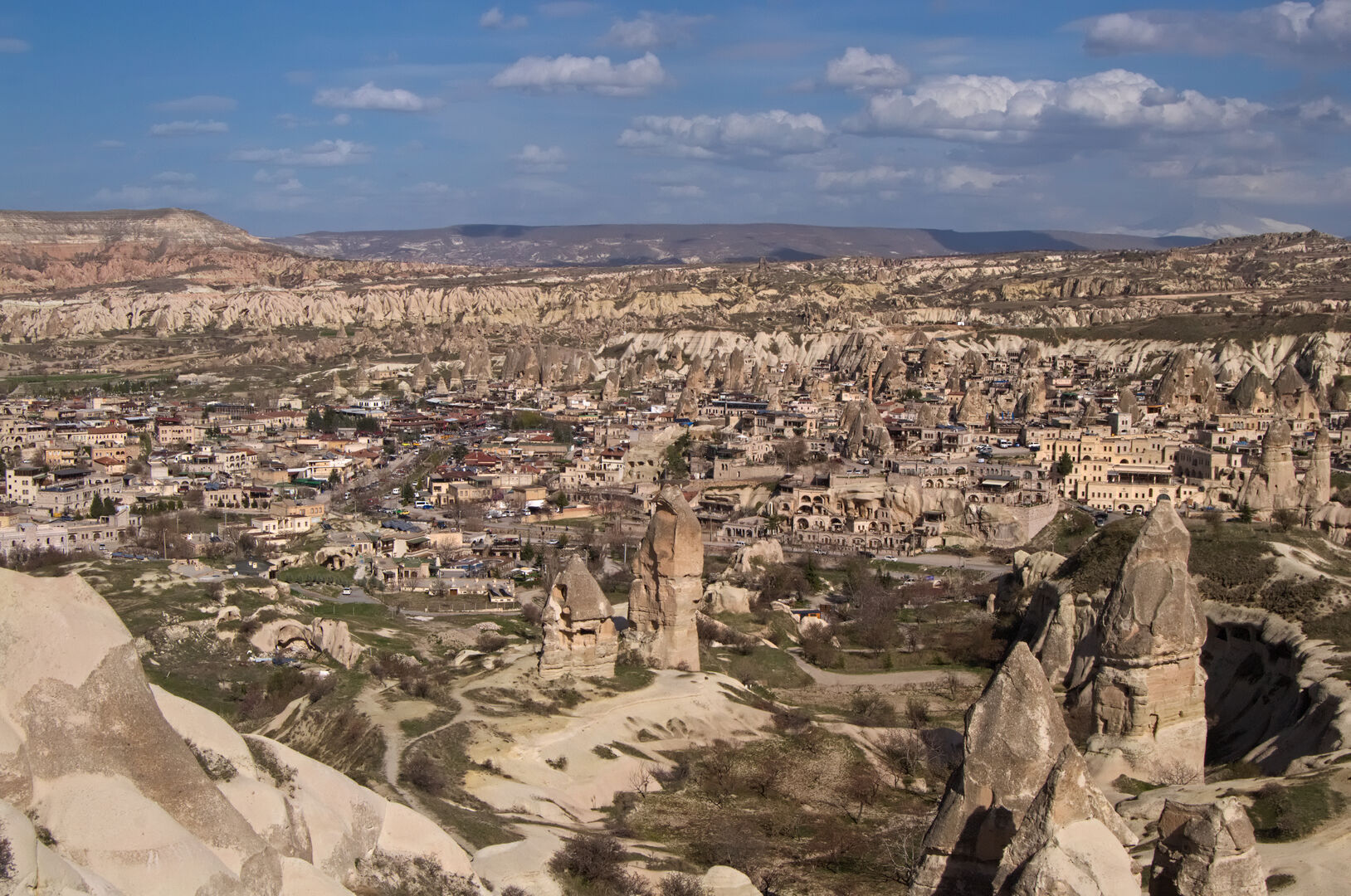
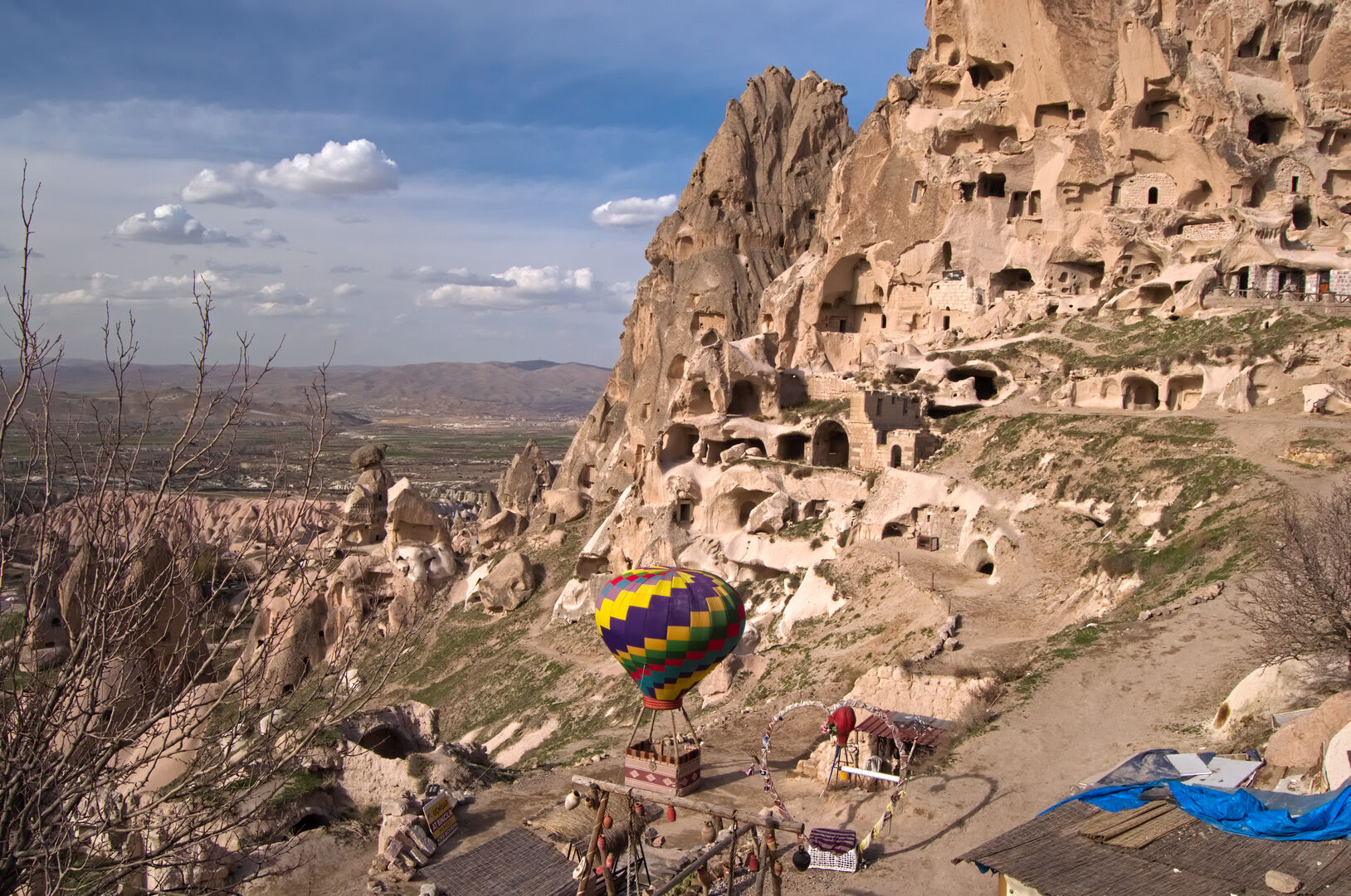
The region is internationally famous for its extraordinary rock formations, known as fairy chimneys, as well as for rock-cut architecture, underground cities, and cave dwellings that blend seamlessly into the natural terrain. Settlements such as Göreme, Ürgüp, Avanos, Uçhisar, and Ortahisar are closely integrated with the surrounding geology, with homes, hotels, churches, and storage spaces carved directly into the volcanic rock.
Cappadocia has a continental climate, with hot, dry summers and cold, snowy winters. Large daily temperature variations are common, especially in spring and autumn. The regional economy is strongly dependent on tourism, but agriculture, viticulture, pottery, stonework, and traditional crafts continue to play an important role in local life.
History
Human habitation in Cappadocia dates back to prehistoric times, encouraged by the region’s fertile volcanic soils and its natural defensive advantages. Early communities used caves and rock shelters for protection from climate extremes and external threats, laying the foundation for later architectural development.
During the Bronze Age, Cappadocia was influenced by the Hittite civilization, which controlled much of Anatolia. After the collapse of the Hittite Empire, the region came under successive rule by Phrygians, Persians, and Hellenistic kingdoms. Under the Persian Empire, Cappadocia was organized as a satrapy and became known for its horses and strategic location.
The Roman and Byzantine periods marked a turning point in Cappadocia’s cultural significance. From the 3rd century onward, the region became an important refuge for early Christians fleeing persecution. Monastic communities carved churches, chapels, monasteries, and entire settlements into the rock. Cappadocia emerged as a major center of Christian theology and monastic life, associated with figures such as Basil the Great and Gregory of Nyssa.
From the 11th century onward, Cappadocia came under Seljuk Turkish rule, followed later by the Ottomans. Despite political changes, many Christian and Muslim communities coexisted in the region for centuries. Cappadocia’s relative isolation helped preserve its architectural and cultural heritage until modern tourism brought global attention to the area.
Geology
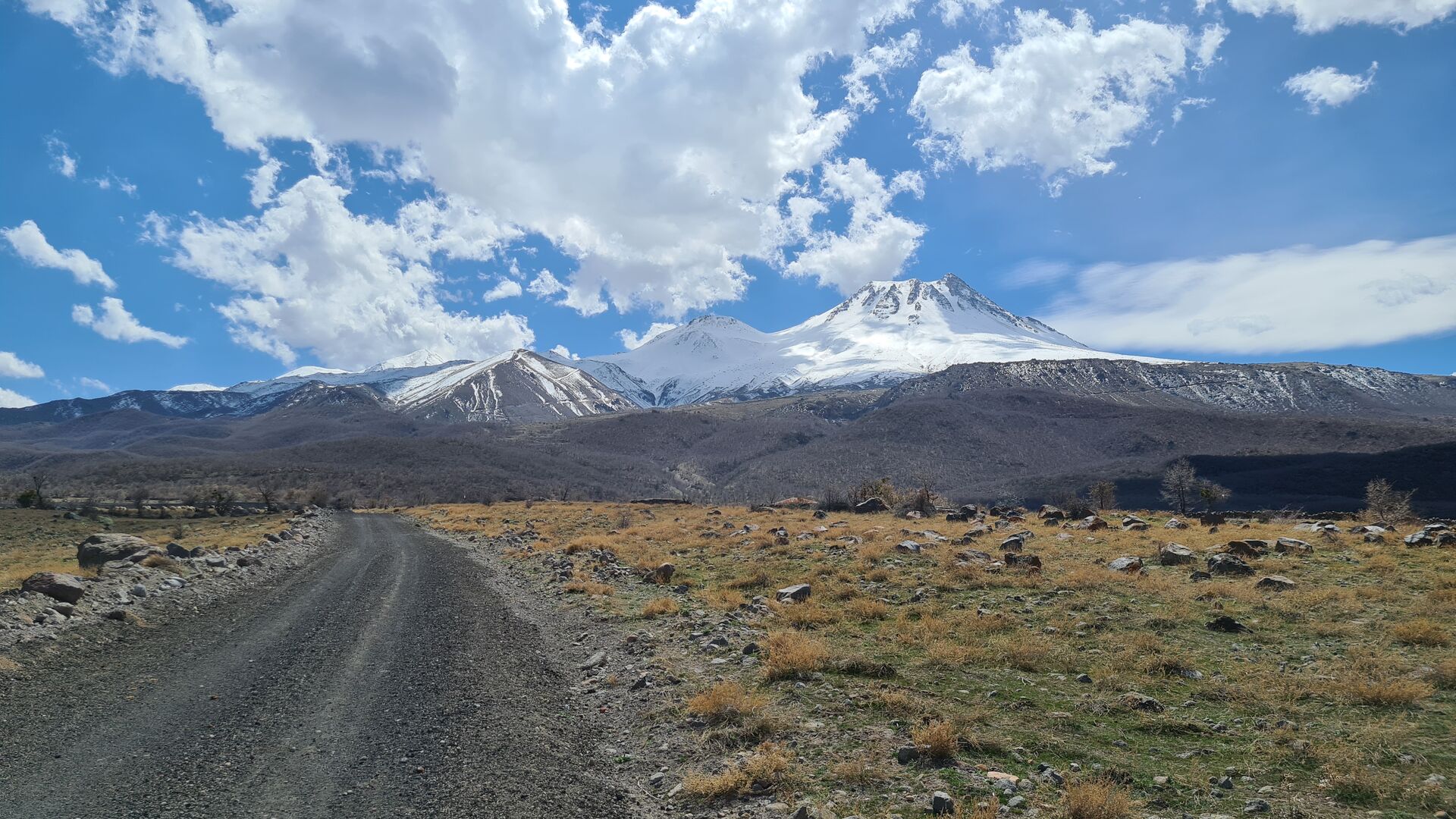
Cappadocia’s unique landscape is the result of extensive volcanic activity millions of years ago. Large volcanoes, including Mount Erciyes, Mount Hasan, and Mount Güllü, erupted repeatedly during the late Miocene and Pliocene periods, covering the region with thick layers of lava, ash, and volcanic tuff.
Over time, erosion caused by wind, rain, frost, and temperature fluctuations sculpted these deposits into valleys, cliffs, and cone-shaped formations. In many places, a harder basalt cap protected softer tuff beneath, resulting in the iconic fairy chimney formations.
The softness of the volcanic tuff made it ideal for excavation. Ancient inhabitants carved homes, churches, underground cities, ventilation shafts, and storage rooms directly into the rock. These spaces provided insulation, security, and long-term durability. Cappadocia’s geology is therefore inseparable from its human history, influencing settlement patterns, architecture, and daily life for thousands of years.
Things to See
Cappadocia offers one of the richest concentrations of natural and cultural attractions in Turkey:
Natural Landscapes
- Fairy chimneys in Göreme, Pasabag, Zelve, and Devrent Valley
- Rose Valley, Red Valley, and Love Valley with dramatic rock formations
- Ihlara Valley, a deep canyon with a river and rock-cut churches
- Panoramic viewpoints from Uçhisar and Ortahisar castles
Historical and Cultural Sites
- Göreme Open-Air Museum, a UNESCO World Heritage Site
- Rock-cut churches decorated with Byzantine frescoes
- Underground cities such as Derinkuyu, Kaymaklı, and Özkonak
- Cave dwellings, monasteries, and ancient caravan routes
Experiences and Activities
- Hot air balloon flights offering sunrise views over the valleys
- Hiking and trekking routes through volcanic landscapes
- Pottery workshops in Avanos using clay from the Kızılırmak River
- Traditional cuisine, local wines, and cultural events