





Mersin is a major port city located on the southern coast of Turkey, along the Mediterranean Sea. It lies within the Çukurova region and serves as one of the most important economic and logistical centers of southern Turkey. Mersin is both a metropolitan municipality and a provincial capital, with a population exceeding one million residents in the wider urban area.
The city stretches along a long coastline and includes modern urban districts, industrial zones, agricultural hinterlands, and coastal resorts. Mersin benefits from a strategic location that connects Anatolia to the Mediterranean, the Middle East, and international trade routes. Its port is one of the largest and busiest in Turkey, playing a key role in import, export, and transit trade.
Mersin has a Mediterranean climate, characterized by hot, dry summers and mild, wet winters. This climate supports agriculture, outdoor living, and tourism throughout much of the year. The city’s economy is diversified, with strengths in port logistics, agriculture, food processing, industry, energy, tourism, and higher education.
History
The region around Mersin has been inhabited since prehistoric times due to its fertile land, favorable climate, and access to the sea. Archaeological evidence from nearby sites shows continuous human presence dating back thousands of years.
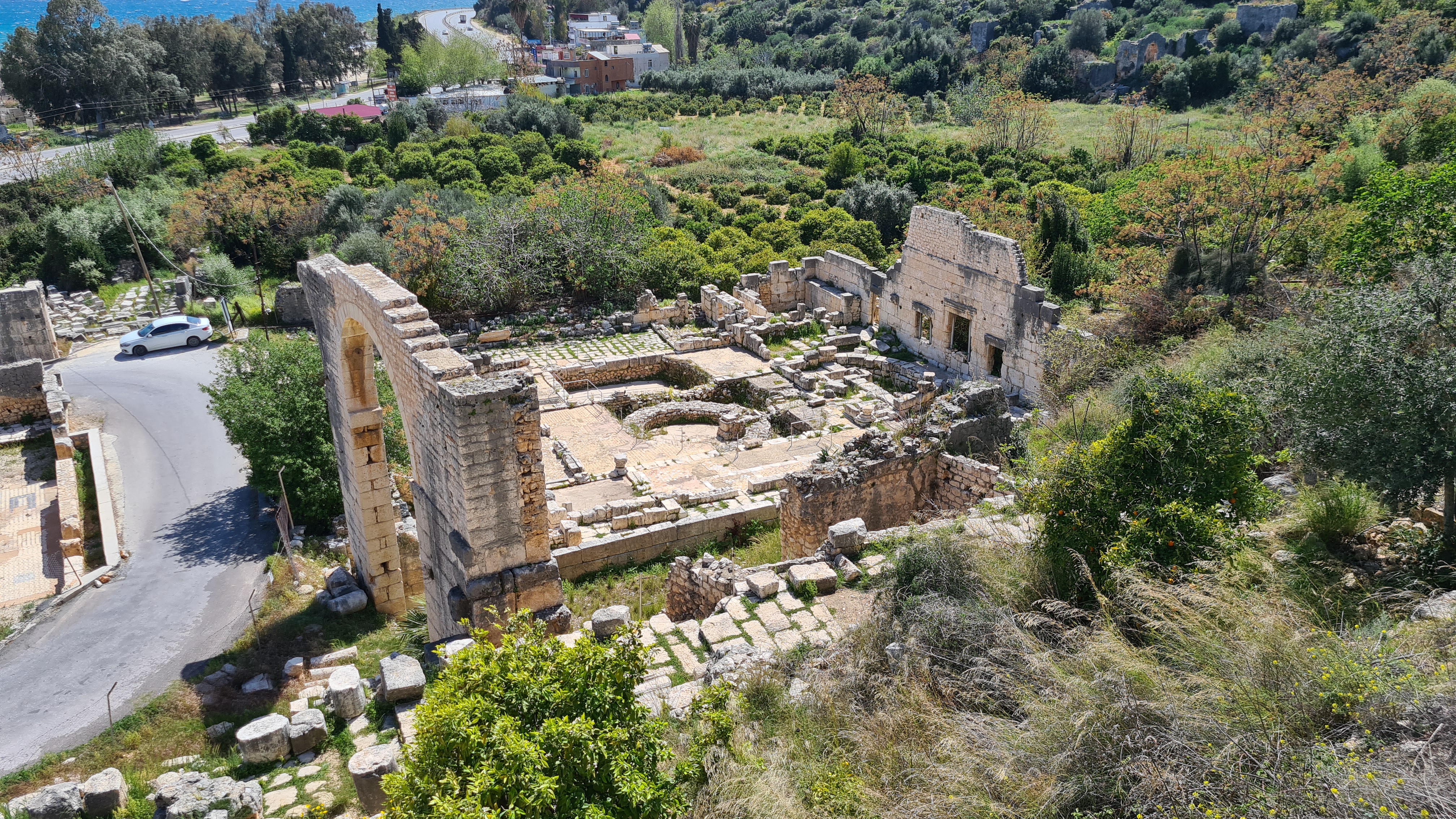
In antiquity, the area was part of Cilicia, an important region in the eastern Mediterranean. Nearby ancient cities such as Soli-Pompeiopolis, Tarsus, and Anemurium played major roles during Hellenistic, Roman, and Byzantine periods. Mersin itself developed more significantly in the 19th century as a port settlement supporting regional agricultural exports.
During the late Ottoman period, Mersin grew rapidly due to increased trade, railway connections, and foreign investment. Following the establishment of the Turkish Republic, the city continued to expand as a modern port and industrial center. Today, Mersin reflects a layered history that combines ancient heritage, Ottoman-era development, and contemporary urban growth.
Geology
Mersin is located at the intersection of coastal plains and the Taurus Mountains, giving the region a diverse geological structure. The coastal areas consist mainly of alluvial plains formed by river deposits, while the inland areas rise sharply into limestone-dominated mountain ranges.
The Taurus Mountains are characterized by karst formations, caves, sinkholes, and underground water systems. These geological features influence water availability, agriculture, and settlement patterns in the region. Rivers descending from the mountains have deposited fertile soils along the coast, supporting intensive farming.
The region is also shaped by tectonic activity, as southern Turkey lies within a seismically active zone. Mersin’s geology has played a key role in shaping its natural landscapes, agricultural productivity, and historical development.
Things to See
Mersin offers a wide range of attractions combining history, nature, and modern urban life:
Historical and Archaeological Sites
- Soli-Pompeiopolis, an ancient Roman city with colonnaded streets
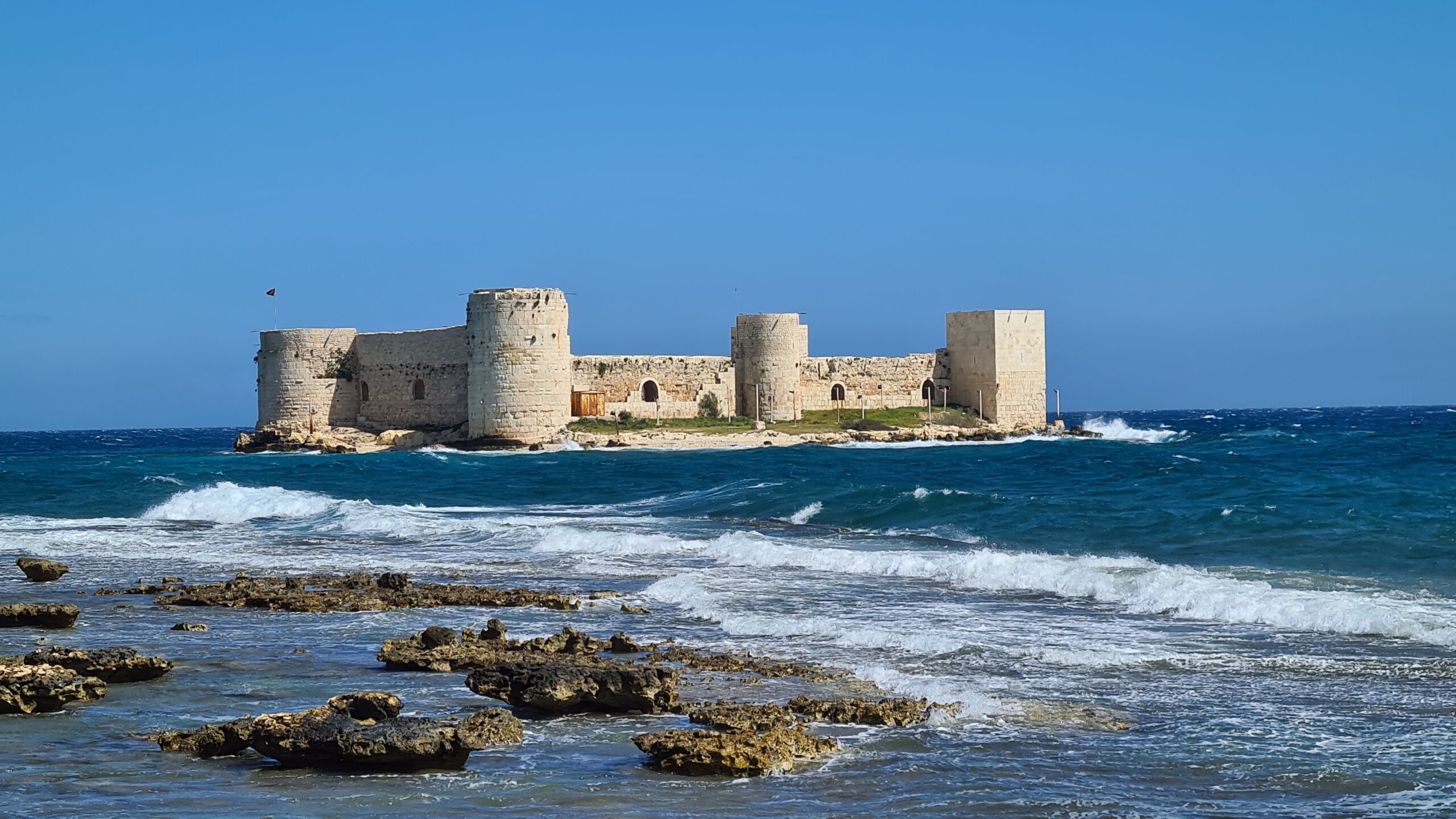
- Maiden’s Castle (Kızkalesi), a fortress on a small island off the coast
- Anemurium, one of the best-preserved ancient cities in southern Turkey
- Tarsus, nearby, with strong Roman, early Christian, and Islamic heritage
Natural and Coastal Attractions
- Long Mediterranean beaches along the city and surrounding coast
- Taurus Mountain landscapes, suitable for hiking and exploration
- Caves such as Heaven and Hell (Cennet ve Cehennem)
- Coastal parks and waterfront promenades
Urban Life and Culture
- Mersin Marina and modern shopping districts
- Cultural centers, museums, and performance venues
- Local cuisine known for its diversity and regional flavors
- Festivals, markets, and community events throughout the year