
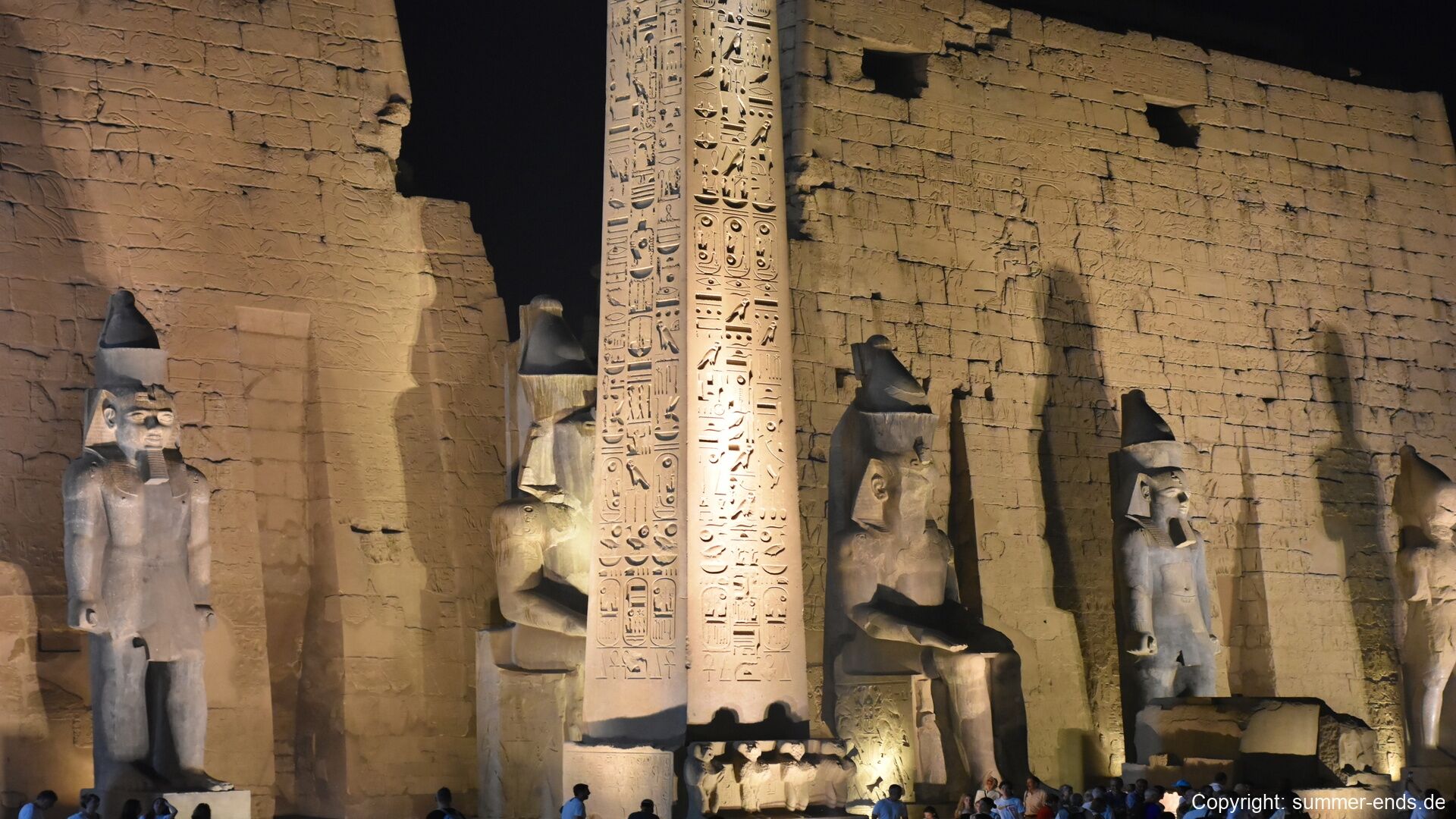
The Temple of Hatshepsut at Deir el-Bahari is one of the most extraordinary monuments of ancient Egypt. Located on the west bank of the Nile opposite modern Luxor, the temple was constructed during the 15th century BCE as the mortuary temple of Hatshepsut, one of the few women to rule Egypt as pharaoh.
Uniquely designed, the temple blends harmoniously into the limestone cliffs of the Theban mountains. It features three broad terraces connected by long ramps, flanked by colonnades and aligned on a strict central axis. The temple was built to honor Hatshepsut’s divine birth and achievements, and also served as a cult temple for Amun-Ra and other deities.
Today, the temple stands as a masterpiece of New Kingdom architecture and remains one of the most visited sites in Luxor. It also continues to be a focal point for archaeological research, conservation, and cultural tourism.
History
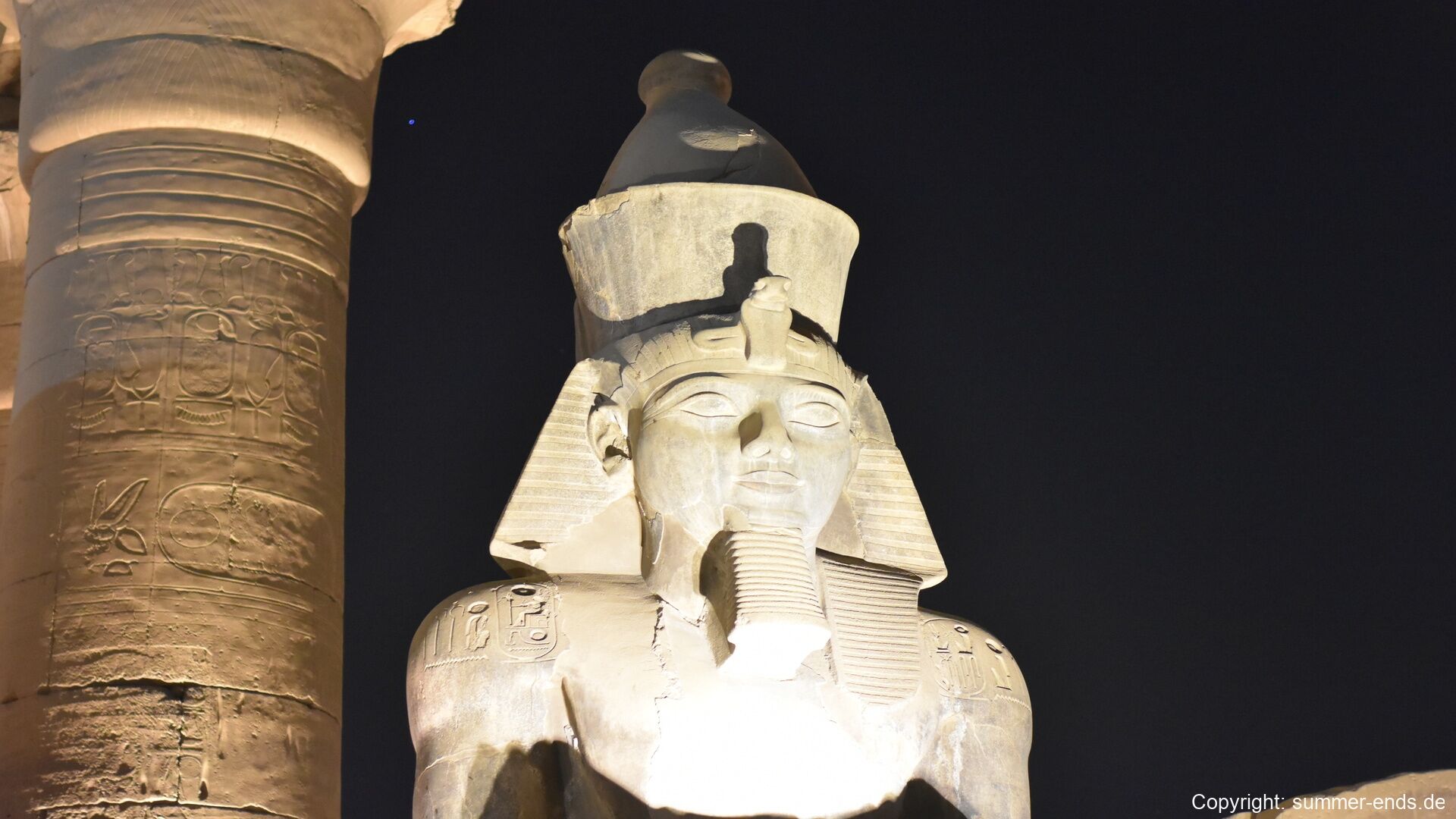
Hatshepsut came to power as regent for her stepson Thutmose III but gradually assumed full pharaonic authority. Her reign lasted roughly from 1479 to 1458 BCE and is marked by peace, prosperity, and monumental building projects. To legitimize her role as a female pharaoh, she adopted male regalia and commissioned statues showing her in masculine form.
Central to her political and religious strategy was the construction of her mortuary temple, known in ancient Egyptian as Djeser-Djeseru, meaning “Holy of Holies”. Designed by her architect and close advisor Senenmut, the temple was built adjacent to the older mortuary complex of Mentuhotep II, establishing Hatshepsut’s connection to revered past rulers.
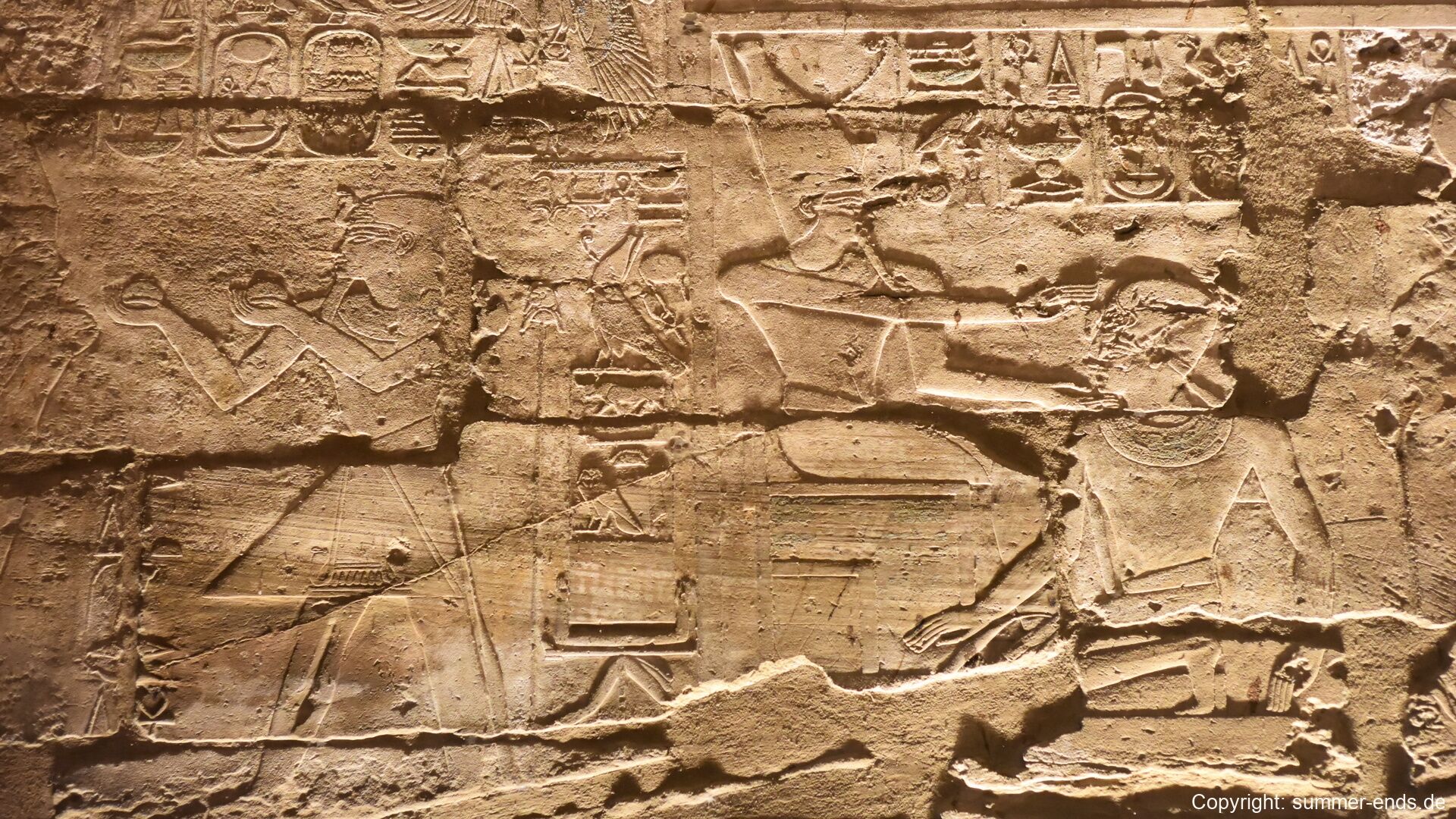
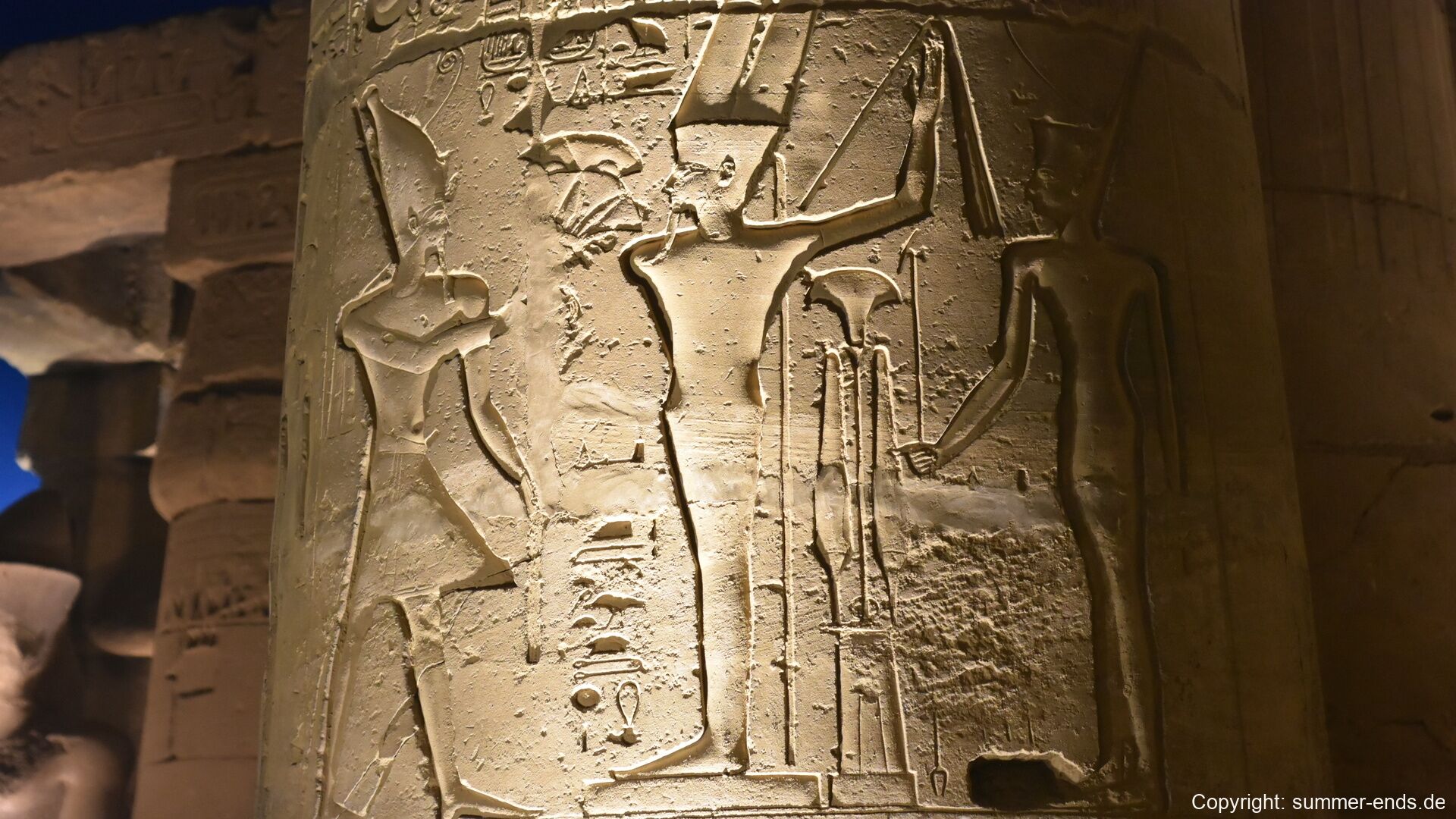
The temple’s reliefs narrate important events from Hatshepsut’s life and reign. One of the most famous is the depiction of her divine birth, in which the god Amun impregnates her mother, granting Hatshepsut divine legitimacy. Another major scene depicts the expedition to Punt, a land rich in incense, exotic animals, and valuable trees—evidence of Egypt’s far-reaching trade networks.
After Hatshepsut’s death, many of her images and inscriptions were defaced or removed. Scholars believe this may have been done under Thutmose III, possibly to erase her memory from the historical record and reassert traditional succession. Despite these efforts, her temple survived and remains one of the most remarkable achievements of ancient Egyptian statecraft and religious symbolism.
Geology
The Temple of Hatshepsut is built into the cliffs of Deir el-Bahari, a natural amphitheater formed by the Theban mountain range. The cliffs are composed of Eocene limestone, specifically from the Thebes Formation, which is common throughout the Luxor region. This soft but durable rock allowed the ancient builders to carve architectural elements directly into the cliff face.
The geology of the site not only provided a dramatic backdrop but also held symbolic value. The west bank of the Nile was associated with the realm of the dead, and the natural pyramid-like shape of the surrounding cliffs may have carried spiritual meaning related to the solar cult and the afterlife.
However, the limestone is porous and vulnerable to salt efflorescence and erosion, especially when exposed to humidity or seasonal rains. Over the centuries, weathering, rockfalls, and flash floods have caused damage to both the structural integrity and painted surfaces of the temple. Modern conservation teams, especially the Polish-Egyptian mission working since the 1960s, have implemented desalination treatments, stone stabilization, and ongoing restoration of the painted reliefs.
Things to See
The Temple of Hatshepsut is divided into three main terraces, each with its own architectural and ritual significance. A central ramp connects each level, reinforcing the temple’s axial symmetry and ceremonial flow.
On the lower terrace, visitors can see the wide open court that was once lined with sphinxes. This area led to the processional causeway connecting the temple to the Nile and would have hosted public rituals and offerings.
The middle terrace contains two of the temple’s most iconic visual narratives. The southern colonnade features scenes from the voyage to Punt, including depictions of incense trees, exotic animals, and the Queen of Punt. These are among the most detailed representations of foreign lands in all of ancient Egyptian art. The northern colonnade presents the story of Hatshepsut’s divine birth and coronation, linking her directly to the god Amun and affirming her right to rule.
The upper terrace houses the sanctuary of Amun, carved deep into the cliff, as well as chapels for Hathor and Anubis. The Chapel of Hathor contains pillars with Hathor’s face and cow ears, while the Anubis chapel is decorated with scenes of funerary rites and protection in the afterlife.
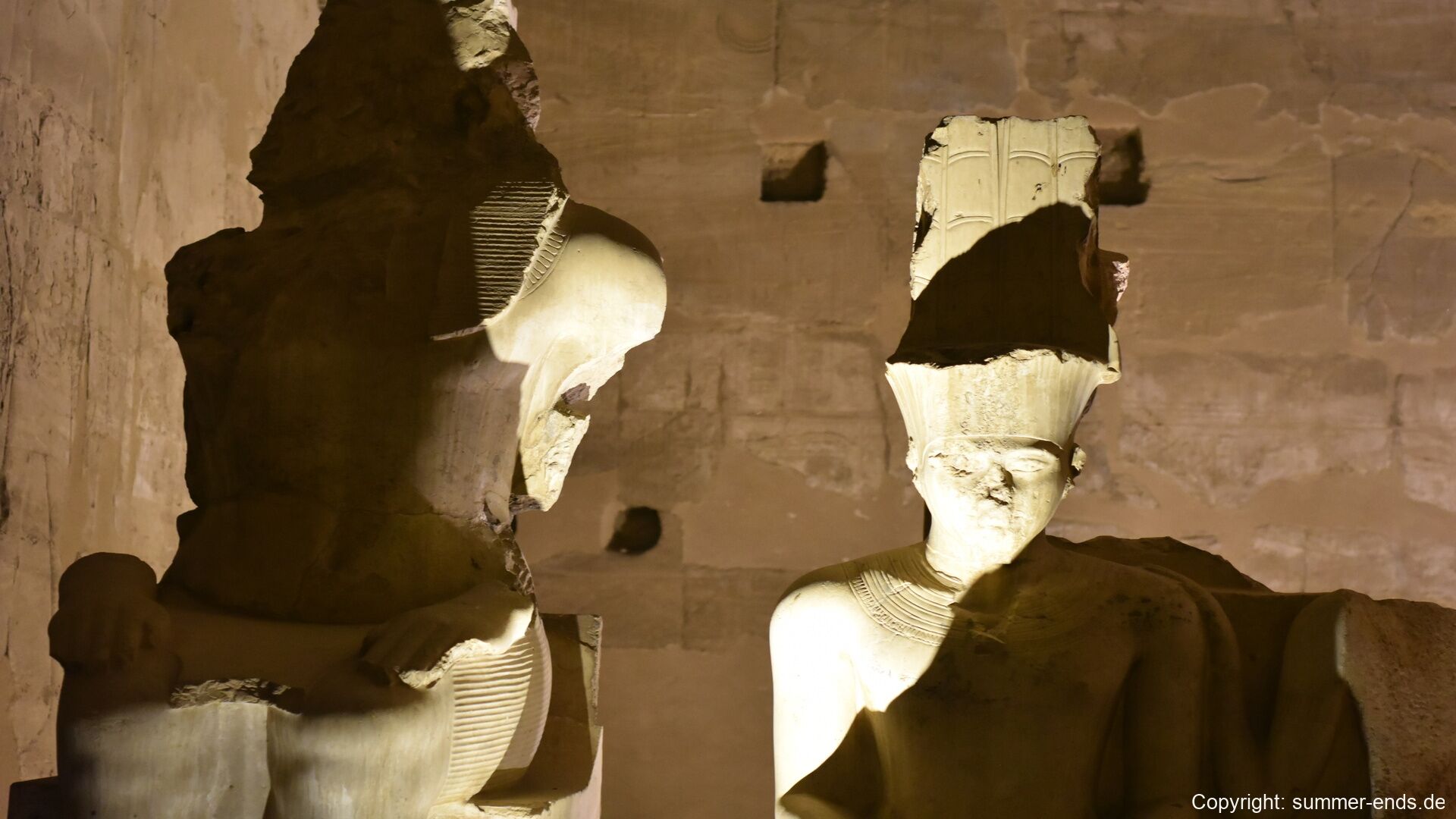
Throughout the temple, visitors will find restored statues of Hatshepsut as Osiris, standing with arms crossed in a traditional pose of eternal kingship. These statues were destroyed in antiquity but many have been pieced back together from thousands of fragments.
Additional points of interest include:
- The solar cult court, possibly dedicated to Ra, reflecting the growing importance of solar theology in the New Kingdom.
- Architectural evidence of later modifications during the Ptolemaic and Roman periods.
- The nearby temples of Mentuhotep II and Thutmose III, offering insight into the evolution of mortuary temple design over several dynasties.
Visiting the site at sunrise or late afternoon offers dramatic lighting that enhances the contrast between the temple’s geometry and the rugged cliffs. For those interested in ancient Egyptian history, architecture, or religious symbolism, the Temple of Hatshepsut is an essential destination.