
Abu Simbel is one of the most iconic archaeological sites in Egypt, located near the southern border with Sudan in the region of Nubia, about 280 kilometers southwest of Aswan. The site is famous for its two massive rock-cut temples, built by Pharaoh Ramses II in the 13th century BCE to commemorate his reign, military victories, and divine status.
The temples of Abu Simbel were carved directly into a sandstone cliff facing the Nile and are renowned for their colossal statues, intricate interior reliefs, and astronomical alignment. They are dedicated to the gods Amun-Ra, Ra-Horakhty, Ptah, and to Ramses himself, as a deified ruler.
In the 1960s, the temples were relocated piece by piece to higher ground to protect them from flooding caused by the construction of the Aswan High Dam. This extraordinary international effort, coordinated by UNESCO, preserved the temples as part of the Nubian Monuments UNESCO World Heritage Site.
History
Abu Simbel was constructed during the reign of Ramses II (circa 1279–1213 BCE) in the 19th Dynasty of the New Kingdom. It served both religious and political functions. The Great Temple, the larger of the two, was intended to glorify Ramses II as a god-king and to impress upon the Nubian territories Egypt’s imperial strength. Its strategic location along the Nile’s southern frontier made it a symbol of Egyptian dominance in the region.
The Small Temple, dedicated to Queen Nefertari—Ramses II’s chief consort—and the goddess Hathor, is one of the few temples in Egypt where a royal woman is depicted with the same prominence and scale as the pharaoh. This temple reinforced the divine legitimacy and favored status of Nefertari.
The temples fell into disuse after the decline of ancient Egypt and were eventually buried by sand. They were rediscovered in 1813 by Swiss explorer Johann Ludwig Burckhardt and fully uncovered by Italian explorer Giovanni Belzoni in 1817. Their dramatic setting and sculptural grandeur quickly made them icons of Egyptian antiquity.
Between 1964 and 1968, the entire site was relocated to an artificial cliff 65 meters higher and 200 meters back from its original location, saving it from the rising waters of Lake Nasser. This ambitious project remains one of the most significant achievements in archaeological preservation history.
Geology
Abu Simbel was originally carved into Nubian sandstone, a relatively soft sedimentary rock that allowed ancient builders to create detailed bas-reliefs and colossal statues. The natural cliff face into which the temples were cut was carefully selected for its stability and visibility along the Nile.
The sandstone here is part of the Nubian Sandstone Formation, which extends across much of southern Egypt and northern Sudan. It consists mainly of cross-bedded sandstones formed in fluvial and aeolian environments during the Cretaceous period.
During the 1960s relocation, engineers and geologists faced the complex task of cutting the temples into massive blocks (weighing up to 30 tons each) and reassembling them on an artificial hill composed of concrete, steel reinforcement, and a limestone dome. Care was taken to match the orientation and geological conditions as closely as possible to the original setting, including preserving the solar alignment of the main temple.
The geological context remains critical to ongoing conservation efforts, especially as the site is now exposed to more wind erosion and temperature fluctuations than in its original, more sheltered location.
Things to See
Visitors to Abu Simbel can explore two monumental temples that together represent some of the finest achievements of ancient Egyptian rock-cut architecture.
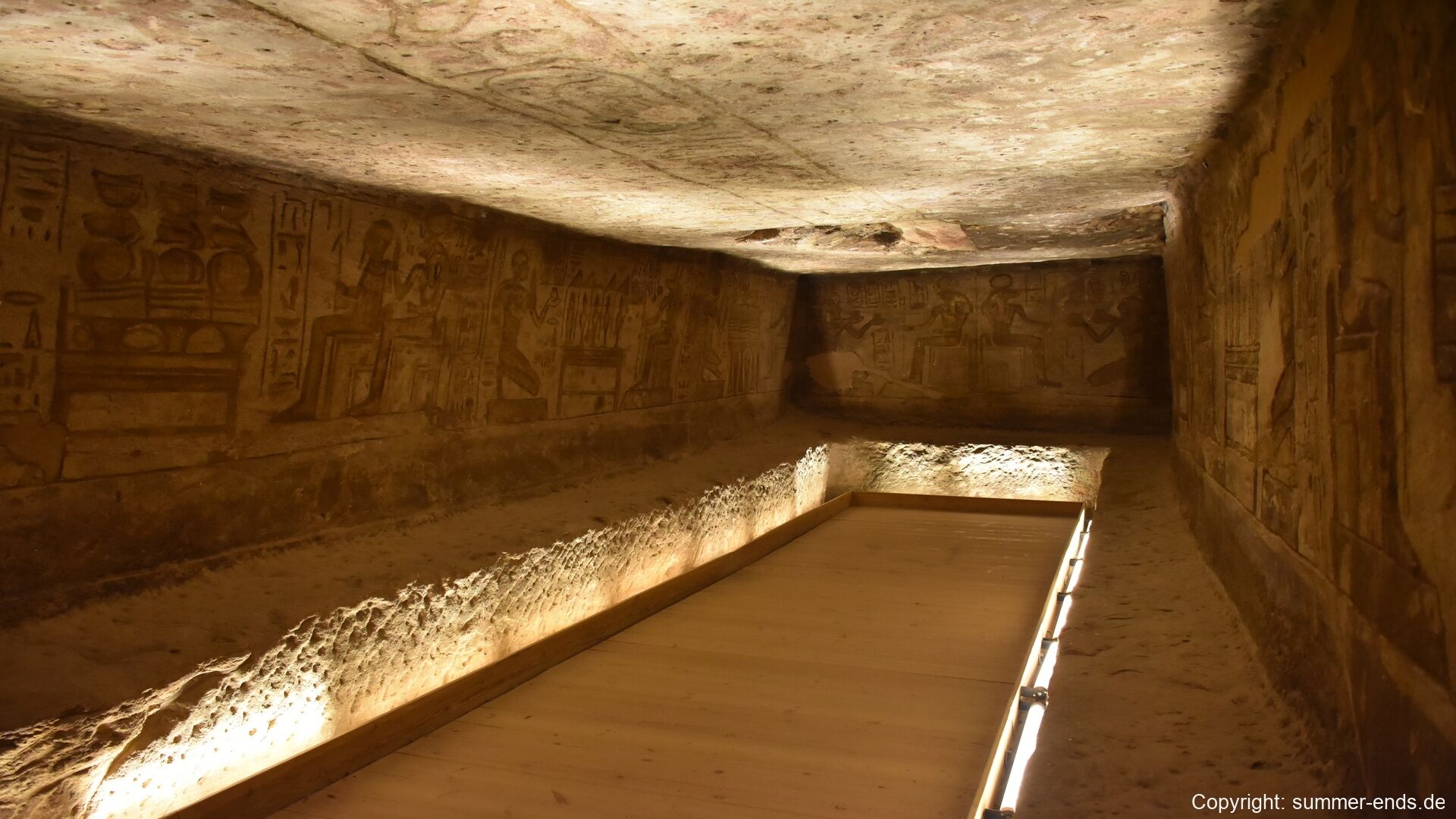
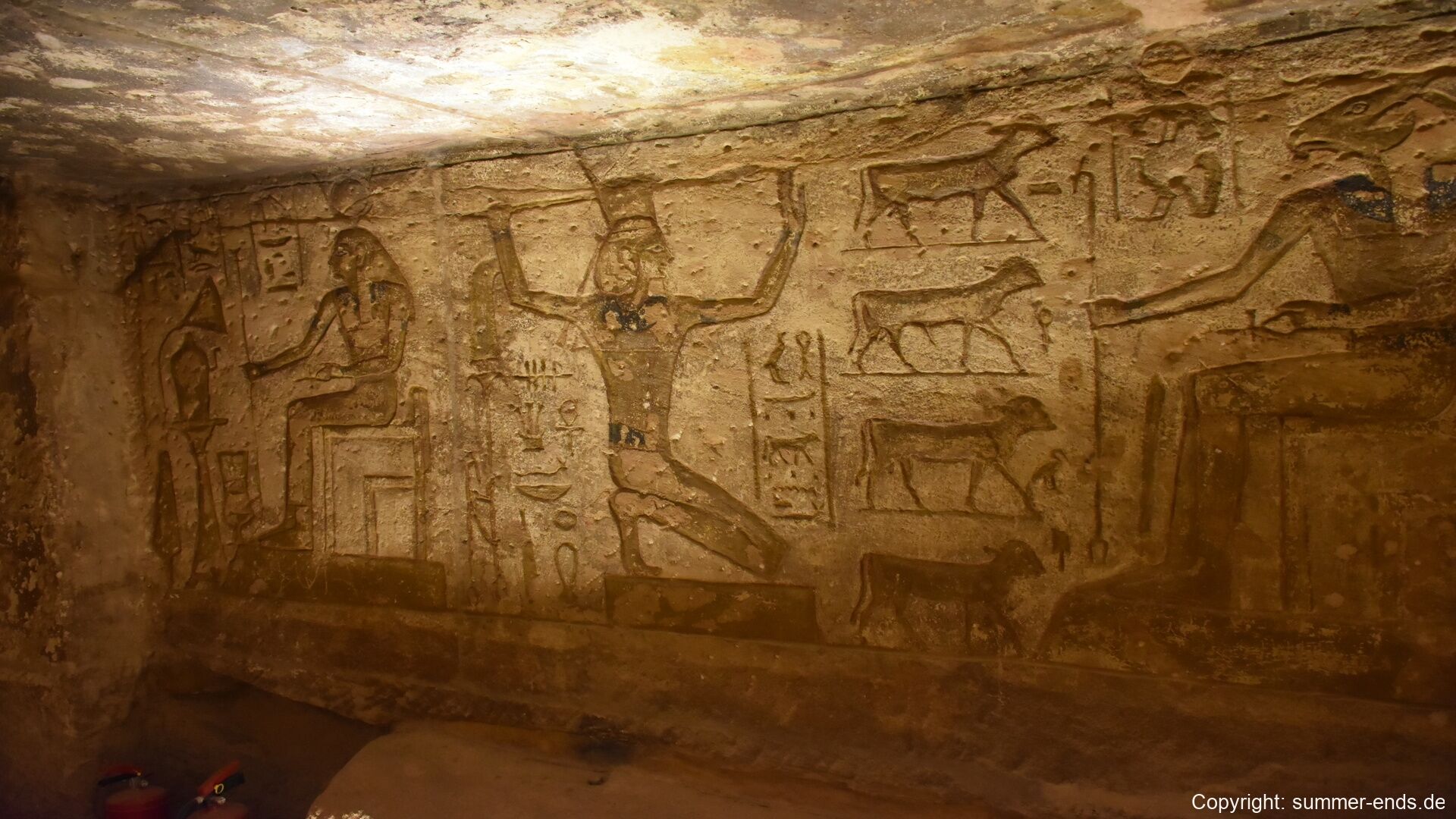
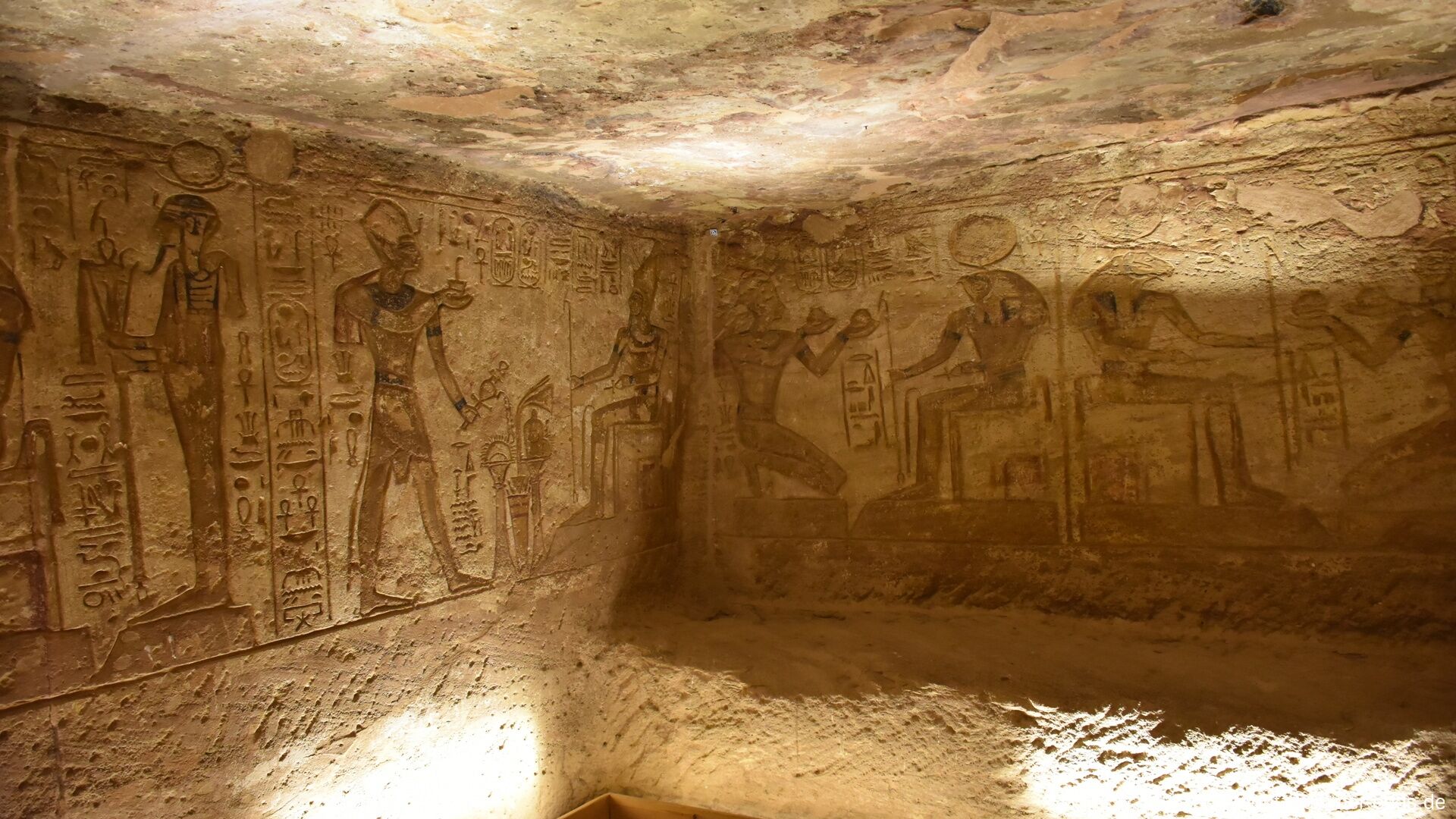
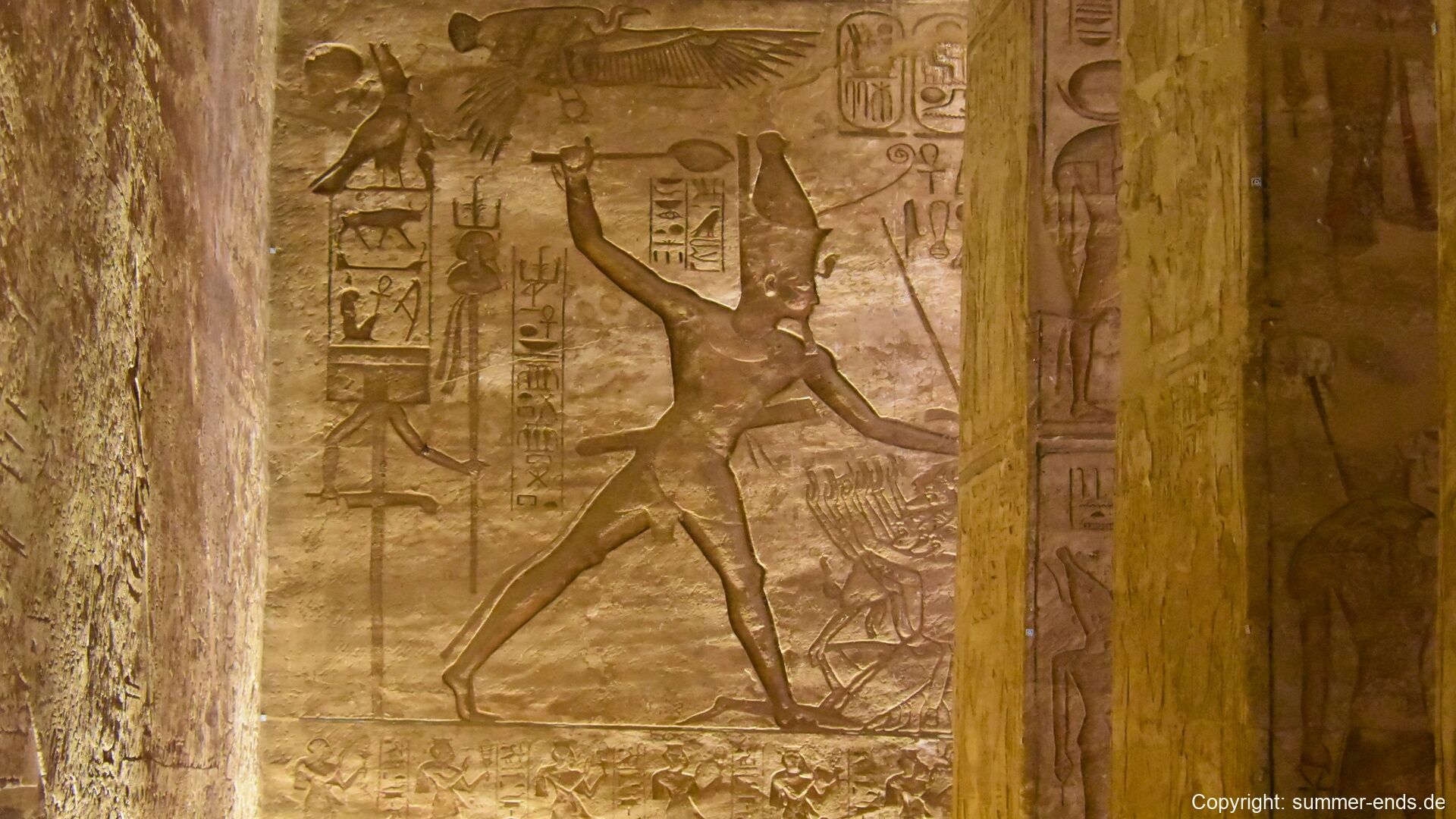
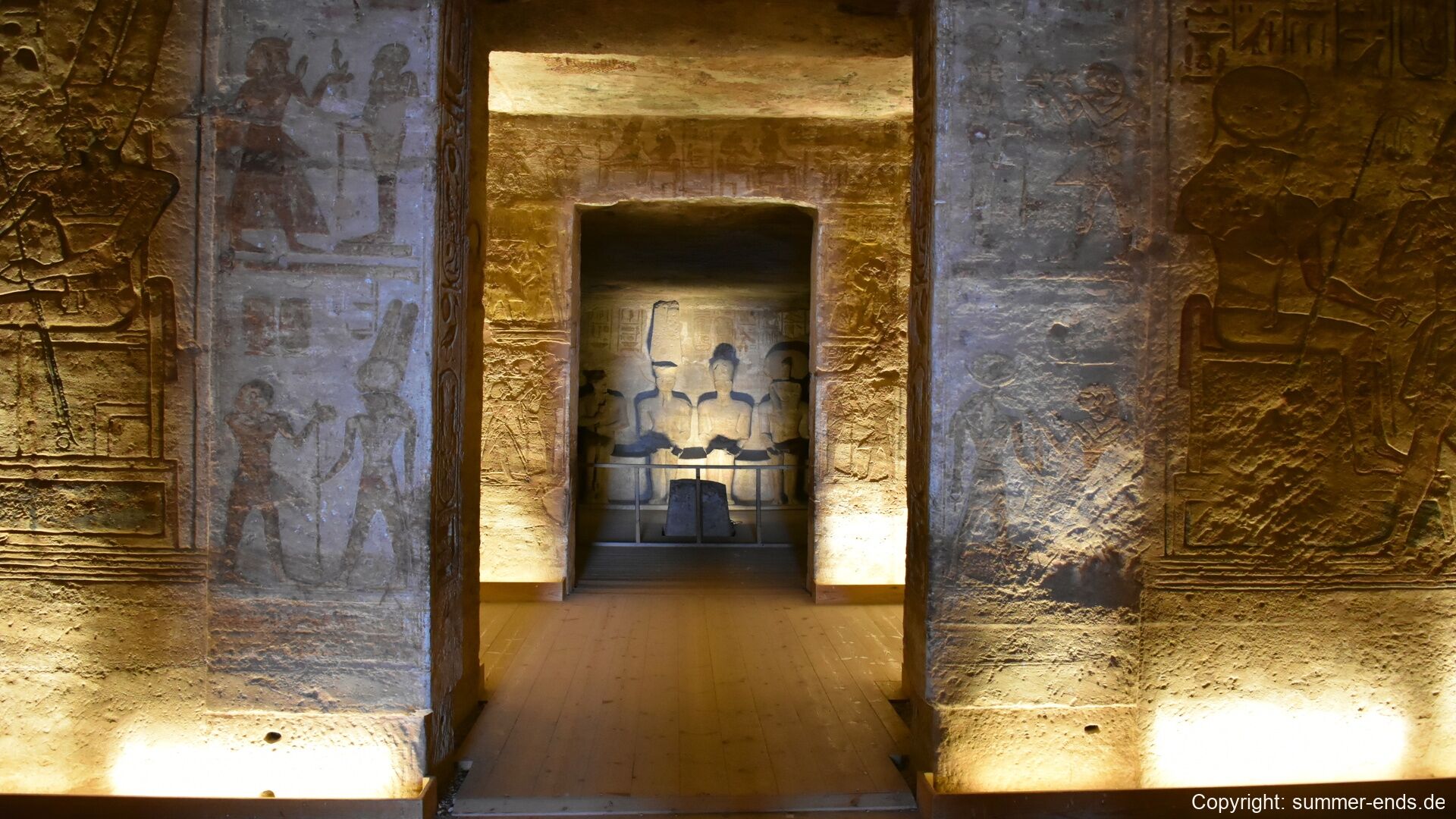
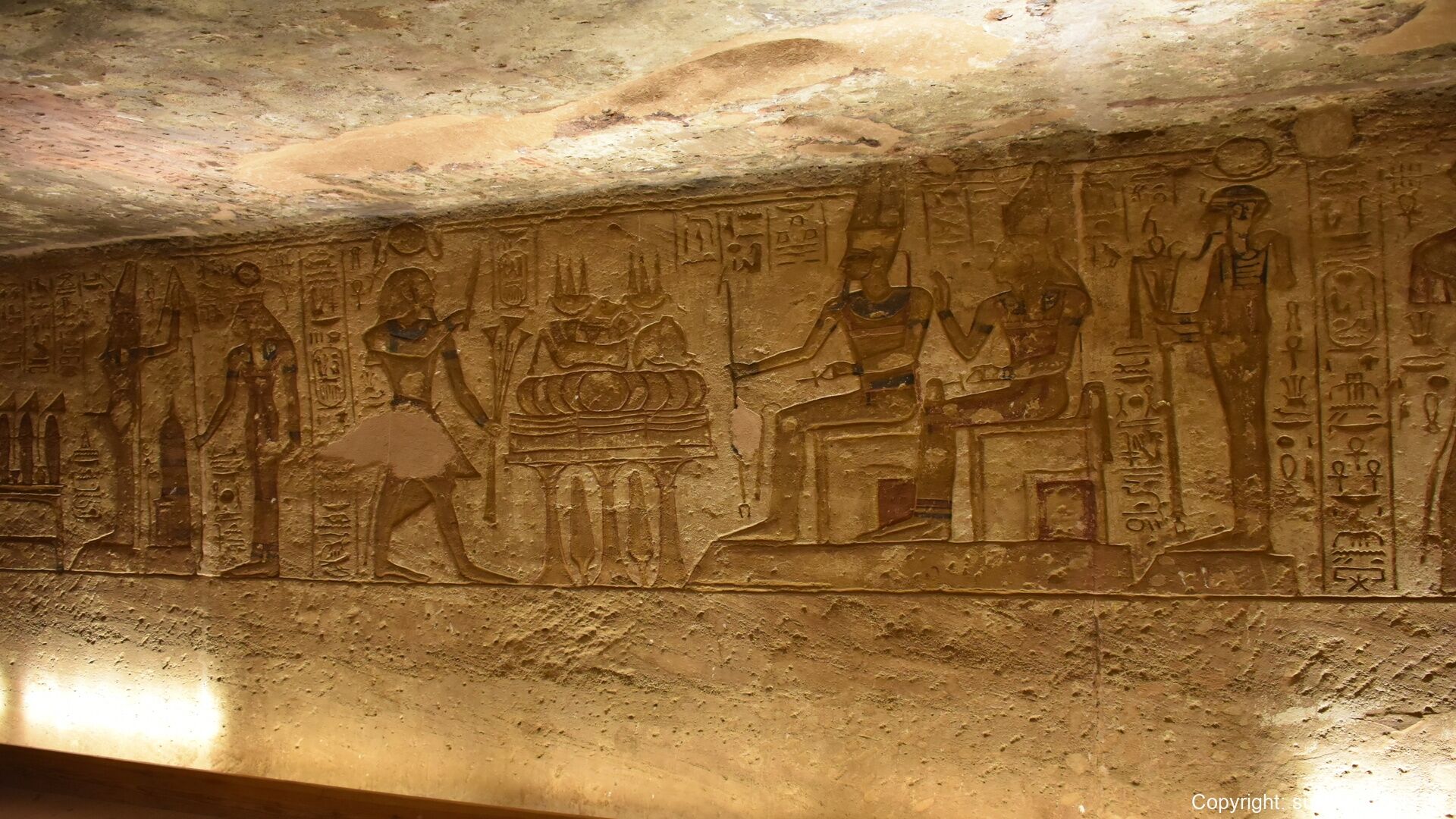
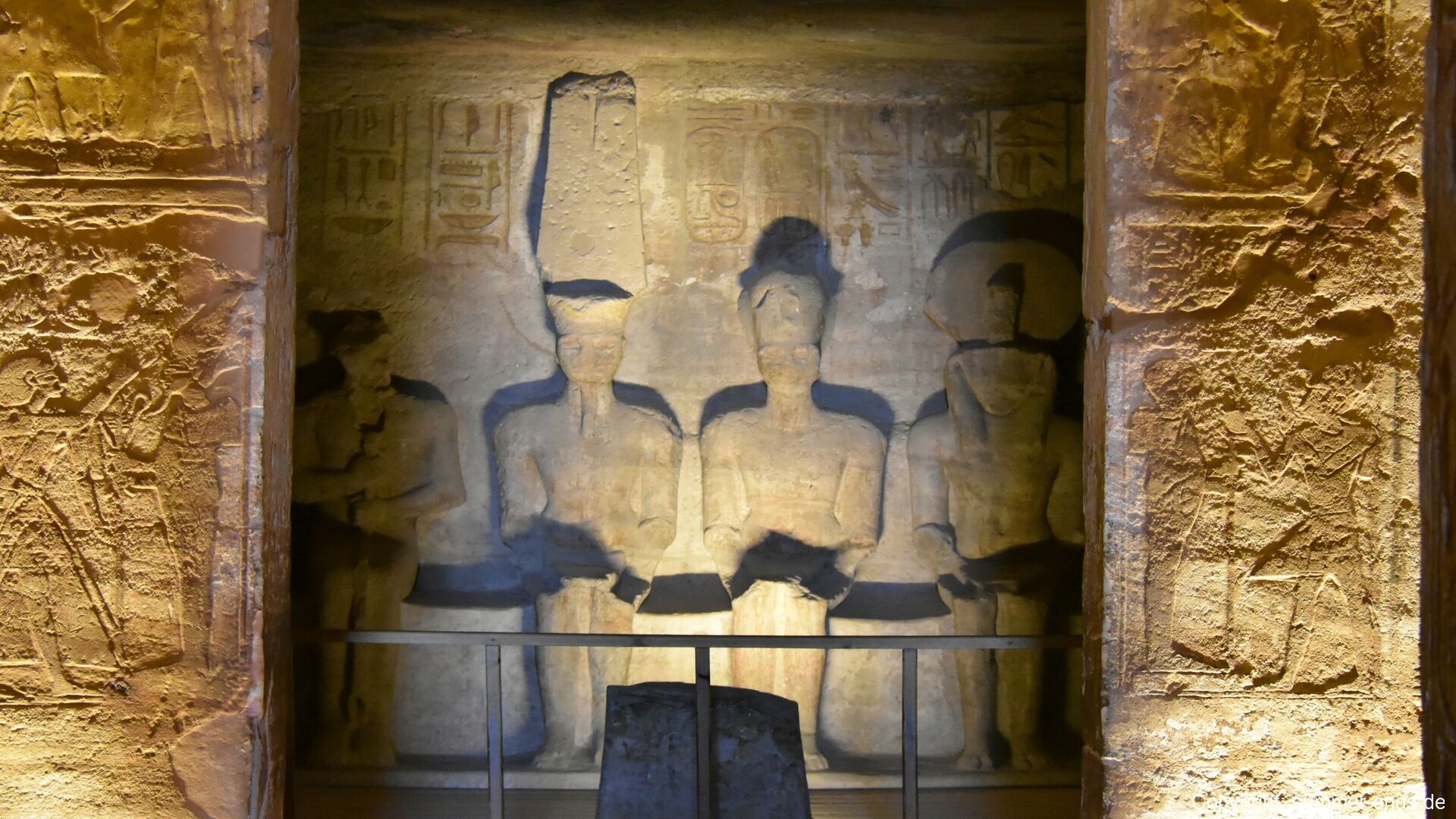
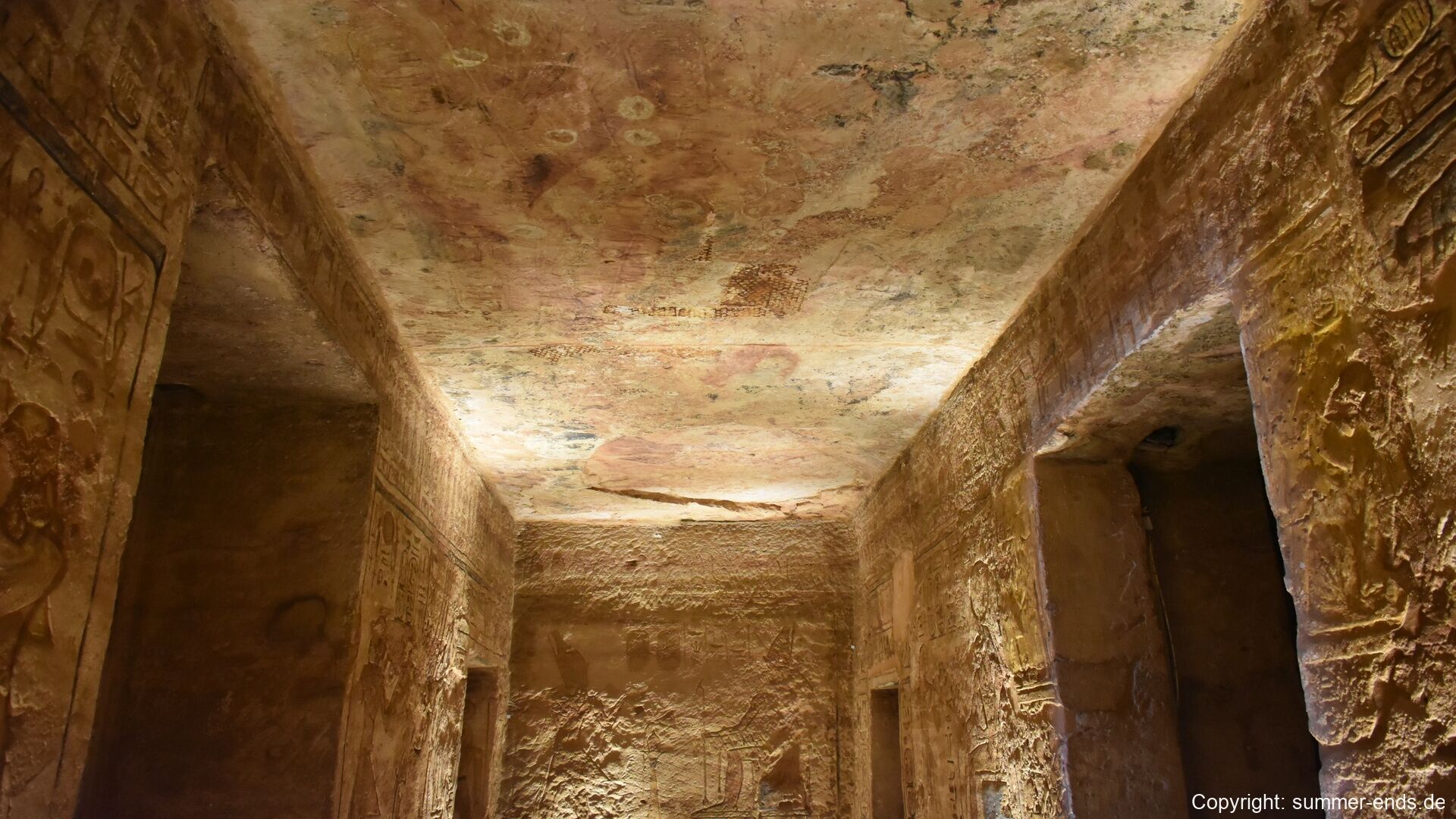
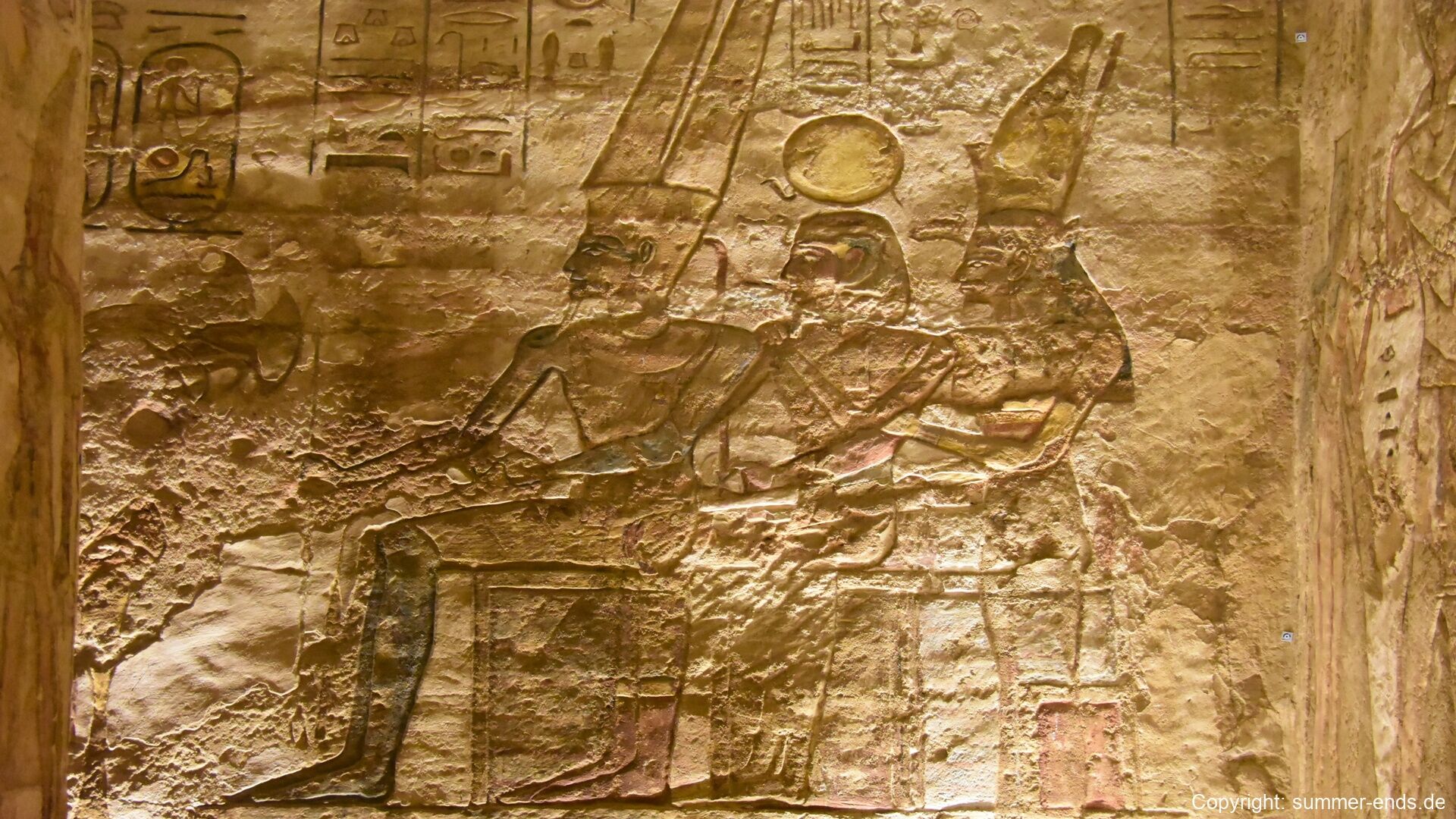
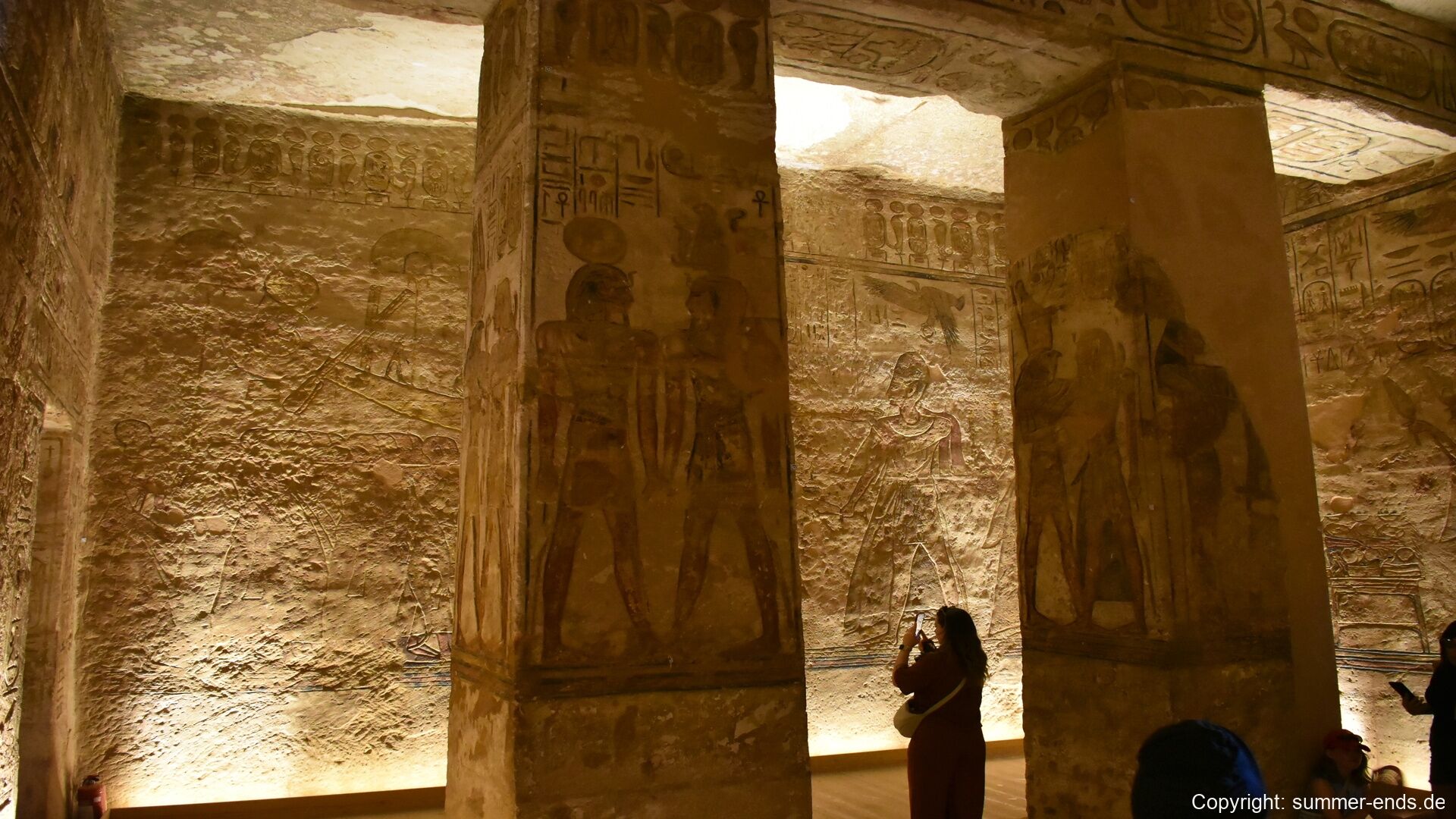
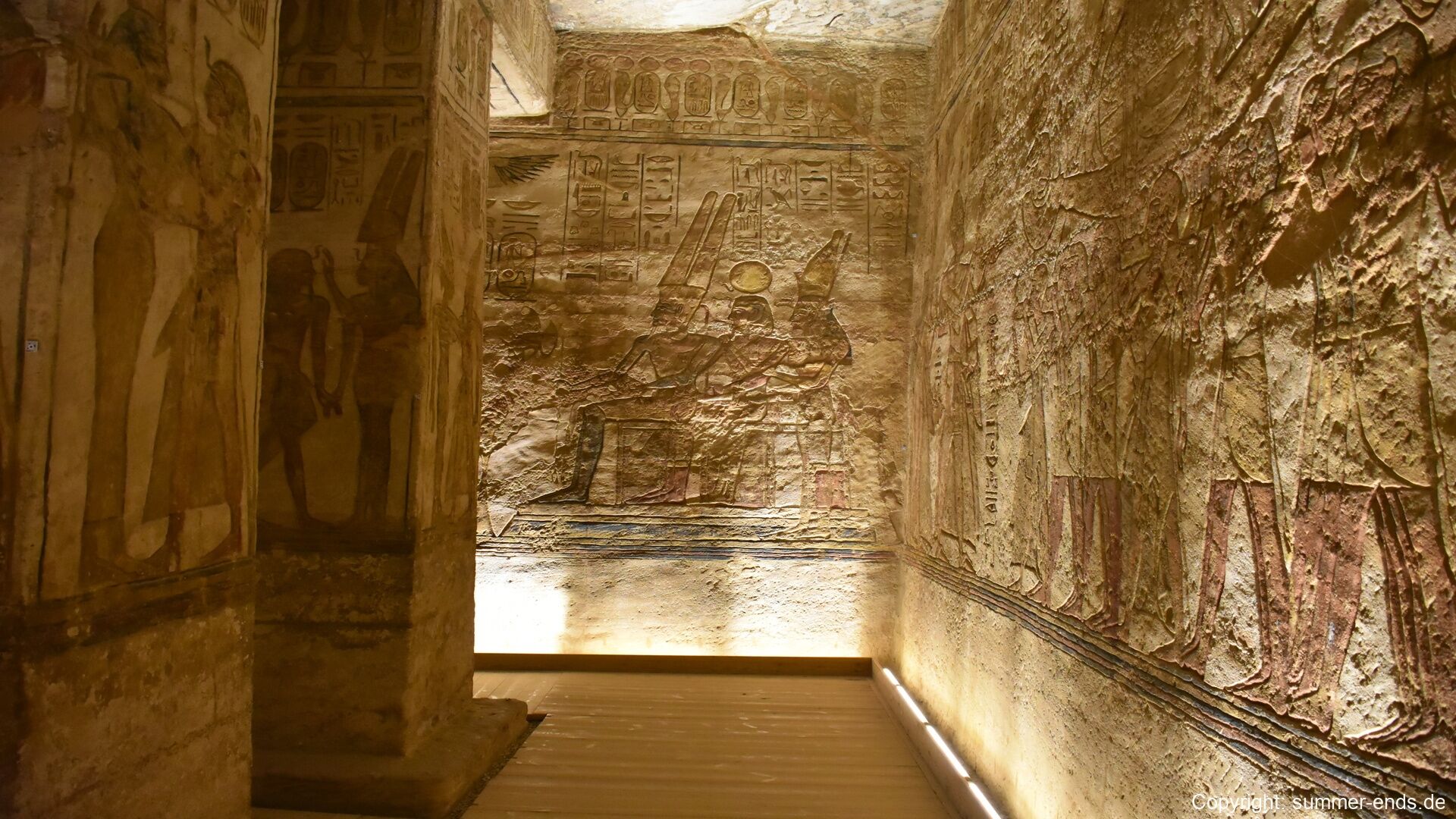
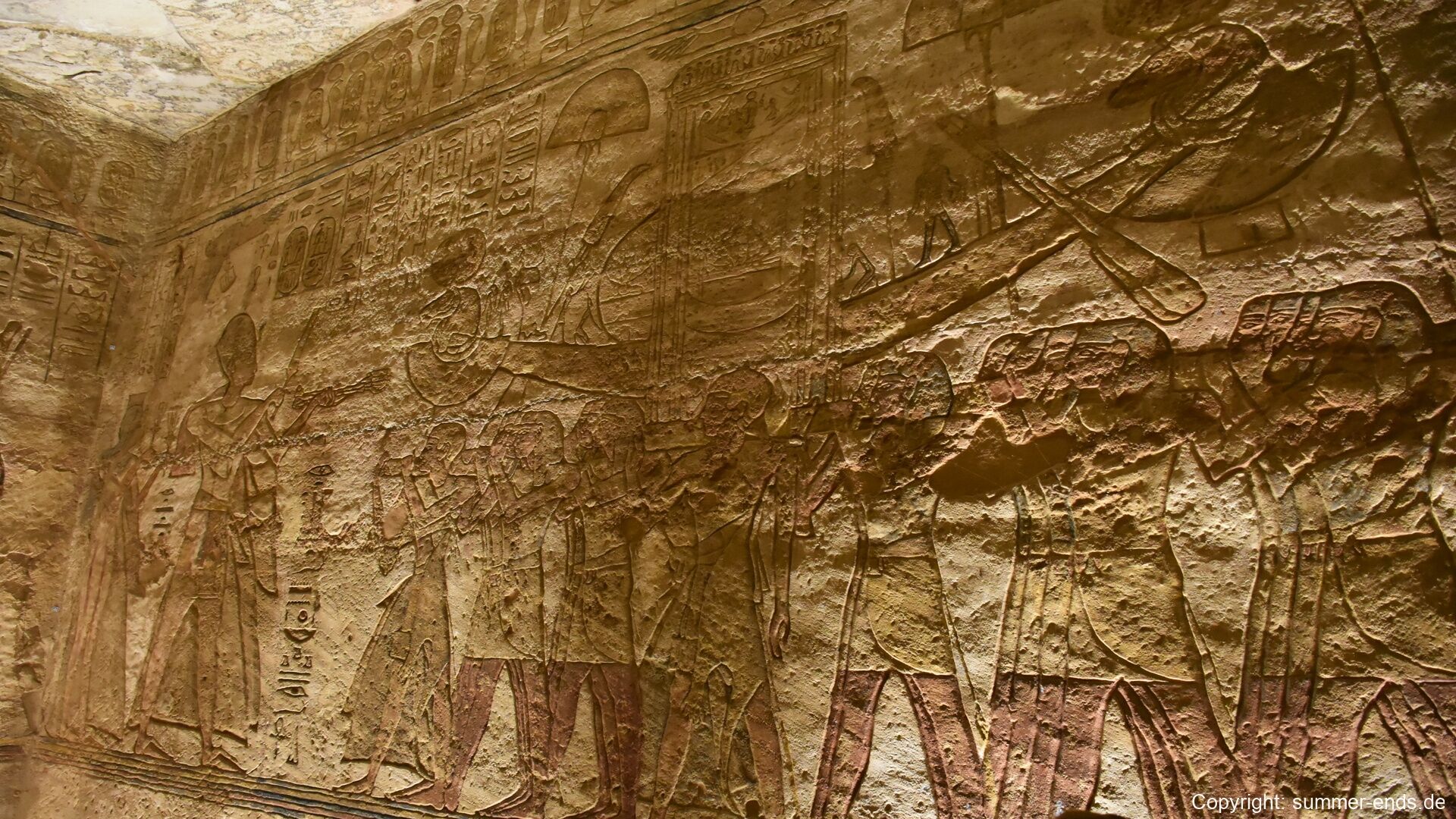
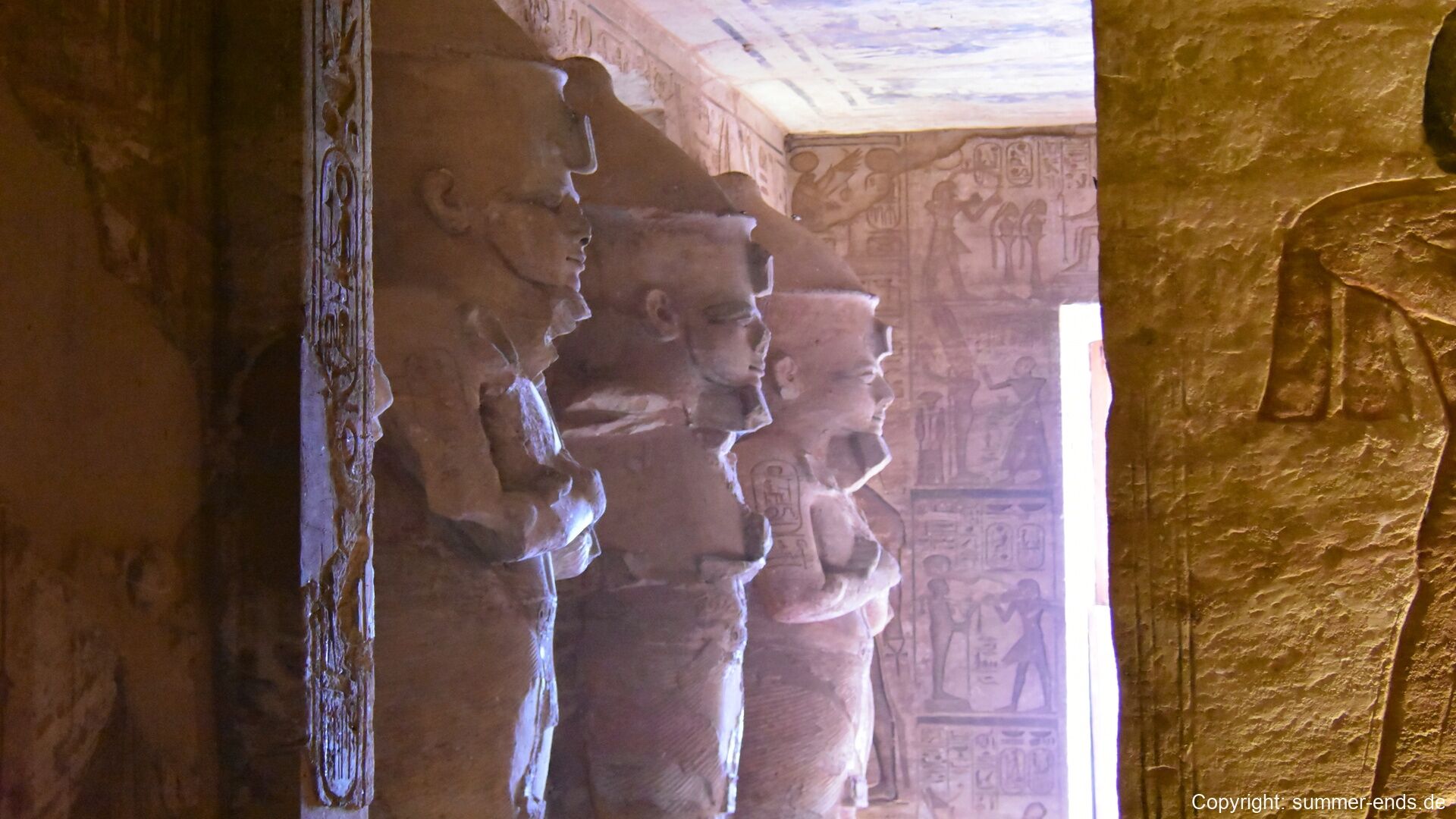
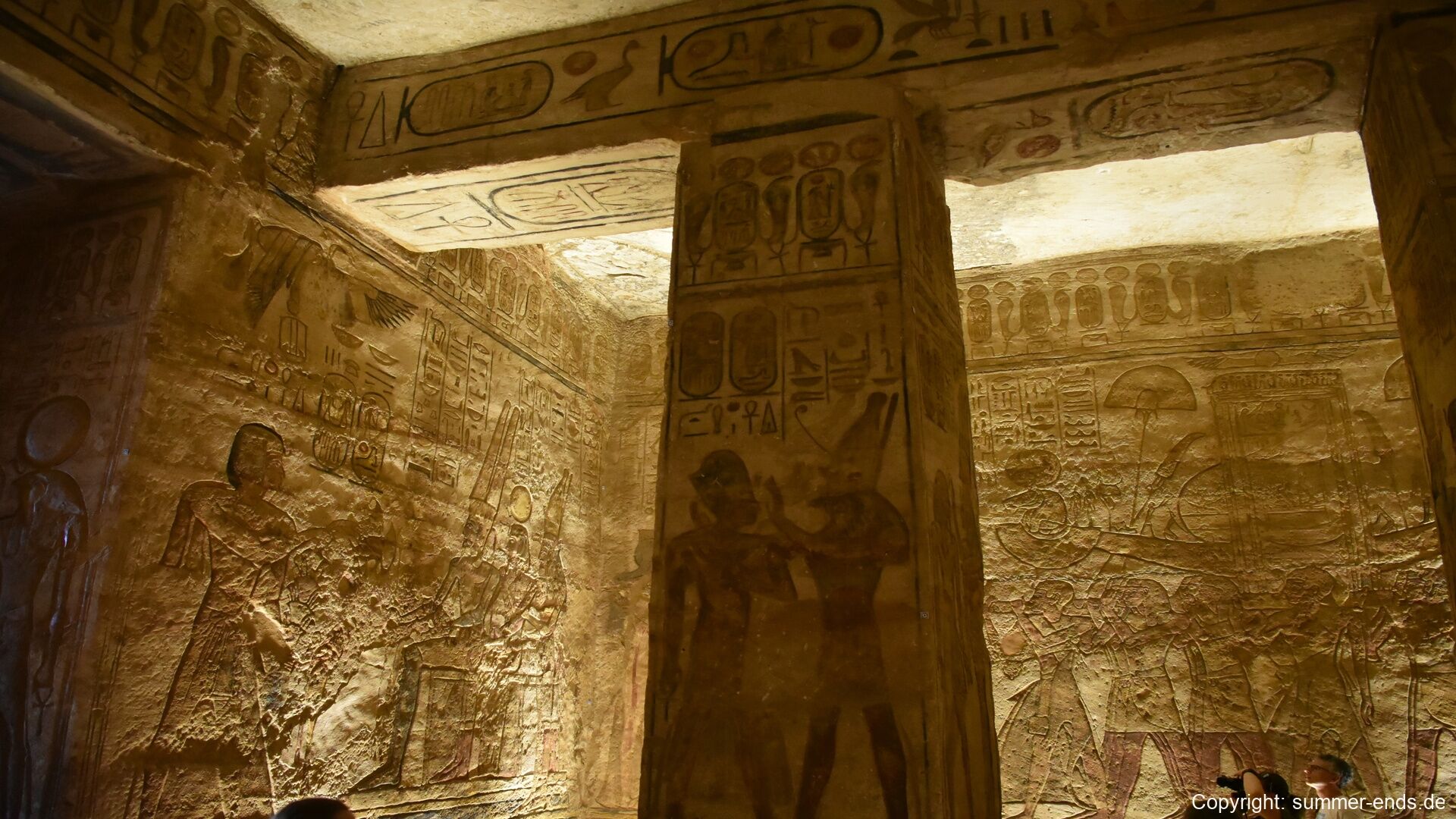
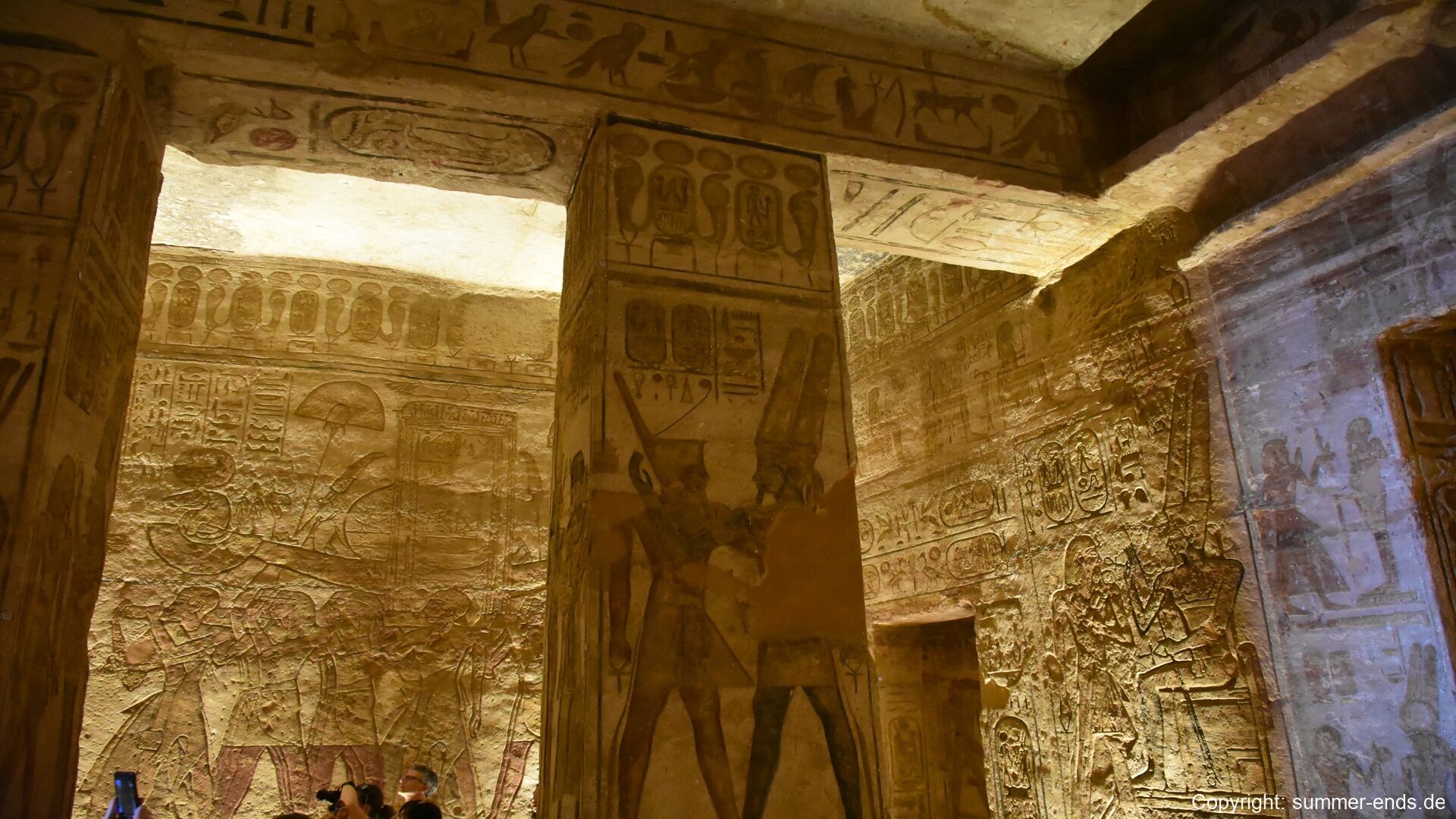
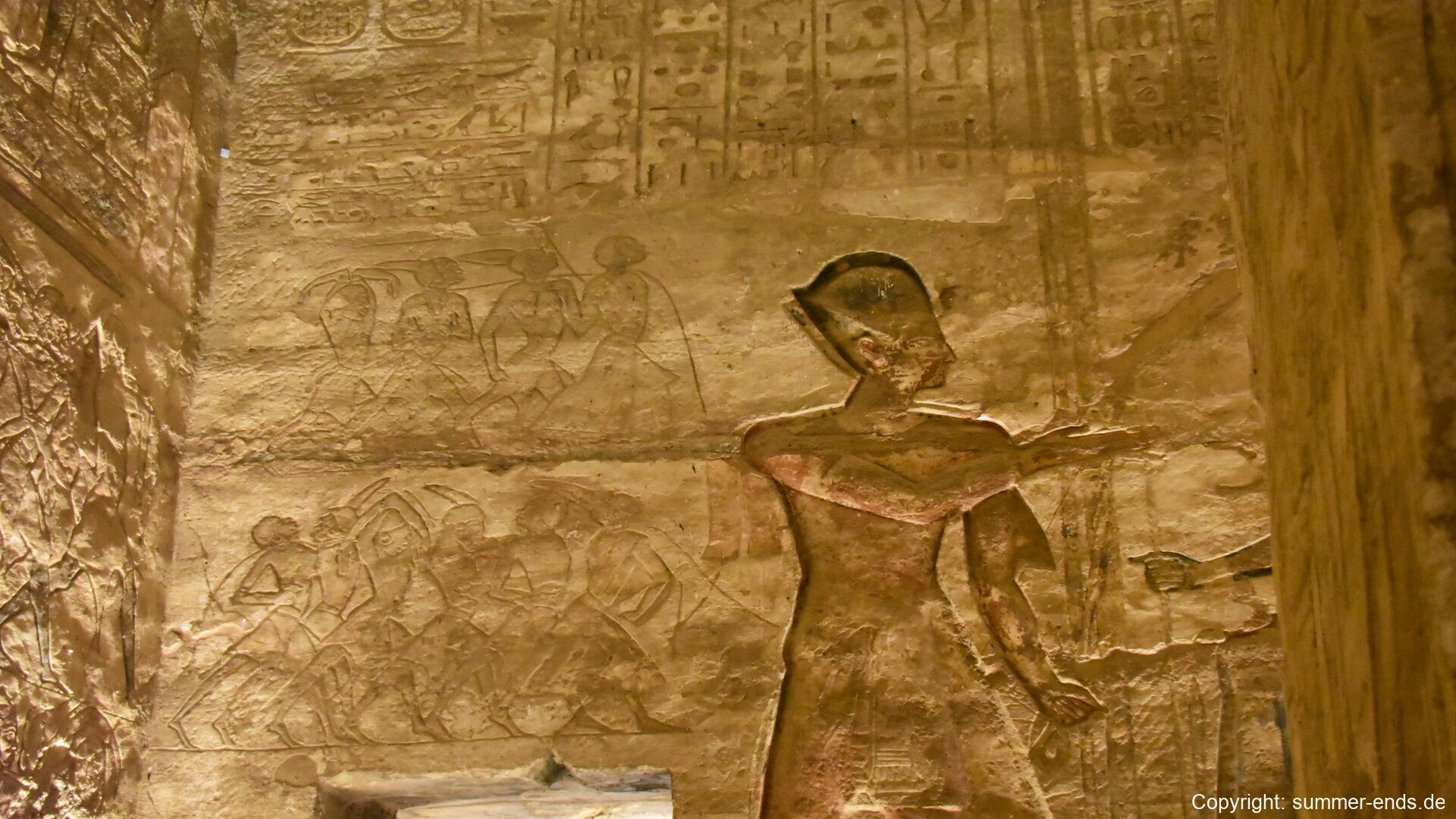
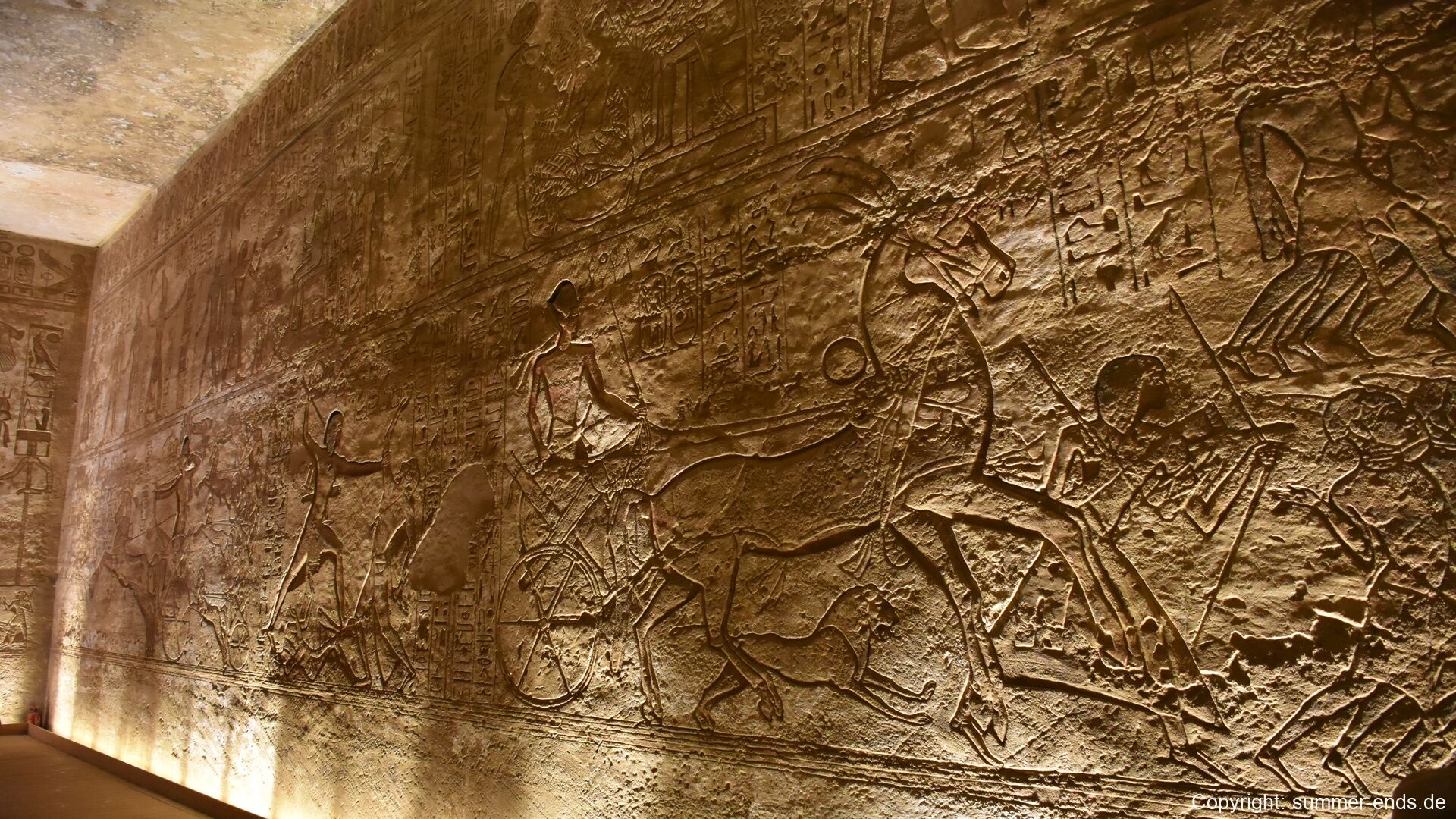
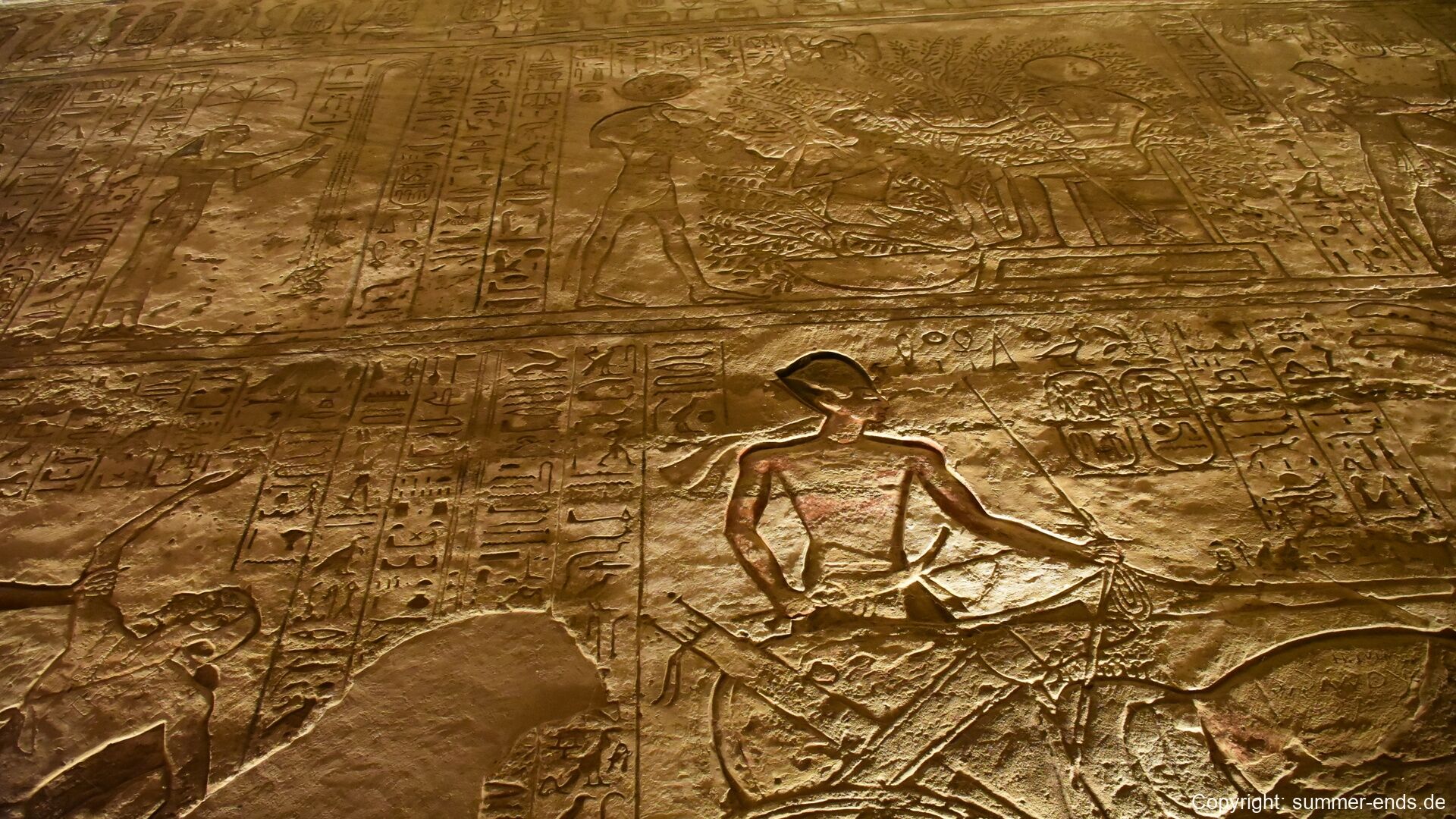
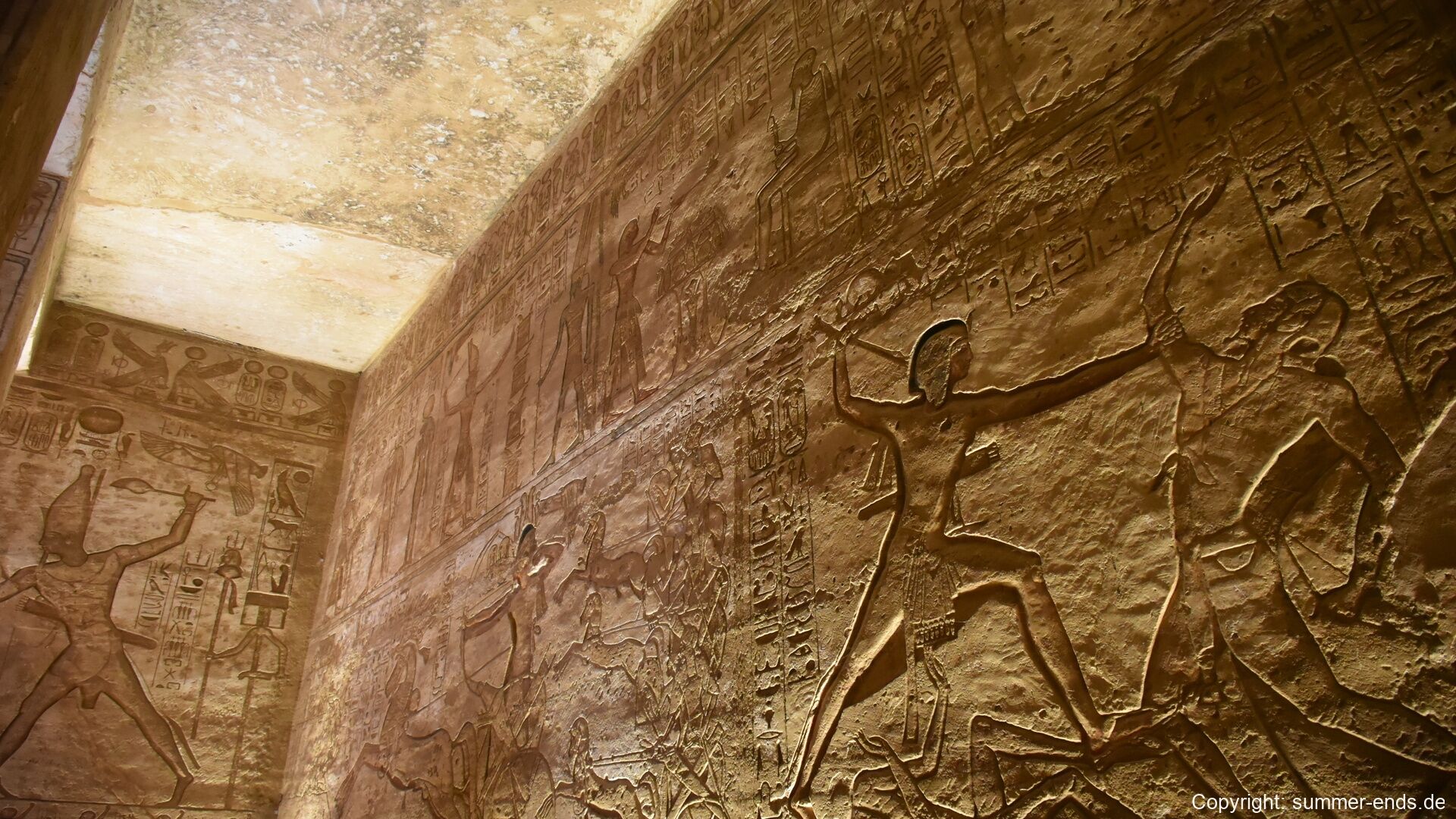
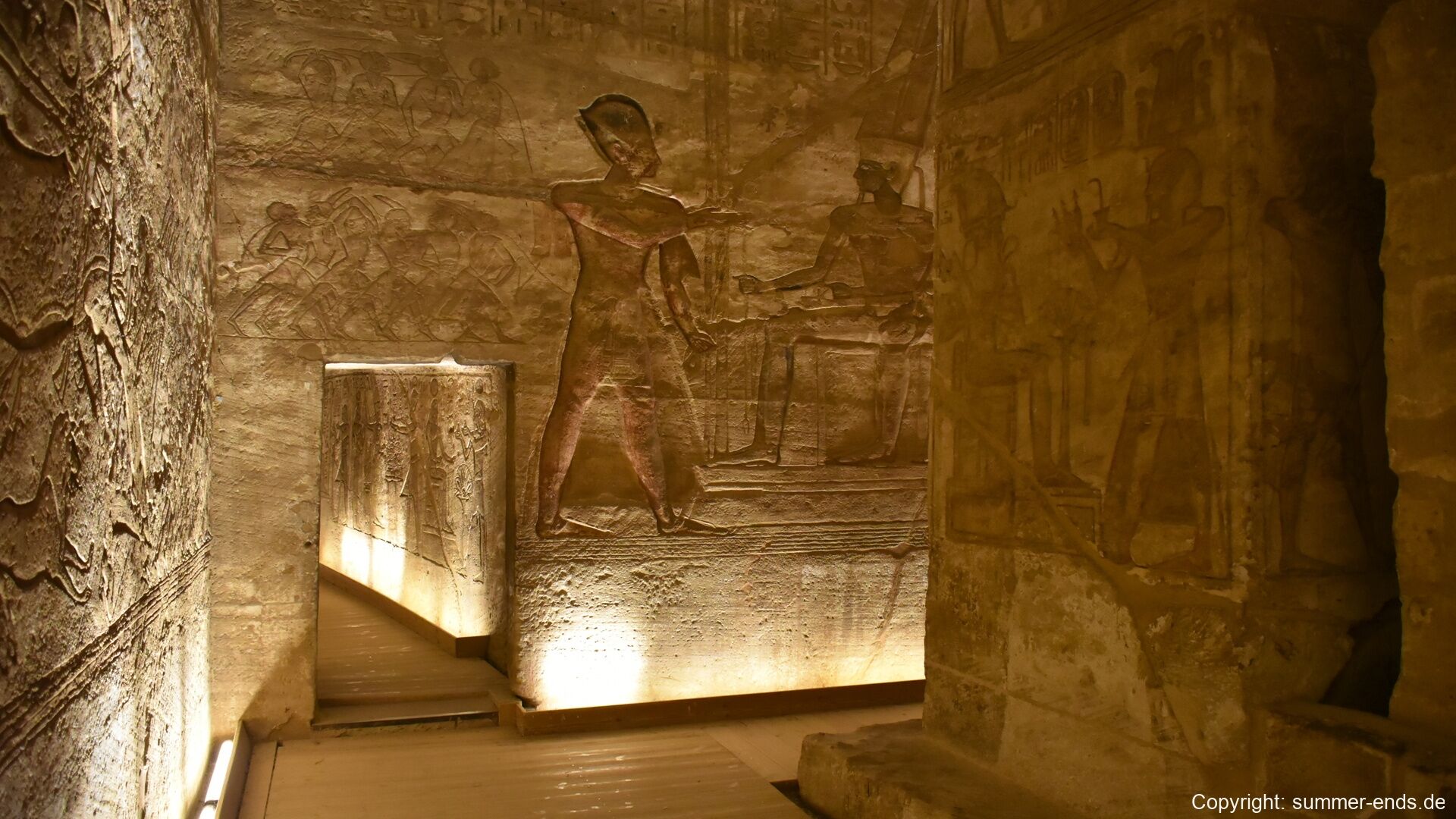
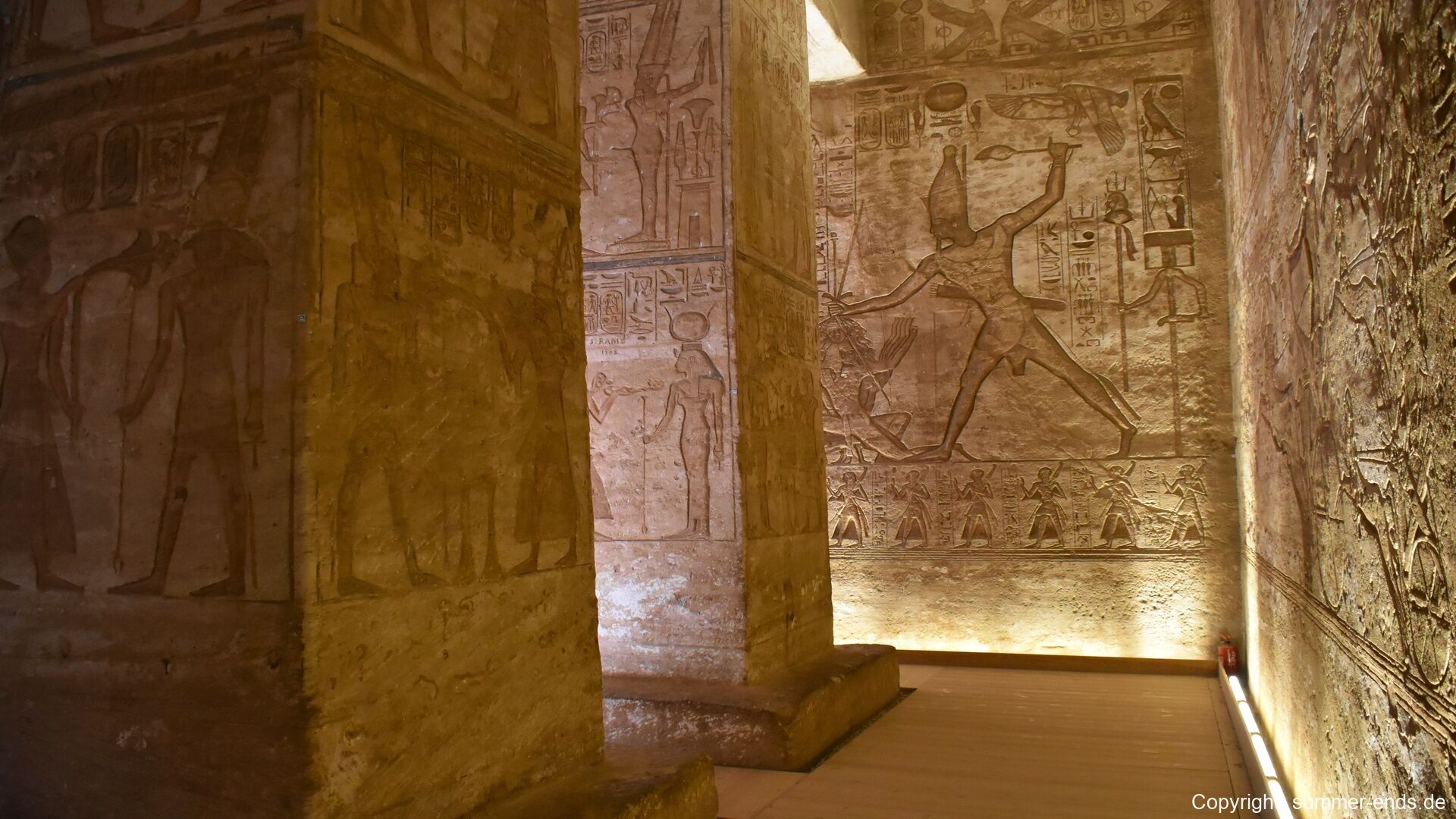
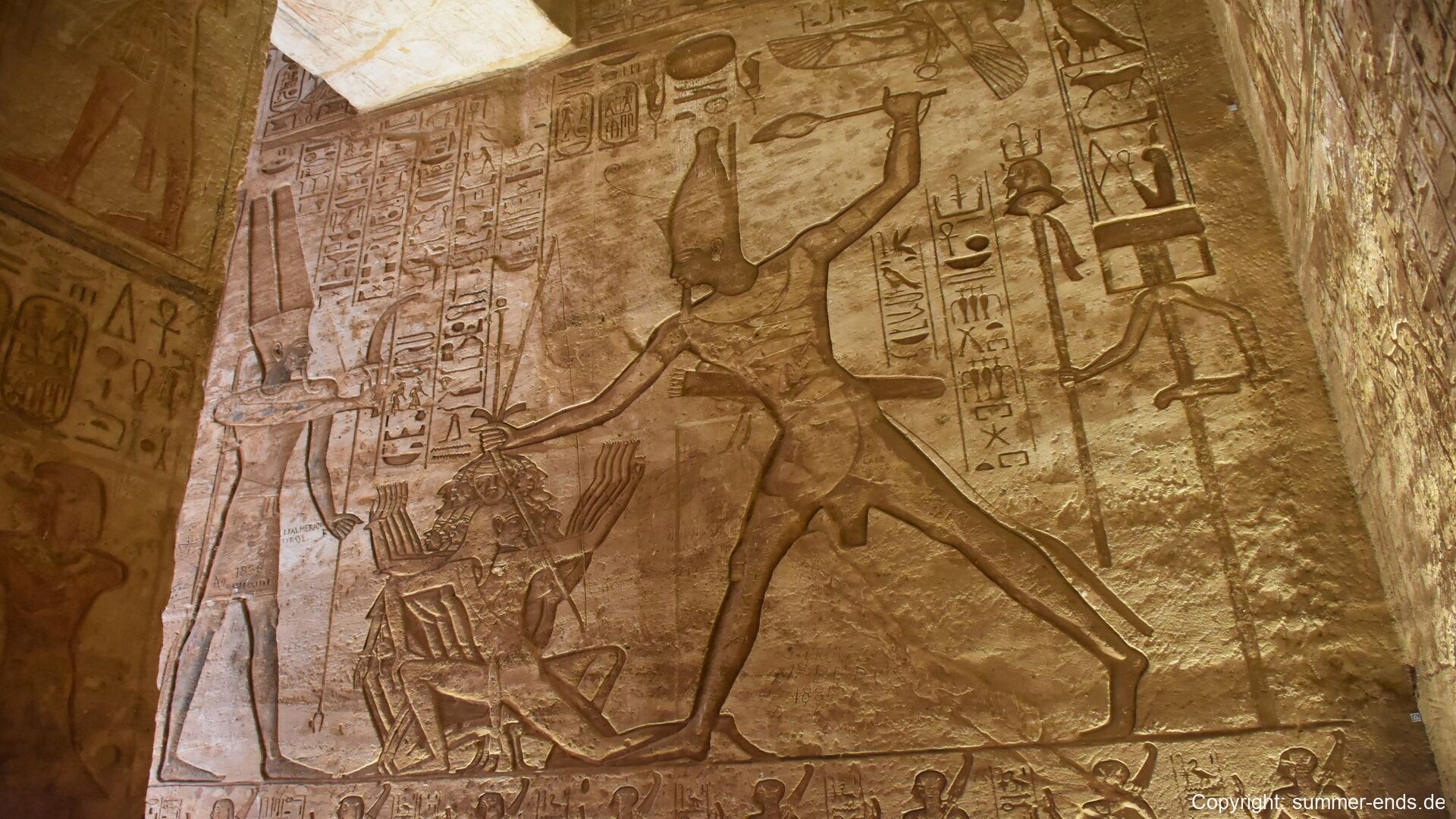
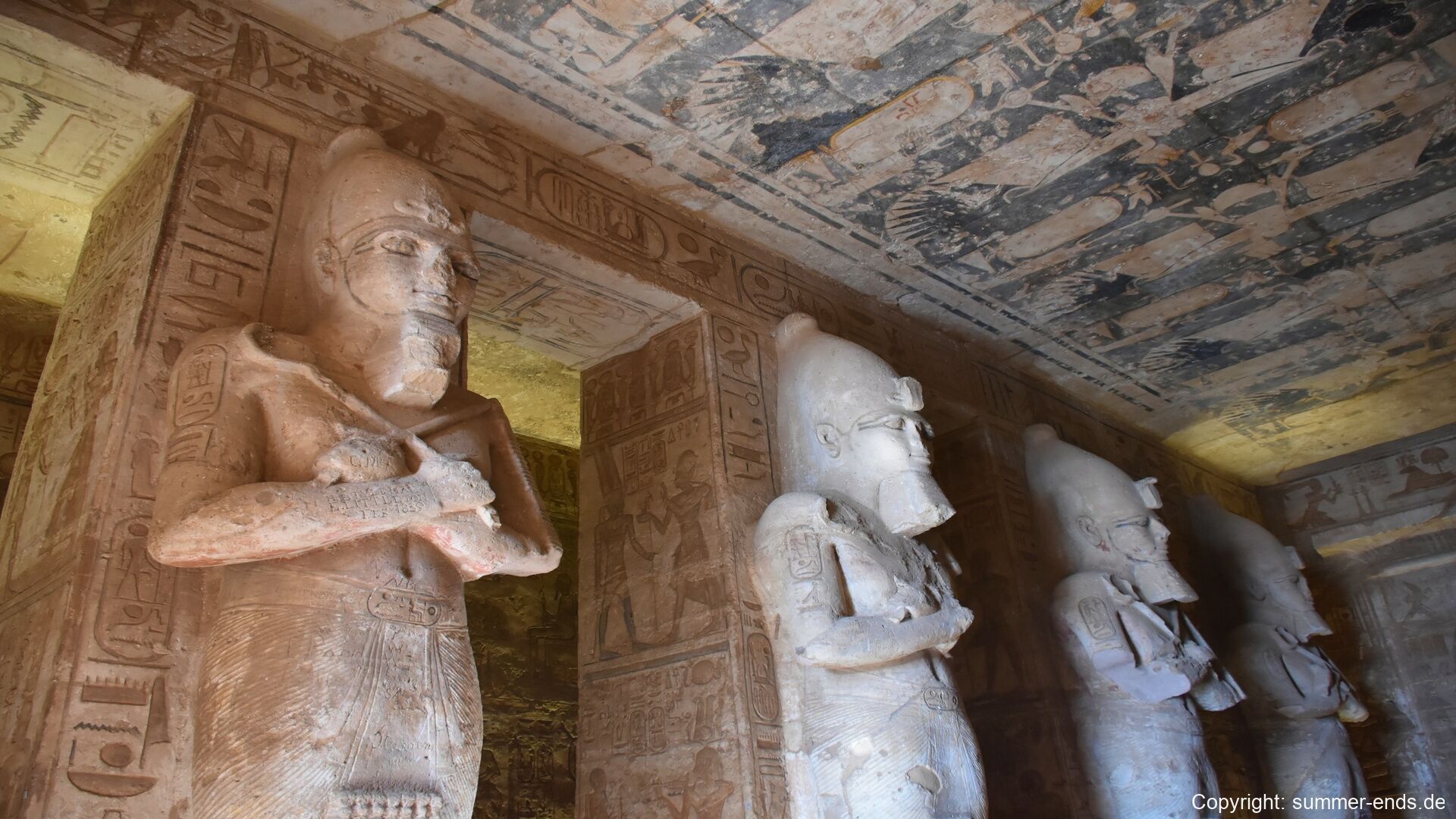
The Great Temple of Ramses II is dominated by four colossal seated statues of the pharaoh, each about 20 meters tall, flanking the entrance. Inside, a hypostyle hall leads to a series of chambers adorned with reliefs depicting battle scenes, such as the famous Battle of Kadesh, as well as offerings to gods and images of Ramses in divine form. At the innermost sanctuary, statues of Amun-Ra, Ra-Horakhty, Ptah, and Ramses himself are aligned so that twice a year—on February 22 and October 22—the sun’s rays penetrate the temple and illuminate the figures, a phenomenon likely planned to coincide with Ramses’ coronation and birthday.
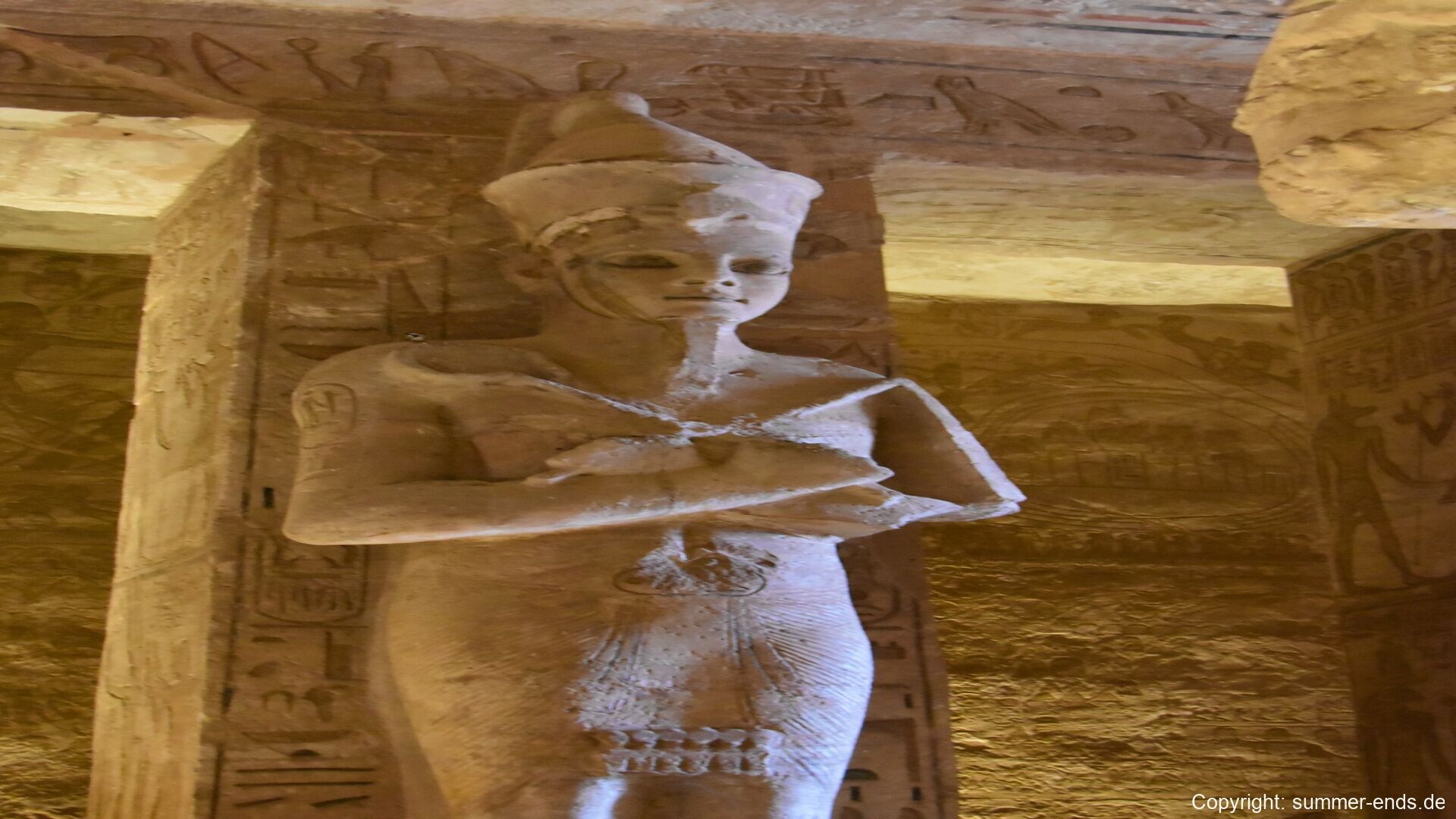
The Small Temple of Nefertari stands nearby and features six standing statues—four of Ramses and two of Nefertari—each about 10 meters tall. Inside, the temple walls display elegant scenes of Nefertari making offerings to Hathor and participating in rituals as both queen and goddess. The interior is more intimate but equally refined, with vibrant carvings and symbolic artwork.
Other features of the site include:
- The visitor center and museum, which documents the history of the temples and the relocation project.
- A solar alignment viewing platform, used during the biannual sun festival.
- Panoramic views of Lake Nasser, formed by the Aswan High Dam, offering insight into modern Egypt’s transformation and the balance between heritage and development.
Abu Simbel is best visited in the early morning when the lighting is most dramatic, and temperatures are cooler. The site is accessible by road or domestic flight from Aswan and is a highlight of any journey into southern Egypt and Nubia.