


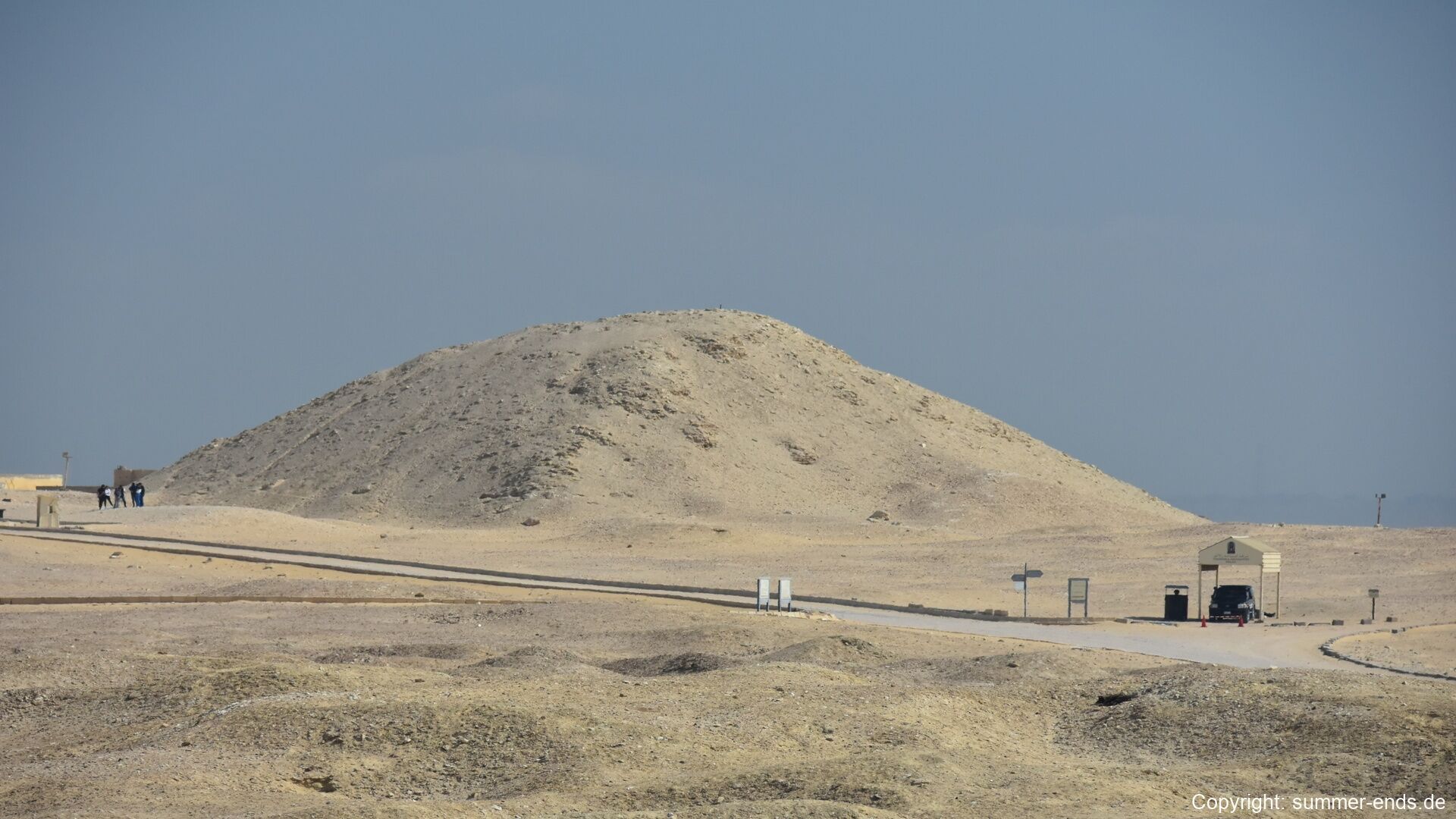


Saqqara is one of the most important and expansive archaeological sites in Egypt, located approximately 30 kilometers south of Cairo on the western bank of the Nile. As the necropolis for the ancient capital Memphis, Saqqara served as a burial ground for pharaohs, nobles, and high officials across several millennia, from the early dynastic period through the Greco-Roman era.
The site is best known for the Step Pyramid of Djoser, the oldest large-scale stone structure in the world and a revolutionary moment in ancient architecture. Unlike the Pyramids of Giza, which reflect the grandeur of the Fourth Dynasty, Saqqara reveals the evolution of ancient Egyptian funerary practices, art, and engineering. With over a dozen pyramids, hundreds of mastabas, and vast underground galleries, Saqqara is a rich source of archaeological discovery and continues to yield new finds that reshape our understanding of Egyptian civilization.
History
Saqqara’s use as a burial ground dates back to the First Dynasty (circa 3100 BCE), making it one of the oldest continuously used necropolises in Egypt. It reached its architectural and cultural zenith during the Third Dynasty, under Pharaoh Djoser (circa 2667–2648 BCE), whose revolutionary tomb—known today as the Step Pyramid—was designed by his architect Imhotep. This structure marks the transition from earlier mudbrick mastabas to monumental stone construction and is considered the prototype for all later pyramids.
During the Old Kingdom, Saqqara remained the primary cemetery for the elite of Memphis. It expanded further in the Middle and New Kingdoms, when it became a center for both royal and private tombs. In the Late Period and into the Ptolemaic and Roman eras, Saqqara housed extensive animal catacombs and temple complexes dedicated to gods such as Serapis and Anubis, indicating its continued religious importance.
The site was rediscovered and partially excavated during the 19th century, but systematic archaeological work began in the 20th century and continues to this day. Recent discoveries include intact tombs, sealed burial shafts, and inscribed coffins, many of which remain in pristine condition. These finds contribute significantly to our knowledge of funerary rituals, art, language, and social structure in ancient Egypt.
Geology
Saqqara is located on a desert escarpment that forms part of the western margin of the Nile Valley. The site lies on Pliocene and Eocene sedimentary formations composed mainly of limestone, marl, and sand. The limestone in this region, particularly the Maadi and Mokattam formations, was used extensively in tomb and pyramid construction. These rock layers provided both structural integrity for large monuments and ease of carving for reliefs and inscriptions.
The plateau’s elevation above the Nile floodplain protected tombs from seasonal inundation, a key reason for the site’s long-term use as a necropolis. The geology also permitted the excavation of extensive subterranean burial complexes, including galleries, shafts, and tunnels that were hewn directly into the bedrock. However, modern concerns such as groundwater intrusion, climate change, and urban encroachment present ongoing challenges for conservation and site management.
Things to See
Saqqara offers a wide array of monumental structures, tombs, and sacred spaces that span over 3,000 years of Egyptian history. The most iconic landmark is the Step Pyramid of Djoser, a six-tiered structure rising to about 60 meters, surrounded by a vast mortuary complex that includes temples, courtyards, and ceremonial structures. This entire enclosure, with its limestone colonnades and decorative elements, reflects the architectural genius of Imhotep.
Other significant pyramids include those of Unas, Teti, and Sekhemkhet. The Pyramid of Unas is notable for containing the earliest known Pyramid Texts—religious inscriptions that would become standard in royal tombs. The Pyramid of Teti, though modest in size, is surrounded by a rich cluster of private tombs belonging to officials, priests, and craftsmen.
Saqqara is also home to the Serapeum, an underground necropolis housing the mummified remains of Apis bulls, considered sacred in ancient Egyptian religion. The massive granite sarcophagi in these tunnels reflect the religious and logistical sophistication of the Late Period.
Dozens of Old Kingdom mastabas dot the plateau, including those of high officials like Ti and Mereruka. These tombs feature elaborately carved reliefs depicting scenes of daily life, agriculture, and religious rituals, offering invaluable insights into the social and economic structure of ancient Egypt.
Visitors to Saqqara today can explore restored structures, active excavation zones, and modern interpretive signage. The site’s elevated location also offers panoramic views over the Nile Valley and the Giza Plateau to the north.