Stage 1 of 4
2025 USA I - 1 - Chicago


















Journal Notes
General
Chicago is the largest city of the US state of Illinois and of the American Midwest, standing on the western shore of Lake Michigan where the Chicago River enters the lake. With 2.74 million inhabitants at the 2020 census it is the third most populous city of the United States, and its metropolitan area, home to about 9.62 million people, ranks third among American metropolitan areas. The city is the seat of Cook County, the second most populous county of the country, and covers an area of roughly 600 square kilometres of low, flat ground that was once lake bed and prairie.
The centre of the city is the Loop, one of the 77 officially designated community areas into which Chicago is divided for planning purposes; the whole city is administered through 50 wards, each represented by an alderman. The Loop takes its name from the elevated railway loop that has circled the central business district since the 1890s, and it remains the financial and commercial heart of the region. Around it lie the older residential districts of the Near North Side, the Near West Side and the South Side, while the metropolitan region stretches far into the surrounding counties of Illinois and neighbouring Indiana and Wisconsin.
Chicago grew to national importance as a transport hub. Its position on the Great Lakes and its rail connections made it the gateway between the agricultural interior of the continent and the eastern seaboard, and the city still is one of the largest railway centres of North America, with O’Hare International Airport among the busiest airports of the world. The Chicago Mercantile Exchange and the Chicago Board of Trade, now merged as the CME Group, made the city a world centre of futures trading, and it is a leading American centre of banking, medicine, higher education and corporate headquarters.
The city is also the birthplace of the modern skyscraper, the home of a celebrated architectural tradition, and a centre of American music, from the electric blues of the post-war years to jazz, gospel, house and hip-hop. Its lakefront parks, museums, theatres and festivals draw millions of visitors each year, and its nickname, the Windy City, is explained either by the breezes off Lake Michigan or, more commonly, by the long-winded politicians of the 1890s. Despite its industrial past and its reputation for hard winters, Chicago today is above all a city of neighbourhoods, waterfront and skyline.
History
The area at the mouth of the Chicago River was long a meeting place of Native American peoples, among them the Potawatomi, the Miami, the Sauk and the Fox, who used the low divide between the Great Lakes and the Mississippi basin as a short portage route. The name Chicago is usually traced to a Native American word for the wild garlic or onion that grew in the marshy ground. French explorers, including Louis Jolliet and Jacques Marquette in 1673, recognised the strategic value of the passage, and towards the end of the eighteenth century the trader Jean Baptiste Point du Sable, of African and French descent, established a permanent settlement near the river mouth that grew into a trading post.
The United States built Fort Dearborn at the site in 1803 to guard the portage route, and during the War of 1812 the garrison was evacuated and attacked near the fort. Chicago was incorporated as a town in 1833 with only a few hundred residents and as a city in 1837. The opening of the Illinois and Michigan Canal in 1848 linked the Great Lakes to the Mississippi River, and the arrival of the railroads soon made the young city the greatest railway centre of the American West. Grain elevators, the Chicago Board of Trade, founded in 1848, and the Union Stock Yards, opened in 1865, made it the market place of the American farm belt, while waves of immigrants from Germany, Ireland, Poland, Italy and Scandinavia filled its new neighbourhoods.
On the night of 8 October 1871 the Great Chicago Fire destroyed much of the central city. The blaze killed about 300 people, ruined some 17,000 buildings across more than three square miles and left over 100,000 residents homeless. The rebuilding that followed was swift and ambitious, and it made Chicago the laboratory of a new American architecture. Steel-frame construction, the passenger elevator and the ideas of architects such as William Le Baron Jenney, Louis Sullivan, Daniel Burnham and John Wellborn Root produced the first generation of skyscrapers and the style later known as the Chicago School of architecture.
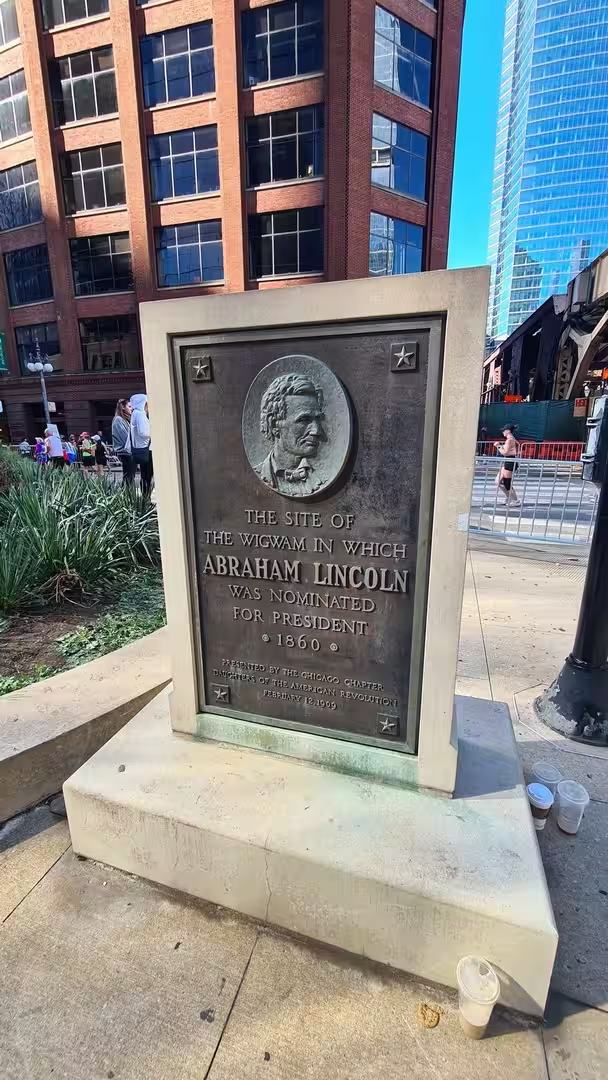
The late nineteenth century was also an age of social conflict. The Haymarket Affair of 1886, in which a bomb thrown at a rally for the eight-hour working day was answered by police fire, became a worldwide symbol of the labour movement, and the reformer Jane Addams founded Hull House in 1889 to serve the immigrant poor of the West Side. In 1893 the World’s Columbian Exposition presented the rebuilt city to the world; its White City of monumental plaster buildings, designed under the direction of Daniel Burnham, influenced American city planning for a generation. Abraham Lincoln had received the Republican nomination for the presidency at the Wigwam, a convention hall in the young city, in 1860.
During the twentieth century Chicago grew into one of the great industrial and cultural capitals of the country. The Great Migration brought hundreds of thousands of African Americans from the South to the city, creating the vibrant Black community of the South Side and giving the world Chicago blues and jazz. The city was long governed by a powerful Democratic machine, and its Prohibition-era gang wars, above all the career of Al Capone, made it famous for organised crime. Like other industrial cities, Chicago lost much of its manufacturing base after the Second World War, but it reinvented itself as a centre of finance, education, medicine, architecture and tourism.
Today the city is defined by the renewal of its downtown, its lakefront and its older neighbourhoods, and by a skyline that still grows upward. Its museums, universities, hospitals and exchanges employ a workforce drawn from across the world, and its history remains visible in its street grid, its parks, its bridges and its architecture. From a fur-trading post at a portage, Chicago has become one of the great cities of North America.
Geology
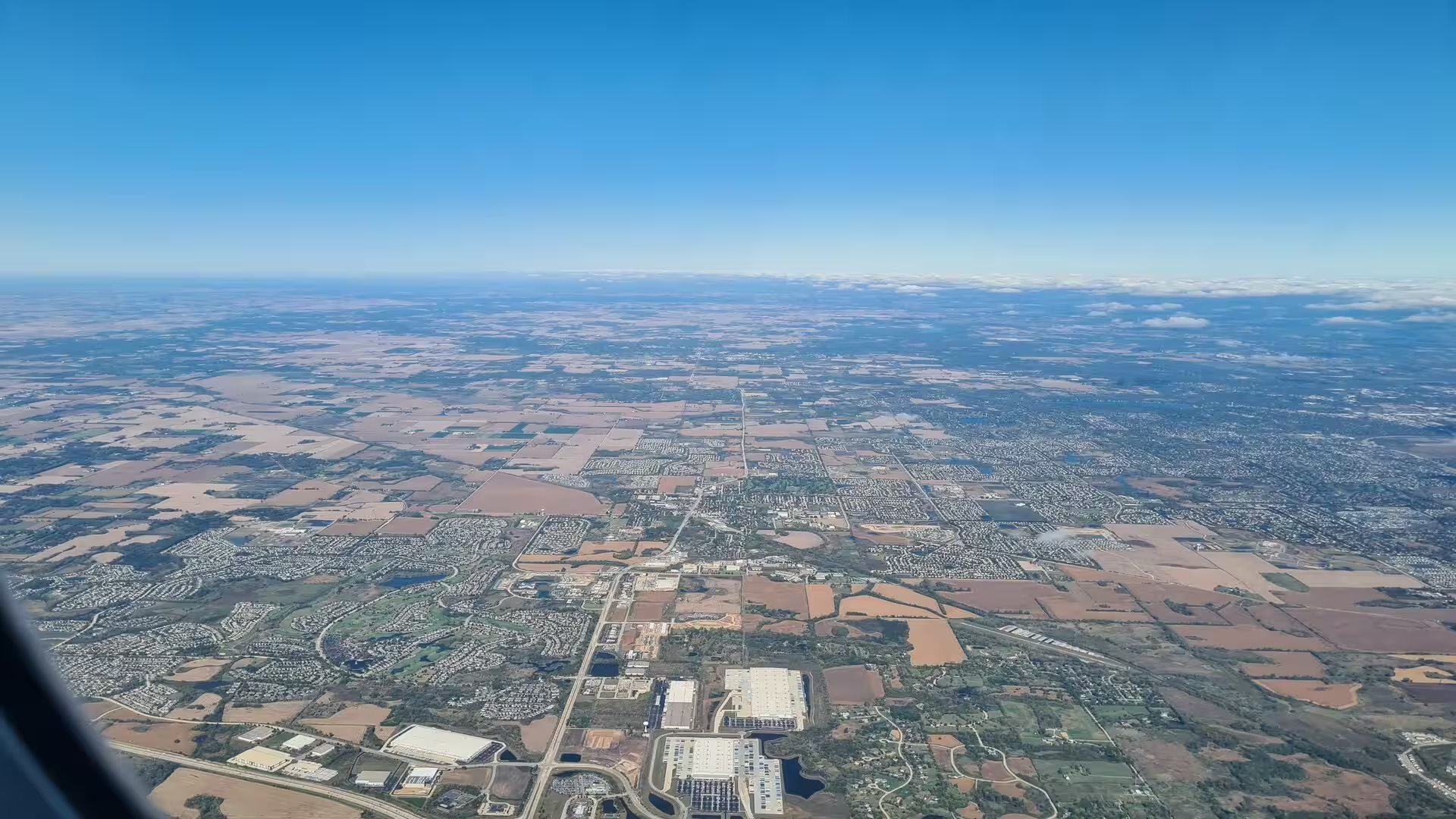
The ground beneath Chicago is young, flat and largely of glacial origin. The city lies on the southwestern shore of Lake Michigan, one of the five Great Lakes, whose basin was scoured out by repeated advances of the great ice sheets of the Pleistocene. When the last glaciers withdrew some 14,000 years ago, they left behind thick deposits of till, clay, silt, sand and gravel that buried the older bedrock and smoothed the landscape into the low plain on which the city was built. The flatness that makes Chicago easy to build on and easy to lay out in straight streets is itself a gift of the ice.
Far below these glacial deposits lies a foundation of Silurian limestone and dolomite, more than 400 million years old. At that time the region lay under a warm, shallow tropical sea in which countless marine organisms built up thick layers of carbonate sediment. The bedrock is rarely visible in the city, buried as it is beneath younger material, but it has shaped Chicago nonetheless: its limestone and dolomite were quarried across the region for building stone and road metal, and the clay of the glacial plain supplied the brickworks that rebuilt the city after the Great Fire of 1871.
The history of Lake Michigan itself is written in the surface of the city. As the ice retreated, the melting water formed a series of larger glacial lakes, and the shorelines of these ancient stages survive as low beach ridges and sand deposits that can still be traced in the gentle relief of the area. The present lakefront is only the latest of these shores. Geologically the most important feature of the site is the Chicago Portage, a low divide between the Great Lakes and the Mississippi watershed, over which the Chicago River, the Des Plaines River and the Illinois River once offered an almost continuous water route to the Gulf of Mexico.
The fine-grained clay and silt of the old lake beds created constant problems for the young city. The ground was poorly drained, much of the site was swampy, and the early streets turned to mud; outbreaks of waterborne disease finally forced the city to raise its street level by up to four metres in places during the 1850s and 1860s and to build a comprehensive sewer system. In 1900 the direction of the Chicago River was reversed by the Sanitary and Ship Canal, so that the city’s waste water flowed away from the lake and towards the Mississippi, one of the boldest pieces of civil engineering of its time.
The lakefront itself is partly a work of human hands. Waves, currents and storms constantly reshape the shore, and much of the present parkland, from Grant Park to the Museum Campus, stands on ground created by landfill behind breakwaters. The lake also moderates the climate of the city, cooling the shore in summer and feeding the heavy snowfalls of the lake-effect winters, while the open flatness of the plain lets the winds sweep through the street grid. Chicago’s geology, in short, explains its flat streets, its deep foundations, its drainage canals and its very position as the meeting point of the waters of the continent.
Things to See
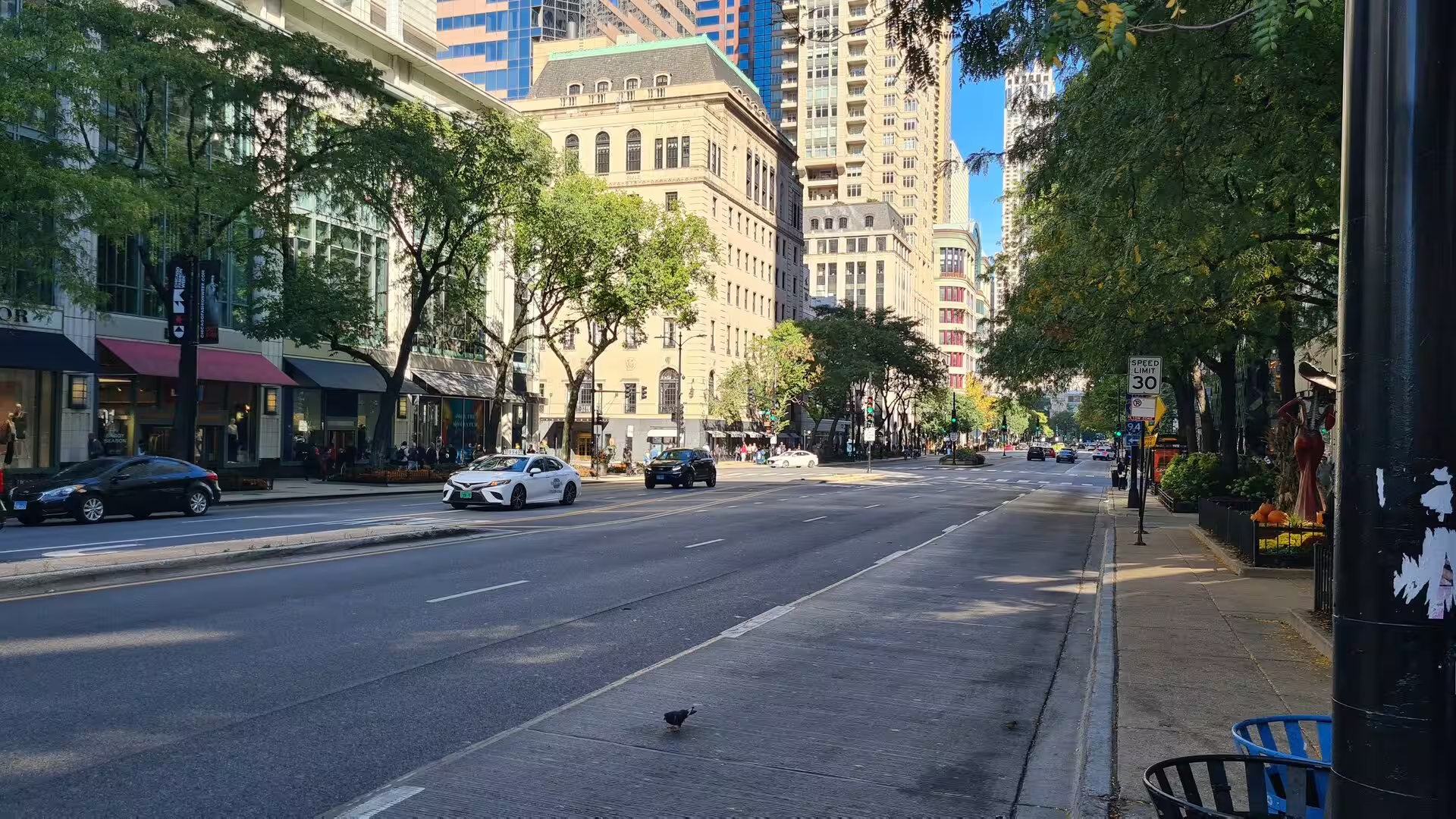
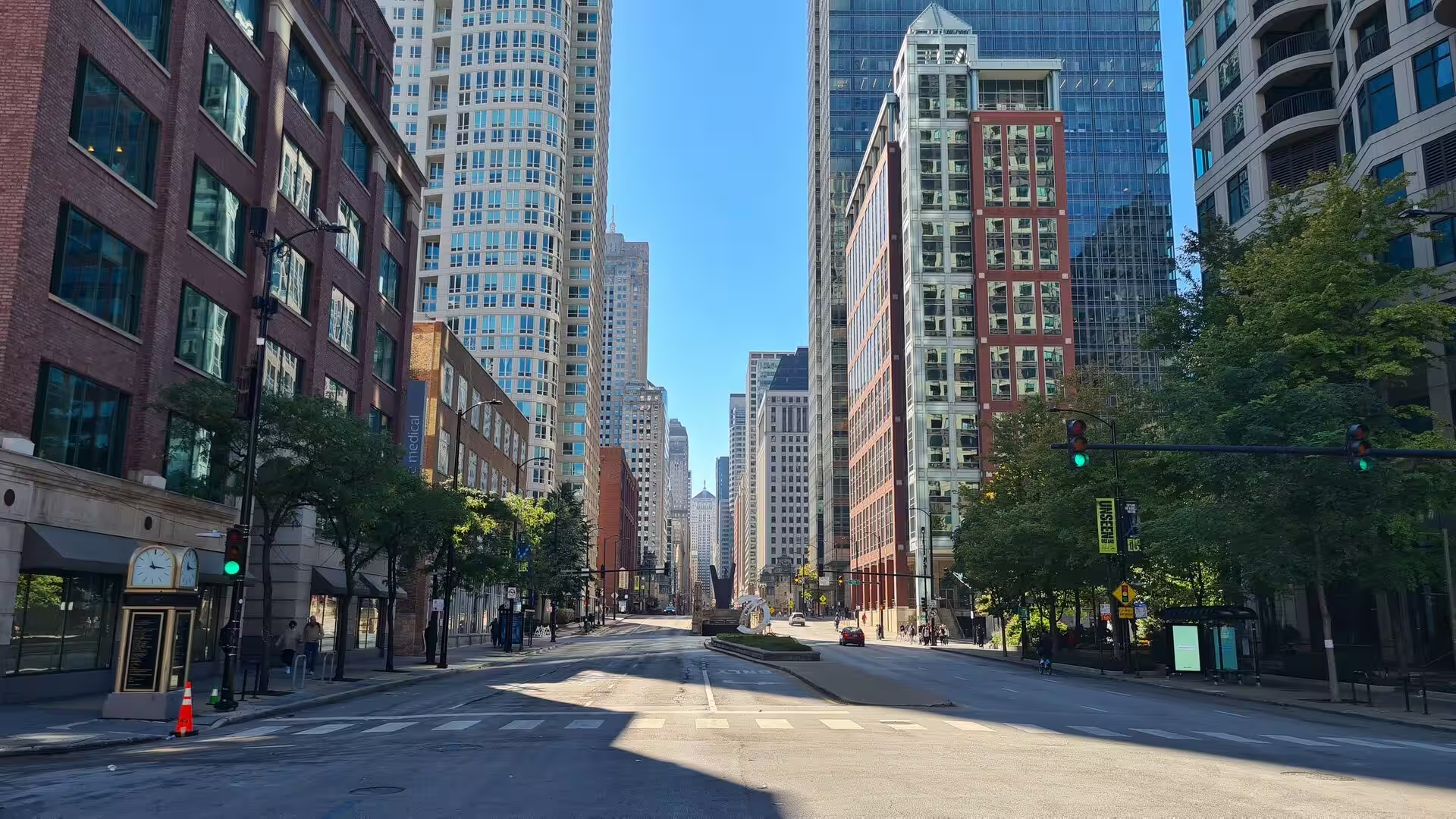
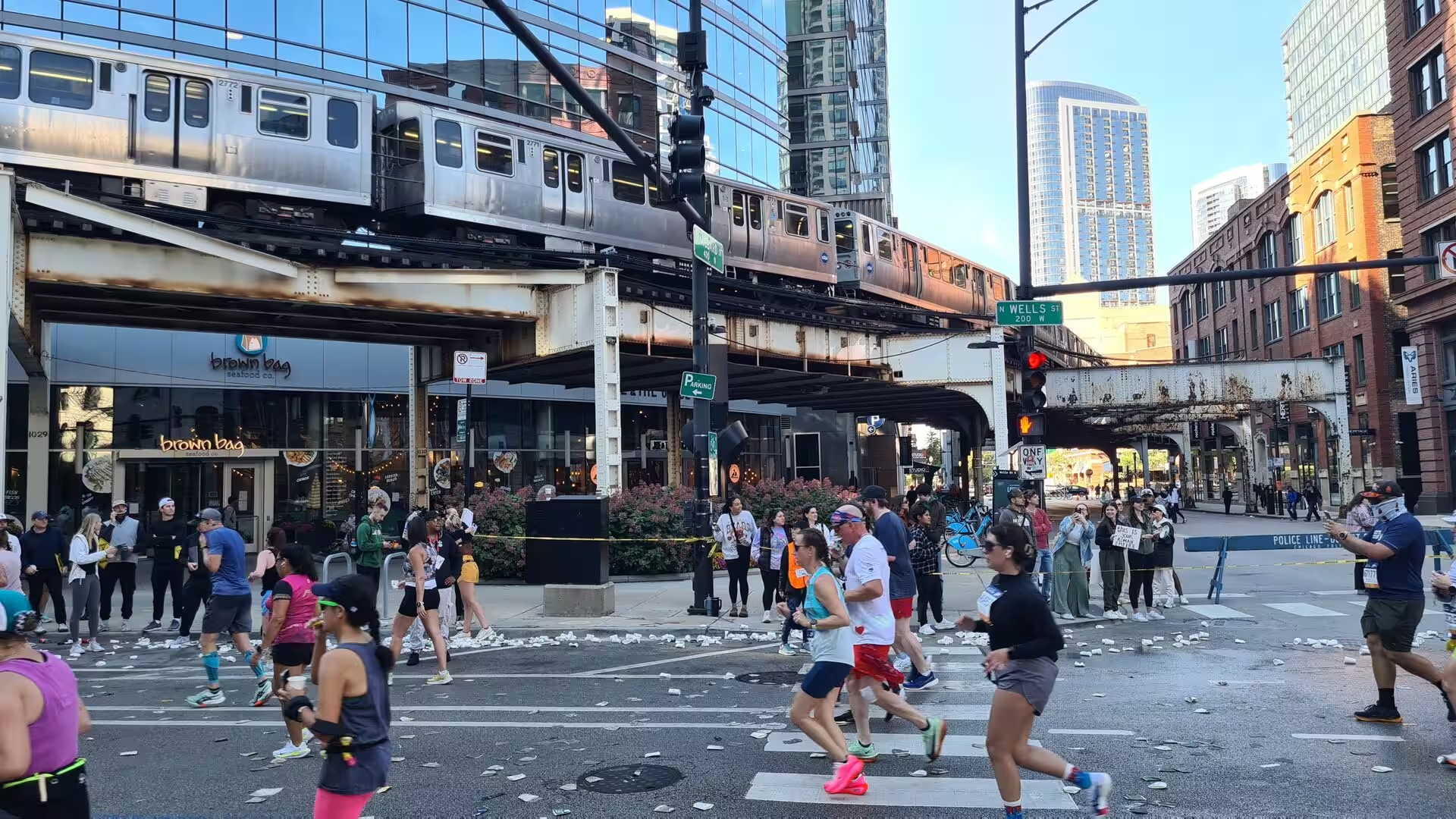
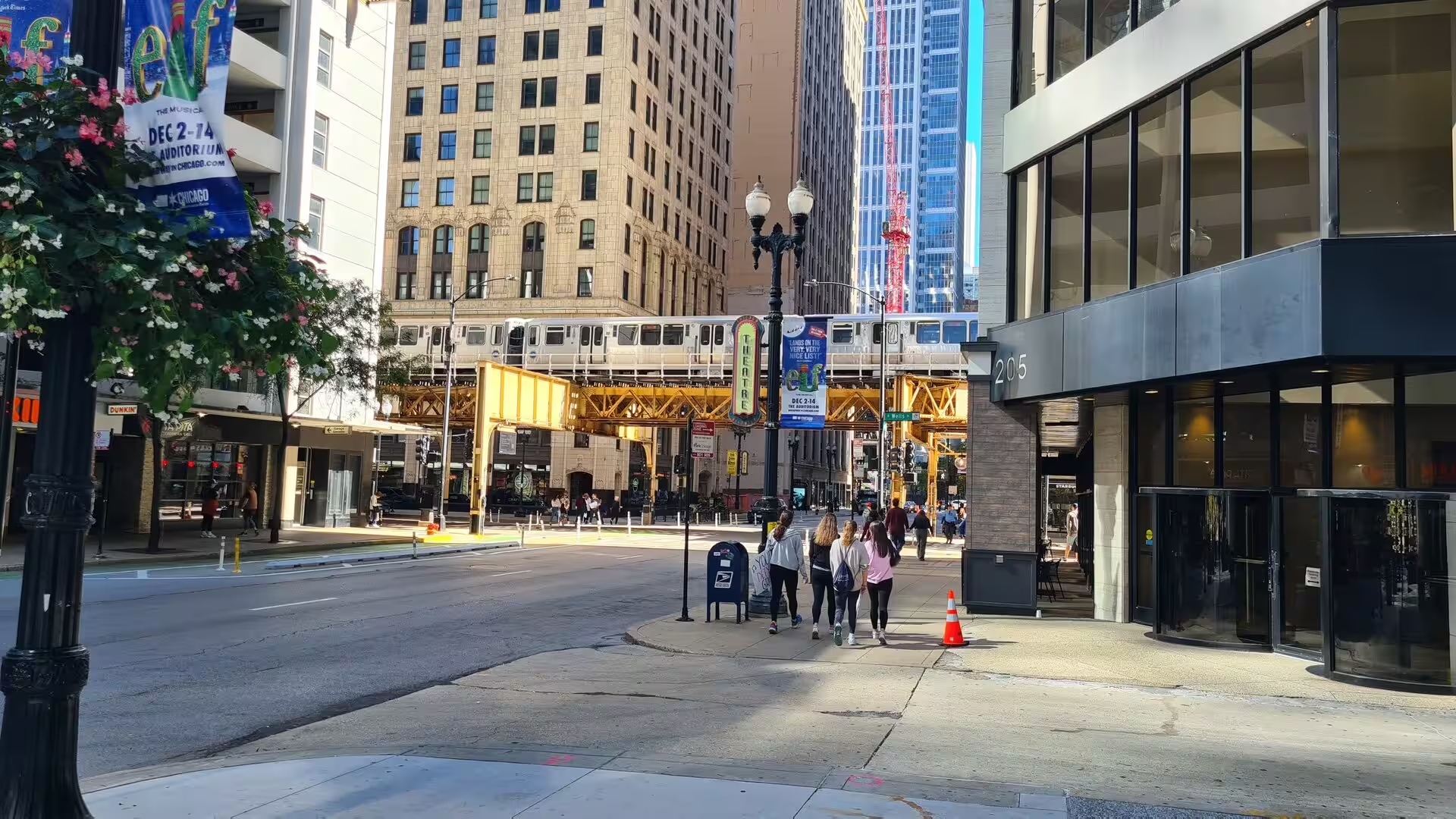
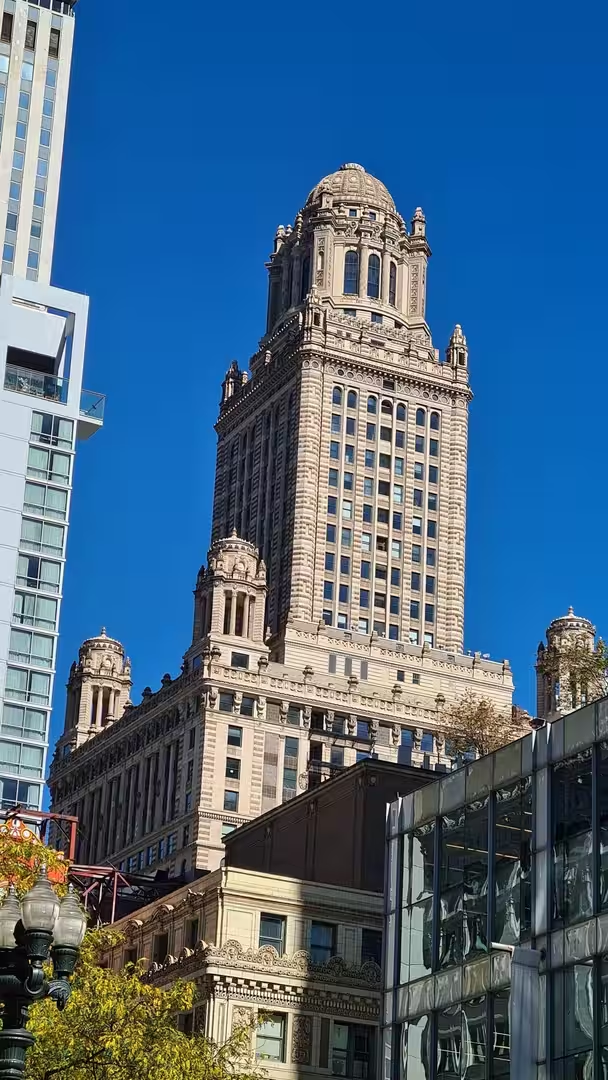
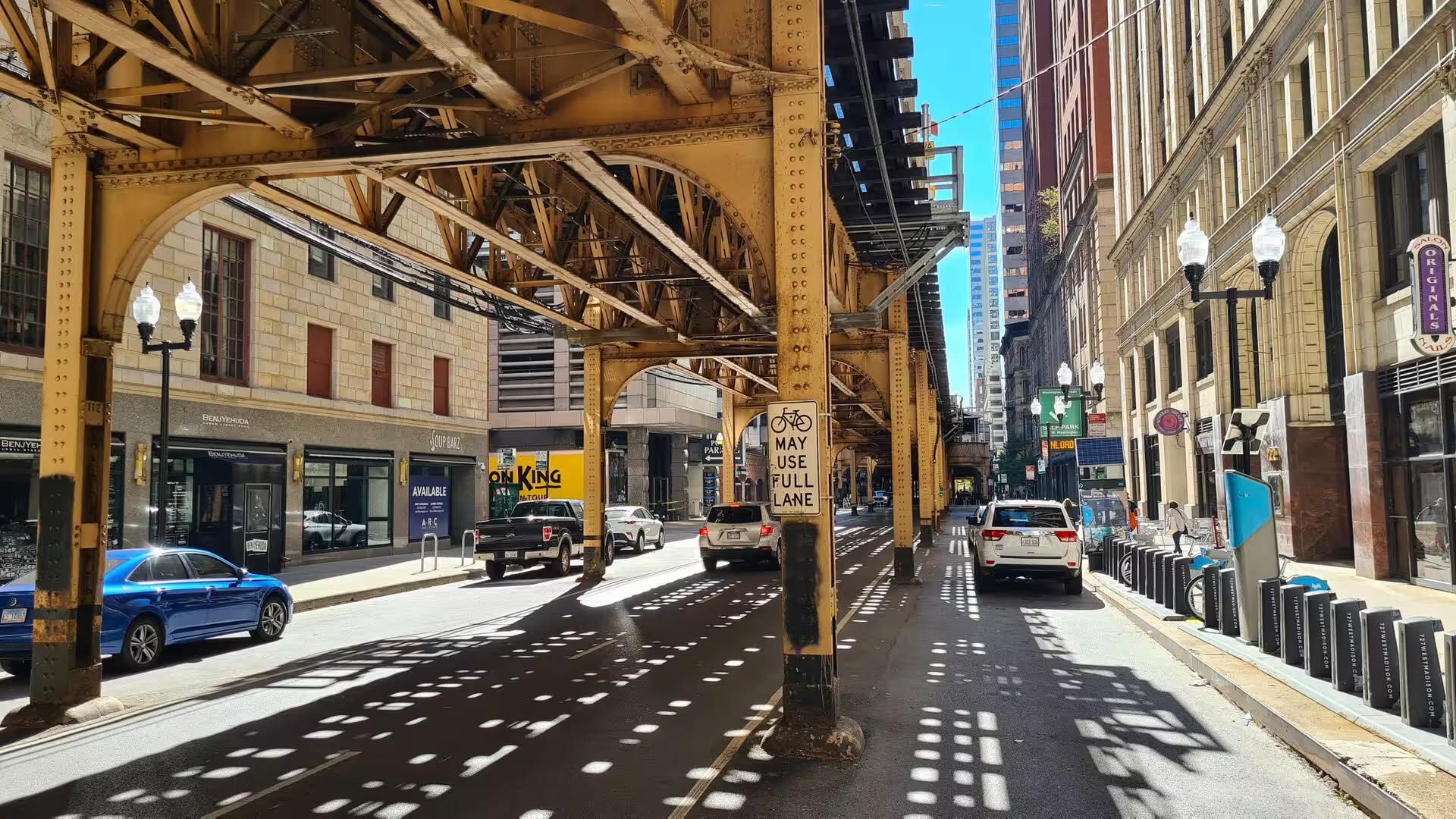
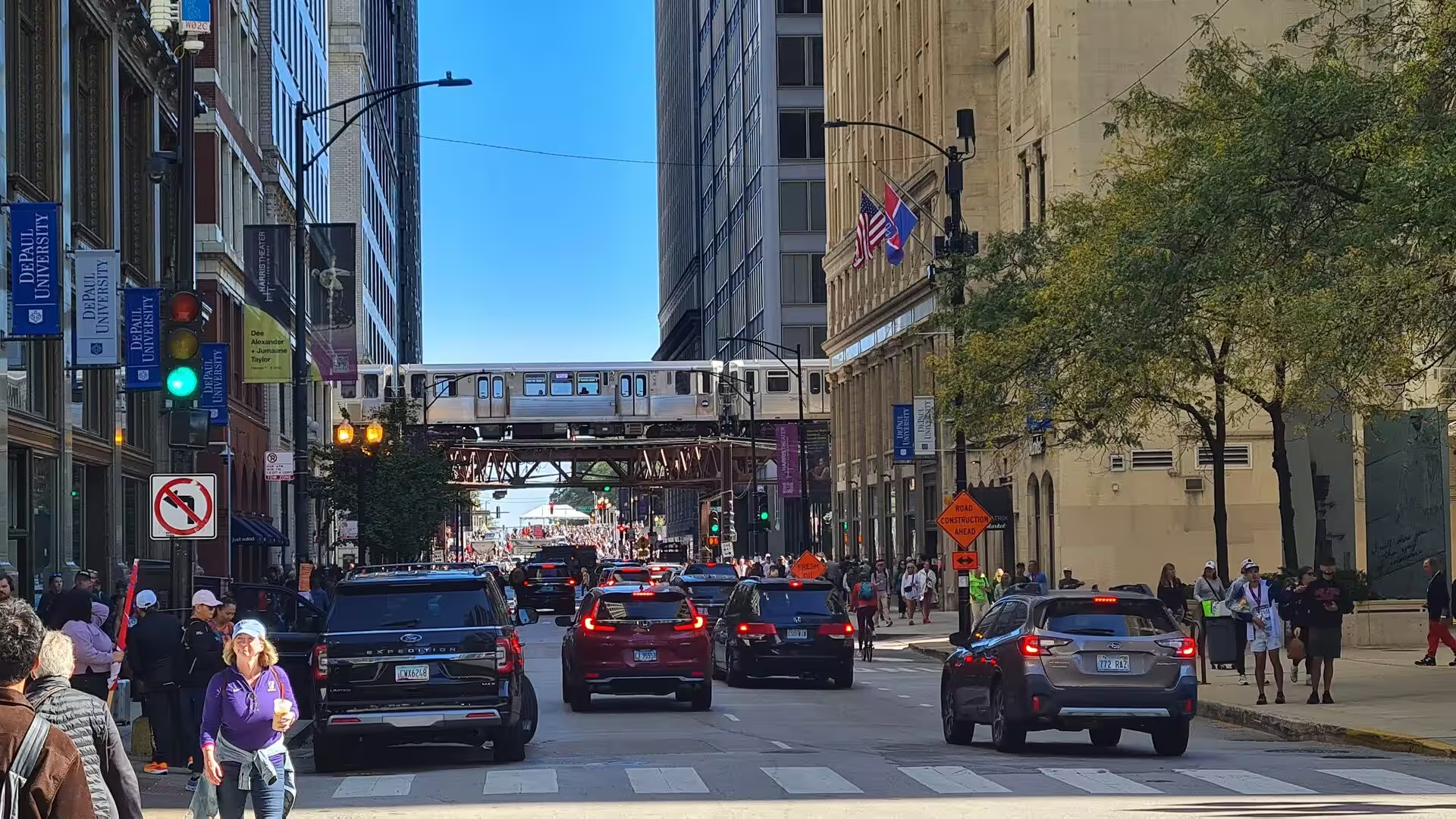
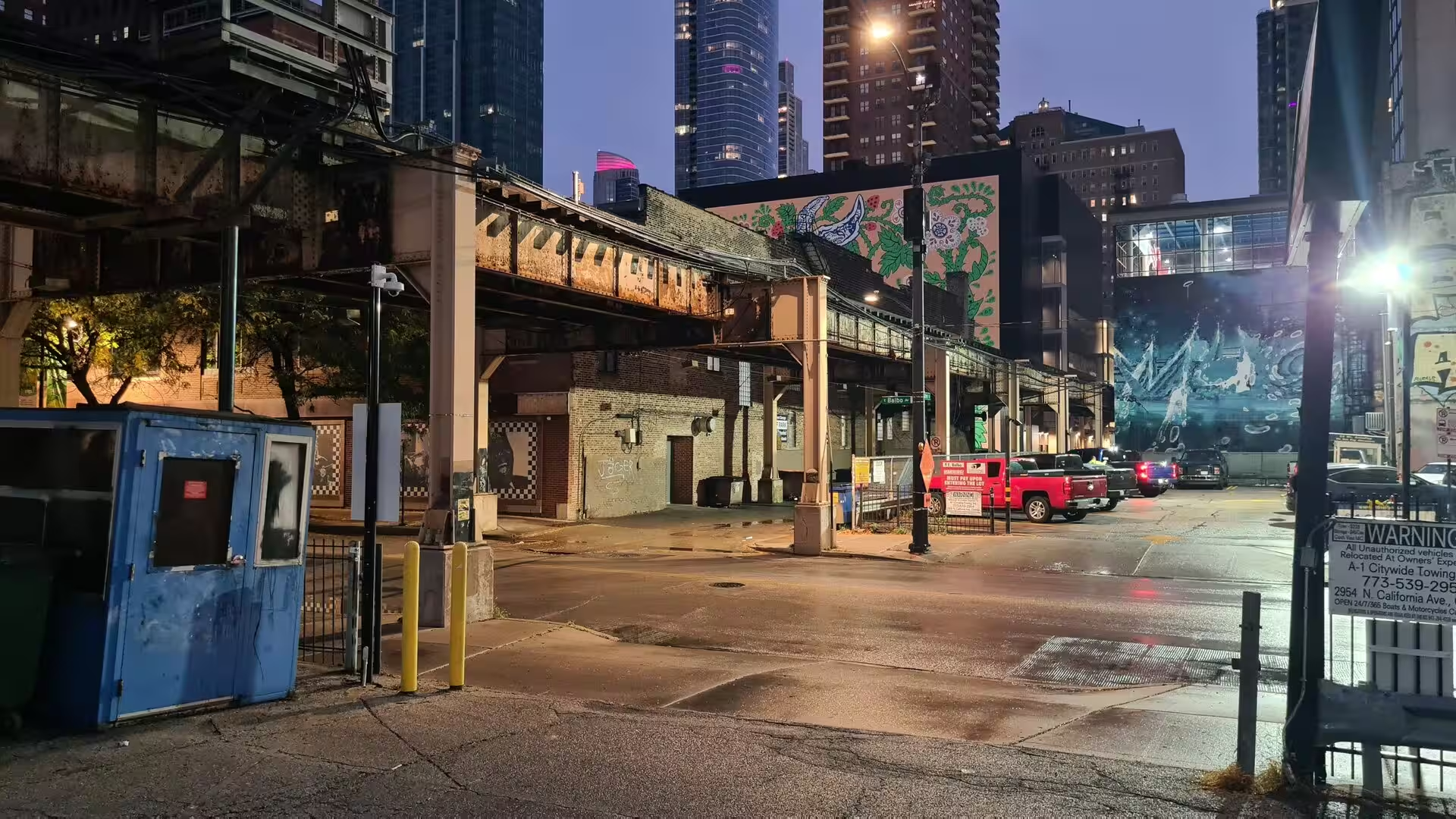
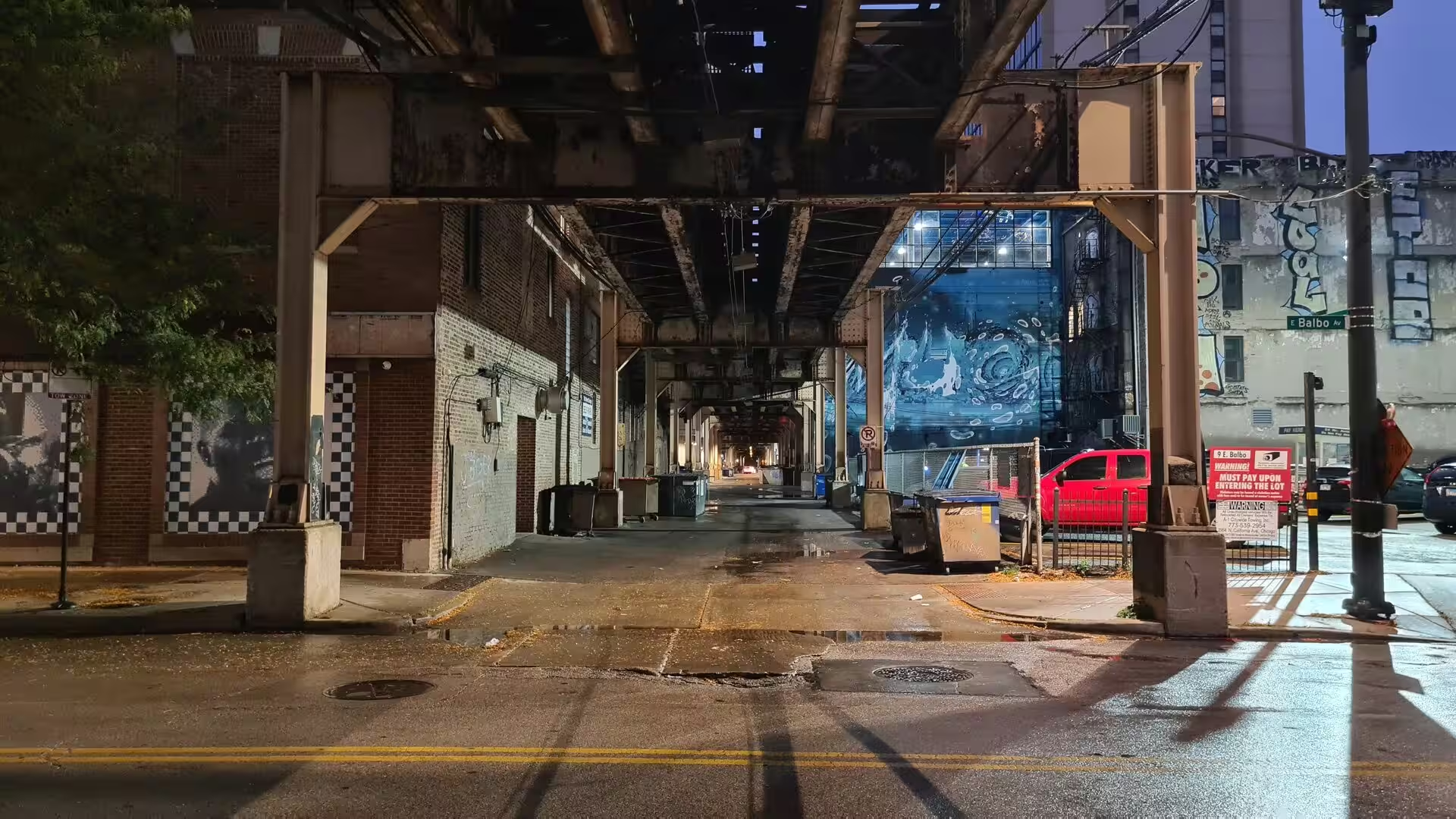
The Loop is the natural beginning of any visit to Chicago. The elevated railway lines of the Chicago Transit Authority, known simply as the L, circle the district on their historic steel structure and provide a moving view of the street canyons below, where masonry towers of the 1920s stand beside glass skyscrapers of the present day. Walking tours of the Loop explain the architecture of the birthplace of the skyscraper, from the early steel frames to the soaring towers of the modern era, and the district is also the centre of the city’s theatre life, with its illuminated marquees concentrated along Randolph Street.
The theatre district of the Loop contains two of the most beautiful historic houses of the city. The Merle Reskin Theatre, opened in 1910 as the Blackstone Theatre, is a classical revival building with an elegant stone facade, now owned by DePaul University and used for student and visiting productions. Nearby, the James M. Nederlander Theatre on West Randolph Street presents touring Broadway shows beneath its historic marquee. Both theatres belong to the lively downtown stage scene that makes Chicago one of the leading theatre cities of North America.
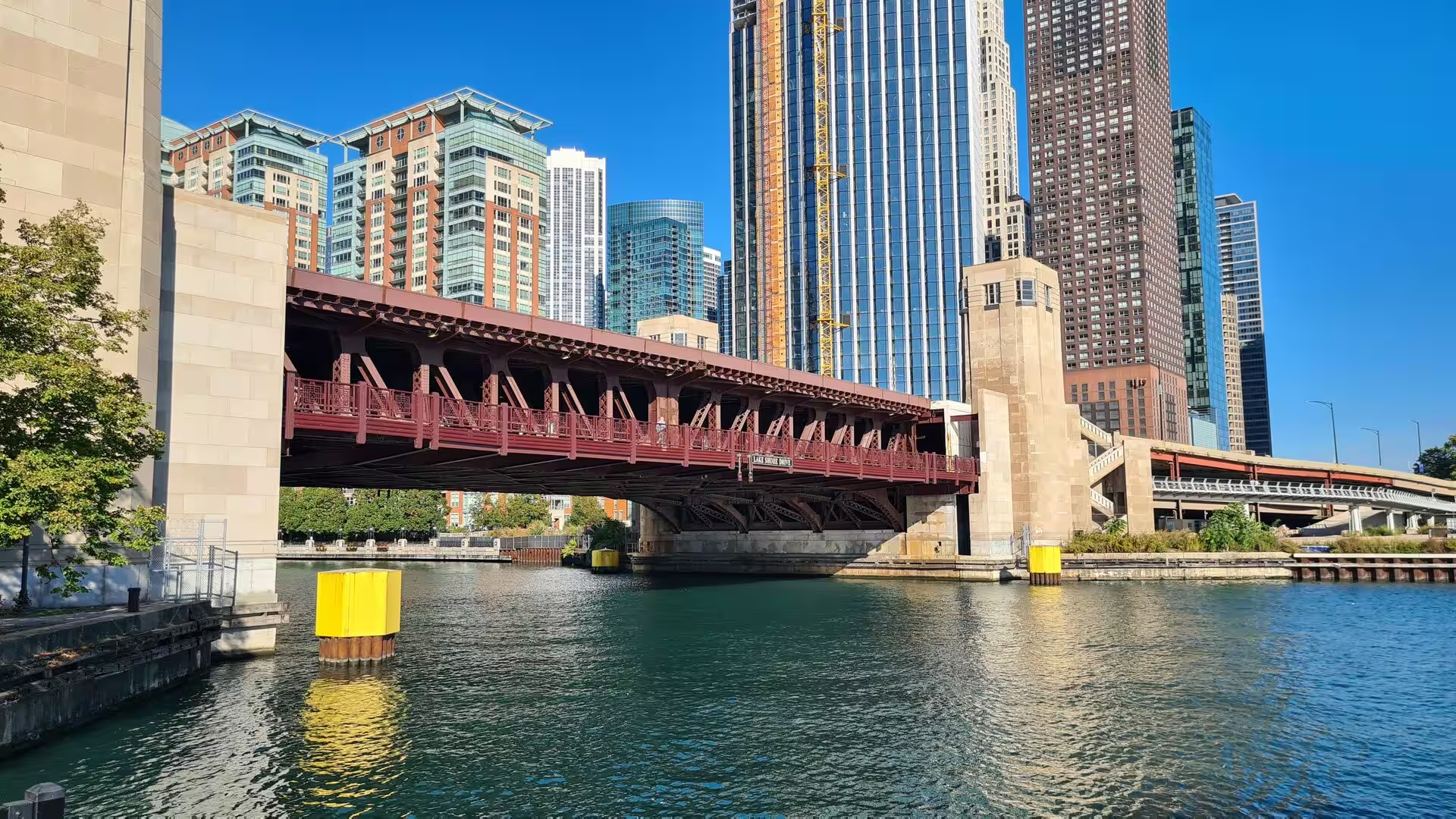
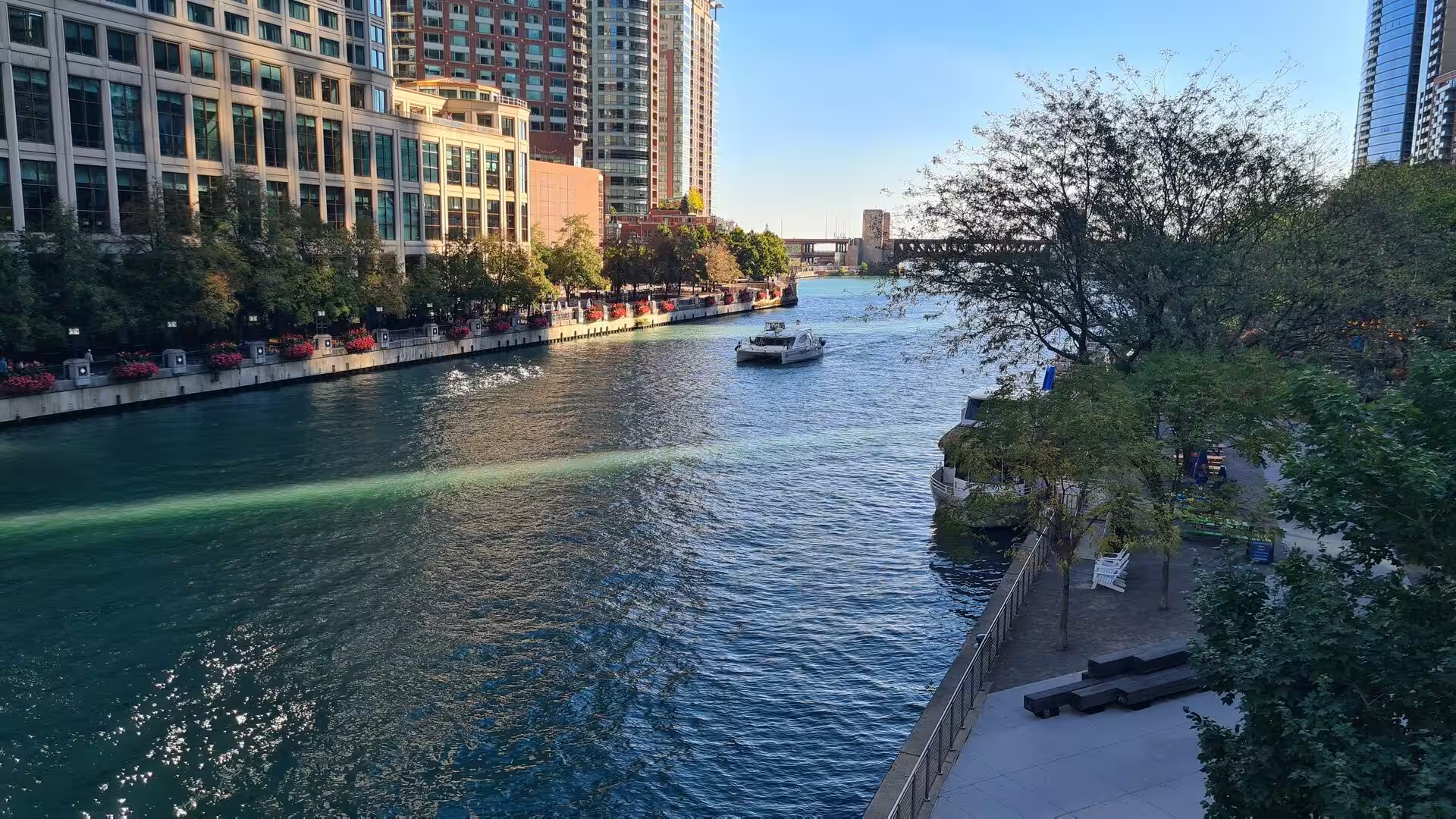
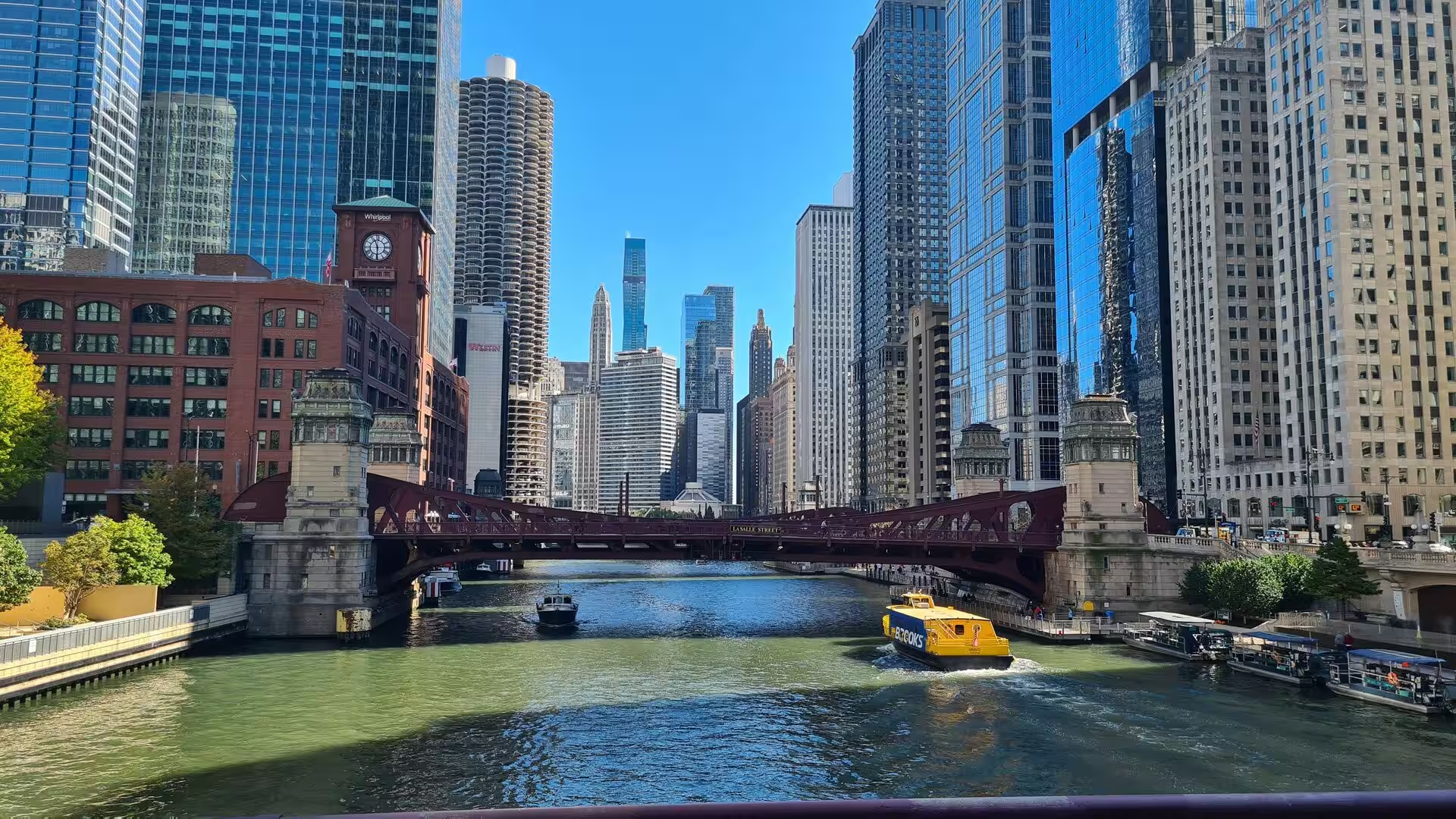
The Chicago River, with its two branches and its famous system of movable bridges, runs through the heart of the city. The Riverwalk, a continuous pedestrian promenade along the south bank of the main branch, is lined with cafés, terraces and boat landings, and river cruises pass beneath the bridges while guides explain the architecture of the banks. The most celebrated of the spans are the double-deck Wells Street Bridge of 1922, which carries the Brown and Purple elevated lines above the roadway, and the State Street Bridge, officially the Bataan-Corregidor Memorial Bridge, whose towers frame the view of the river from State Street.
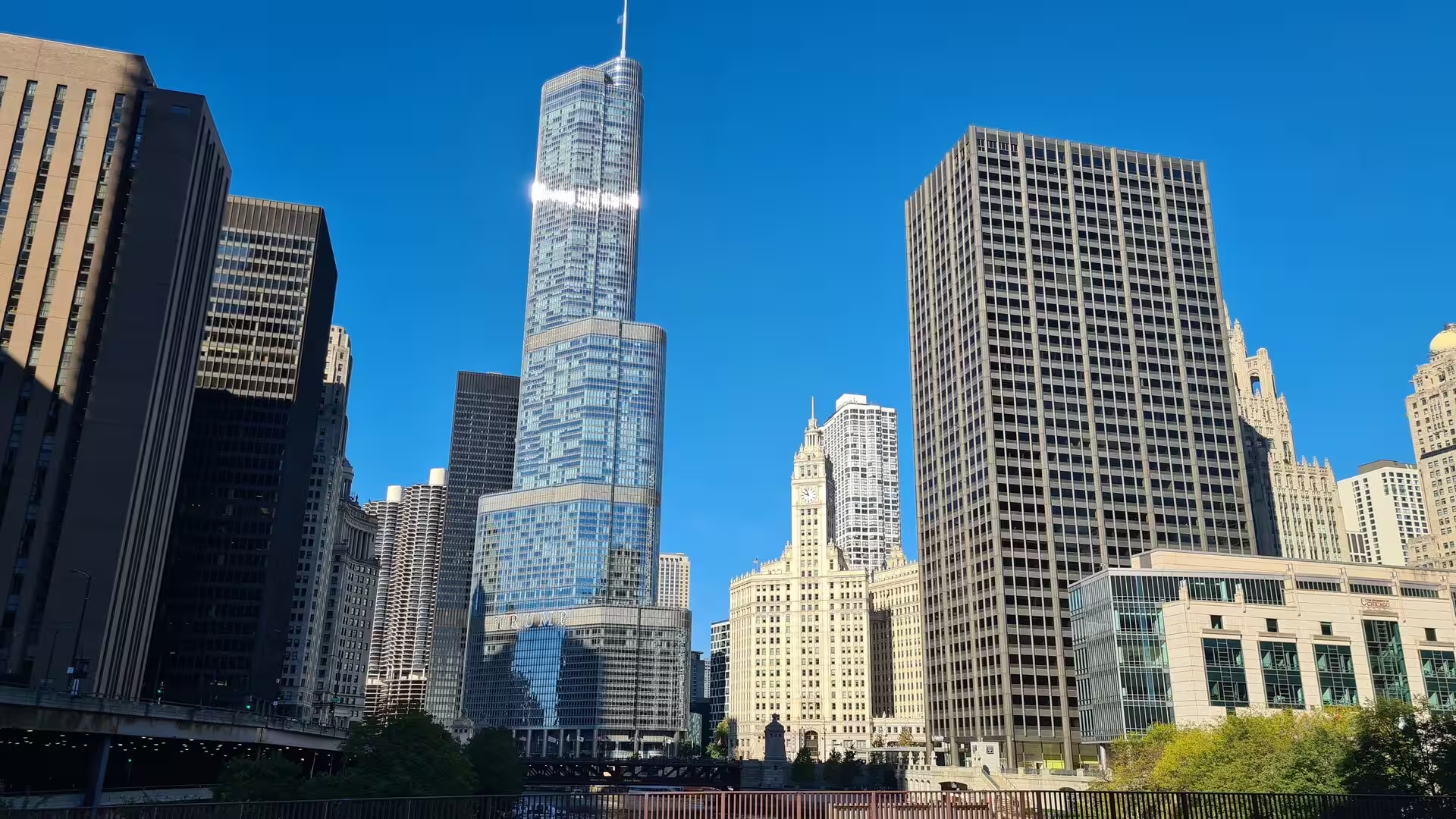
At the Michigan Avenue bridge the riverfront is dominated by two landmarks of the 1920s. The Wrigley Building, with its gleaming white terra cotta cladding and its clock tower, was built between 1920 and 1924 as the headquarters of the Wrigley chewing gum company; its illuminated tower has been a symbol of the city ever since. Across the street rises the Tribune Tower, completed in 1925 as the home of the Chicago Tribune, a neo-Gothic skyscraper whose walls incorporate fragments of famous buildings from around the world, from the Parthenon to the Great Wall of China, embedded in the masonry above the entrance.
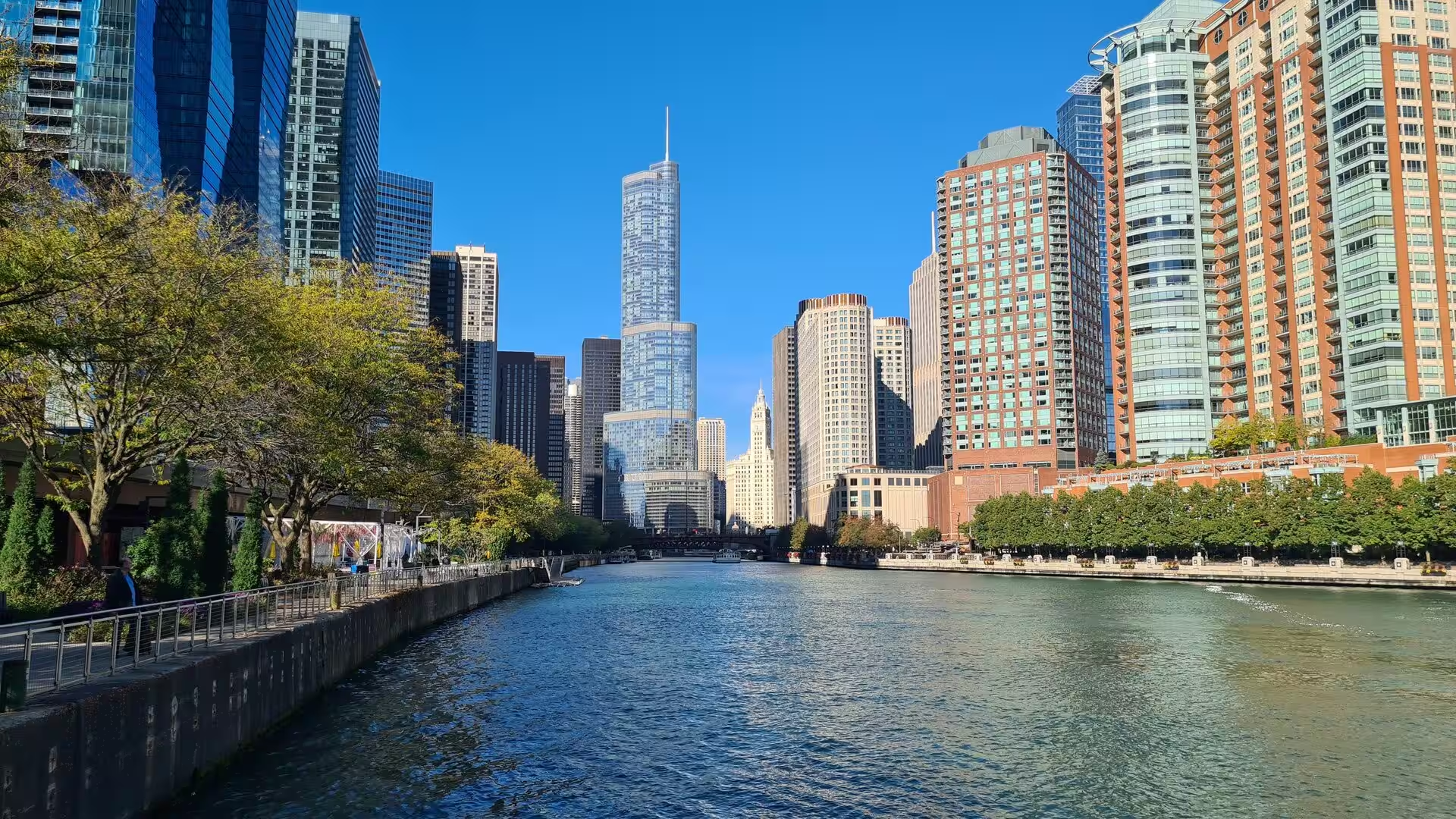
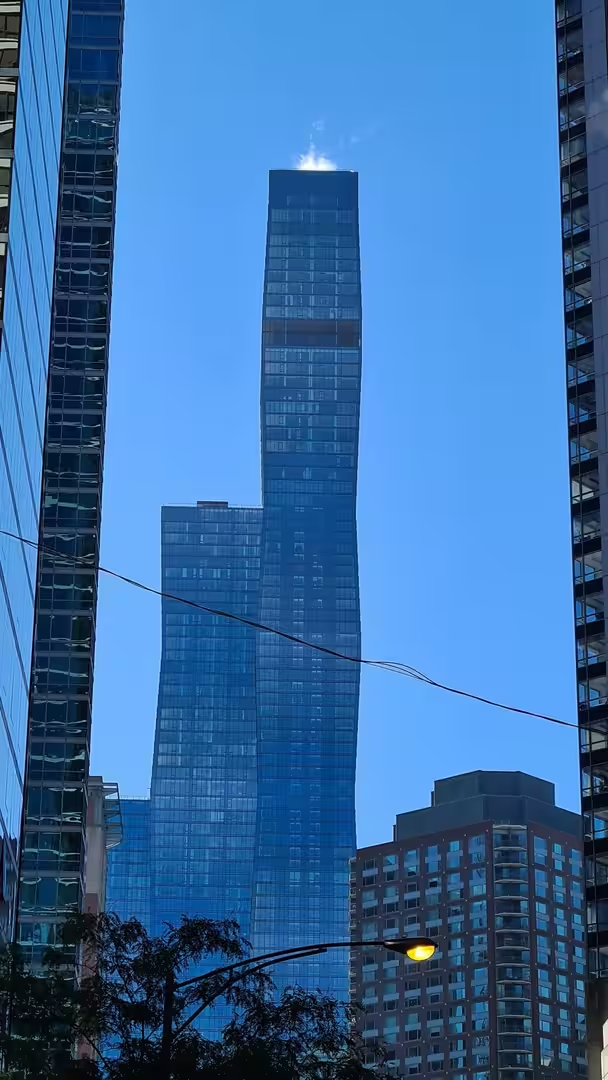
The modern skyline is best seen from the water and from the beaches of Lake Michigan. The Trump International Hotel and Tower, completed in 2009 with 100 storeys and a height of 1,388 feet including its spire, stands above the north bank of the river, while the St. Regis Chicago, finished in 2020, rises 1,198 feet in the Lakeshore East development at the eastern edge of downtown with its softly rippling glass facade; designed by Jeanne Gang, it is the tallest building in the world designed by a woman. From the lakefront the whole panorama of towers, from the historic Wrigley and Tribune buildings to these modern giants, unfolds across the water.
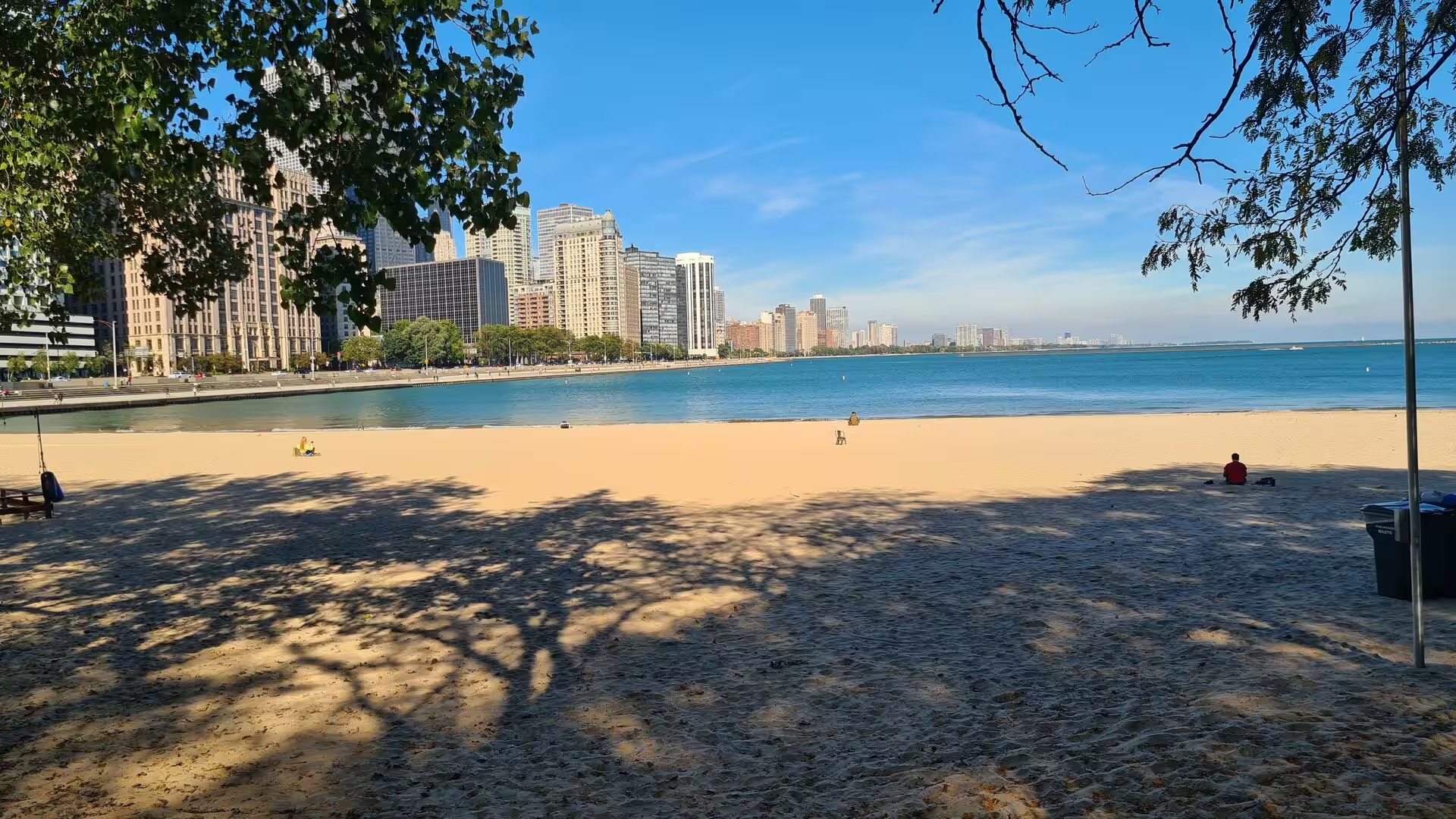
The lakefront itself is one of the great public spaces of Chicago. The Lakefront Trail runs for about 29 kilometres along the shore, linking beaches, harbours, parks and museums, and the sandy beaches closest to downtown, Oak Street Beach and Ohio Street Beach, lie directly beneath the skyscrapers. On a calm day the water is clear and turquoise, the skyline rises behind the swimmers and sunbathers, and sailboats and tour boats move along the shore; the trail continues north past the yacht harbours towards the greener reaches of the lake.
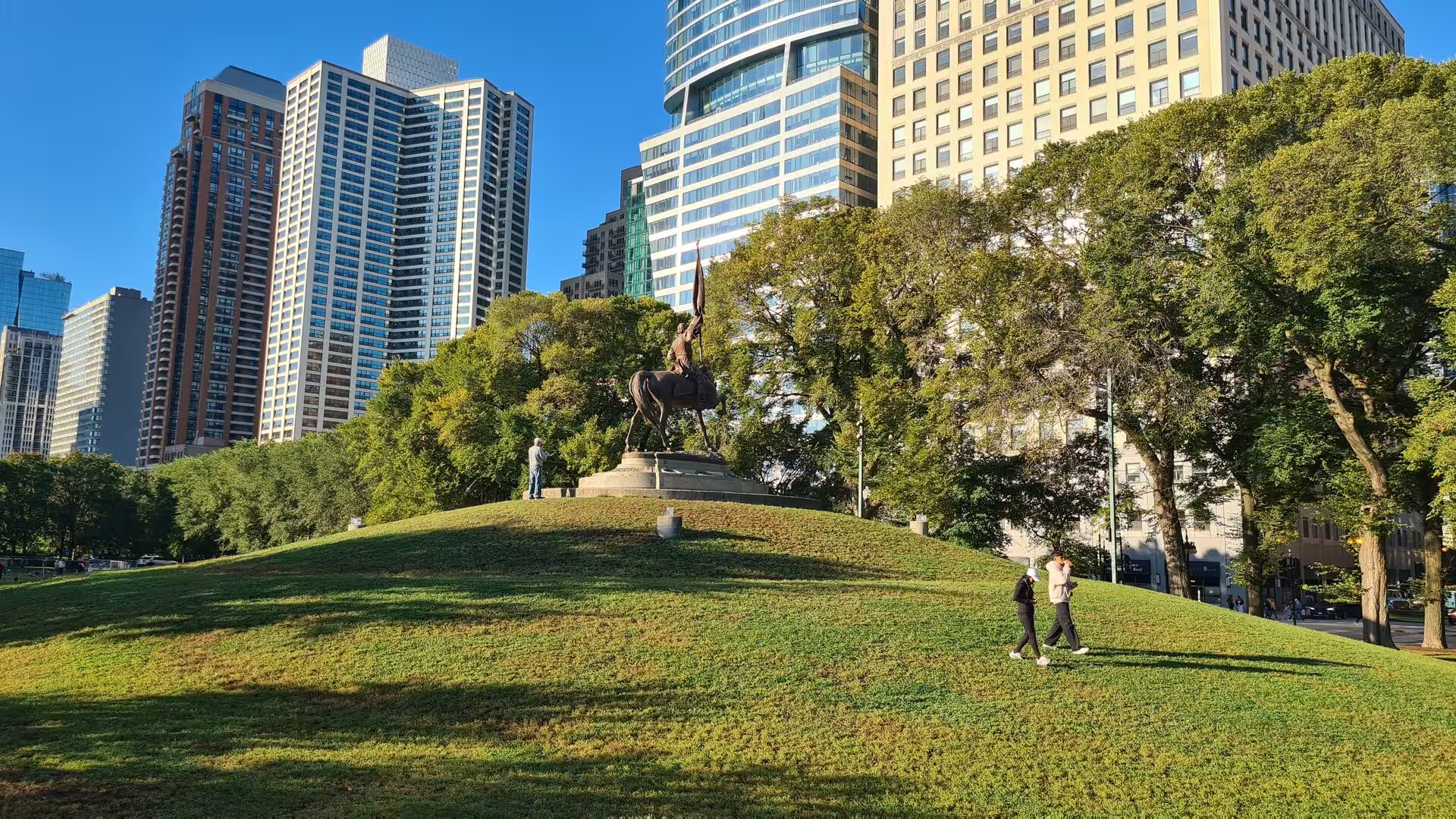
Lincoln Park, the largest park of the city, stretches for about 11 kilometres along the lake north of downtown, a green strip of lawns, gardens and lagoons between the water and the old residential streets. Its southern end is marked by the Ulysses S. Grant Monument, an equestrian statue completed in 1891 by Louis Rebisso, at the time the largest bronze statue cast in the United States; the pedestal was suggested by the architect William Le Baron Jenney. The park also contains the Lincoln Park Zoo, one of the oldest zoos of the country and free of charge, and the Victorian glasshouse of the Lincoln Park Conservatory.
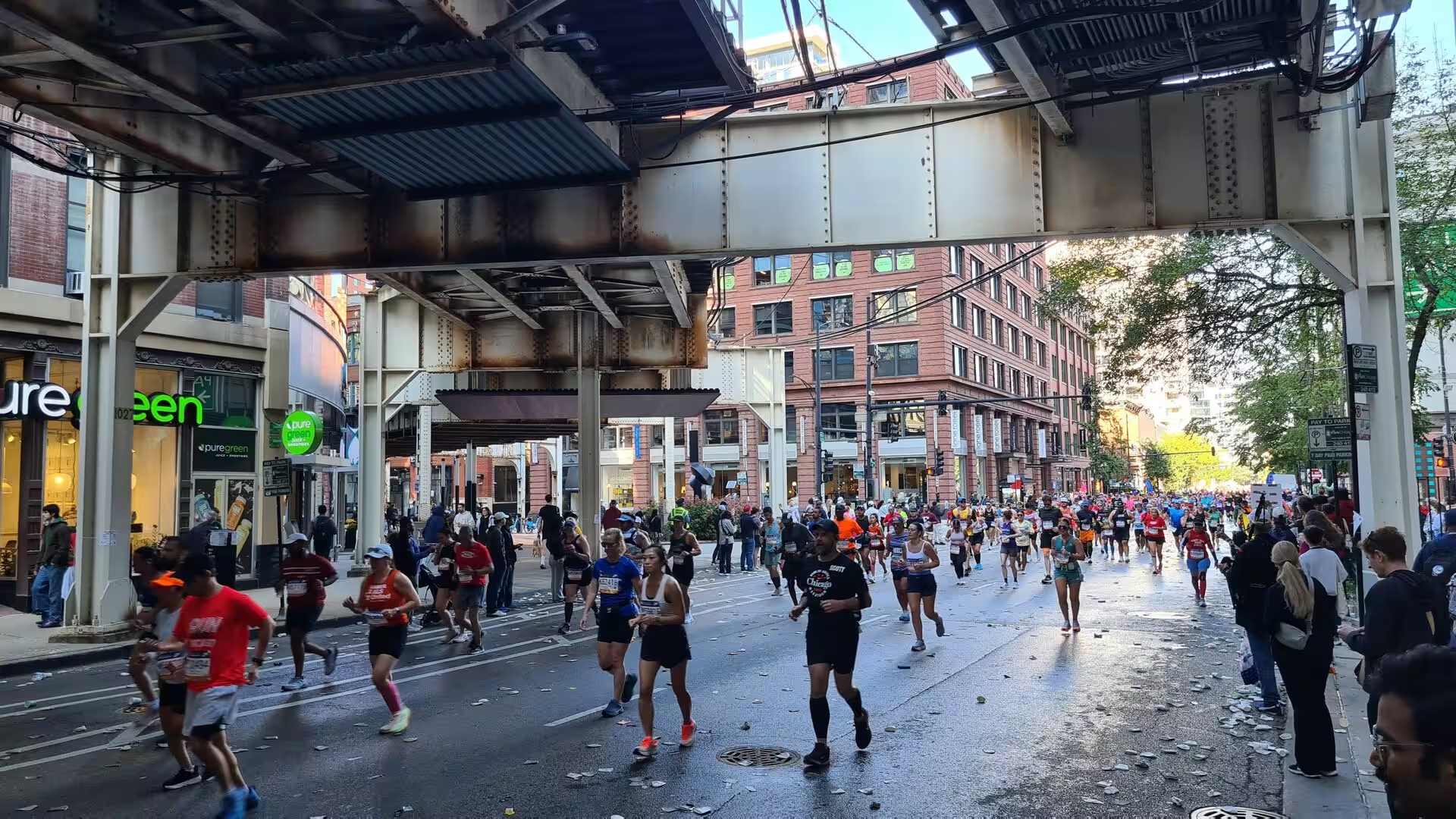
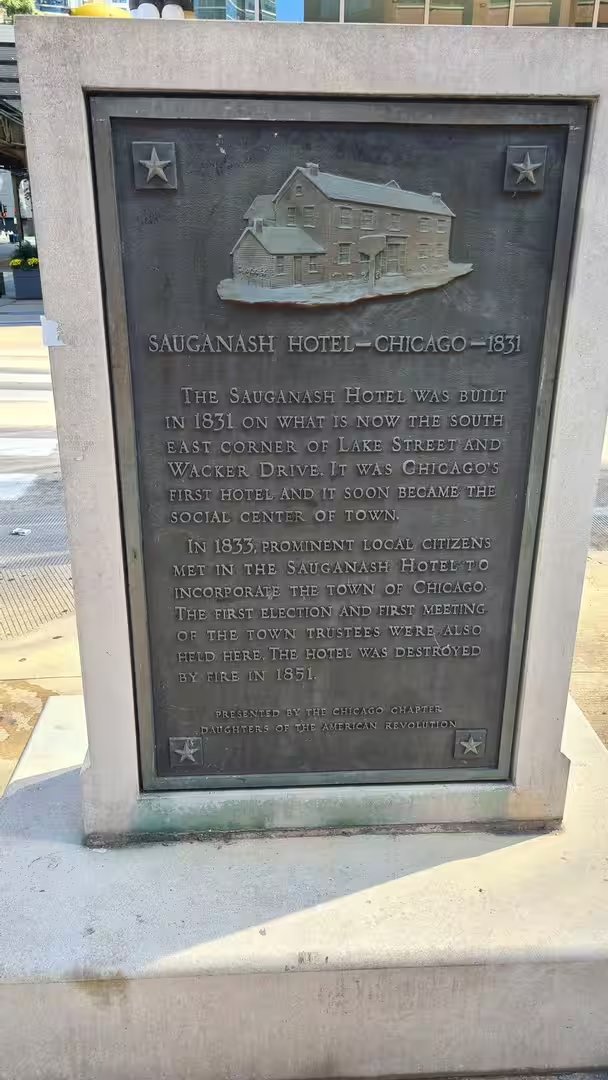
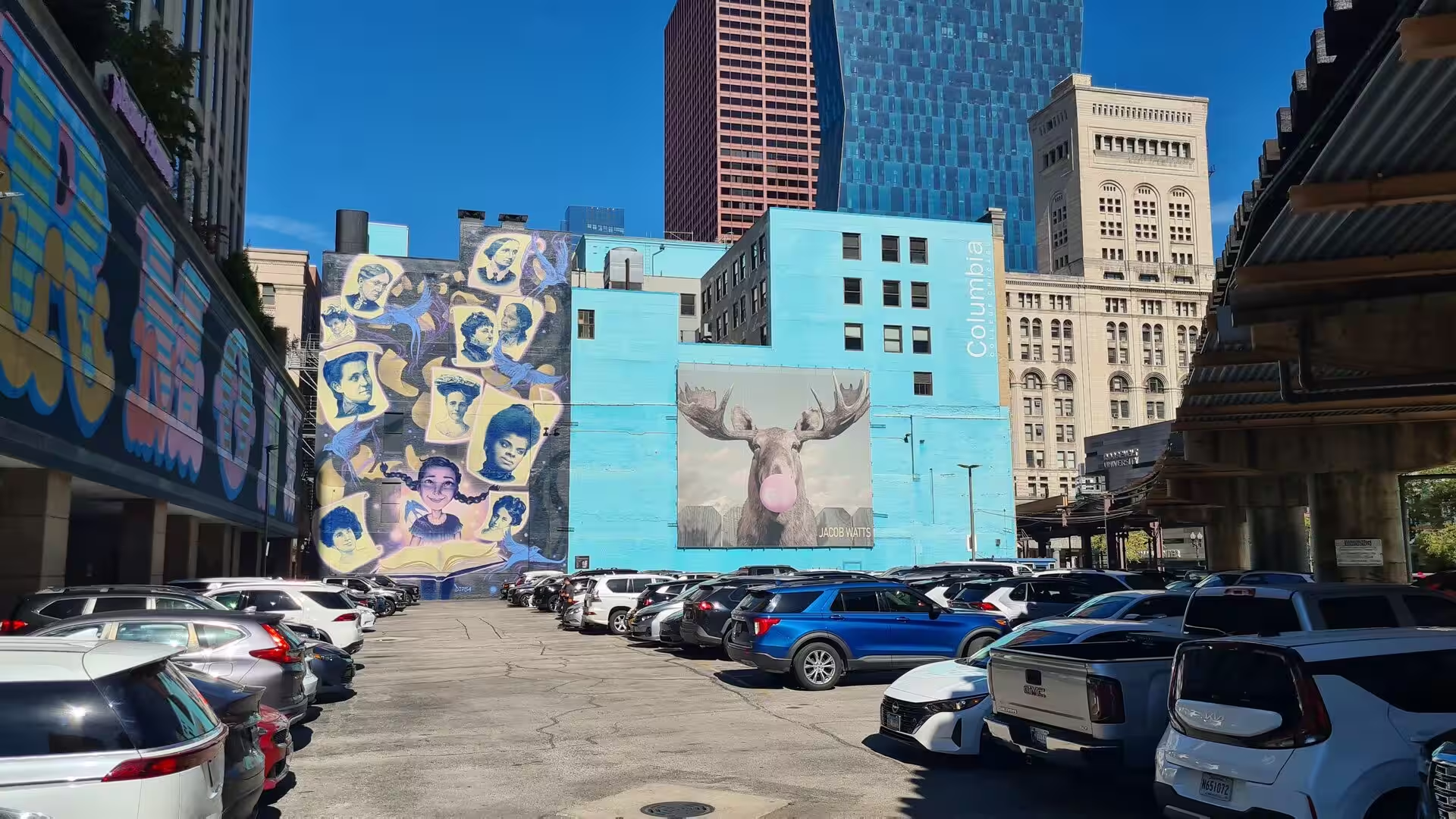
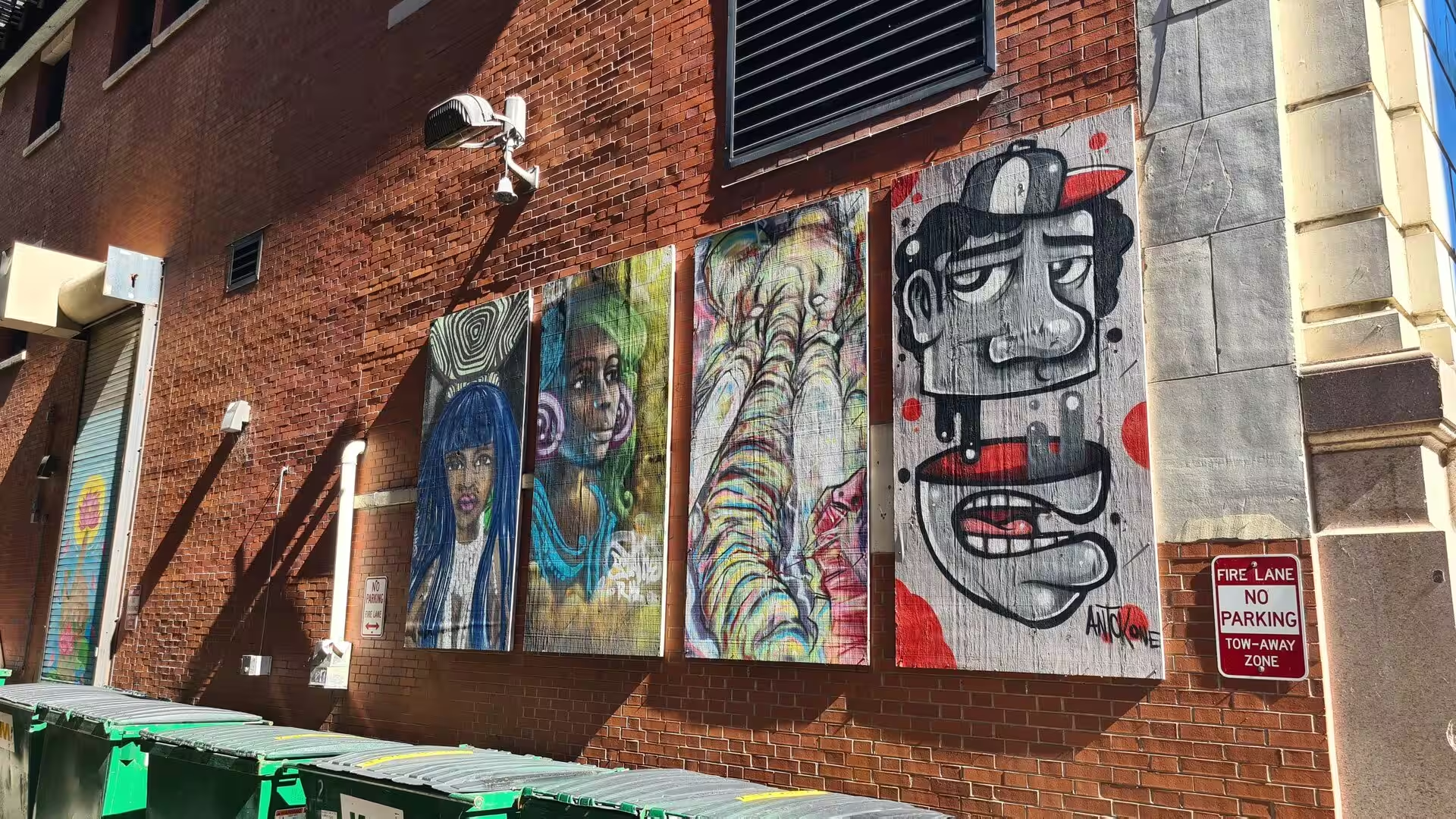
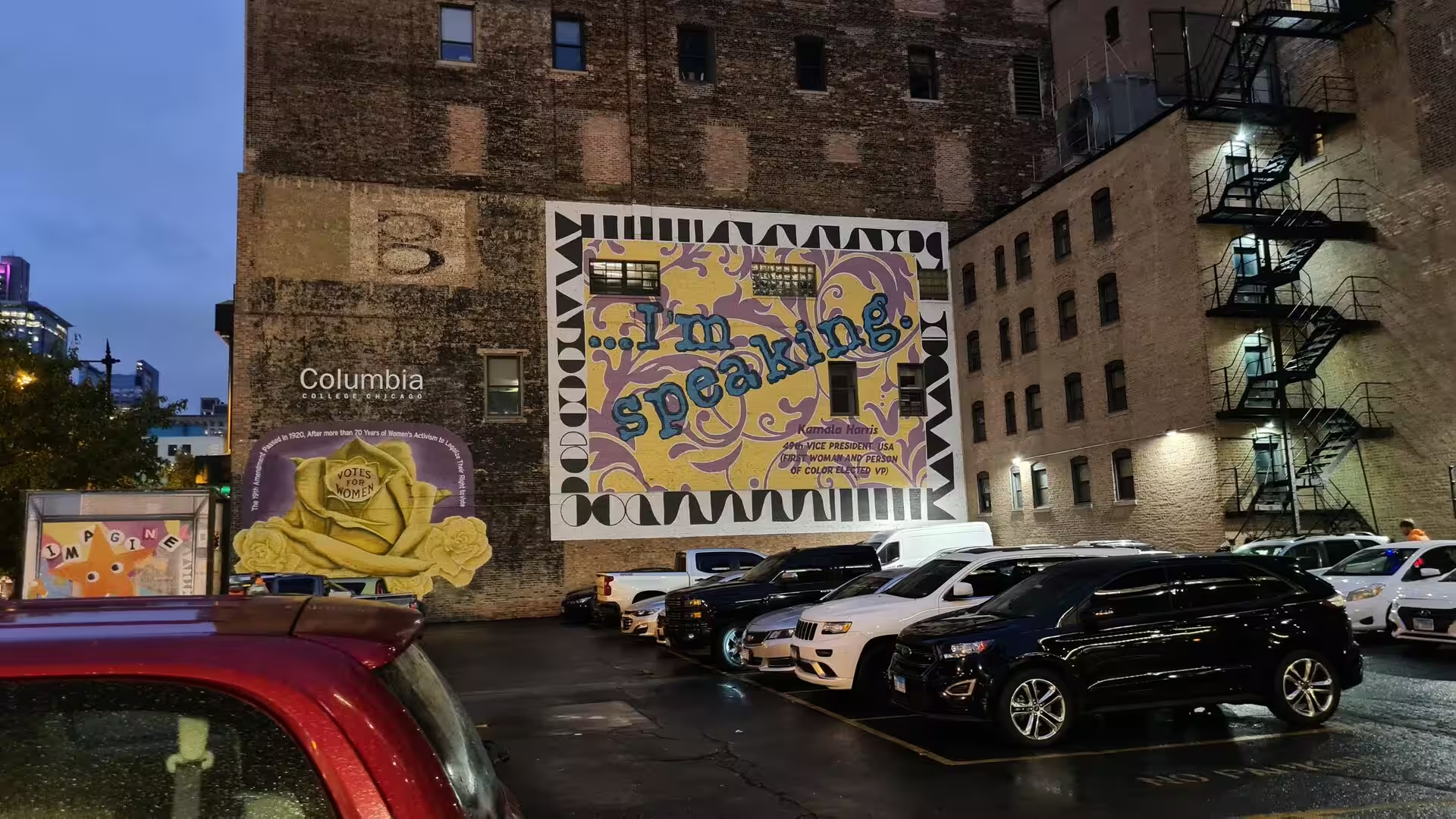
Each October the Chicago Marathon, one of the World Marathon Majors and among the largest races of its kind, carries tens of thousands of runners through the streets of the city, past the landmarks of the Loop, beneath the elevated tracks and across the river bridges. The downtown streets also hold smaller monuments of history: a marker at the corner of Lake and Wacker Drive recalls the Wigwam, where Abraham Lincoln was nominated for the presidency in 1860, and a bronze plaque on the riverfront marks the site of the Sauganash Hotel, the first hotel of Chicago, opened in 1831 at Wolf Point. Around the South Loop campus of Columbia College Chicago, large murals turn whole building walls into open-air galleries of contemporary art.
References
- Miller, D. L. (1996). City of the Century: The Epic of Chicago and the Making of America. New York: Simon & Schuster.
- Cronon, W. (1991). Nature’s Metropolis: Chicago and the Great West. New York: W. W. Norton.
- Choose Chicago (2026). Official visitor information for Chicago. www.choosechicago.com/
- Chicago Architecture Center (2026). Tours, exhibitions and river cruises. www.architecture.org/
- Chicago Park District (2026). Parks, beaches and the Lakefront Trail. www.chicagoparkdistrict.com/
- Wikipedia contributors (2026). Chicago (English). en.wikipedia.org/wiki/Chicago
- Wikipedia contributors (2026). History of Chicago (English). en.wikipedia.org/wiki/History_of_Chicago
- Wikipedia contributors (2026). Great Chicago Fire (English). en.wikipedia.org/wiki/Great_Chicago_Fire
- Wikipedia contributors (2026). Chicago River (English). en.wikipedia.org/wiki/Chicago_River
- Wikipedia contributors (2026). Chicago Marathon (English). en.wikipedia.org/wiki/Chicago_Marathon
- Wikipedia contributors (2026). St. Regis Chicago (English). en.wikipedia.org/wiki/St._Regis_Chicago
- Wikipedia contributors (2026). Wrigley Building (English). en.wikipedia.org/wiki/Wrigley_Building
- Wikipedia contributors (2026). Tribune Tower (English). en.wikipedia.org/wiki/Tribune_Tower
- Wikipedia contributors (2026). Hilton Chicago (English). en.wikipedia.org/wiki/Hilton_Chicago
- Wikipedia contributors (2026). Ulysses S. Grant Monument (English). en.wikipedia.org/wiki/Ulysses_S._Grant_Monument