




Levada dos Cedros Region – General Overview
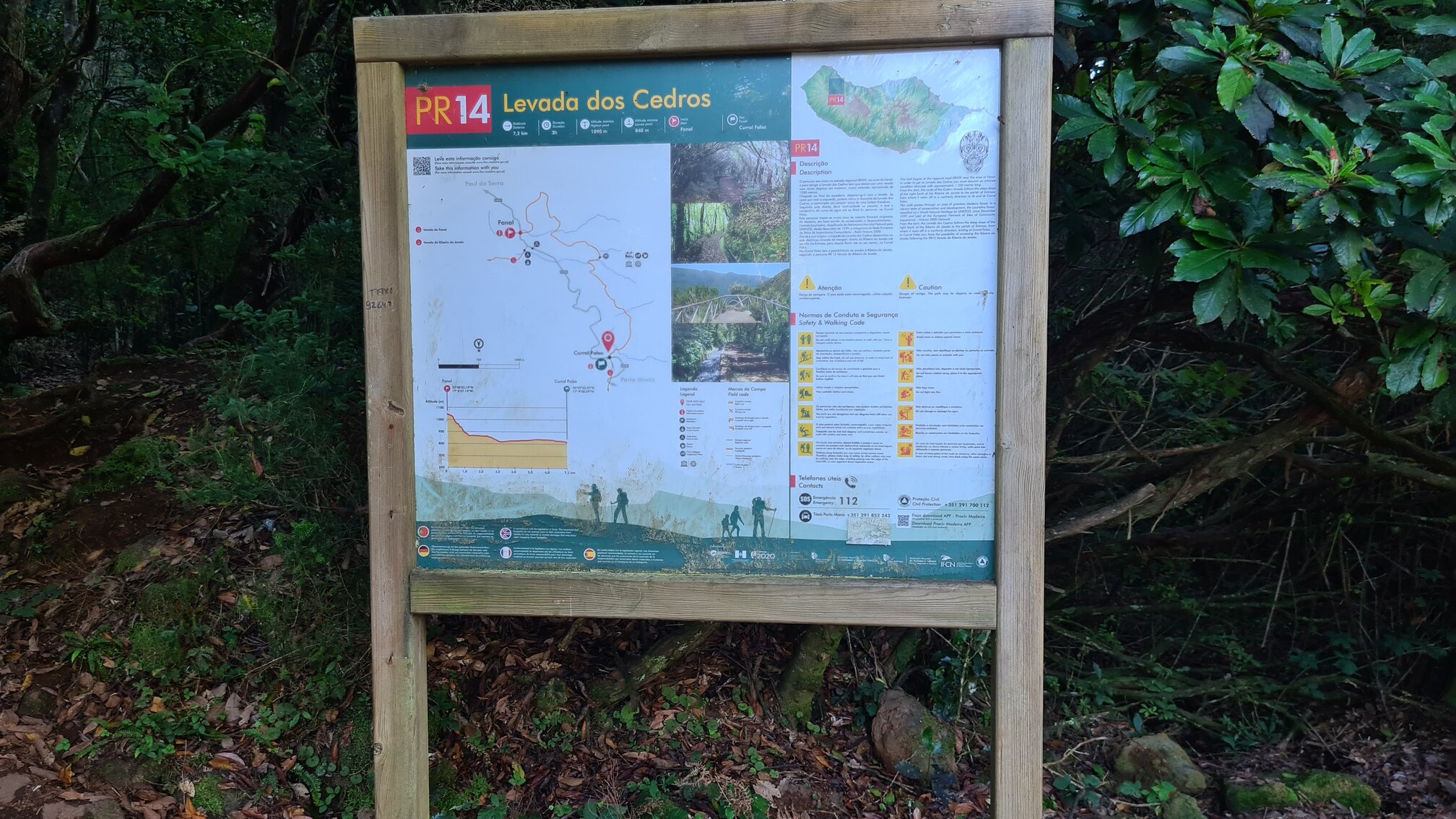
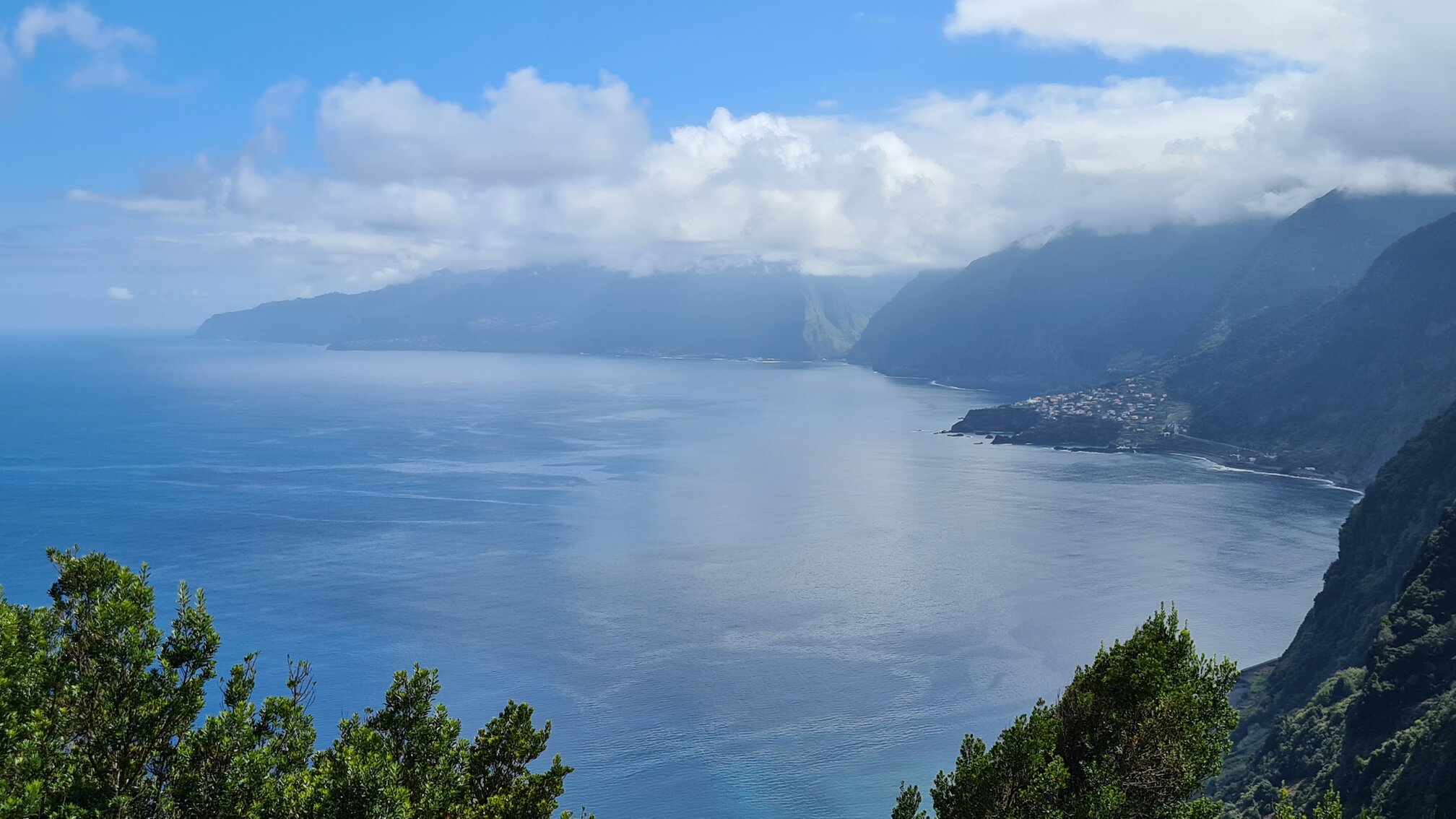
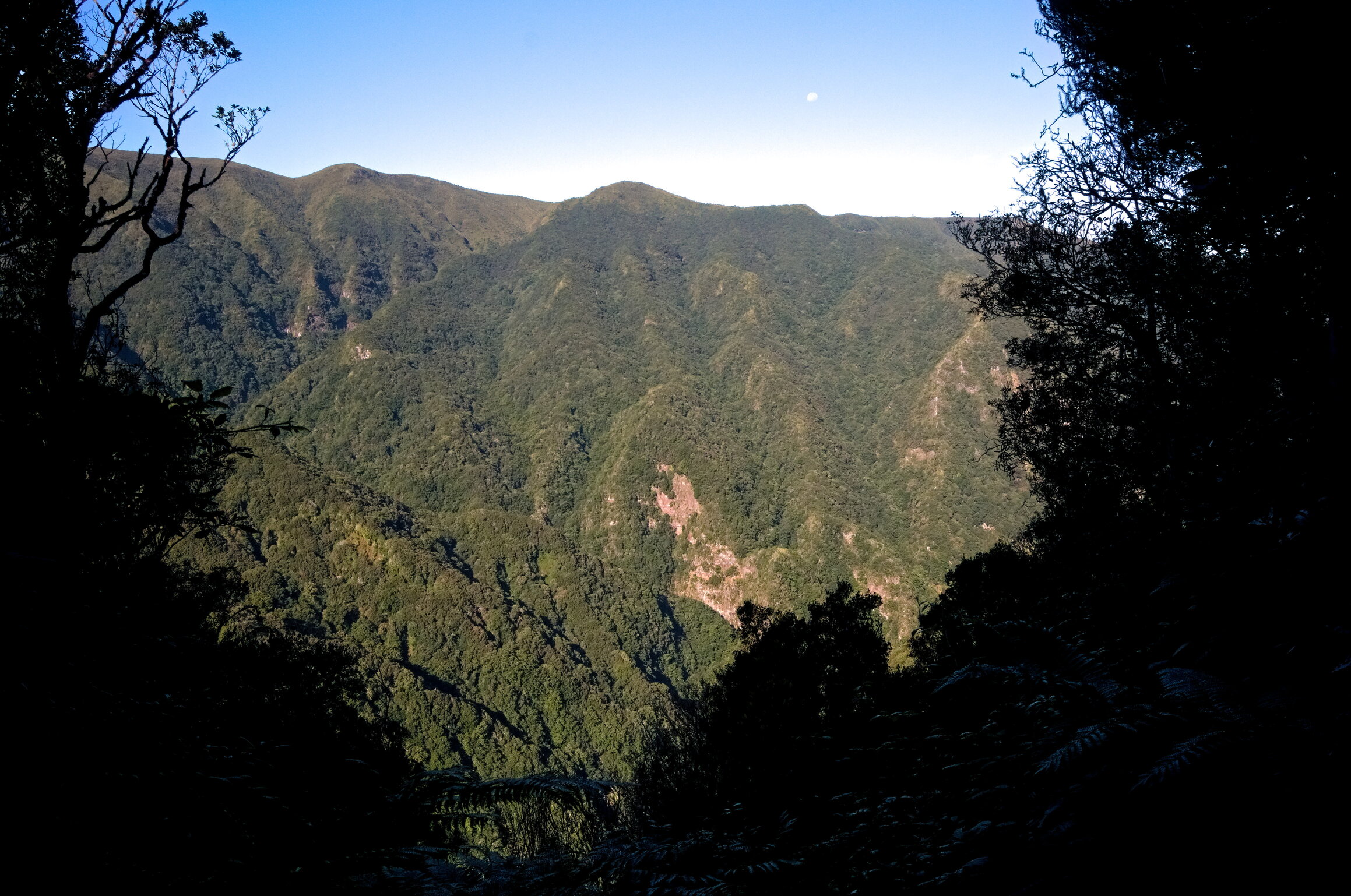
The Levada dos Cedros region is located in the northwestern highlands of Madeira, primarily within the municipality of Porto Moniz, near the Fanal plateau. The area forms part of Madeira’s extensive levada network and lies within a largely intact mountainous interior characterized by high humidity, frequent cloud cover, and limited permanent settlement. The region is situated at elevations generally exceeding 900 meters above sea level and is strongly influenced by orographic and Atlantic climatic processes.
Levada dos Cedros is embedded within one of the most ecologically significant landscapes on the island, where hydrology, vegetation, and geomorphology are closely interconnected. The area is remote in character and exhibits minimal anthropogenic modification beyond historical water-management infrastructure and footpaths, contributing to its high environmental integrity.
Geology and Geomorphology
Geologically, the Levada dos Cedros region is underlain by basaltic volcanic formations associated with Madeira’s intraplate volcanic origin. The bedrock consists predominantly of layered basaltic lava flows interbedded with pyroclastic deposits, reflecting successive eruptive phases during the island’s subaerial growth stage.
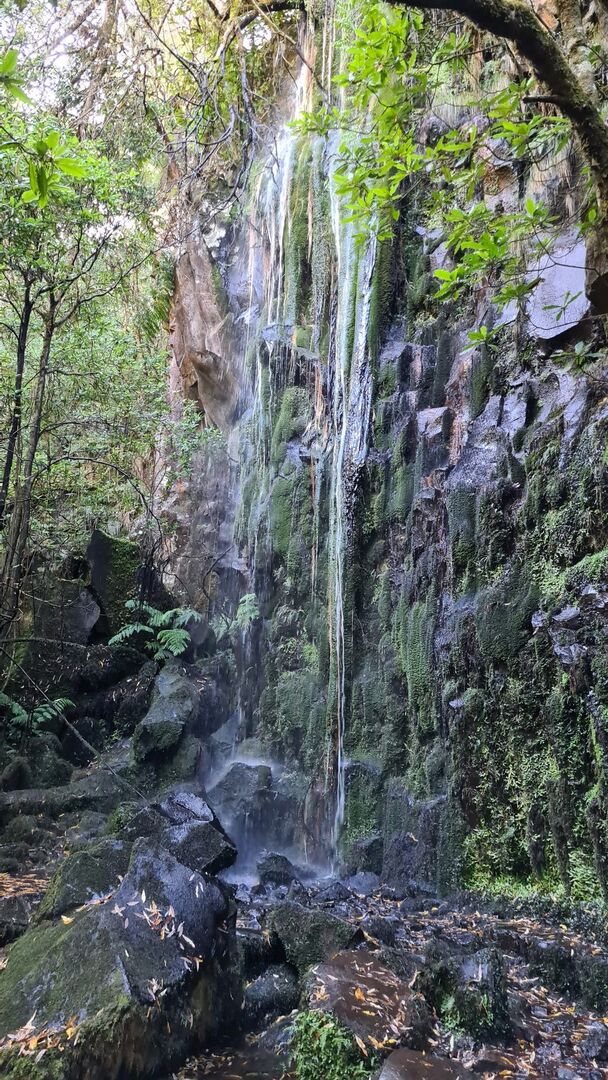
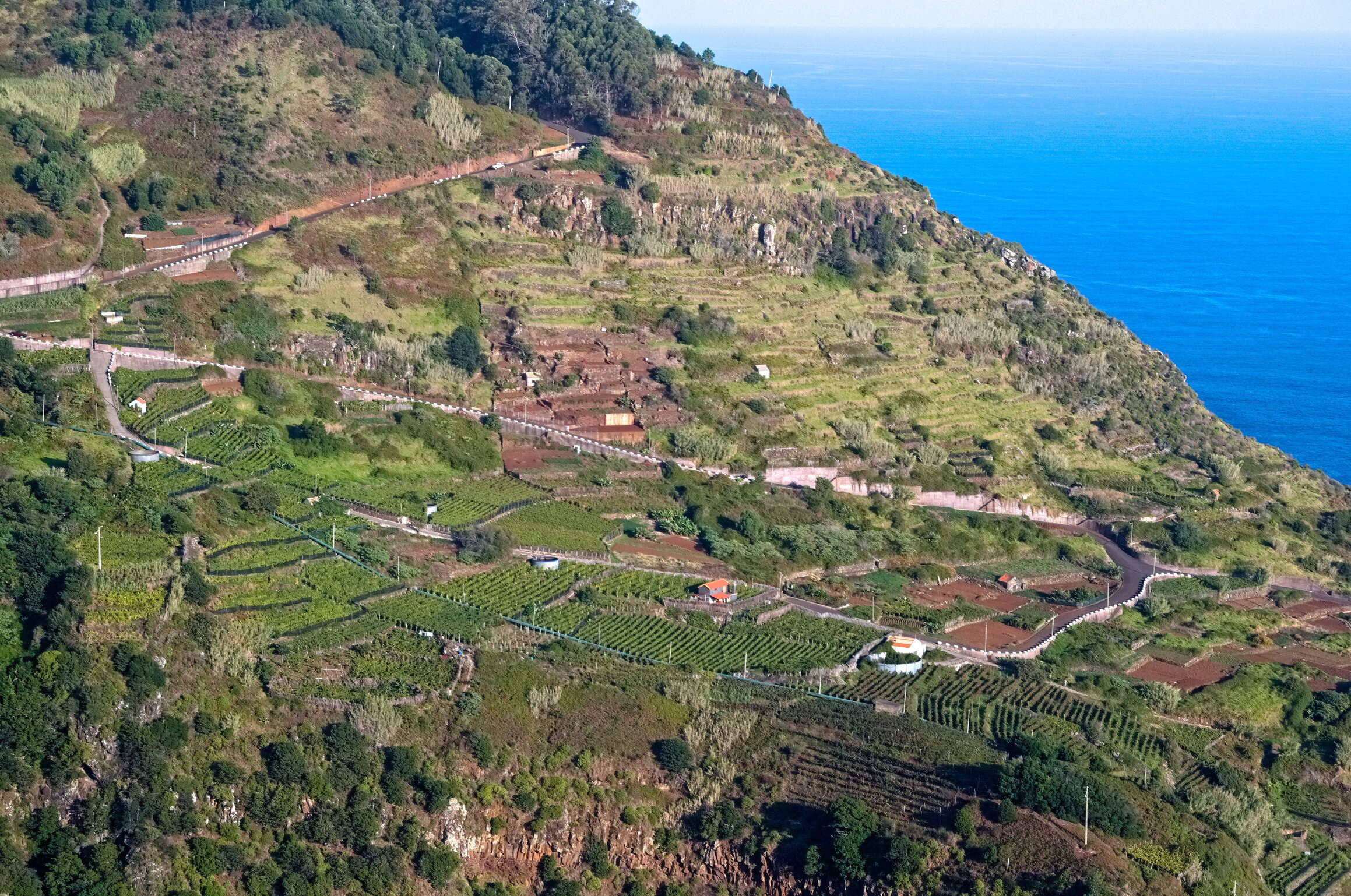
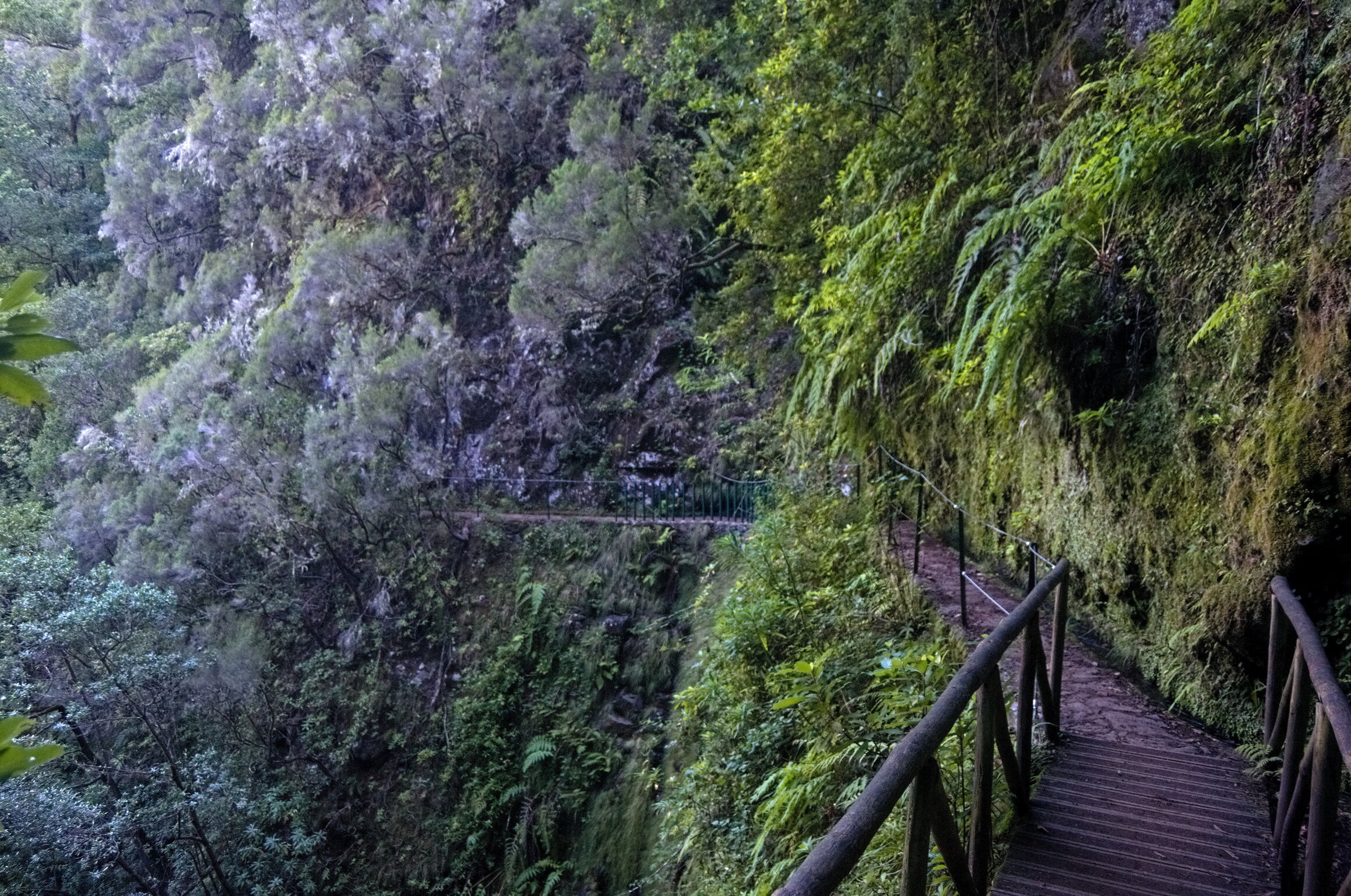
Geomorphologically, the terrain is defined by steep slopes, deeply incised valleys, and narrow interfluves. Long-term fluvial erosion, combined with mass-wasting processes such as rockfalls and shallow landslides, has shaped a highly dissected relief. The levada itself follows a contour-aligned route, exploiting relatively stable lithological horizons to maintain a consistent gradient for water transport.
Chemical weathering is enhanced by persistent moisture and mild temperatures, promoting the development of altered volcanic surfaces and shallow soils. These processes contribute to slope instability in certain areas but also support dense vegetation cover, which plays a stabilizing role in the landscape.
Hydrology and Levada System
The Levada dos Cedros is part of Madeira’s historic gravity-fed irrigation system, designed to transport water from high-precipitation zones in the island’s north to drier regions elsewhere. In this region, the levada collects water from small upland catchments fed by frequent rainfall, cloud condensation, and subsurface flow.
Hydrologically, the area is characterized by:
- perennial surface water flow
- high groundwater recharge rates
- frequent saturation of soils and rock fractures
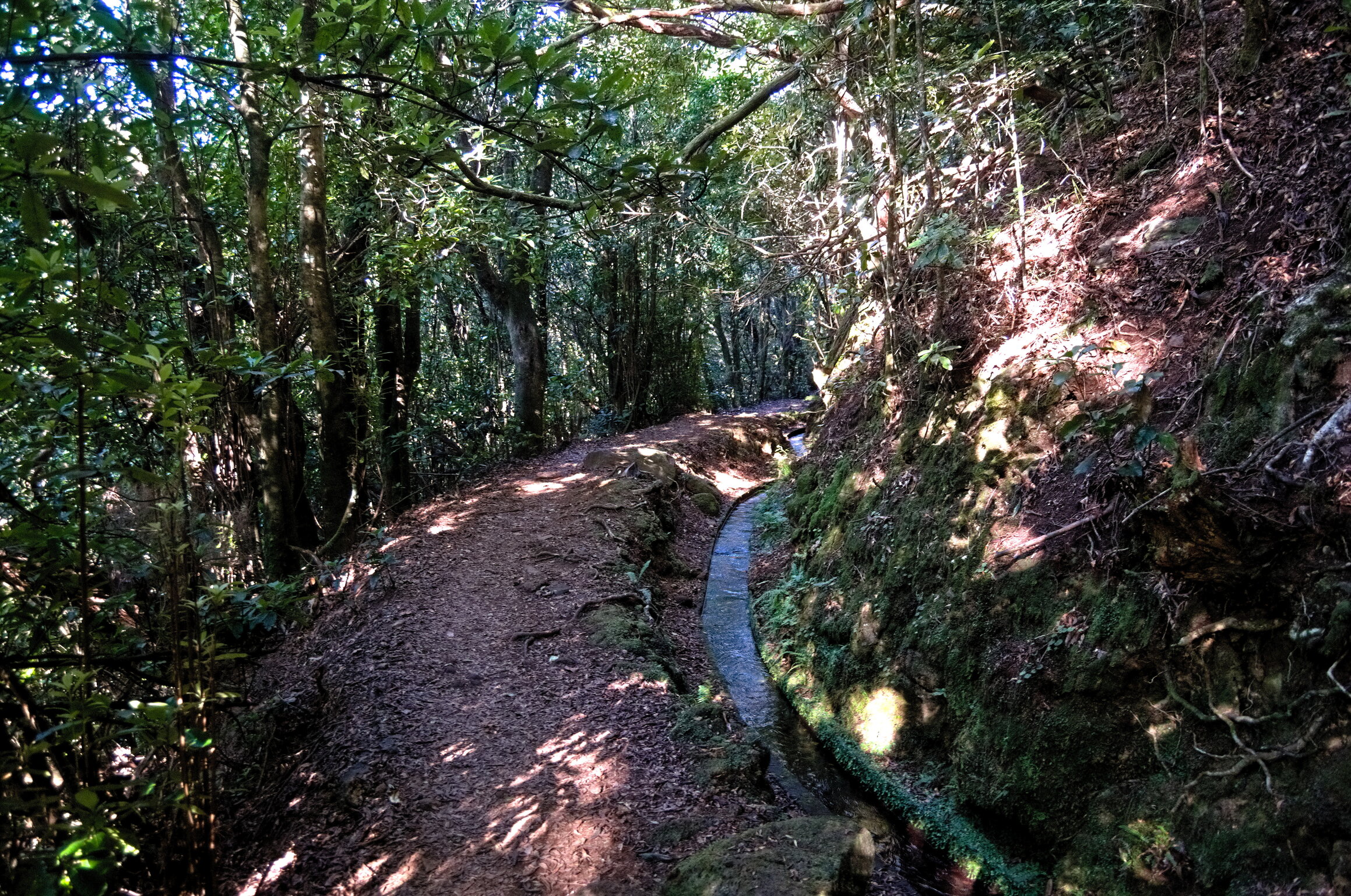
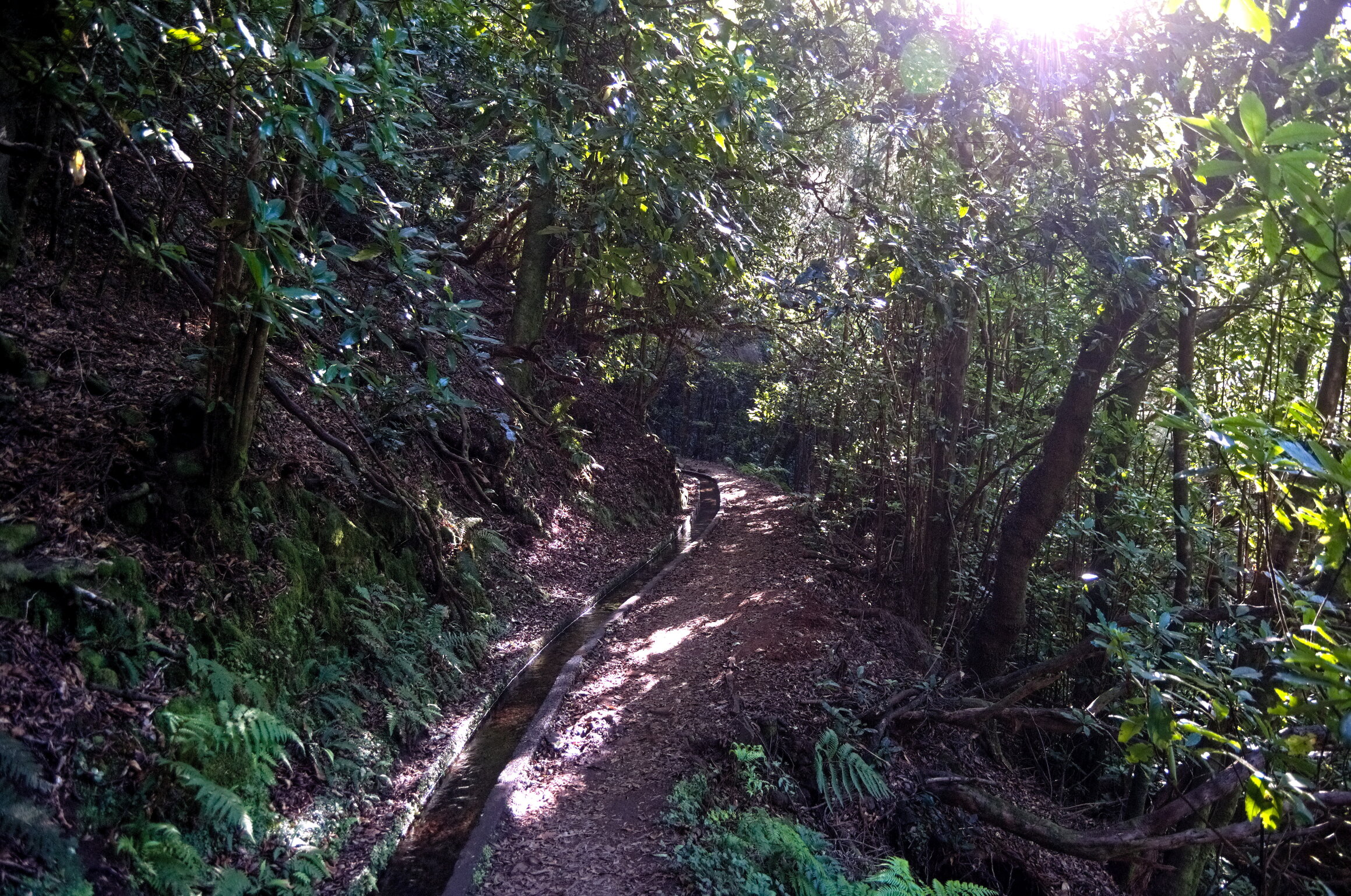
The levada functions not only as an irrigation channel but also as a linear hydrological corridor, influencing local moisture distribution and microhabitats along its course.
Landscape and Ecology
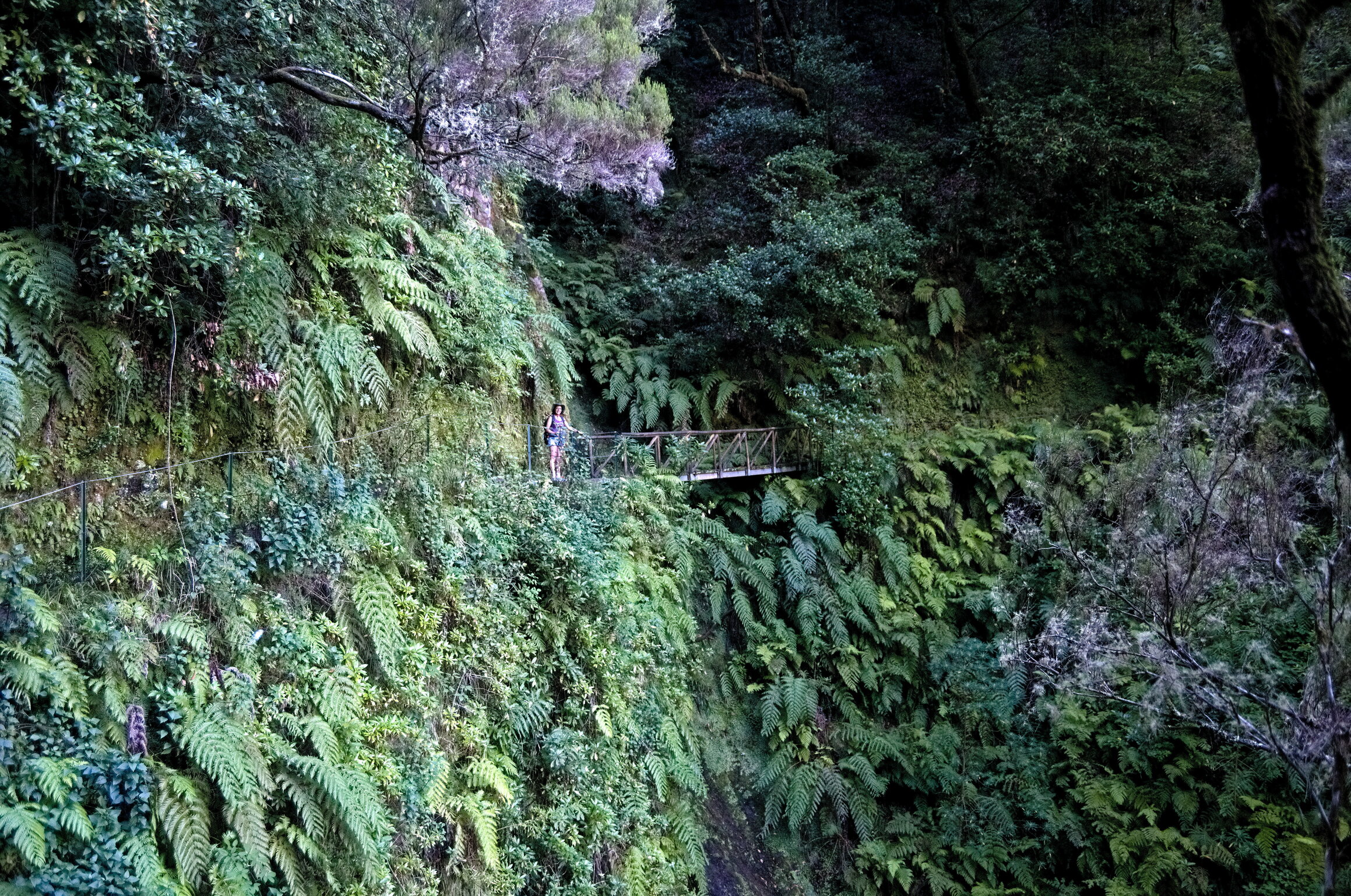
The Levada dos Cedros traverses core areas of Madeira’s Laurisilva forest, a UNESCO-listed ecosystem representing a relic of Tertiary subtropical forests. The vegetation structure is dominated by evergreen tree species such as Laurus novocanariensis and Ocotea foetens, accompanied by a dense understory of ferns, mosses, and epiphytes.
Persistent cloud immersion and high relative humidity create a stable microclimate that favors bryophytes and lichens, resulting in extensive biological surface coverage on tree trunks, rocks, and levada walls. This contributes to both high biodiversity and a distinctive visual character.
Ecologically, the region supports endemic plant species and provides habitat for forest-dependent fauna. Limited accessibility and low infrastructure density have allowed ecological processes to remain largely uninterrupted.
Environmental and Visitor Significance
The Levada dos Cedros region holds considerable importance for both environmental conservation and scientific observation. It represents a well-preserved example of the interaction between:
- volcanic geology
- humid montane climate
- engineered water management
- endemic forest ecosystems
For visitors, the area offers an immersive experience within Madeira’s interior landscapes, characterized by shaded paths, flowing water, and dense forest cover. From a scientific perspective, it provides opportunities to study hydrology, vegetation dynamics, geomorphological processes, and human–environment interactions in a relatively undisturbed setting.