
Luxor Temple is one of the most iconic and best-preserved ancient temples in Egypt, located in the heart of modern Luxor on the east bank of the Nile River. Unlike many other temples that were built for the worship of gods in secluded settings, Luxor Temple was constructed as a ceremonial center tied directly to the living pharaoh and the divine renewal of kingship. It was dedicated primarily to the Theban Triad: Amun, Mut, and their son Khonsu.
Built during the New Kingdom and expanded by several pharaohs over the centuries, the temple reflects a sophisticated blend of religious symbolism, political power, and monumental architecture. Today, Luxor Temple remains an integral part of the city’s urban fabric and is particularly well known for its dramatic appearance when illuminated at night. It is a major attraction for historians, archaeologists, and visitors seeking to experience the grandeur of ancient Egyptian civilization up close.
History
Construction of the Temple of Luxor began around 1400 BCE under the reign of Pharaoh Amenhotep III of the 18th Dynasty. He built the inner sanctuary, large colonnades, and core structures. Later, Pharaoh Ramses II of the 19th Dynasty expanded the temple significantly, adding the massive entrance pylon, two seated statues of himself, obelisks, and courtyards.
Unlike nearby Karnak Temple, which functioned as a major cult center for daily rituals, Luxor Temple was closely associated with the annual Opet Festival. During this festival, statues of Amun, Mut, and Khonsu were transported from Karnak to Luxor along the Avenue of Sphinxes in a ceremonial procession that symbolized the rejuvenation of pharaonic power and divine legitimacy.
The temple remained active well into the Greco-Roman period, when new elements were added, including a Roman sanctuary and Christian frescoes. During the Islamic era, a mosque—still in use today—was built within the structure, integrating the ancient monument into the evolving spiritual life of the city.
Rediscovered and excavated in the 19th century, the temple has since become one of Egypt’s most studied and visited archaeological sites, offering key insights into New Kingdom religion, art, and statecraft.
Geology
Luxor Temple is built on the alluvial plains of the Nile Valley, where fertile soils from annual Nile flooding allowed ancient Thebes to flourish. The temple itself stands on a slightly raised platform to protect it from past inundations.
Its construction materials consist primarily of sandstone from Gebel el-Silsila, a quarry site located upstream along the Nile. This Nubian sandstone is fine-grained and well-suited to large-scale carvings and inscriptions. The stone was transported by boat and assembled with remarkable precision, using interlocking joints and architectural techniques that have allowed the structure to endure for over three millennia.
The East Bank’s relatively stable geological conditions, compared to the more erosion-prone cliffs of the West Bank, have contributed to the excellent preservation of the temple’s walls, columns, and statues. Nonetheless, the site faces modern environmental threats, including urban development, fluctuating groundwater levels, and air pollution, all of which are addressed through ongoing conservation efforts.
Things to See
Luxor Temple offers visitors a deeply immersive experience into ancient Egyptian religious and architectural traditions.
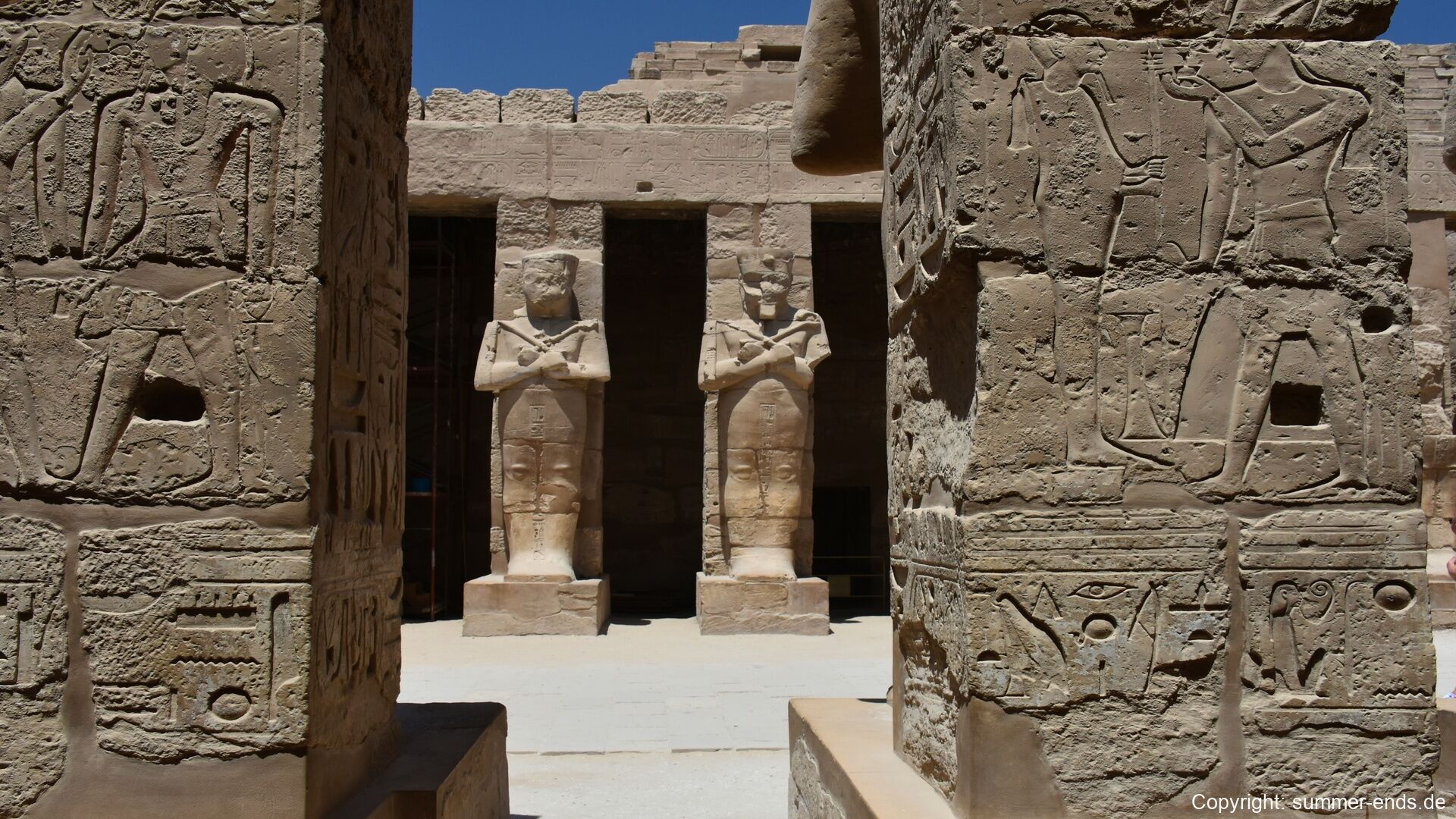
The first major feature is the monumental entrance pylon built by Ramses II, originally fronted by two obelisks—one of which remains in place, while the other now stands in the Place de la Concorde in Paris. Flanking the entrance are colossal seated statues of Ramses II, and additional standing statues line the open courtyard beyond.
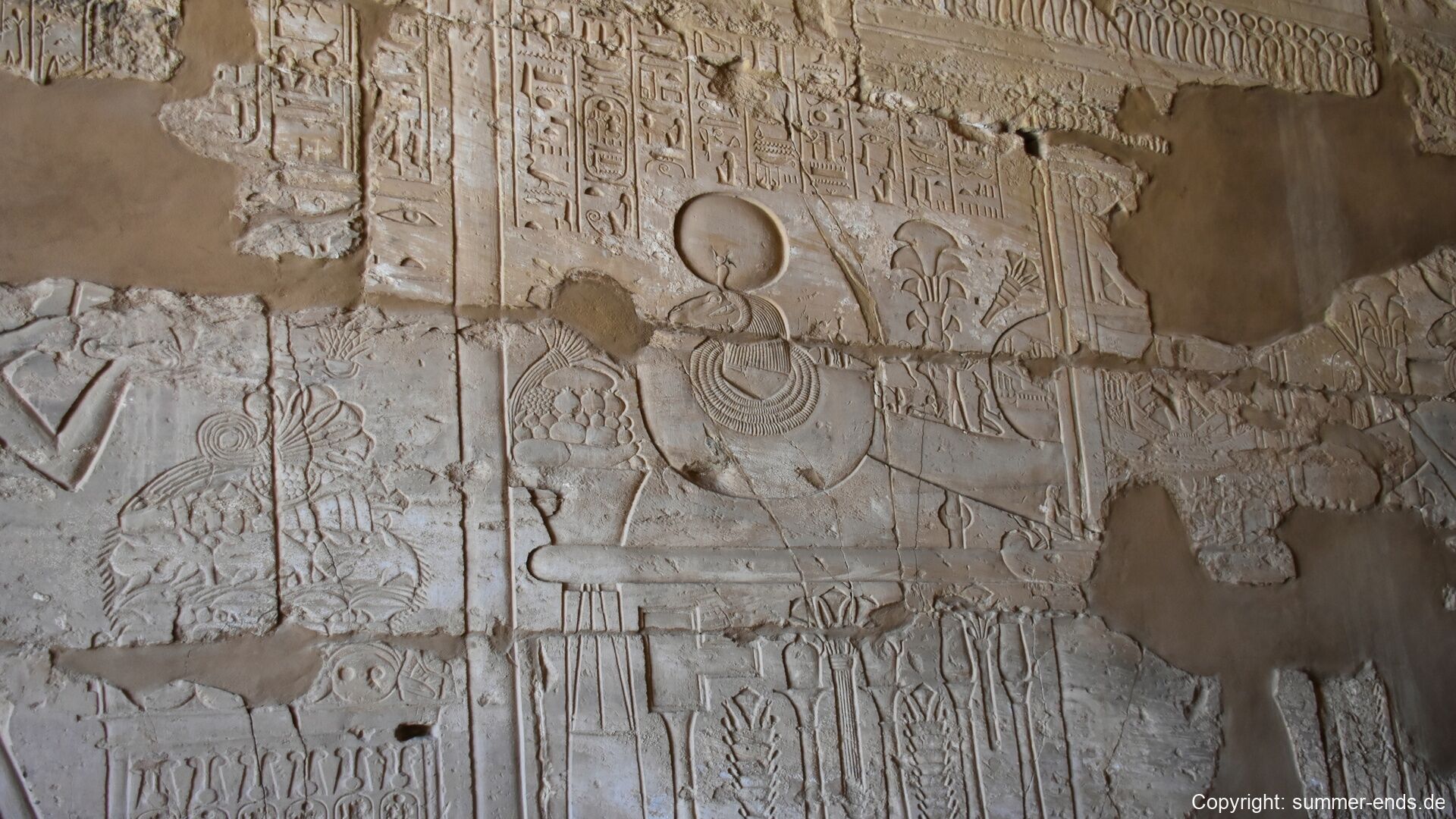
The peristyle court of Ramses II leads into the colonnade hall of Amenhotep III, an impressive sequence of 14 massive columns that guide visitors deeper into the sacred space. The temple’s inner sanctuaries, including the Barque Shrine and offering halls, display reliefs depicting scenes from the Opet Festival and royal rituals.
One of the temple’s unique features is the active Abu Haggag Mosque, built in the medieval period directly atop the ancient ruins. The mosque’s integration within the temple complex symbolizes the layered religious history of Luxor.
Visitors can also see traces of Roman occupation, including a chapel built by Emperor Diocletian and faint frescoes from the time when the temple was repurposed as a Christian church. Coptic crosses and inscriptions are still visible in some chambers.
A highlight of any visit is exploring Luxor Temple at night. The entire complex is beautifully illuminated after sunset, revealing dramatic shadows and architectural details that create a powerful connection to the past. The temple is also the southern terminus of the Avenue of Sphinxes, which once linked it to Karnak Temple through a 2.7-kilometer processional road now restored for modern tourism.